
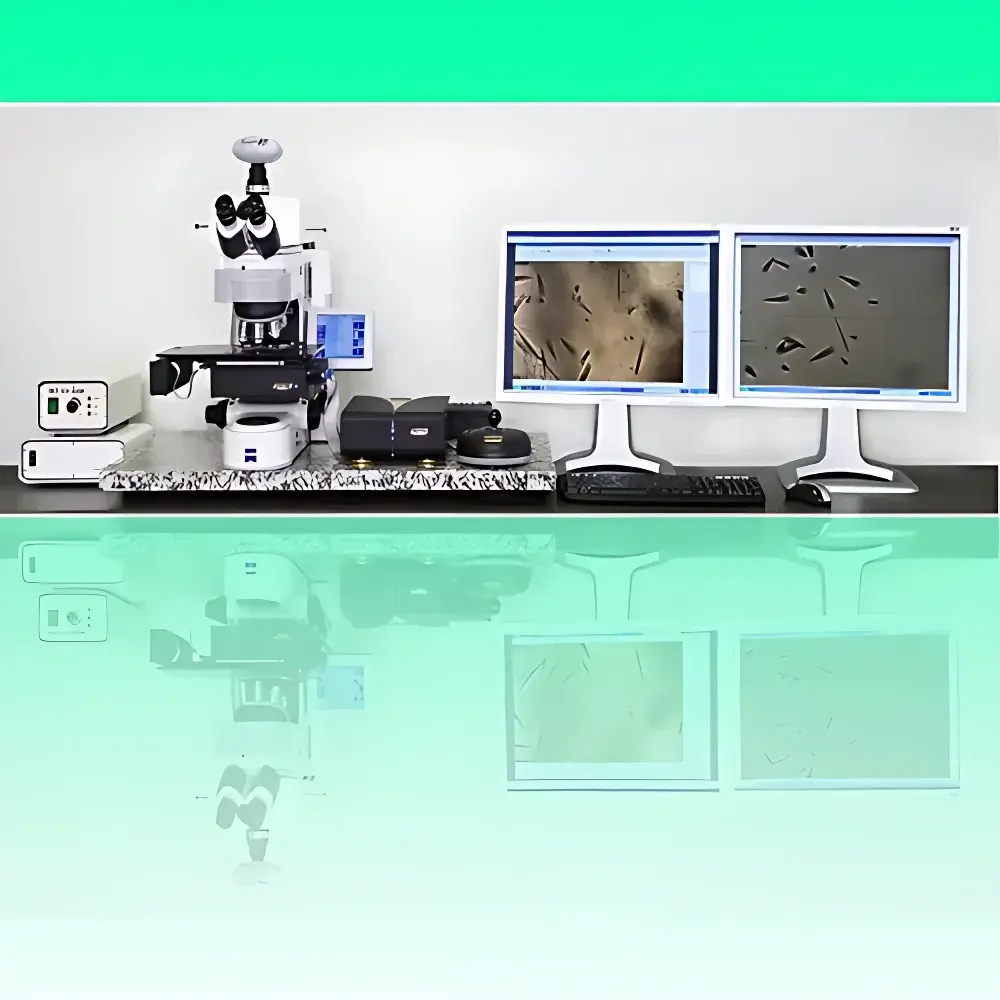
Autoscan-3 Fission Track Dating Analysis System
| Brand | AUTOSCAN |
|---|---|
| Origin | Australia |
| Model | Autoscan-3 |
| Application | Apatite & Zircon Fission Track Thermochronology |
| Measurement Principle | Neutron Irradiation + Automated Microscopic Track Imaging & Length Distribution Analysis |
| Optical System | High-NA EC Plan Apochromat Objectives with Anti-Fungal Coating |
| Compliance | ASTM D7612, ISO/IEC 17025 (for lab-accredited dating workflows), GLP-aligned data audit trail capability |
| Software | Integrated track detection, length measurement, histogram generation, and thermal history inversion (using QTQt or HeFTy-compatible output formats) |
Overview
The Autoscan-3 Fission Track Dating Analysis System is a fully automated, research-grade microscopy platform engineered for quantitative fission track thermochronology in apatite and zircon. It implements the standard neutron irradiation method (ASTM D7612–19) to determine annealing ages and reconstruct low-temperature thermal histories of geological samples. The system combines a high-stability motorized inverted microscope with precision autofocus, programmable stage navigation, and AI-assisted track recognition algorithms. Spontaneous fission tracks—etched in polished mineral mounts using controlled chemical etching—are imaged under high-magnification, strain-free optics. Thermal history modeling is derived from statistical analysis of measured track lengths, enabling robust interpretation of exhumation rates, basin evolution, and tectonic timing across scales from 1 Ma to >100 Ma.
Key Features
- EC Plan Apochromat objectives (100×, NA ≥ 1.30) with enhanced chromatic aberration correction and zero mechanical strain—critical for accurate track length metrology at sub-micron resolution
- Fully automated track search, classification, and length measurement across user-defined fields of view (FOVs), reducing inter-operator bias and improving reproducibility
- Integrated thermal drift compensation and real-time focus stabilization for extended acquisition sessions (>8 hrs continuous operation)
- Modular optical path supporting both brightfield and differential interference contrast (DIC) imaging for optimal track contrast in apatite and zircon matrices
- Compact benchtop footprint (W × D × H: 620 × 540 × 480 mm) with shock-absorbing base—designed for field-deployable lab setups or mobile core logging facilities
- Compliance-ready software architecture with timestamped audit logs, user access control, and electronic signature support aligned with GLP and ISO/IEC 17025 documentation requirements
Sample Compatibility & Compliance
The Autoscan-3 accommodates standard 25 × 75 mm petrographic slides with polished apatite or zircon mounts (epoxy-embedded, 100–200 µm thick). Sample preparation follows IUGS-recommended etching protocols (e.g., 5.5N HNO₃ for apatite; molten KOH for zircon). All measurements adhere to ASTM D7612 guidelines for fission track age calculation—including interspike calibration using standard reference materials (e.g., Durango apatite, Fish Canyon Tuff zircon). The system supports dual-detection mode: confined track counting for age determination and projected track length measurement for thermal history inversion. Data outputs conform to HeFTy and QTQt input specifications, facilitating integration into published thermal modeling frameworks.
Software & Data Management
The Autoscan Control Suite provides end-to-end workflow management—from slide mapping and autofocus calibration to track segmentation, length distribution binning (0.1 µm resolution), and histogram export in CSV and HDF5 formats. Image metadata (exposure time, objective ID, stage coordinates, operator ID, timestamp) is embedded in TIFF headers and archived with SHA-256 checksums. Version-controlled analysis scripts allow reproducible reprocessing. For regulated environments, optional 21 CFR Part 11 compliance modules include electronic signatures, role-based permissions, and immutable audit trails with configurable retention policies. Raw image stacks and processed histograms are automatically backed up to network-attached storage (NAS) via SMB or SFTP.
Applications
- Determining cooling ages of sedimentary basins to constrain burial and exhumation histories
- Validating thermal models in hydrocarbon exploration (e.g., source rock maturity assessment)
- Resolving tectonic uplift timing in orogenic belts and rift systems
- Calibrating low-temperature (60–120°C) geochronometers for landscape evolution studies
- Supporting nuclear forensics and reactor dosimetry through calibrated fission track density quantification
- Teaching and method development in graduate-level geochronology laboratories
FAQ
What neutron source is required for irradiation prior to Autoscan-3 analysis?
The Autoscan-3 itself does not include a neutron source. Users must arrange irradiation at a qualified reactor facility (e.g., OPAL in Australia, HFIR in the US) using certified flux monitors and irradiation capsules compliant with ASTM D7612 Annex A2.
Can the system measure both apatite and zircon on the same slide?
Yes—multi-mineral slides are supported via objective turret switching and material-specific etch parameter recall. Zircon requires higher magnification (100× oil) and longer exposure times due to lower spontaneous track density.
Is track length measurement traceable to NIST standards?
Track length calibration is performed using certified graticules traceable to NIST SRM 2034 (10 µm line spacing) and validated annually per ISO/IEC 17025 clause 6.5.2.
Does the software support batch processing of multiple slides?
Yes—slide barcodes or manual IDs trigger sequential auto-acquisition. Up to 20 slides can be queued with pre-defined FOV grids, focus maps, and exposure profiles.
What maintenance is required for long-term optical stability?
Annual recalibration of stage positioning accuracy (±0.2 µm) and objective centering is recommended. EC objectives feature anti-fungal coatings and require only periodic lens cleaning with spectroscopic-grade solvents.
Related Products





