
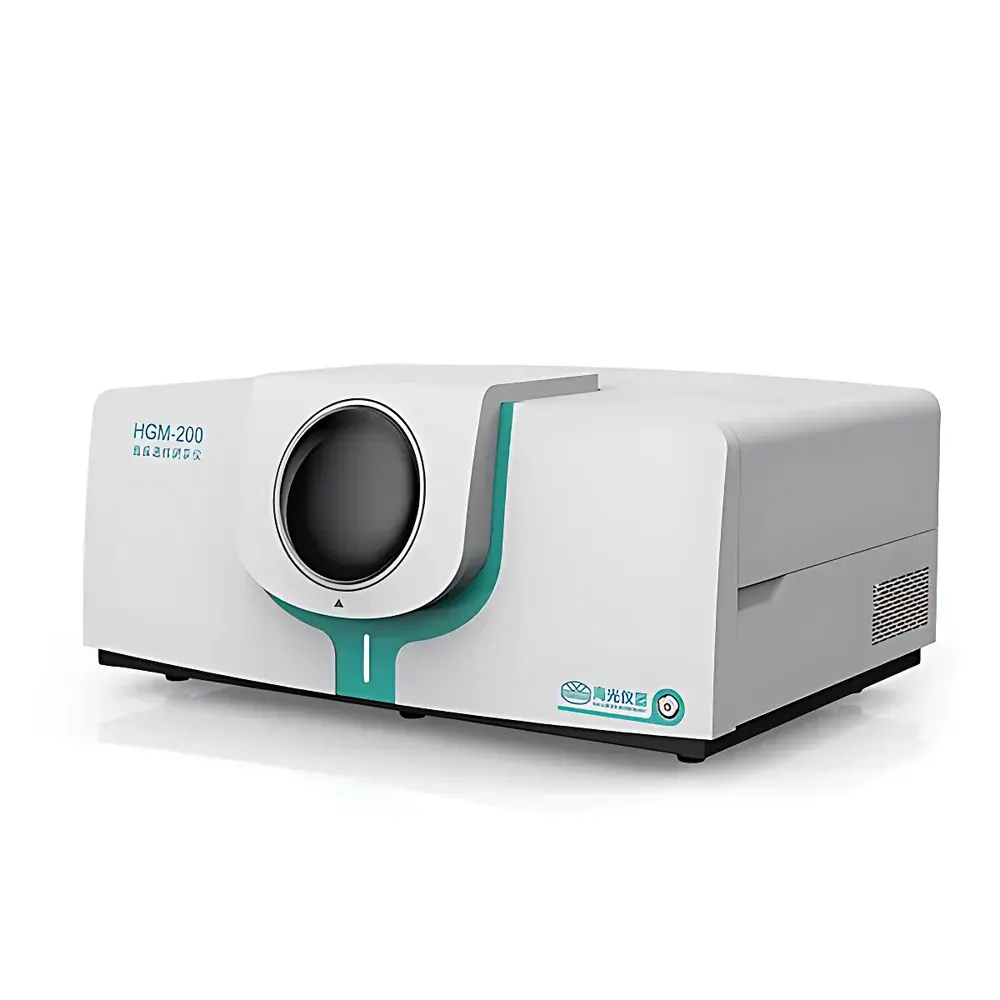
Haiguang HGM-200 Dual-Channel Direct-Sampling Mercury Analyzer
| Brand | Haiguang Instrument |
|---|---|
| Origin | Beijing, China |
| Model | HGM-200 |
| Instrument Type | Benchtop Laboratory Analyzer |
| Measurement Principle | Cold Vapor Atomic Absorption Spectrometry (CVAAS) |
| Detection Limit | ≤0.005 ng |
| Measurement Range | 0–15 ng (long-path absorption cell), 15–200 ng (short-path absorption cell) |
| Sample Throughput | 2.5 min per sample |
| Sample Capacity | 60-position autosampler tray |
| Compliance | ASTM D7623, EPA Method 7473, GB 5009.17-2021, HJ 923-2017, HJ 910-2017, SN/T series, ISO/IEC 17025-aligned operation |
Overview
The Haiguang HGM-200 Dual-Channel Direct-Sampling Mercury Analyzer is a benchtop analytical instrument engineered for trace-level mercury quantification in solid, liquid, and gaseous matrices without acid digestion or chemical pretreatment. It employs cold vapor atomic absorption spectrometry (CVAAS) coupled with catalytic thermal decomposition and gold amalgamation. Mercury in the sample is thermally released at controlled temperatures (typically 600–900 °C), converted to elemental vapor via reduction catalysts (e.g., tin(II) chloride or cobalt oxide), transported through a temperature-stabilized quartz cell, and quantified by absorption at 253.65 nm. The dual-channel architecture enables simultaneous or sequential analysis of two independent samples or parallel calibration/blank verification—enhancing throughput while maintaining metrological integrity. Designed for laboratories requiring regulatory compliance, method robustness, and minimal operational overhead, the HGM-200 meets the physical and functional requirements of ISO/IEC 17025-accredited testing environments.
Key Features
- Dual-channel configuration supports concurrent analysis or automated blank/sample alternation, improving data reliability and reducing operator intervention.
- Direct solid/liquid/gas sampling eliminates wet chemistry steps—no HNO₃, H₂SO₄, KMnO₄, or SnCl₂ reagents required—reducing consumable costs and hazardous waste generation.
- Integrated temperature-controlled gas pathway and gold-coated amalgamation traps minimize memory effects; system purge cycles and real-time temperature profiling ensure carryover <0.5% between high-concentration samples.
- Optimized catalytic decomposition module uses proprietary mixed-metal oxide catalysts and nanoscale gold-film amalgamators to achieve quantitative Hg release across diverse matrices—including coal, soil, biological tissue, and petroleum distillates.
- Benchtop footprint (580 × 450 × 420 mm) integrates a 60-position XYZ autosampler with gravimetric sample positioning accuracy ±0.1 mg, compatible with standard crucibles and quartz boats.
- Onboard diagnostics include lamp energy monitoring, flow rate validation, absorption cell temperature logging, and automatic baseline correction—each recorded with timestamped metadata for audit readiness.
Sample Compatibility & Compliance
The HGM-200 accommodates heterogeneous samples ranging from 0.1 mg to 1.0 g (solids), 1–500 µL (liquids), and 10–500 mL (gas bags or Tedlar®-collected air). Its performance aligns with internationally recognized standards including EPA Method 7473 (thermal decomposition–gold amalgamation–CVAAS), ASTM D7623 (crude oil mercury), GB 5009.17-2021 (food), HJ 923-2017 (soil/sediment), and HJ 910-2017 (ambient air). All measurement protocols support GLP/GMP documentation workflows: raw absorbance traces, peak integration parameters, calibration curve residuals, and system suitability test (SST) results are stored in immutable binary format compliant with FDA 21 CFR Part 11 requirements when paired with Haiguang’s certified LIMS interface.
Software & Data Management
The HGM-200 operates under MercuryControl v4.2 software—a Windows-based application validated for analytical instrument control, data acquisition, and report generation. It provides full audit trail functionality: user login/logout timestamps, parameter change logs, electronic signatures for method approval, and version-controlled method templates. Quantitative output includes concentration (ng/g or ng/m³), relative standard deviation (RSD %) per batch, recovery rates from matrix-matched spikes, and uncertainty estimation per GUM (Guide to the Expression of Uncertainty in Measurement). Export formats include CSV, PDF analytical reports (with embedded chromatograms and calibration curves), and XML files compatible with third-party LIMS platforms such as LabWare LIMS and Thermo Fisher SampleManager.
Applications
This analyzer serves regulated and research laboratories engaged in environmental monitoring (soil, sediment, flue gas, ambient air), food safety testing (fish, rice, infant formula), clinical toxicology (hair, blood, urine), mining and metallurgy (ore concentrates, slag, recycled metals), petrochemical QA/QC (crude oil, naphtha, LNG condensate), and public health surveillance (drinking water, cosmetics, pharmaceutical excipients). Its direct-sampling capability is particularly advantageous for mercury speciation screening where methylmercury interference must be avoided—enabling rapid total-Hg screening prior to ICP-MS or GC-ICP-MS speciation workflows.
FAQ
Does the HGM-200 require carrier gas cylinders or external vacuum pumps?
No. It incorporates an integrated diaphragm pump and internal zero-air generator, eliminating dependency on compressed gas supplies.
Can it analyze volatile organic mercury compounds like methylmercury?
No—it measures total elemental mercury only. Speciation requires coupling with GC or LC separation upstream.
Is method validation support available for ISO/IEC 17025 accreditation?
Yes. Haiguang provides documented IQ/OQ/PQ protocols, reference material traceability certificates (NIST SRM 2710a, ERM-CC580), and uncertainty budget templates aligned with EURACHEM/CITAC guidelines.
What maintenance intervals are recommended for routine operation?
Catalyst cartridge replacement every 2,000 analyses; gold trap regeneration every 500 runs; quartz cell cleaning every 100 runs using certified Hg-free solvents.
How is carryover verified during daily system suitability testing?
By analyzing a 10-ng blank immediately after a 200-ng standard; acceptance criterion: signal ≤3× baseline noise (≤0.015 ng equivalent).



