
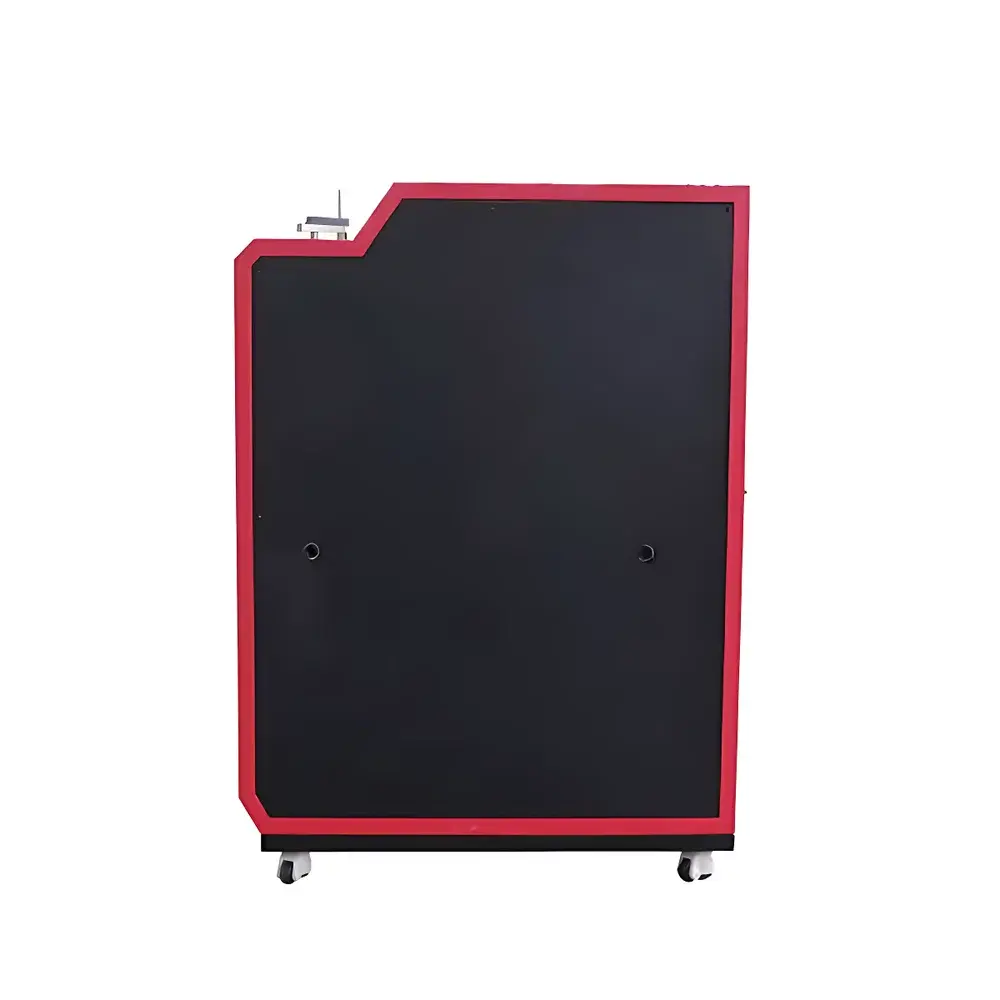
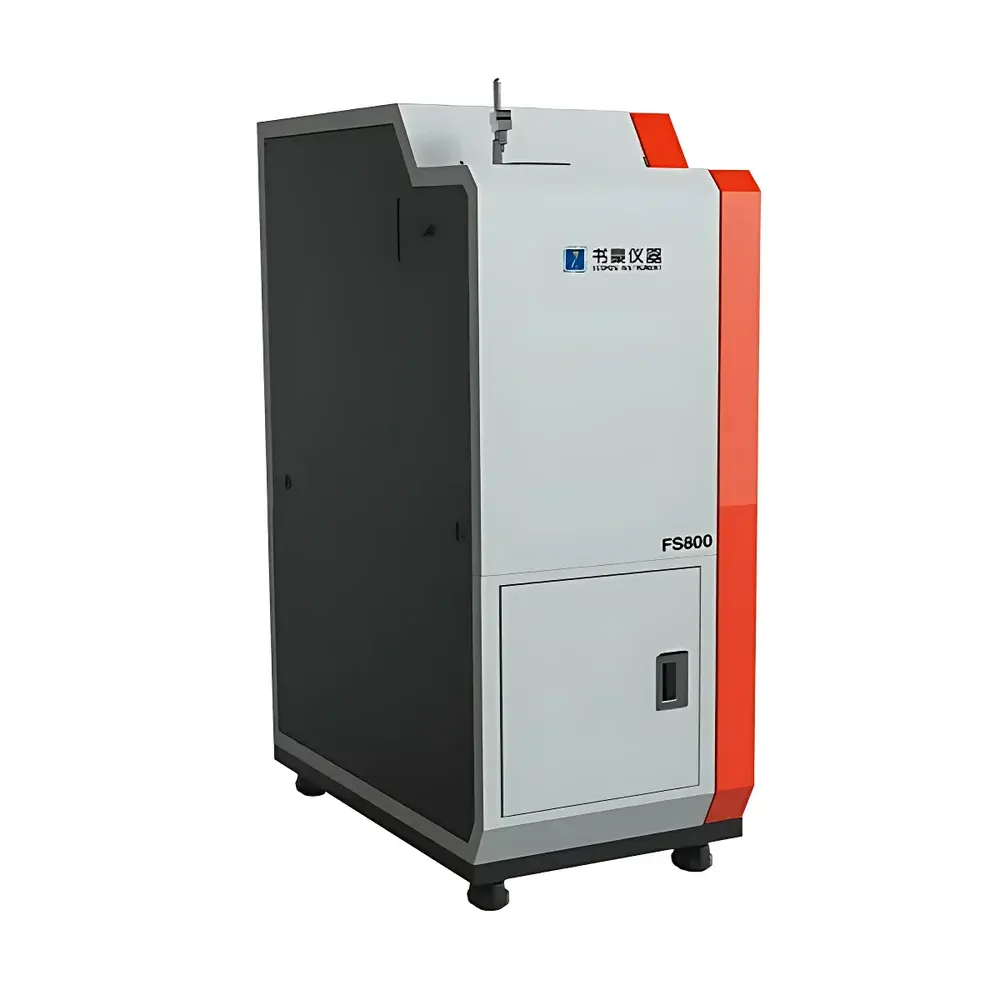
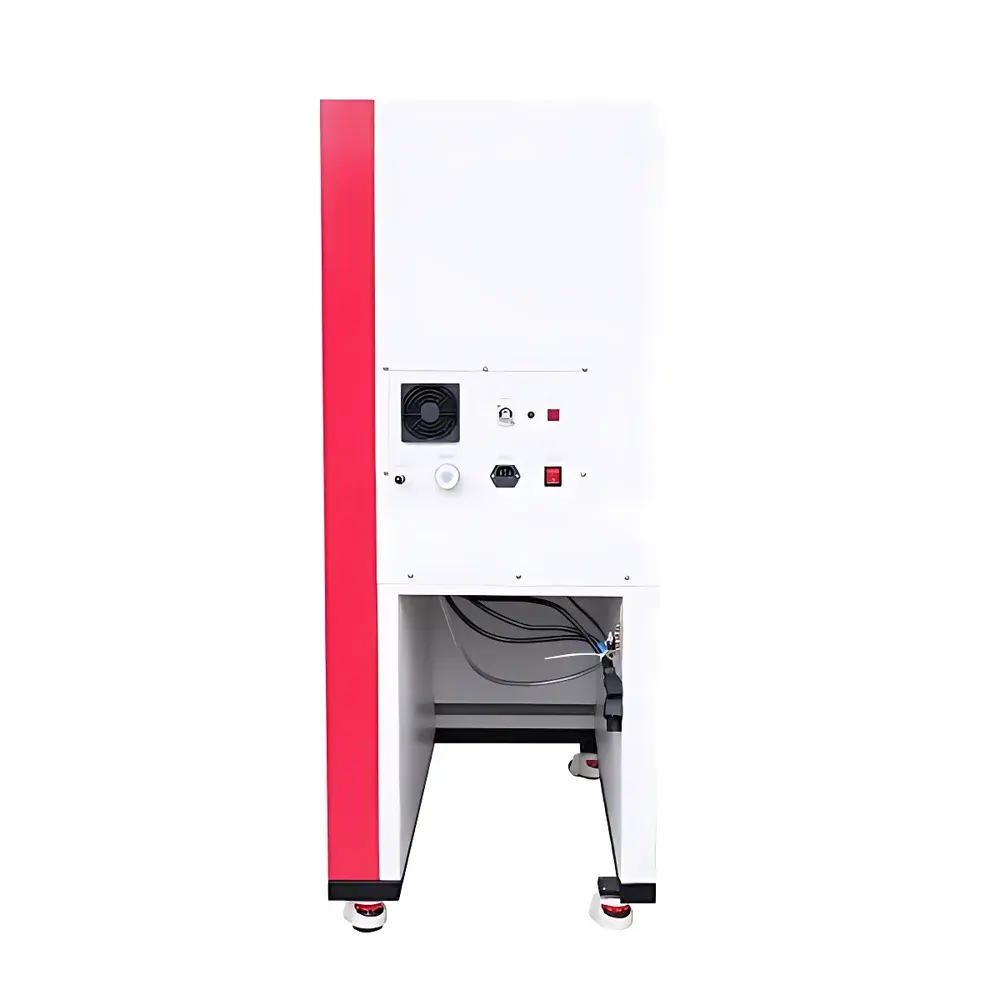
SOOHOW INSTRUMENT FS800 Floor-Standing Full-Spectrum Direct-Reading Optical Emission Spectrometer
| Brand | SOOHOW INSTRUMENT |
|---|---|
| Origin | Jiangsu, China |
| Manufacturer Type | Manufacturer |
| Country of Origin | China |
| Model | FS800 |
| Instrument Type | Floor-standing |
| Excitation Method | Spark |
| Detector Type | Charge-Coupled Device (CCD) |
| Focal Length | 500 mm |
| Grating Groove Density | 2700 gr/mm |
| Wavelength Range | 130–800 nm (configurable per application) |
Overview
The SOOHOW INSTRUMENT FS800 is a floor-standing full-spectrum direct-reading optical emission spectrometer (OES) engineered for high-precision quantitative elemental analysis of metallic materials. Based on spark source atomic emission spectroscopy (AES), the instrument atomizes and excites solid metal samples under controlled argon atmosphere, generating element-specific emission lines across the ultraviolet to near-infrared spectrum (130–800 nm). Its core optical architecture employs a high-stability Paschen–Runge mounting with a 500 mm focal length vacuum spectrometer housing, enabling simultaneous multi-element detection with high spectral resolution and long-term signal reproducibility. Designed for routine laboratory and foundry QC/QA environments, the FS800 delivers ppm-level detection limits for key alloying and trace elements—including C, P, S, N, and O—without requiring vacuum pumps during continuous operation, thanks to its intermittent vacuum control strategy and heated optical window system.
Key Features
- Optical system: Holographic concave grating (2700 grooves/mm), first-order dispersion 0.74 nm/mm, second-order 0.37 nm/mm; fully sealed vacuum chamber maintained at <10⁻² Pa via duty-cycled pumping (<20 min/day runtime)
- Thermal stabilization: Constant-temperature optical chamber regulated at 33 °C ± 0.1 °C using PID-controlled heating and damping rubber mounts to suppress mechanical drift
- Detection architecture: Up to 16 high-sensitivity CCD detectors (3648 pixels each), delivering up to 58,368 total spectral data points per acquisition for comprehensive spectral coverage and flexible channel assignment
- Spark source: Microprocessor-controlled semiconductor ignition system with adjustable plasma current (1–100 A), frequency (20–1000 Hz), and discharge duration (10–10,000 µs); HEPS (High-Energy Pre-Spark) mode enabled for improved precision on heterogeneous or oxidized surfaces
- Sample interface: Open-type spark stand accommodating samples up to 20 kg; modular adapters for wires, chips, small parts, and irregular geometries; integrated safety interlock prevents ignition unless sample is correctly seated and argon flow is verified
- Gas management: Tidal-purge argon system with <60 mL/min standby consumption; cold-start purge time ≤30 min (after 12 h shutdown); hot-start ready in ≤5 min
Sample Compatibility & Compliance
The FS800 supports ferrous and non-ferrous alloys including carbon steels, stainless steels, aluminum, copper, nickel, titanium, and magnesium-based matrices. Its open spark stand and configurable electrode geometry accommodate castings, forgings, billets, machined parts, and scrap fragments. All calibration protocols are traceable to certified reference materials (CRMs) compliant with ISO/IEC 17025 requirements. The instrument’s hardware and software architecture support audit-ready data integrity practices aligned with GLP and GMP frameworks. While not pre-certified for FDA 21 CFR Part 11, its WinLab software provides configurable user access levels, electronic signature capability, and full audit trail logging for raw spectra, integration parameters, and calibration history—enabling internal validation for regulated environments.
Software & Data Management
WinLab operates natively on Windows 7 (64-bit) and follows standard Office-style UI conventions for intuitive navigation. It integrates real-time instrument diagnostics, automatic wavelength calibration, and dynamic background correction across all channels. The software includes a hierarchical database structure containing spectral line libraries, CRM databases, historical measurement records, and customizable analysis templates. Advanced features include matrix-matched curve fitting with interference correction (e.g., Mn 403.307 nm correction for Fe I 403.397 nm overlap), C-equivalent calculation, statistical reporting (mean, SD, RSD), and export to CSV, Excel, or LIMS-compatible formats via TCP/IP or USB. Users may extend analytical capabilities onsite by adding new alloy base calibrations or custom grade identification logic without firmware modification.
Applications
The FS800 serves as a primary tool for incoming material inspection, melt process control, finished product certification, and failure analysis in metallurgical laboratories, casting facilities, and third-party testing centers. Typical use cases include rapid verification of alloy grade compliance (e.g., ASTM A240, EN 10088, GB/T 20878), low-level sulfur/phosphorus quantification in ultra-low-carbon steels, nitrogen determination in austenitic stainless grades, and oxygen analysis in titanium alloys. Its robust spark stability and wide dynamic range (ppm to wt%) also support scrap sorting, recycling feedstock characterization, and research into novel alloy development where multi-element correlation and repeatability are critical.
FAQ
What is the typical detection limit for carbon in steel using the FS800?
Detection limits vary by matrix and calibration but typically reach 10–30 ppm for C in low-alloy steel under optimized conditions.
Can the FS800 analyze coated or painted metal samples?
No—surface coatings must be mechanically removed prior to analysis to ensure representative sampling and avoid spectral interference from organic volatiles.
Is vacuum pump maintenance required frequently?
The intermittent vacuum system minimizes wear; oil changes are recommended every 6 months under normal operation, with no daily servicing needed.
Does the instrument support remote diagnostics or service access?
Yes—WinLab includes secure remote desktop capability (user-enabled) for technical support and firmware updates via encrypted connection.
How many elements can be calibrated simultaneously?
Up to 48 elements can be configured in a single program, limited only by available spectral lines and detector channel allocation.




