
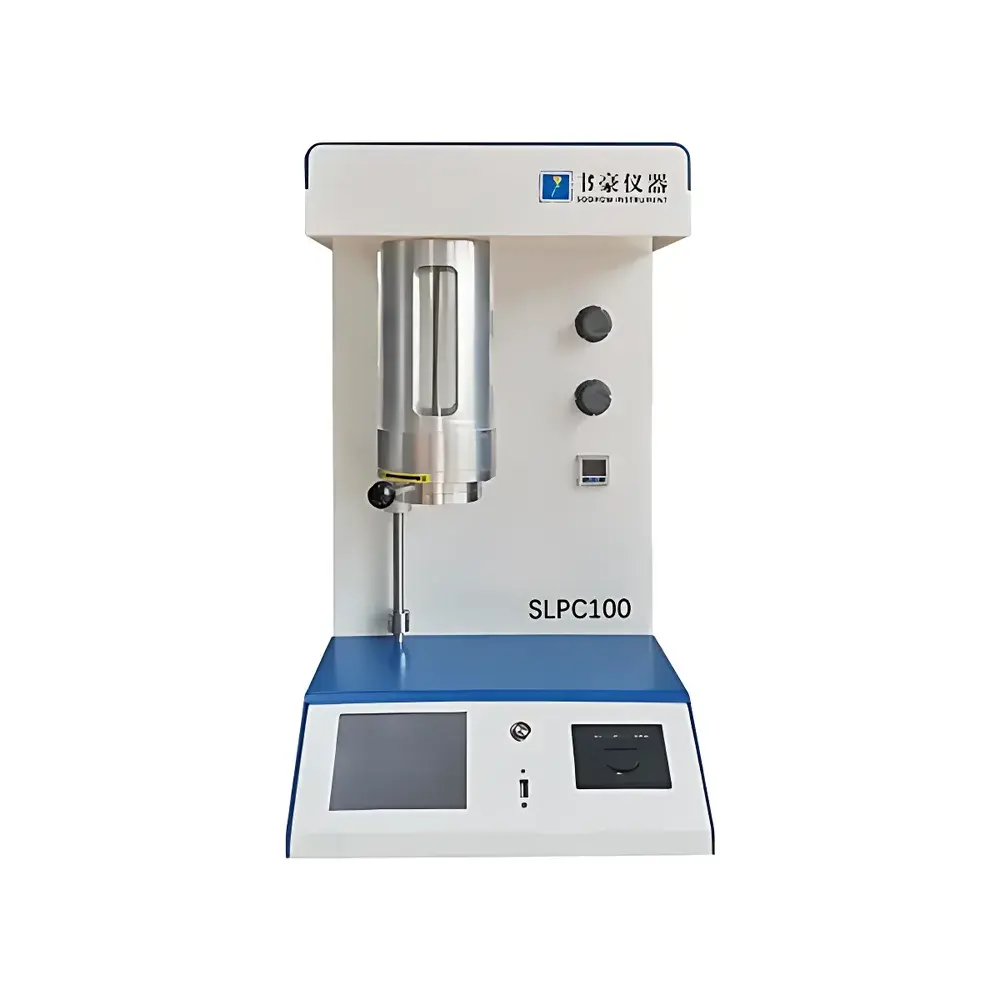
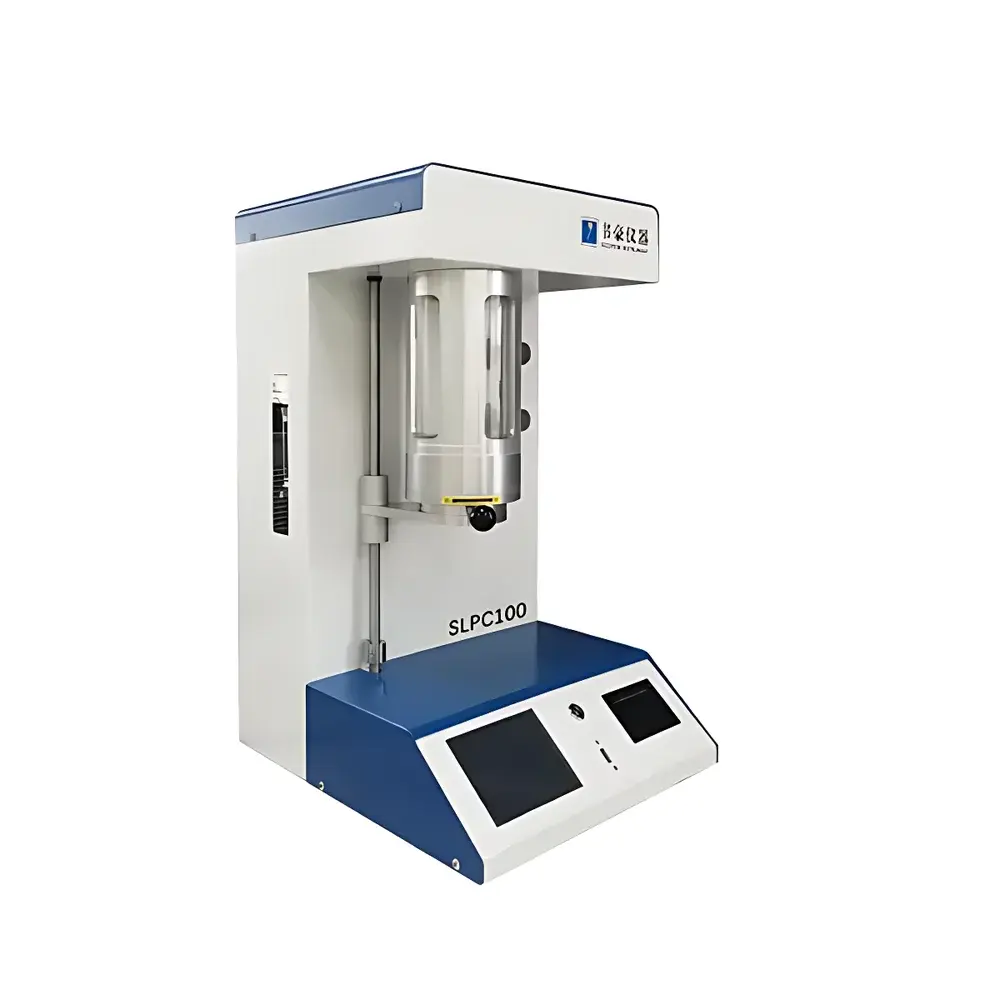
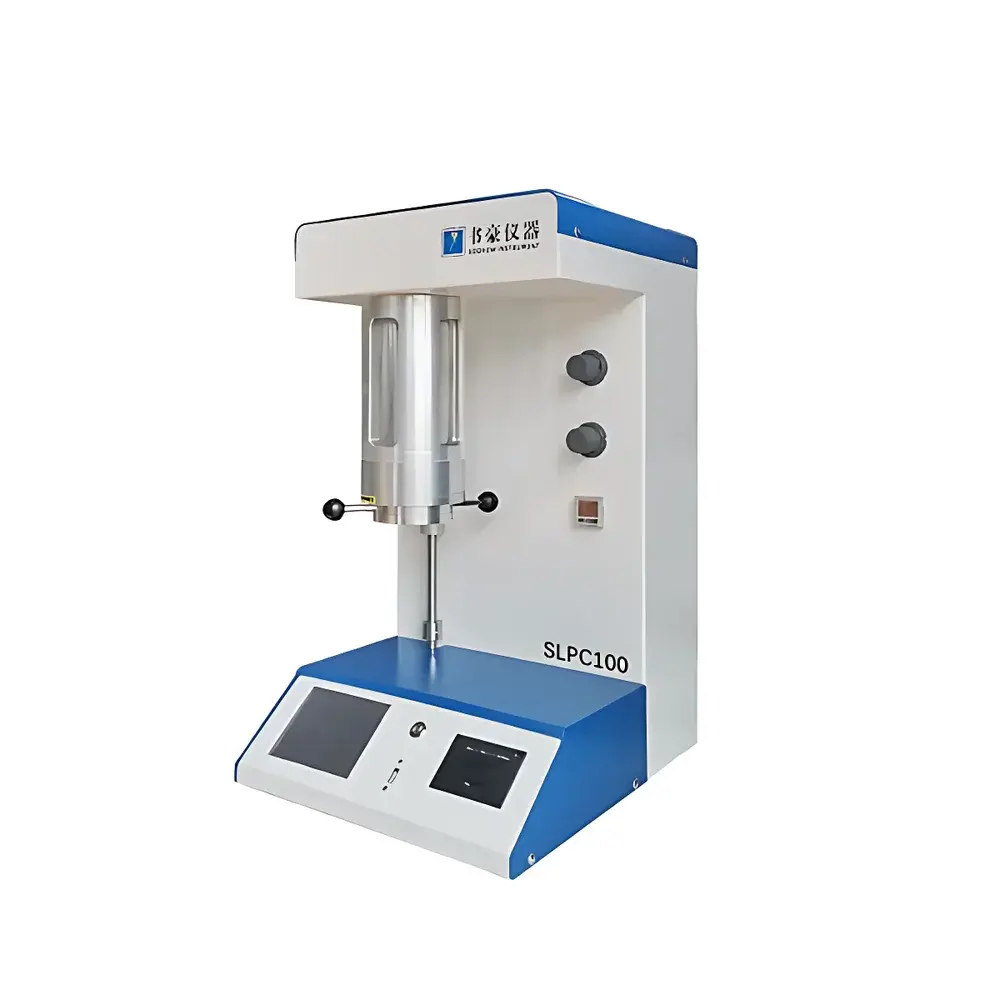
SOOHOW INSTRUMENT SLPC100 Optical In-Line Particle Counter for Oil Condition Monitoring
| Brand | SOOHOW INSTRUMENT |
|---|---|
| Origin | Jiangsu, China |
| Manufacturer Type | Direct Manufacturer |
| Product Category | Domestic |
| Model | SLPC100 |
| Instrument Type | Optical Particle Counter |
| Light Source | Semiconductor Laser |
| Particle Size Range | 0.8 µm to 600 µm (calibrated per ISO 4402 for 1–100 µm or per ISO 11171/GB/T 18854 for 4–70 µm(c)) |
| Detection Channels | 8–64 user-configurable channels |
| Sensitivity | 0.8 µm (ISO 4402) or 3 µm(c) (ISO 11171 / GB/T 18854) |
| Resolution | <10% (per ISO 11171 / GB/T 18854) |
| Repeatability | RSD < 2% |
| Max. Sample Viscosity | ≤650 cSt (heating or dilution optional for higher viscosity) |
| Sample Volume Range | 0.2–1000 mL (0.1 mL increment) |
| Sampling Accuracy | ±0.5% |
| Flow Rate | 5–80 mL/min |
| Pressure Chamber | Dual-mode (vacuum & positive pressure) |
| Max. Vacuum | −0.08 MPa |
| Max. Positive Pressure | 0.8 MPa |
| Max. Particle Concentration | 12,000–40,000 particles/mL |
| Optional Temperature Sensor | Range 1–100 °C, Accuracy ±1 °C |
| Optional Water Activity Sensor | Range 1–100 %RH, Accuracy ±5 %RH |
| Optional Moisture Sensor | Range 1–300 ppm, Accuracy ±1 ppm |
| Power Supply | 110–245 V AC, 50 Hz, 70 W |
| Dimensions (W×D×H) | 340 × 410 × 650 mm |
| Net Weight | 25 kg |
Overview
The SOOHOW INSTRUMENT SLPC100 is an optical in-line particle counter engineered for real-time, quantitative monitoring of particulate contamination in lubricating oils, hydraulic fluids, turbine oils, and other industrial circulating systems. Based on light extinction (obscuration) and calibrated laser scattering principles, the SLPC100 delivers traceable, ISO-compliant particle size distribution data across a broad dynamic range—from sub-micron wear debris (0.8 µm) up to large contaminant agglomerates (600 µm). Its dual-mode pressure chamber enables stable sampling of high-viscosity fluids (≤650 cSt) and facilitates in-situ degassing—critical for eliminating microbubble interference that compromises count accuracy in pressurized or vacuum-degassed oil circuits. Designed for integration into predictive maintenance programs, the SLPC100 operates continuously during system runtime, supporting ASTM D6786, ISO 4406, ISO 11171, ISO 4402, and GB/T 18854 compliance protocols.
Key Features
- High-fidelity optical detection using a stabilized semiconductor laser source with temperature-compensated photodiode array
- User-definable channel configuration (8–64 channels), allowing flexible binning aligned with ISO 4402 or ISO 11171 standard thresholds
- Dual-mode pressure chamber capable of −0.08 MPa vacuum (for dissolved gas removal) and +0.8 MPa positive pressure (for forced flow through viscous or restricted lines)
- Gravimetrically verified volumetric sampling accuracy (<±0.5%) over 0.2–1000 mL ranges, with programmable flow control (5–80 mL/min)
- Robust mechanical architecture optimized for industrial environments: IP54-rated enclosure, shock-damped optical path, and sealed fluidic manifold resistant to oxidation and hydrocarbon exposure
- Modular sensor expansion: integrated support for optional temperature (±1 °C), water activity (±5 %RH), and ppm-level moisture sensing (±1 ppm)
Sample Compatibility & Compliance
The SLPC100 accommodates mineral, synthetic, and bio-based oils—including aviation turbine oil (MIL-PRF-23699), hydraulic fluid (ISO L-HM), gear oil (API GL-5), and transformer insulating oil (IEC 60296). It meets calibration traceability requirements under ISO/IEC 17025 when operated with certified reference materials (CRM) such as NIST SRM 2806 or ISO Medium Test Dust (MTD). All reported particle counts comply with ISO 4402 (for legacy calibration) and ISO 11171:2010 (for modern, pulse-height–based sizing). The instrument’s repeatability (RSD < 2%) and resolution (<10%) satisfy minimum performance criteria defined in ISO 11171 Annex B and GB/T 18854 Clause 7. Data output formats are compatible with OEM fleet management platforms and support audit-ready export for GLP/GMP environments.
Software & Data Management
The SLPC100 is operated via embedded Linux-based firmware with a web-accessible GUI (HTTPS-enabled, no local installation required). Real-time histograms, cumulative distributions, and ISO cleanliness codes (e.g., 18/16/13) are rendered dynamically. Raw count data (including timestamp, flow rate, temperature, and pressure status) is stored locally on a removable SD card and exported in CSV or XML format compliant with ASTM E2792 and ISO 13320 metadata standards. Optional software modules provide automated trend analysis, alarm thresholds per ISO 4406 class limits, and electronic signature–enabled report generation satisfying FDA 21 CFR Part 11 requirements for electronic records and signatures.
Applications
- Condition-based monitoring of critical rotating equipment (turbines, compressors, gearboxes) in power generation, marine propulsion, and wind energy sectors
- On-site verification of filter efficiency and bypass valve operation in hydraulic power units
- Acceptance testing of new oil batches prior to system commissioning or after bulk replenishment
- Root-cause analysis of abnormal wear patterns via time-series particle morphology indexing (using size distribution skewness and kurtosis)
- Supporting ISO 55001 asset management frameworks through automated data ingestion into CMMS/EAM systems (via Modbus TCP or OPC UA)
FAQ
Can the SLPC100 be installed directly into a pressurized hydraulic loop without external pumping?
Yes—the integrated positive-pressure chamber allows direct T-connection to loops operating up to 0.8 MPa; no auxiliary pump is required.
Does the instrument require annual recalibration by the manufacturer?
No—field calibration verification can be performed using ISO 11171-certified latex sphere suspensions; full recalibration is recommended every 24 months or after major optical component service.
Is raw particle count data accessible for third-party statistical process control (SPC) tools?
Yes—CSV exports include all measured parameters with millisecond timestamps and are structured for direct import into Minitab, JMP, or Python-based SPC libraries.
How does the SLPC100 handle air bubbles in oil samples?
The vacuum chamber removes dissolved gases pre-detection; combined with flow-rate stabilization and signal blanking algorithms, bubble-induced false counts are reduced to <0.3% of total events.
What cybersecurity measures are implemented in the embedded web interface?
TLS 1.2 encryption, role-based access control (admin/operator/guest), configurable session timeout, and disabled default credentials upon first boot.



