
SOOHOW INSTRUMENT Wear Particle Image Acquisition & Intelligent Analysis Software
| Brand | SOOHOW INSTRUMENT |
|---|---|
| Origin | Jiangsu, China |
| Manufacturer Type | Original Equipment Manufacturer (OEM) |
| Product Category | Domestic |
| Model | Wear Particle Image Acquisition & Intelligent Analysis Software |
| Price Range | USD 11,200 – 16,800 (based on exchange rate ~¥80,000–¥120,000) |
| Pixel Resolution | 5480 × 3648 / 2736 × 1824 |
| Calibration Standard | SH/T 0573 — Test Method for Wear Debris in In-Service Lubricating Oil (Analytical Ferrography) |
| Particle Recognition Range | 0–1200 µm |
| Particle Classification Types | 12 (including normal, fatigue, cutting, severe sliding, spherical, copper, oxide, laminar, curled, blocky, alloy, and composite wear particles) |
| Camera Interface | USB 3.0 compliant |
| Microscope Calibration Reference | 0.01 mm per division |
| Data Output Formats | CSV, PDF, XML, TIFF, JPEG |
| Software Compatibility | Windows 10/11 (64-bit), x86-64 architecture |
| Minimum System Requirements | Intel Core i5-10500 or equivalent, 8 GB RAM, 256 GB SSD |
Overview
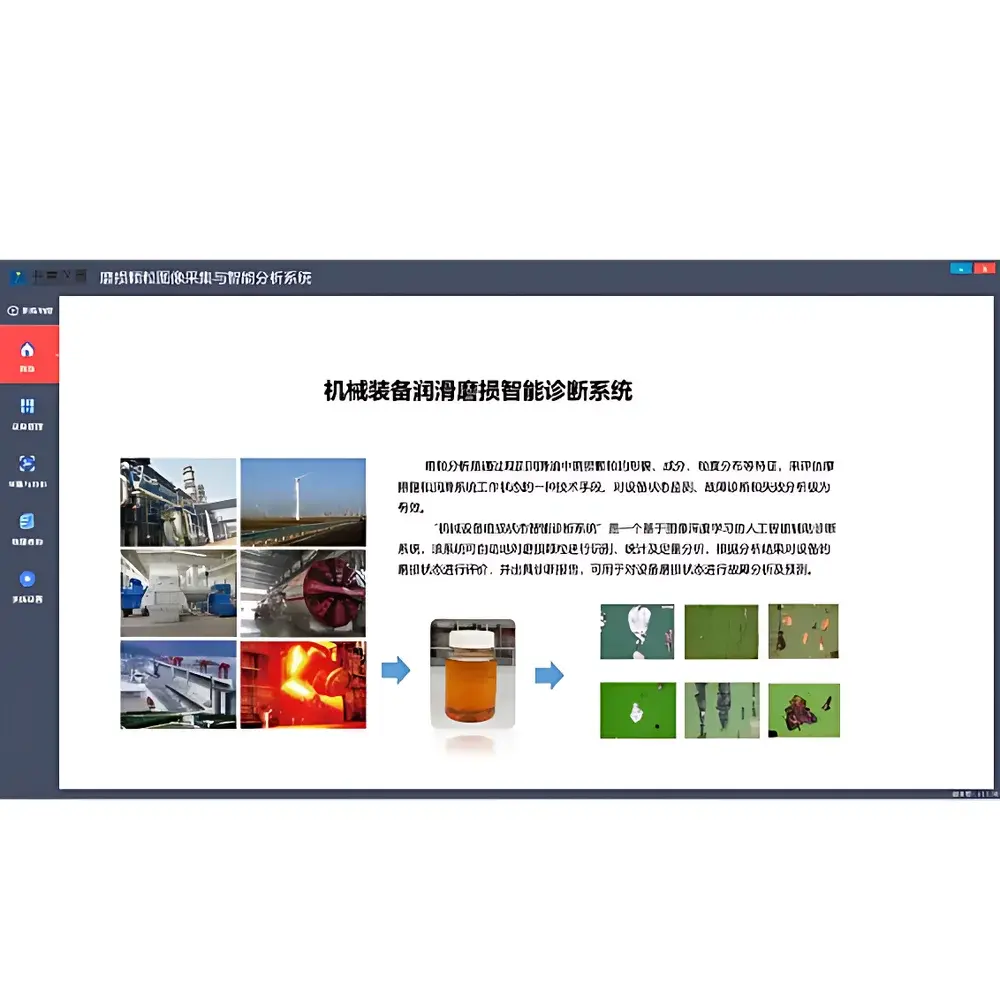
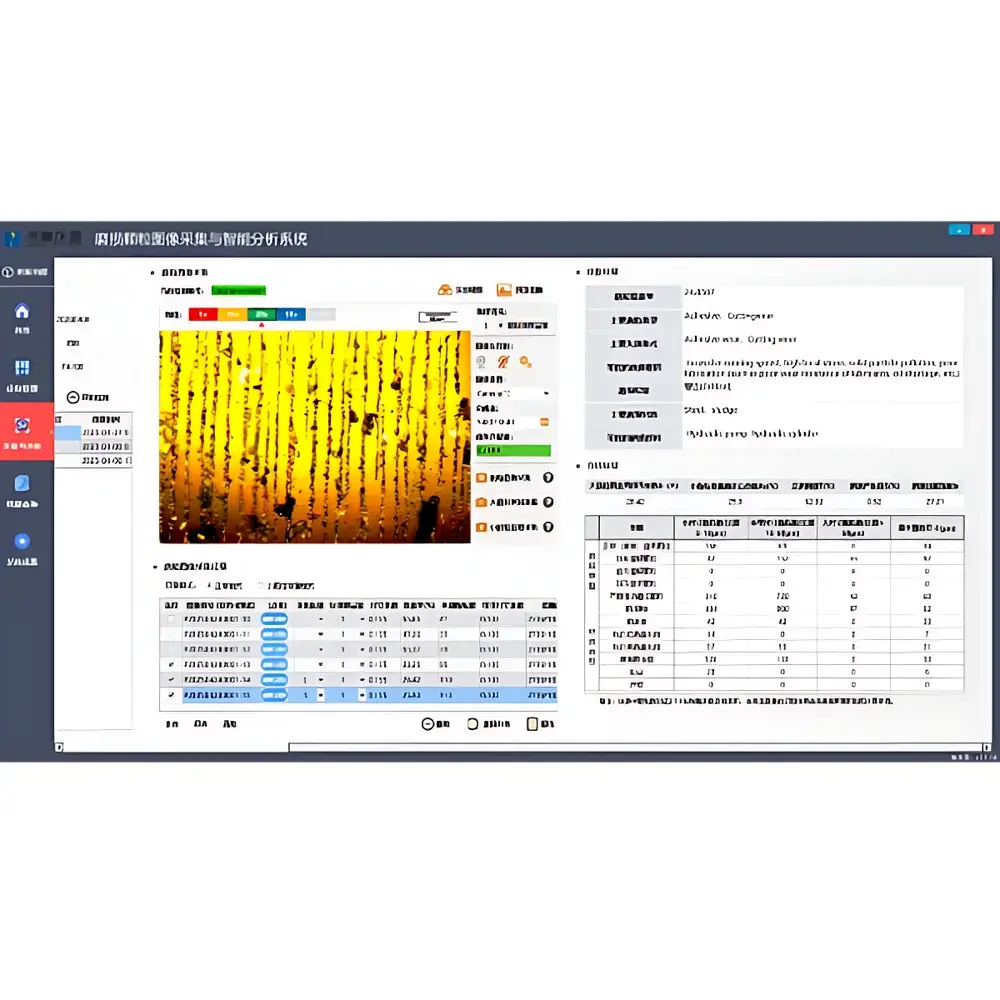
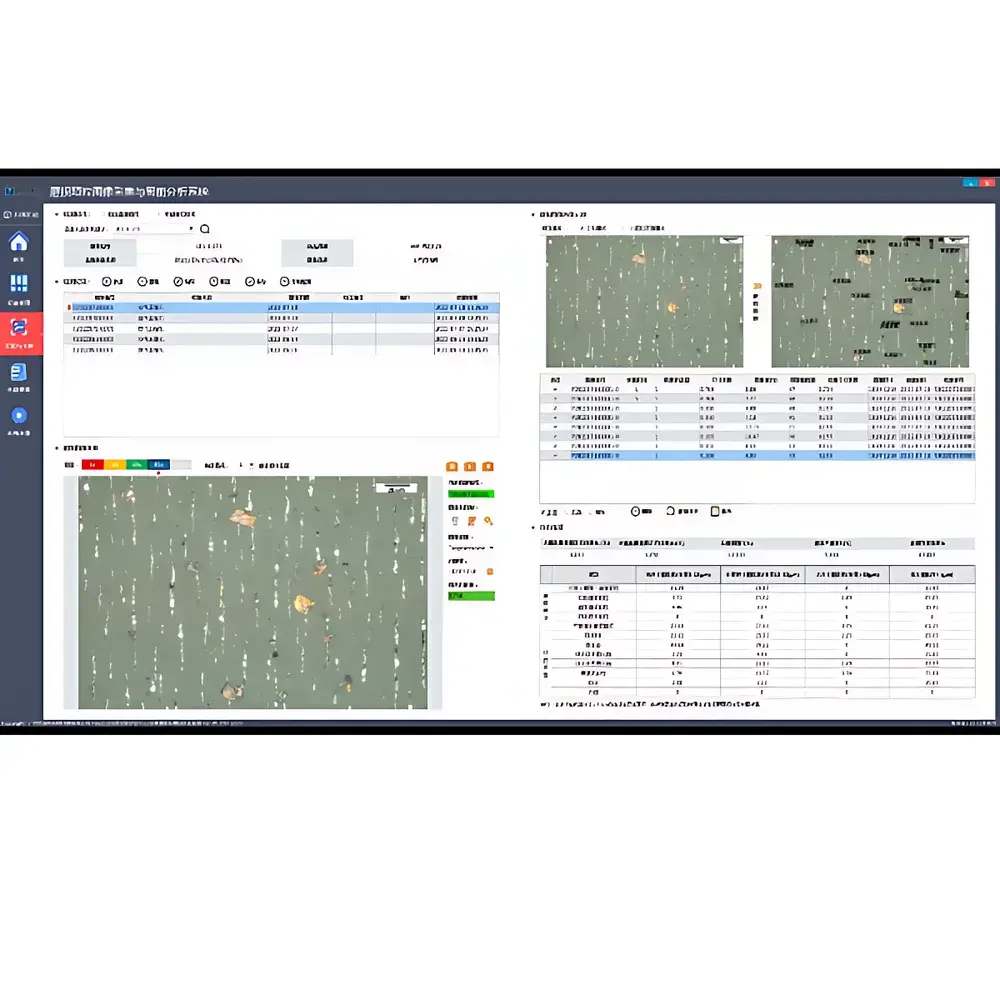
The SOOHOW INSTRUMENT Wear Particle Image Acquisition & Intelligent Analysis Software is a purpose-built digital image analysis platform engineered for condition monitoring of lubricated mechanical systems via analytical ferrography. It operates on the principle that morphology, size distribution, composition, and spatial orientation of wear debris—captured from oil samples deposited on ferrographic substrates—serve as direct indicators of machinery health, failure mode progression, and tribological behavior. The software integrates with standard optical microscopes and high-resolution scientific cameras to digitize ferrogram images, then applies convolutional neural network (CNN)-based object detection and classification models trained exclusively on real-world industrial lubricant samples. Its architecture adheres to the metrological framework defined in SH/T 0573, China’s national standard for analytical ferrography, ensuring traceability, repeatability, and alignment with internationally recognized ferrographic interpretation protocols.
Key Features
- High-fidelity image acquisition at native resolutions up to 5480 × 3648 pixels, supporting both full-frame and binning modes for optimal signal-to-noise ratio across diverse particle densities.
- Deep learning inference engine trained on >50,000 annotated wear particle images sourced from operational gearboxes, hydraulic systems, turbines, and diesel engines—validated for cross-industry generalization.
- Twelve-category particle taxonomy aligned with ASTM D7690 and ISO 4406–derived morphological descriptors: normal (cutting-type), fatigue (spalling), severe sliding (lamellar), spherical (oxidation), copper-rich, iron oxide, alloy fragments, curled, blocky, laminar, composite, and indeterminate classes.
- Automated calibration workflow using integrated micrometer-scale reference grids (0.01 mm/div), enabling pixel-to-micron conversion with sub-pixel interpolation accuracy.
- Real-time acquisition mode with configurable exposure, gain, white balance, and focus assist—optimized for dynamic capture during manual or motorized stage scanning.
- Modular report generation compliant with GLP documentation requirements, including metadata stamping (operator ID, timestamp, instrument serial, sample ID), statistical summaries (count, area%, aspect ratio, Ferrographic Severity Index), and annotated image overlays.
Sample Compatibility & Compliance
The software is validated for use with analytical ferrograms prepared using SOOHOW dual-channel analytical ferroscopes (e.g., FPA-2000), rotating ferroscopes (RFP-3000), and capillary deposition systems (CFT-1000). It accepts standard glass or polyester substrate slides and supports multi-field stitching for extended-area coverage. All image processing algorithms are developed and verified under SH/T 0573, with additional alignment to ISO 11500 (determination of particulate contamination in fluids) and ASTM D7684 (standard guide for ferrographic analysis). Audit trails, user access controls, and electronic signature support meet FDA 21 CFR Part 11 readiness requirements when deployed in regulated environments.
Software & Data Management
Built on a .NET 6 framework with SQLite and HDF5 backend storage, the software provides structured data persistence with versioned schema evolution. Raw image datasets, processed masks, classification confidence scores, and measurement logs are stored with immutable timestamps and SHA-256 checksums. Export options include CSV (for statistical analysis in JMP or Python), PDF/A-2b (archival reports), TIFF (lossless image export), and XML (machine-readable metadata per ISO/IEC 11179). RESTful API endpoints enable integration with LIMS platforms (e.g., LabWare, Thermo Fisher SampleManager) and CMMS systems via OAuth 2.0 authentication.
Applications
- Early-stage fault detection in wind turbine gearboxes through trending of fatigue vs. cutting particle ratios over time.
- Root cause analysis of hydraulic pump failures by correlating copper-rich particle concentration with bearing wear stages.
- Verification of filtration efficiency by quantifying particle count reduction across micron-size bins before/after filter elements.
- Supporting ISO 4406 fluid cleanliness certification workflows with automated particle counting in ≥4 µm(c) and ≥6 µm(c) channels.
- Research-grade tribology studies requiring morphometric quantification (e.g., roundness, convexity, Feret diameter) for wear mechanism modeling.
FAQ
Is the software compatible with non-SOOHOW ferroscopes?
Yes—it supports any microscope equipped with a USB 3.0 scientific camera (e.g., FLIR Blackfly S, Basler ace) via TWAIN and DirectShow drivers.
Does the system support multi-user role-based access control?
Yes—administrators can define operator, reviewer, and approver roles with configurable permissions for acquisition, analysis, reporting, and database maintenance.
Can particle recognition models be retrained with customer-specific data?
Yes—the software includes an optional Model Training Kit licensed separately, enabling transfer learning on proprietary oil sample libraries under NDA-compliant deployment.
What validation documentation is provided?
Each installation includes a Factory Acceptance Test (FAT) report, software verification protocol (SVP), and SH/T 0573 conformance statement signed by SOOHOW’s Quality Assurance unit.
Is cloud-based deployment supported?
No—on-premise installation only, ensuring full data sovereignty and compliance with industrial cybersecurity policies (e.g., IEC 62443 Level 1).




