PIV View DGV Doppler Global Velocimetry System
| Brand | PIV View |
|---|---|
| Origin | Germany |
| Manufacturer Type | Authorized Distributor |
| Origin Category | Imported |
| Model | DGV |
| Price Range | USD 270,000 – 410,000 (based on configuration and integration support) |
| Measurement Mode | Planar (2D/3D capable) |
| Acquisition Frequency | Low-to-Medium Repetition Rate (typically 1–10 Hz for high-energy pulsed operation) |
| Velocity Range | 0–3000 m/s |
| Absolute Velocity Accuracy | ±0.8–1.4 m/s |
| Measurement Field of View | 120 mm × 120 mm |
| Core Optical Filter | Integrated Iodine Vapor Molecular Filter with Thermal Stabilization |
| Laser Source | Narrow-Linewidth Pulsed or CW Diode-Pumped Solid-State Laser (532 nm typical) |
| Detection Architecture | Dual-Camera Configuration (Signal + Reference) |
| Compliance | Designed to support GLP-compliant experimental workflows |
Overview
The PIV View DGV Doppler Global Velocimetry System is a non-intrusive, laser-based optical diagnostic instrument engineered for quantitative, full-field velocity mapping in high-speed and hypersonic flow environments. Operating on the physical principle of laser Doppler frequency shift detection—combined with molecular absorption spectroscopy—the DGV system converts velocity-induced spectral shifts in scattered light from tracer particles into spatially resolved intensity variations via a precisely tuned iodine vapor molecular filter. Unlike conventional particle image velocimetry (PIV), which relies on cross-correlation of particle images between successive frames, DGV directly encodes instantaneous line-of-sight velocity components into pixel-intensity values, enabling single-shot, absolute velocity determination without iterative post-processing. This makes it particularly suited for transient, unsteady, or highly compressible flows where temporal resolution and phase-locking constraints limit traditional PIV applicability. The system is optimized for integration into large-scale wind tunnels, propulsion test facilities, and scramjet ground-test rigs—environments characterized by high dynamic pressure, thermal loading, optical path distortion, and limited access.
Key Features
- Single-shot, absolute velocity measurement with no need for inter-frame correlation or seeding density optimization
- Integrated iodine vapor molecular filter with active temperature stabilization (±0.05 °C), ensuring consistent spectral transmission characteristics and long-term calibration stability
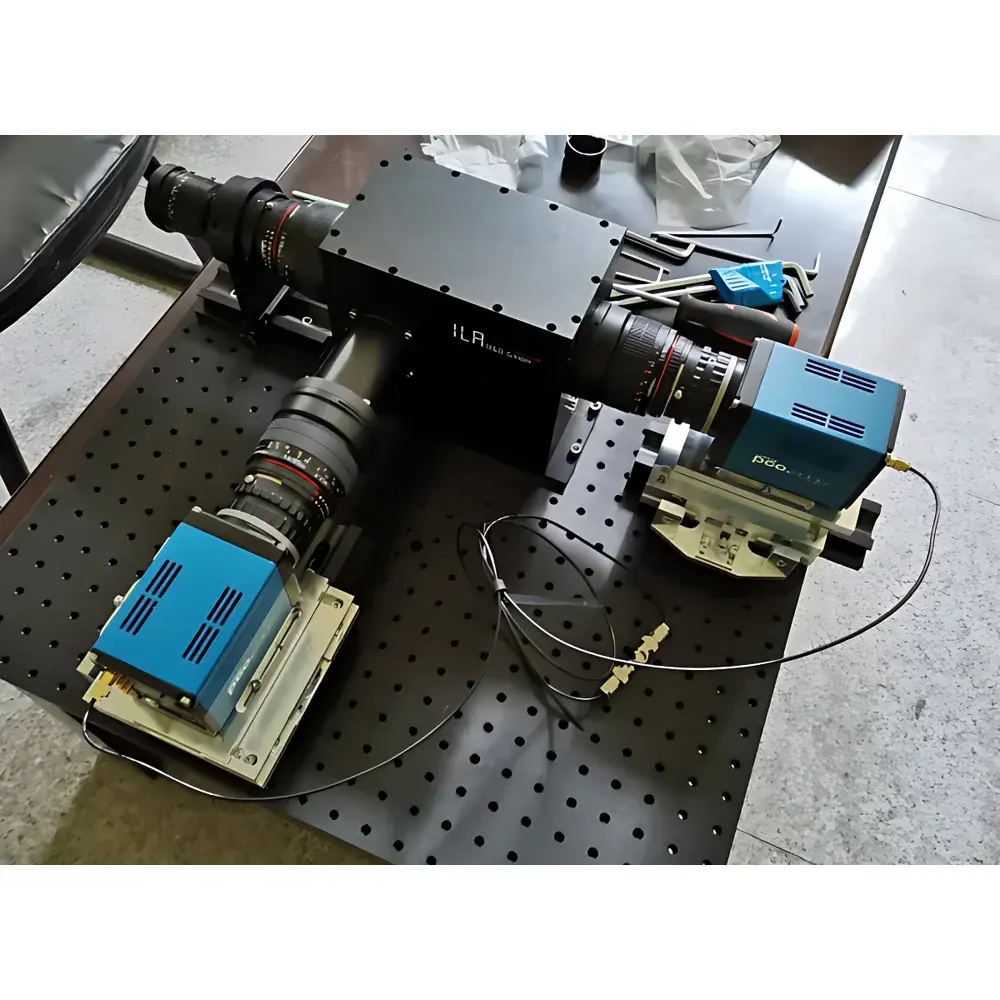
- Dual-camera architecture: signal camera (iodine-filtered) and reference camera (unfiltered or broadband-filtered) for real-time correction of laser intensity fluctuations, window fouling, and beam steering artifacts
- Narrow-linewidth laser illumination (typical Δν < 100 MHz) matched to iodine absorption lines near 532 nm, maximizing Doppler sensitivity and minimizing background interference
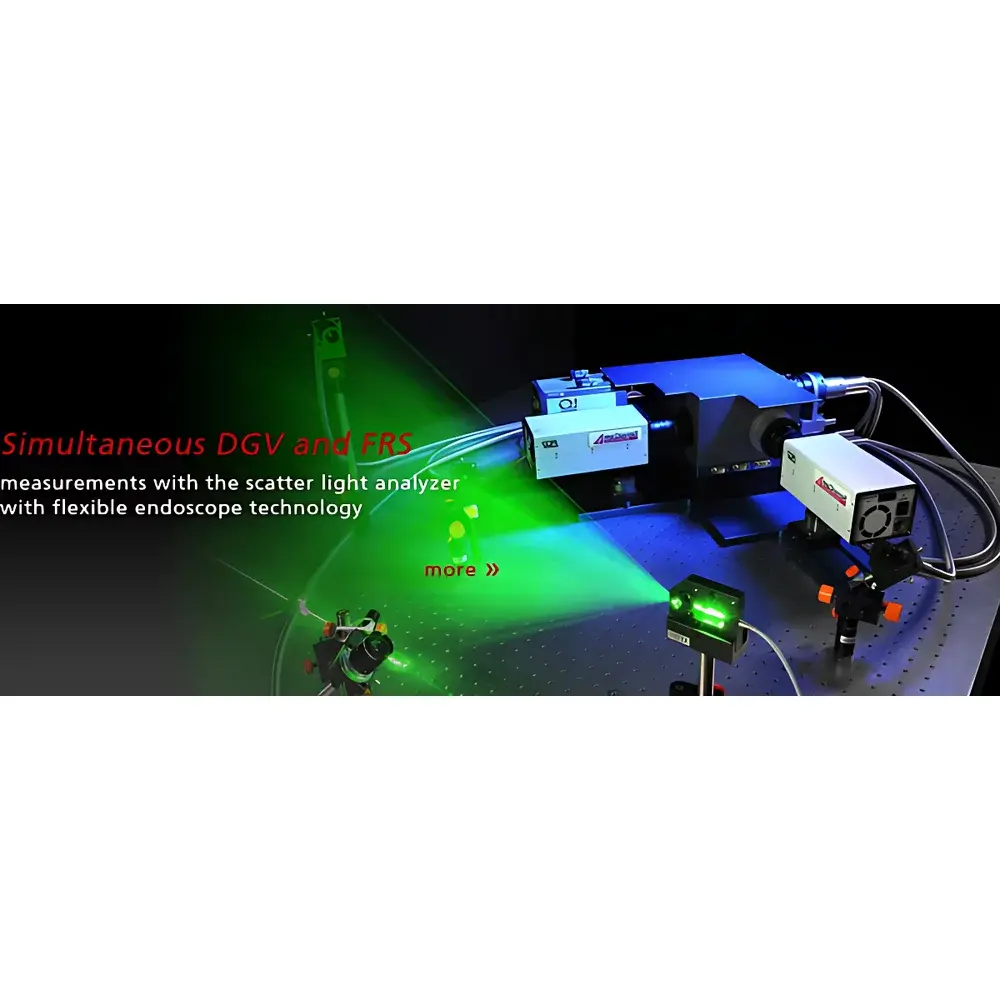
- Modular optical design with flexible light-arm configuration, enabling adaptation to constrained optical access ports and variable working distances (up to 10 m fiber-coupled delivery)
- Robust mechanical housing rated for operation in vibration-prone test cells and ambient temperature gradients up to 15 K/hour
Sample Compatibility & Compliance
The DGV system requires optically transparent, neutrally buoyant tracer particles with Mie-scattering efficiency at 532 nm—commonly titanium dioxide (TiO₂), aluminum oxide (Al₂O₃), or oil-based droplets sized between 0.5–2 µm. Particle seeding methodology is application-dependent: continuous vaporization for steady flows, pulsed injection for transient events, or fluid-phase doping for internal combustion or scramjet applications. The system complies with optical safety standards IEC 60825-1 (Class 4 laser product) and supports alignment verification per ISO 10110-7. While not a certified medical or industrial process device, its architecture conforms to principles outlined in ISO/IEC 17025 for measurement uncertainty quantification and supports audit-ready documentation for GLP and GMP-aligned aerospace R&D programs. Data provenance, acquisition timestamps, and hardware configuration logs are embedded in raw frame metadata.
Software & Data Management
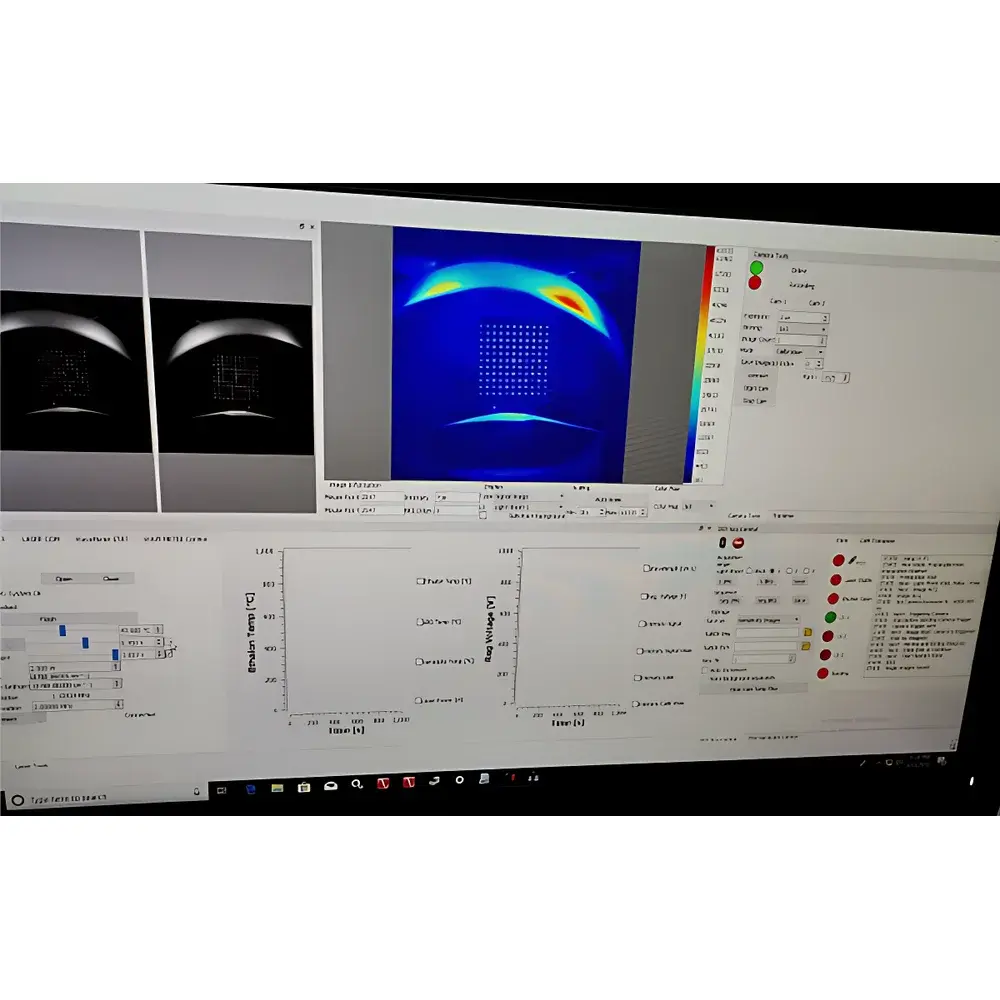
Acquisition and analysis are managed through the vendor’s proprietary DGV Control Suite—a Windows-based application supporting synchronized hardware triggering, real-time intensity normalization, and automated iodine cell temperature ramping. Raw dual-camera TIFF sequences are stored with embedded EXIF tags including laser pulse energy, filter temperature, exposure time, and geometric calibration coefficients. Post-processing includes pixel-wise intensity ratio computation (signal/reference), lookup-table-based velocity calibration using NIST-traceable iodine absorption spectra, and optional vector reconstruction for 3D velocity fields when combined with stereoscopic imaging geometry. Export formats include HDF5 (with metadata schema compliant with CF-1.8 conventions), ASCII matrix files, and VTK for CFD visualization interoperability. Audit trail functionality records all user-initiated parameter changes, satisfying requirements analogous to FDA 21 CFR Part 11 for electronic records in regulated development environments.
Applications
- Hypersonic boundary layer transition studies in Mach 5–12 wind tunnels
- Scramjet isolator and combustor flowfield characterization under realistic fuel-air mixing conditions
- Unsteady shock-wave/boundary-layer interaction diagnostics in impulse facilities
- Velocity profiling in high-enthalpy arc-jet nozzles and plasma wind tunnels
- Validation of high-fidelity LES and DNS simulations requiring point-wise absolute velocity truth data
- Industrial gas turbine compressor and turbine vane wake surveys under high-pressure-ratio conditions
FAQ
What is the fundamental difference between DGV and standard PIV?
DGV measures absolute line-of-sight velocity via Doppler-induced spectral shifts converted to intensity by a molecular filter; PIV infers displacement from particle image correlation between two exposures. DGV requires no inter-frame timing synchronization and delivers single-shot velocity magnitude without ambiguity.
Can DGV resolve three-component velocity vectors?
Yes—when implemented in stereoscopic configuration using two orthogonally oriented DGV subsystems or combined with a secondary imaging axis, full 3C velocity decomposition is achievable within the same field of view.
How is calibration performed and maintained?
Calibration uses NIST-referenced iodine absorption line databases and in-situ reference measurements at known velocities (e.g., rotating calibration disk or calibrated jet). Temperature drift compensation is applied continuously during acquisition using integrated thermistor feedback.
Is the system suitable for harsh environments such as engine test cells?
Yes—the iodine cell assembly, laser head, and camera housings are designed for operation in ambient temperatures from 10–40 °C and relative humidity ≤80% non-condensing. Optional purge interfaces support nitrogen blanketing in corrosive or particulate-laden atmospheres.
What level of technical support and training is provided?
PIV View offers on-site installation commissioning, two-day operator certification workshops, and remote diagnostics support. Application-specific protocol development is available through collaborative engineering engagements.