
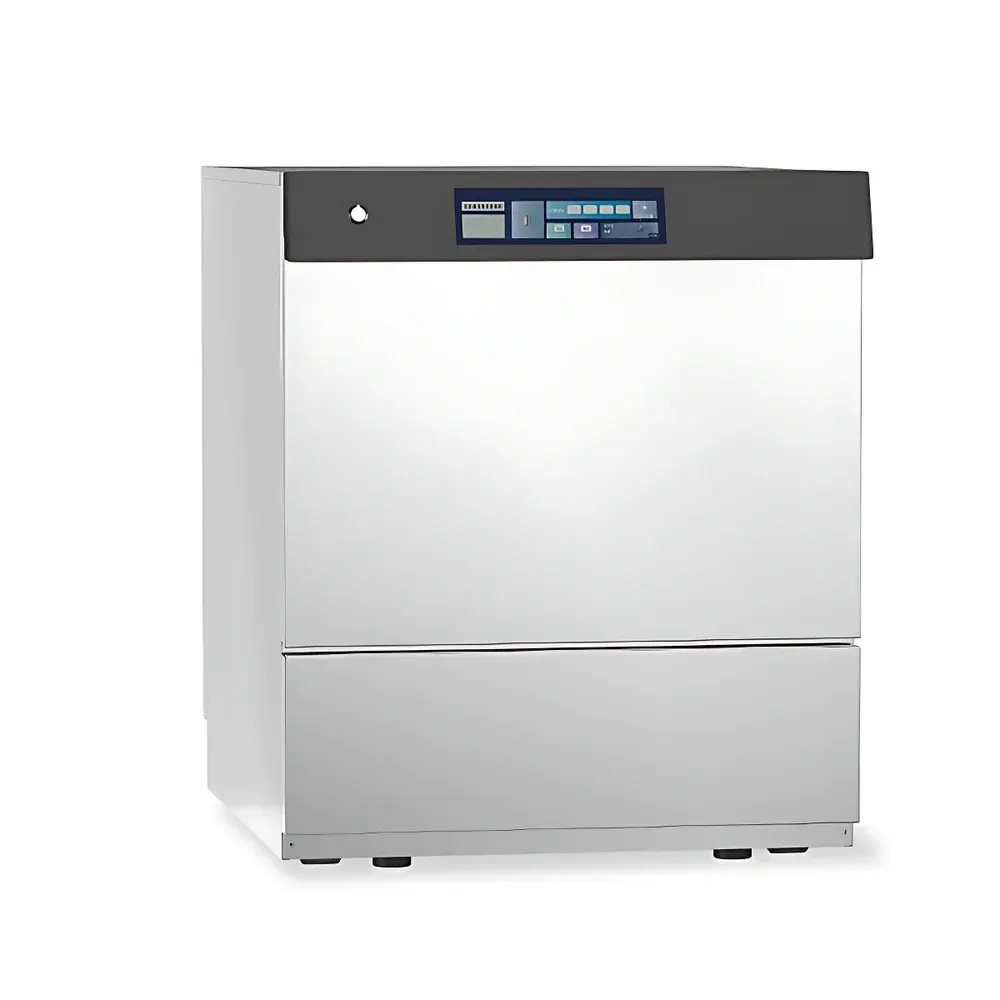
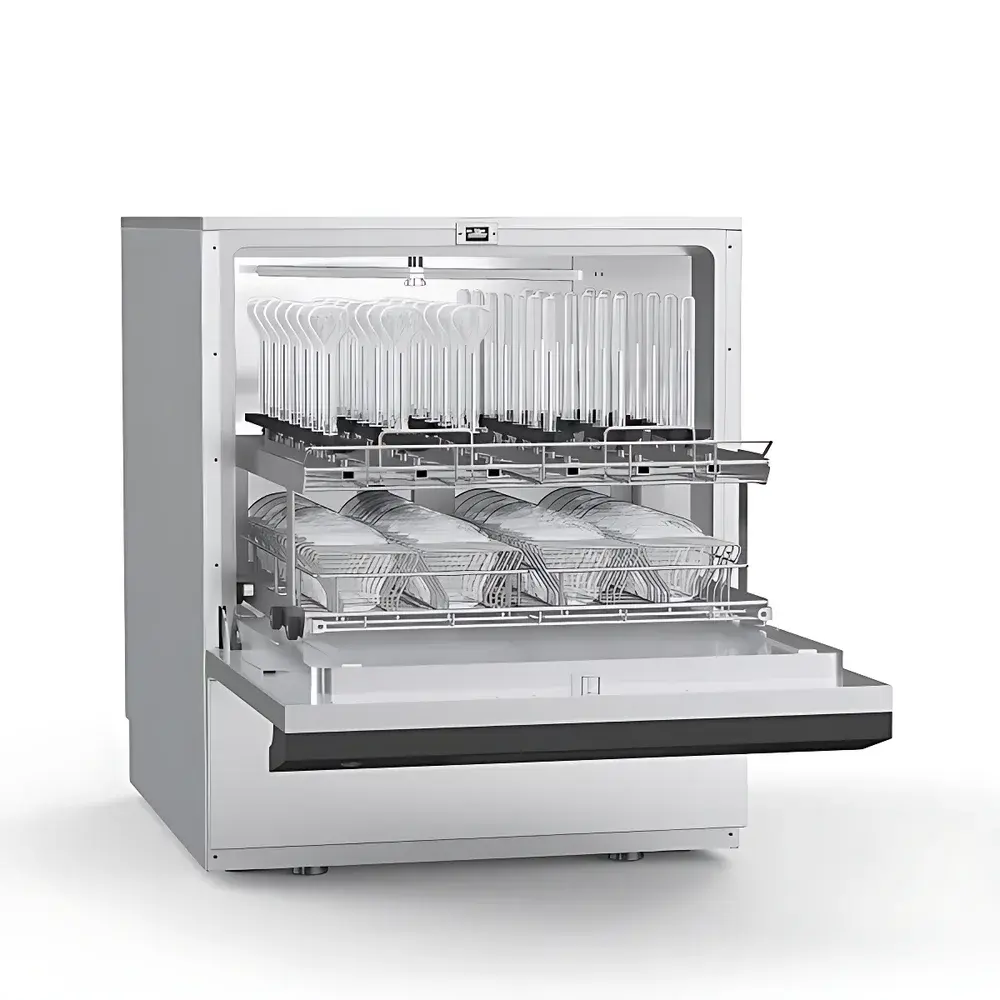
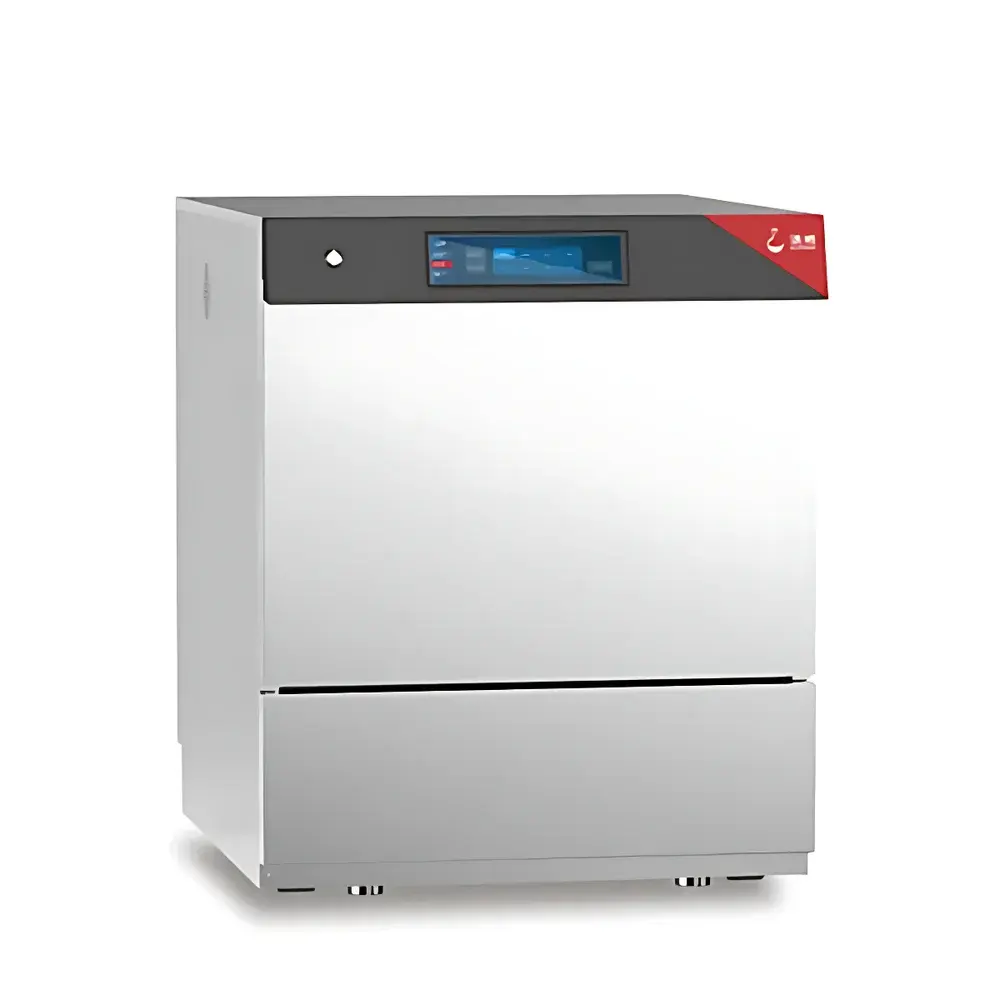
EURPING Q520D Laboratory Bottle Washer
| Brand | EURPING |
|---|---|
| Origin | Tianjin, China |
| Manufacturer Type | Direct Manufacturer |
| Product Category | Domestic (China-made) |
| Model | Q520D |
| Chamber Volume | 158 L |
| Heating Power | 4 kW |
| Maximum Cleaning Temperature | 93 °C |
| Compatible Cleaning Agents | Alkaline & Acidic Detergents |
| External Dimensions (L×W×D) | 639 × 726 × 765 mm |
| Power Supply | 220 V, 50 Hz |
| Max. Power Consumption | 5 kW |
| Control Interface | 8.8-inch Touchscreen |
| Predefined Programs | 30 |
| Customizable Programs | 120 |
| Circulation Flow Rate | 0–400 L/min (VFD-controlled) |
| Construction | 304 Stainless Steel Exterior / 316L Stainless Steel Chamber |
| Door Mechanism | Motorized Electric Lock (EULA-compliant) |
| Drying Method | Forced-air Cabinet-style Drying |
| Filtration | Multi-stage Particulate Filtration with Dedicated Debris Collection |
| Water Supply | Rear-mounted Integrated Pure Water Booster Pump |
| Rinse Delivery | FL-EXCH Modular Rack System with Dual-channel Detergent Dosing |
Overview
The EURPING Q520D Laboratory Bottle Washer is an engineered solution for high-throughput, traceable, and validated cleaning of glassware and plastic labware in regulated research, quality control, and GMP-compliant environments. Designed around a closed-loop circulation principle, the system delivers reproducible cleaning performance through precisely controlled temperature, flow dynamics, chemical dosing, and mechanical action—critical parameters defined by ISO 15883-1 (washer-disinfectors for medical devices) and aligned with laboratory best practices referenced in ASTM E2892 and USP . Its 158 L monolithic 316L stainless steel chamber eliminates weld seams—reducing microbial harborage points and enabling full validation of cleaning efficacy per ICH Q5C and FDA guidance on cleaning validation. The absence of internal heating elements in direct contact with water (replaced by jacketed stainless steel piping with indirect heating) ensures uniform thermal distribution and eliminates localized scaling or hot-spot degradation of sensitive components.
Key Features
- Monolithic 316L stainless steel wash chamber—press-formed, zero-weld construction—designed for corrosion resistance, cleanability, and compliance with ASME BPE surface finish standards (Ra ≤ 0.8 µm).
- 8.8-inch industrial-grade touchscreen HMI with real-time display of cycle progress, fluid pressure, fill volume, detergent concentration status, and component-level operational logs.
- Dual-channel programmable detergent delivery system supporting sequential alkaline pre-rinse, acidic neutralization, and final ultra-pure water rinse—fully configurable per load type and residue profile.
- VFD-controlled circulation pump (0–400 L/min range) with integrated pressure transducer feedback loop to maintain consistent impingement force across all rack positions, independent of load density.
- Motorized EULA-compliant electric door lock with interlocked safety cutoff—prevents opening during active heating, pressurization, or chemical dosing phases.
- Multi-stage filtration architecture including coarse particulate sieve, fine mesh screen, and dedicated debris collection sump—minimizing risk of pump cavitation and nozzle clogging during extended operation.
- Forced-air cabinet drying system with adjustable temperature ramp profiles (up to 93 °C), ensuring rapid moisture removal without thermal stress on borosilicate or polypropylene substrates.
Sample Compatibility & Compliance
The Q520D accommodates standard laboratory vessels—including volumetric flasks (10 mL to 2 L), graduated cylinders, conical flasks, Erlenmeyer flasks, test tubes, pipettes (with dedicated holders), wide-mouth bottles, and narrow-neck containers—via its modular FL-EXCH rack system. Racks are mechanically interchangeable and designed for optimal spray coverage and drainage. All cleaning cycles meet documented evidence requirements under GLP and GMP frameworks: every run generates a tamper-resistant electronic record—including timestamps, parameter deviations, alarm events, and operator ID—stored locally with optional export to LIMS via USB or Ethernet. System validation documentation supports IQ/OQ/PQ protocols compliant with ISO 13485 and EU Annex 15.
Software & Data Management
Embedded microcontroller firmware provides audit-trail functionality per FDA 21 CFR Part 11 requirements, including electronic signatures, user access levels (admin/operator/auditor), and immutable cycle logs. Data retention spans ≥10,000 cycles; logs include real-time monitoring of pump current draw, heater duty cycle, inlet water conductivity, and detergent pump actuation counts. Optional RS-485 or Modbus TCP integration enables centralized fleet monitoring in multi-unit lab deployments. Software permits export of CSV-formatted reports for regulatory submission or internal review—no proprietary viewers required.
Applications
This washer serves laboratories requiring repeatable residue removal from analytically sensitive equipment—particularly in pharmaceutical QC labs performing HPLC vial cleaning, clinical diagnostics facilities processing sample collection tubes, environmental testing labs handling EPA Method-compliant glassware, and academic core facilities managing shared instrumentation. Its programmability supports method-specific cleaning for organophosphate residues, protein fouling, heavy metal traces, and endotoxin removal—validated using ATP bioluminescence, colorimetric dye tests, or gravimetric residue analysis.
FAQ
Does the Q520D support automated validation reporting for GMP audits?
Yes—each cycle generates a digitally signed PDF report containing critical parameters, deviations, and pass/fail flags against predefined acceptance criteria.
Can the machine operate with deionized water only, without tap water input?
Yes—the integrated pure water booster pump accepts feed from DI or WFI sources; inlet conductivity monitoring ensures rinse purity thresholds are maintained.
Is remote monitoring or software update capability available?
Firmware updates are performed via USB; remote monitoring requires optional Ethernet module and third-party SCADA integration.
What is the maximum allowable load weight per cycle?
Rated capacity is 35 kg per load, optimized for uniform spray coverage and thermal recovery time.
How often does the multi-stage filter require maintenance?
Coarse filters are inspected daily; fine screens and sump debris trays are cleaned after every 5–10 cycles depending on soil load.
Related Products



