
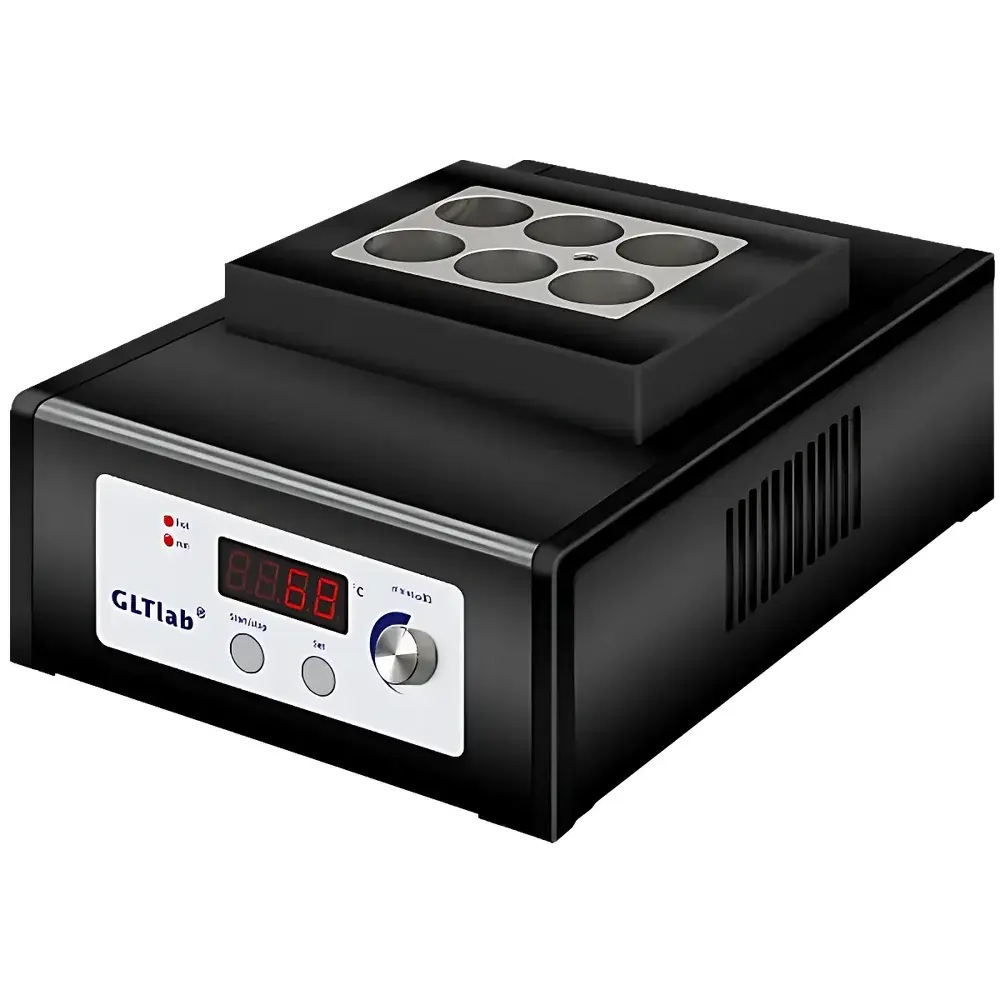
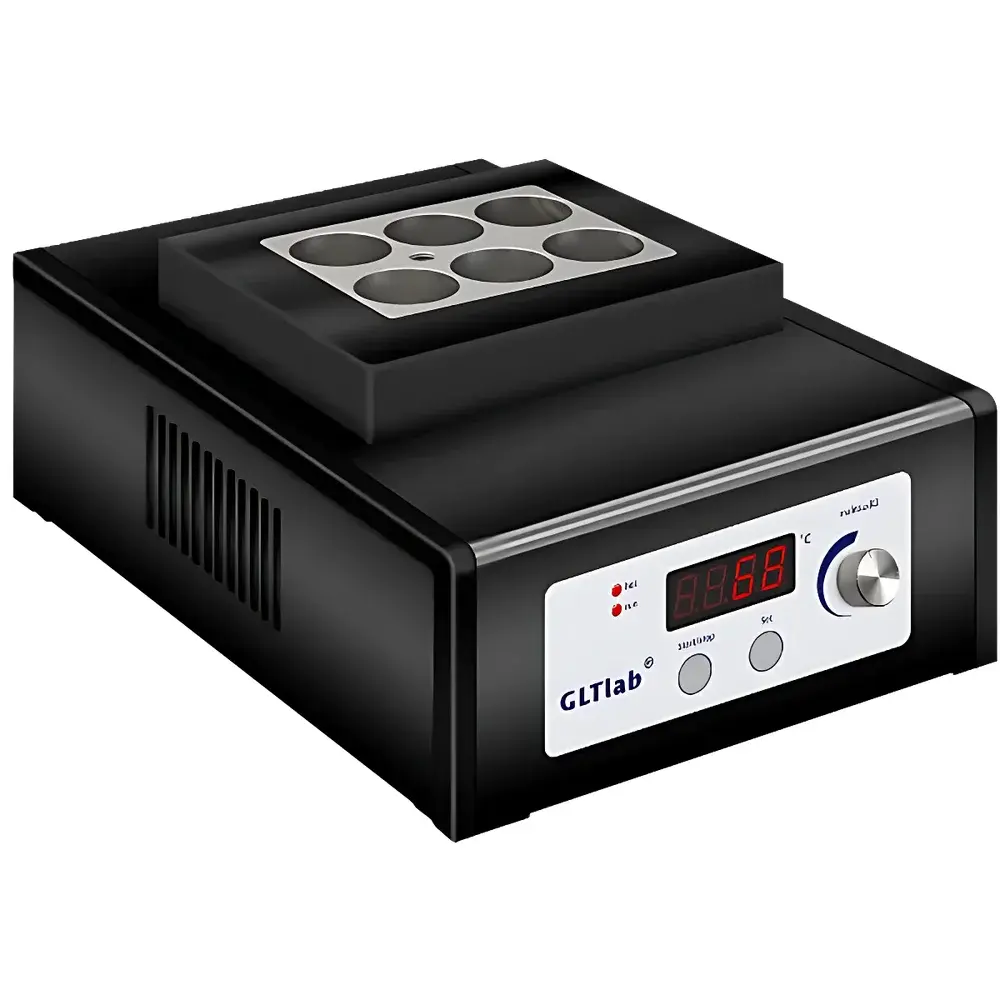
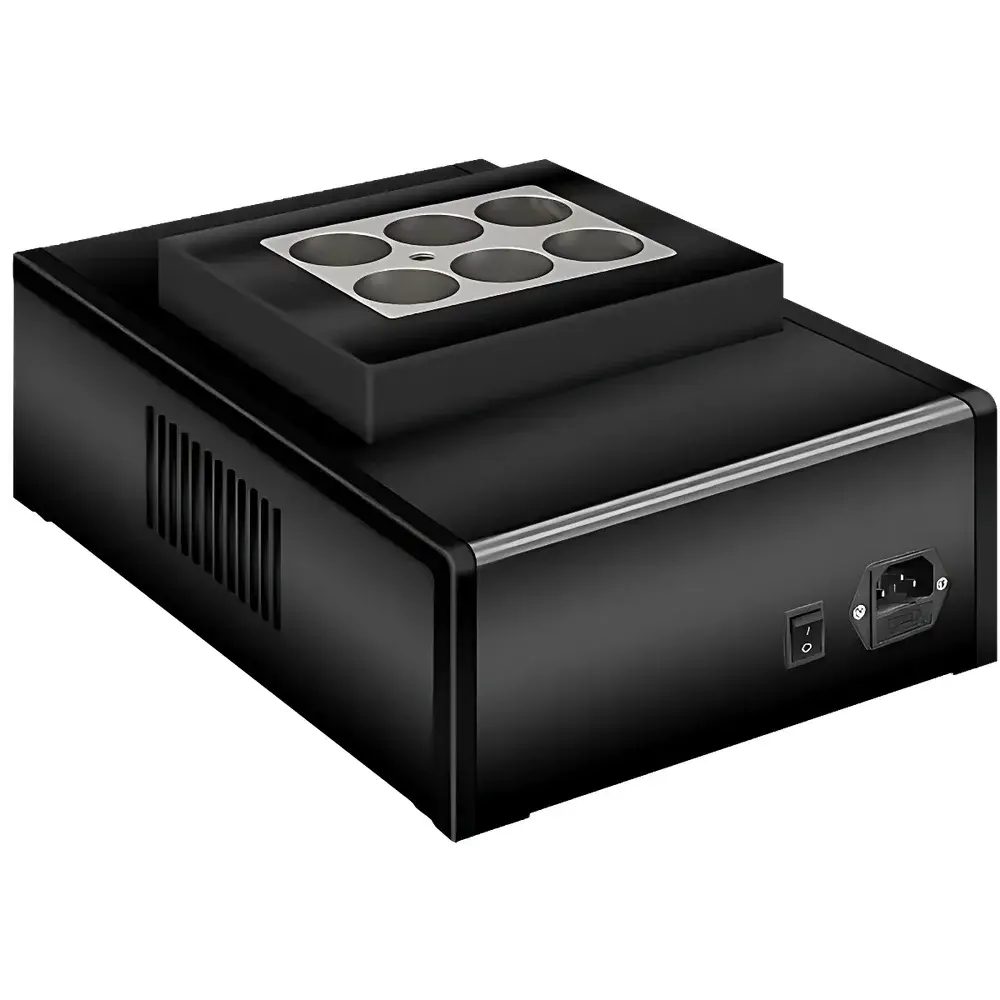
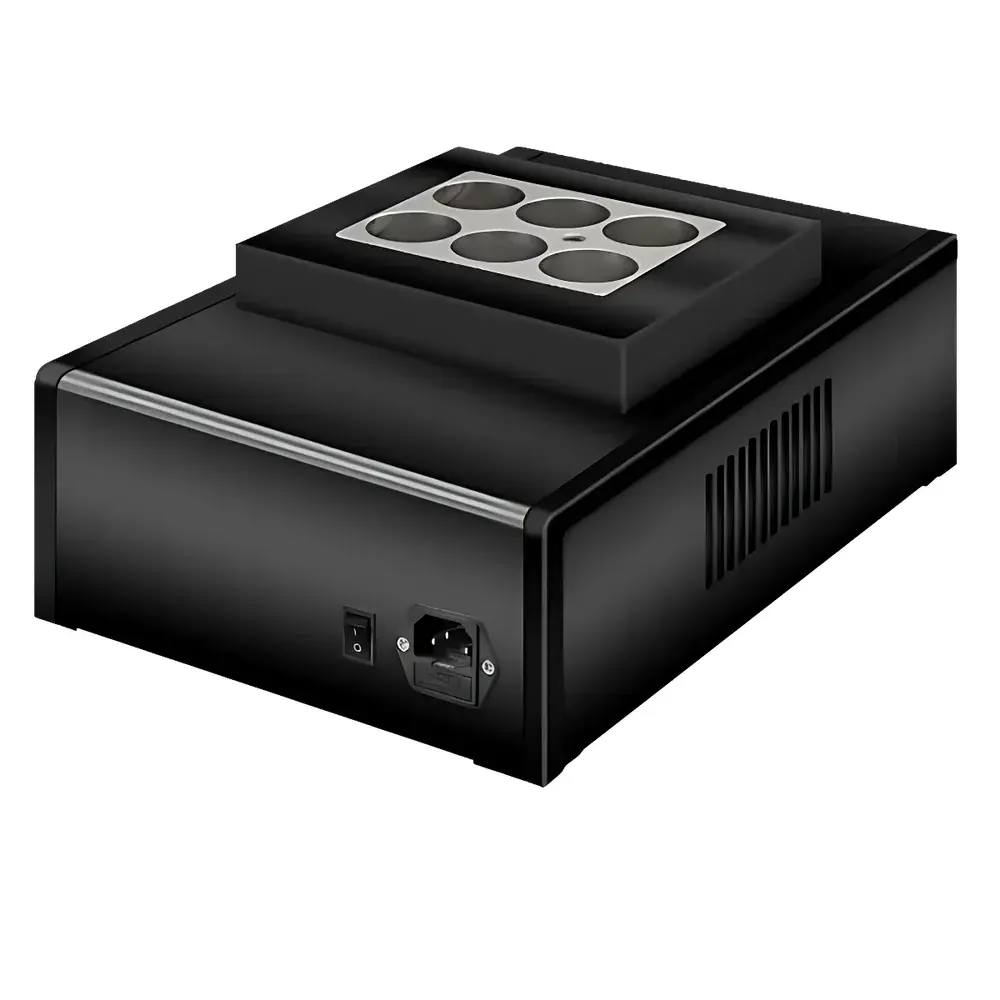
GLTlab BH-601M Mini Stainless Steel Digital Constant-Temperature Metal Bath
| Brand | GLTlab |
|---|---|
| Origin | Guangdong, China |
| Manufacturer Type | Direct Manufacturer |
| Country of Origin | China |
| Model | BH-601M |
| Temperature Range | 35–200 °C |
| Temperature Accuracy | ±0.1 °C |
| Heating Time to 100 °C | ≤15 min |
| Dimensions (W×D×H) | 150×200×130 mm |
| Net Weight | 3 kg |
| Power Rating | 300 W |
| Input Voltage/Frequency | 220 V AC, 50/60 Hz |
| Control Interface | LED Digital Display with PID Algorithm |
| Heating Block | Standard Aluminum Block (GB-compliant) |
Overview
The GLTlab BH-601M Mini Stainless Steel Digital Constant-Temperature Metal Bath is a compact, precision-engineered thermal platform designed for consistent and reliable sample incubation, enzymatic reactions, DNA denaturation, reagent warming, and other temperature-sensitive laboratory protocols. Unlike water baths, metal baths utilize direct conductive heating via a solid aluminum heating block—ensuring faster thermal response, reduced contamination risk, and elimination of evaporation-related variability. The BH-601M employs a closed-loop PID (Proportional-Integral-Derivative) temperature control algorithm to maintain setpoint stability within ±0.1 °C across its full operating range of 35–200 °C. Its all-stainless-steel housing provides corrosion resistance, mechanical durability, and compatibility with routine lab cleaning agents and disinfectants—meeting basic hygiene requirements for shared core facilities and regulated QC environments.
Key Features
- Compact footprint (150 × 200 × 130 mm) optimized for benchtop space-constrained labs, biosafety cabinets, and mobile analytical setups.
- PID-controlled aluminum heating block conforming to GB/T 22879–2008 (Chinese national standard for laboratory heating equipment), ensuring uniform thermal distribution and minimal axial/radial gradient (<0.3 °C at 100 °C).
- Digital LED interface with intuitive single-knob parameter navigation—enabling rapid setpoint adjustment, real-time temperature readout, and visual status indication (heating/ready/error).
- 300 W high-efficiency resistive heating system achieving ≤15 minutes to reach 100 °C from ambient (25 °C), with overshoot limited to <1.2 °C during ramp-up.
- Stainless steel (AISI 304) chassis and block mounting structure—resistant to oxidation, organic solvents, and repeated thermal cycling between 35–200 °C.
- No consumables or fluid maintenance required; no risk of leakage, microbial growth, or bath medium degradation over time.
Sample Compatibility & Compliance
The BH-601M accommodates standard microcentrifuge tubes (0.2–2.0 mL), PCR strips, 1.5/2.0 mL screw-cap vials, and small-volume cuvettes using interchangeable GB-standard aluminum blocks (block geometry specified per order). It supports ISO/IEC 17025-accredited laboratories in maintaining traceable thermal conditions for method validation steps requiring controlled pre-incubation (e.g., ELISA plate preparation, restriction digest setup, or RNA stabilization workflows). While not certified to IEC 61010-1:2012 Ed.3 as a standalone safety-certified instrument, its design adheres to general electrical safety principles—including double insulation, thermal cutoff protection (120 °C fail-safe), and grounded chassis construction. For GLP/GMP-aligned environments, users may document calibration intervals using external NIST-traceable thermometers (e.g., Fluke 1523 or equivalent) and retain records per internal SOPs.
Software & Data Management
The BH-601M operates as a stand-alone analog-digital hybrid controller with no embedded firmware, network interface, or data logging capability. This architecture eliminates cybersecurity exposure, software obsolescence, and regulatory validation overhead associated with connected instruments. All operational parameters are manually entered and retained locally on power cycle. For labs requiring electronic recordkeeping, integration is supported via external USB/RS-232 temperature loggers (e.g., Omega OM-DAQPRO-5300 series) paired with validated third-party acquisition software compliant with FDA 21 CFR Part 11 audit trail requirements. GLTlab provides a factory calibration certificate (as-delivered accuracy verification at 35, 75, and 150 °C) upon request—suitable for initial IQ/OQ documentation.
Applications
- Pre-warming of diagnostic reagents (e.g., immunoassay conjugates, lateral flow buffers) prior to assay initiation.
- Controlled denaturation of nucleic acid samples in molecular biology workflows, including plasmid linearization and probe hybridization steps.
- Enzyme activation and kinetic assay conditioning (e.g., Taq polymerase, restriction endonucleases, phosphatases).
- Standardization of viscosity reference materials prior to rheological measurement in QC labs.
- Stabilization of thermolabile standards during calibration of HPLC autosamplers or GC injectors.
- Supporting ASTM D5293 (cold cranking simulator) sample preconditioning in petroleum testing labs where dry-block alternatives are preferred over oil baths.
FAQ
Does the BH-601M support external temperature probes for independent verification?
Yes—its open-top block design allows insertion of calibrated PT100 or thermistor probes without interference. Users commonly employ handheld thermometers (e.g., Testo 110) for periodic accuracy checks.
Is the aluminum heating block removable for cleaning or replacement?
Yes—the block is mechanically secured with stainless fasteners and can be detached without tools. Replacement blocks (including custom-drilled configurations) are available under GLTlab part numbers.
Can the unit operate continuously at 200 °C?
Yes—rated for indefinite operation within its full 35–200 °C range. Thermal cut-off protection activates only if internal sensor failure occurs.
What is the recommended recalibration frequency?
Per ISO/IEC 17025:2017 Clause 7.8.2, calibration interval should be determined by usage intensity and criticality; typical practice is every 6–12 months or after 200 operational hours, whichever occurs first.
Is the BH-601M suitable for use in Class II biosafety cabinets?
Yes—its low electromagnetic emission profile, absence of moving parts or fluid reservoirs, and compact dimensions make it compatible with most BSC airflow specifications when placed centrally on the work surface.



