
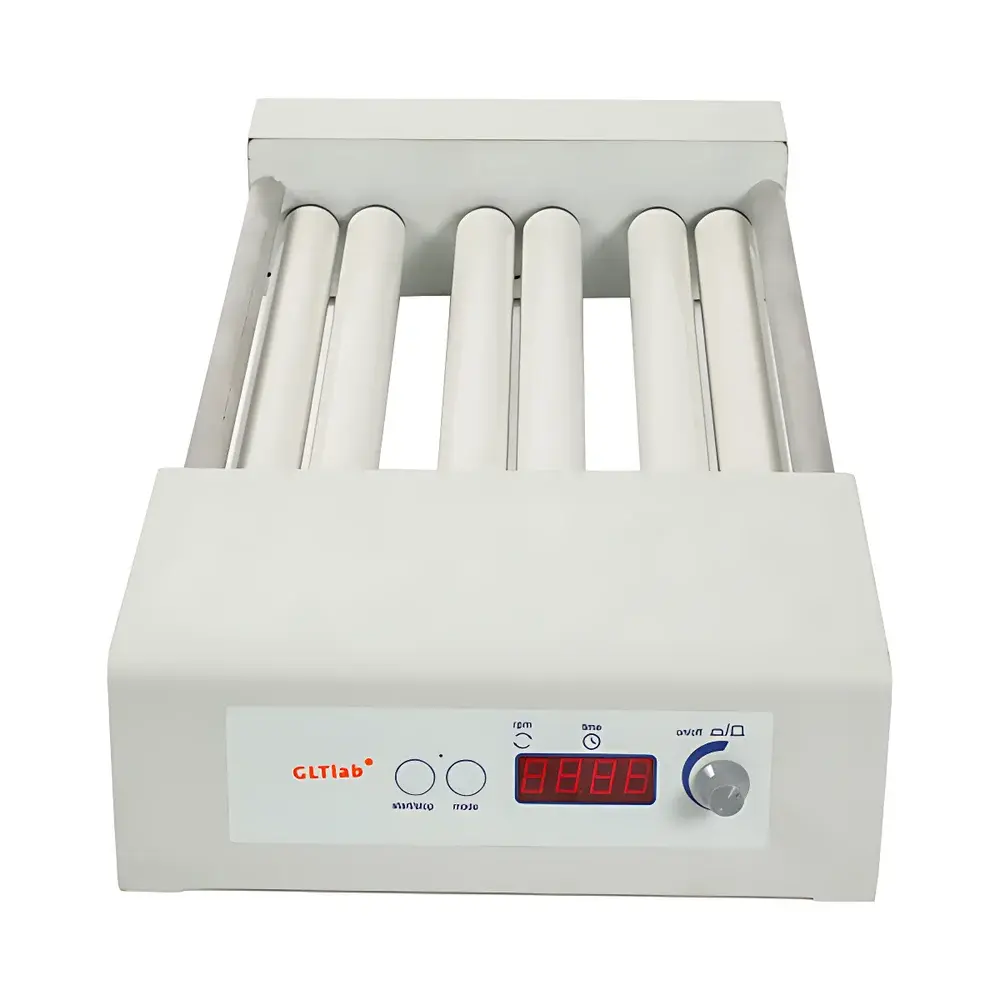
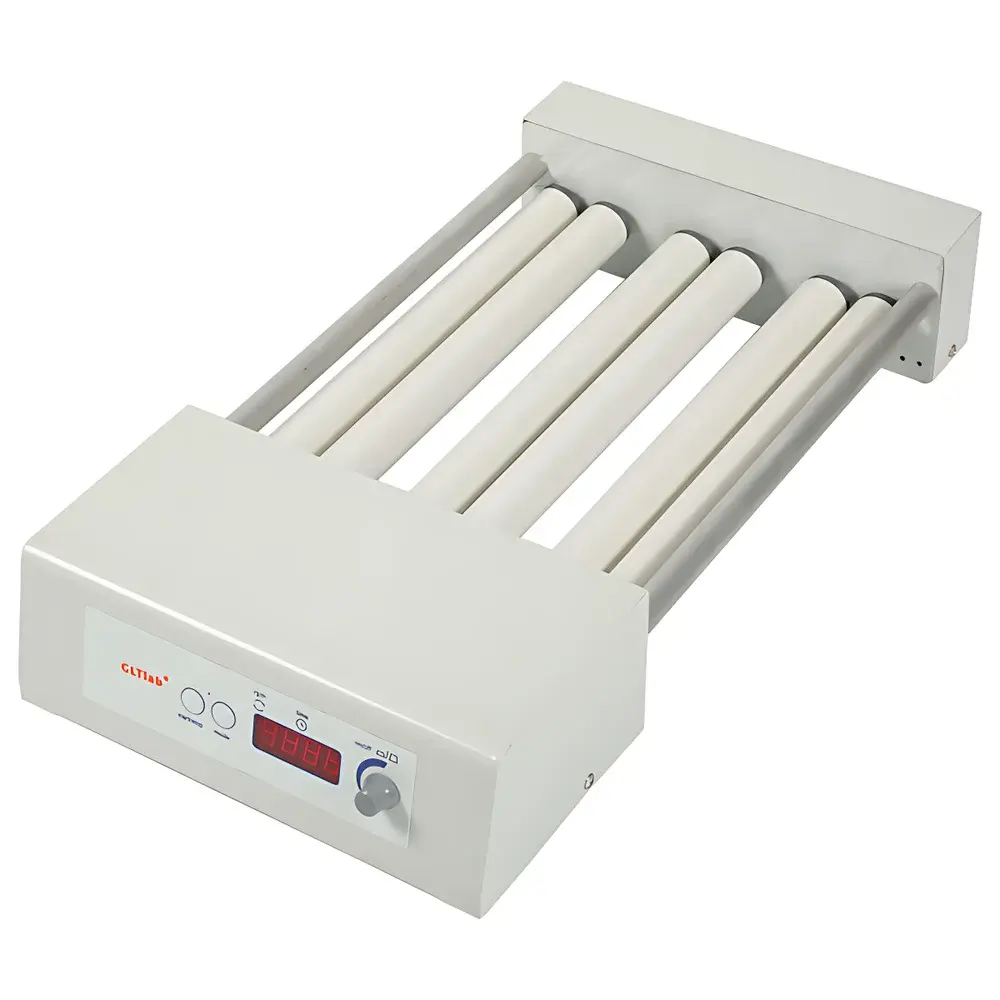
GLTLab TR-6 Rotary Roller Mixer
| Brand | GLTLab |
|---|---|
| Model | TR-6 |
| Roller Count | 6 |
| Speed Range | 5–300 rpm |
| Load Capacity | 10 kg |
| Timer Range | Up to 200 h |
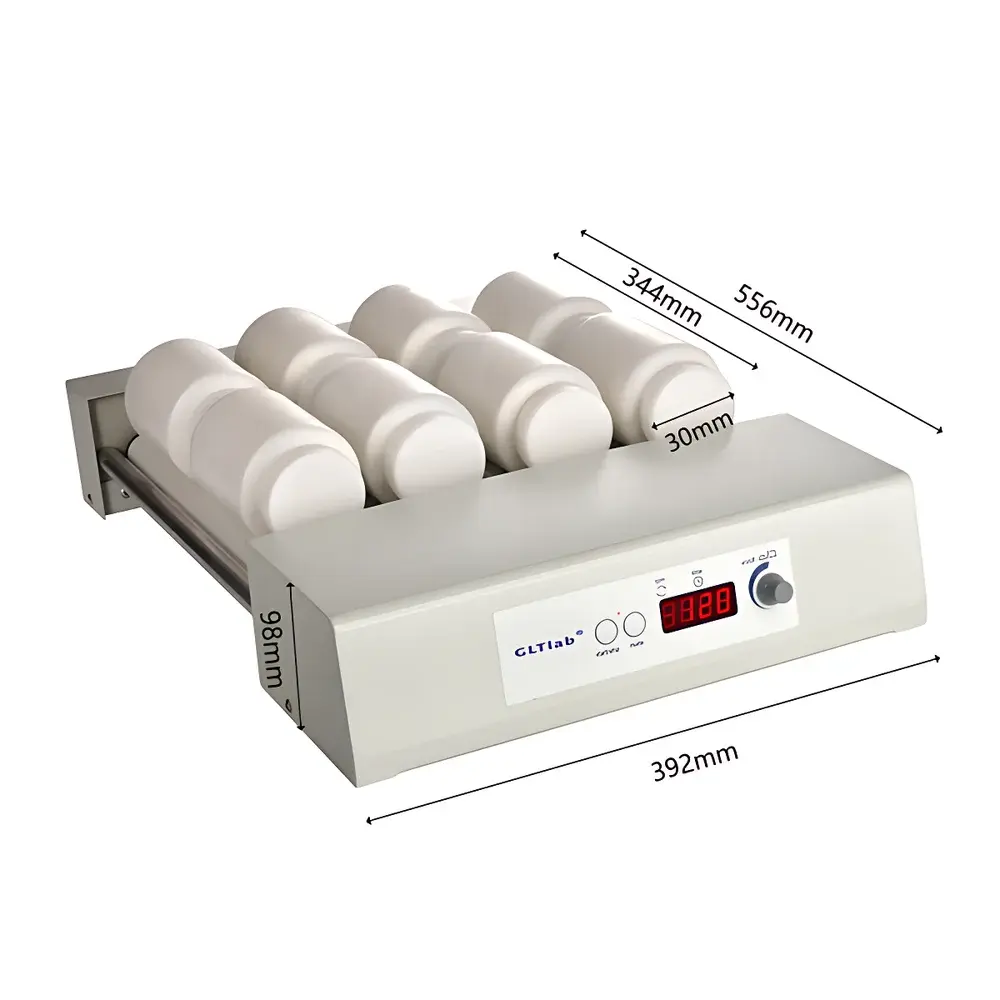
| Roller Dimensions | 340 × 30 mm |
| Footprint (W×D×H) | 556 × 286 × 98 mm |
| Net Weight | 7 kg |
| Control Type | Digital Microprocessor |
| Origin | Guangdong, China |
| Manufacturer | GLTLab (Guoli Tian Instrument Co., Ltd.) |
Overview
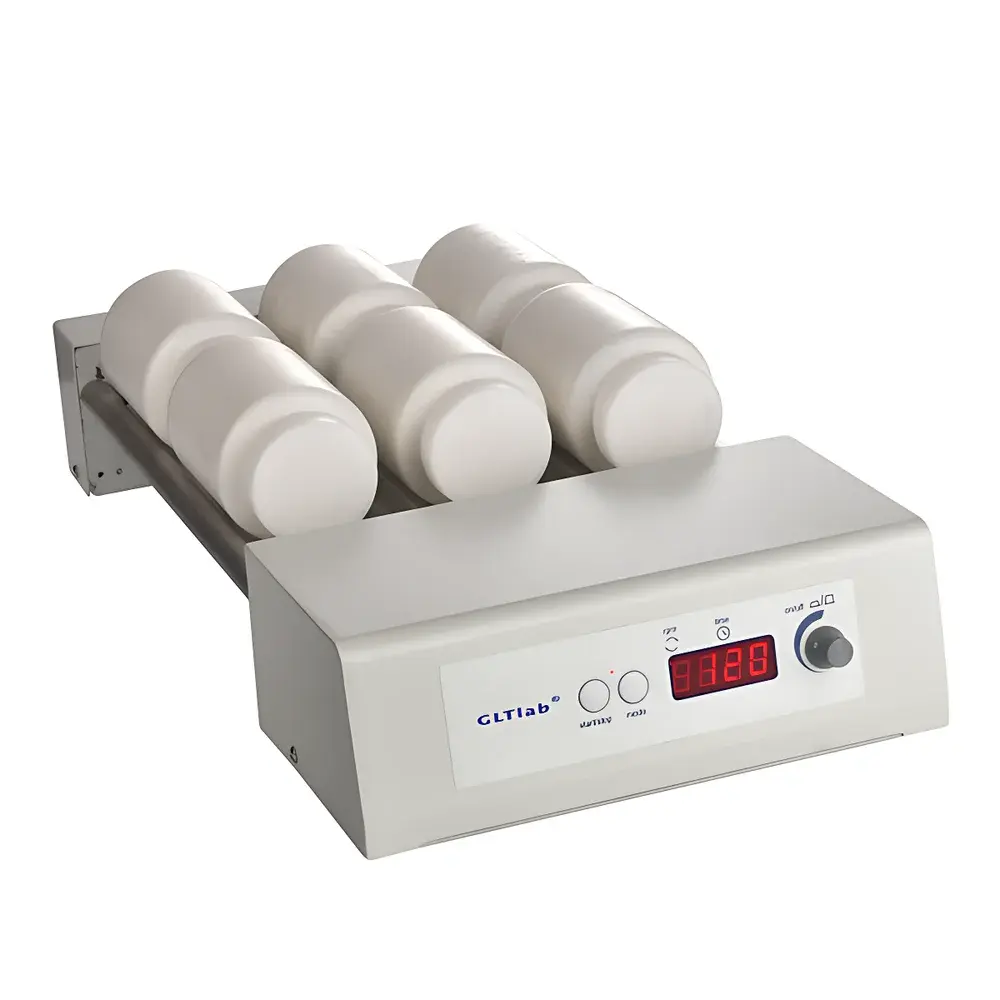
The GLTLab TR-6 Rotary Roller Mixer is an industrial-grade, digitally controlled laboratory mixer engineered for reproducible, low-shear homogenization of viscous and heterogeneous materials. It operates on the principle of continuous axial rotation—where sample containers (e.g., glass vials, stainless-steel jars, or cylindrical mixing cans) are mounted horizontally on parallel rollers that rotate synchronously at adjustable speeds. Unlike orbital shakers or vortex mixers, the TR-6 delivers gentle yet effective agitation through rolling motion, minimizing foaming, particle attrition, and thermal degradation—critical for sensitive battery slurries, polymer composites, and pharmaceutical suspensions. Its robust aluminum-alloy frame, precision-machined roller shafts, and sealed brushless DC motor ensure long-term stability under repeated high-load operation. Designed specifically for R&D labs and pilot-scale production environments, the TR-6 supports both fixed-direction and bidirectional rotation modes—enabling optimized dispersion kinetics in multi-phase systems where directional shear reversal enhances uniformity.
Key Features
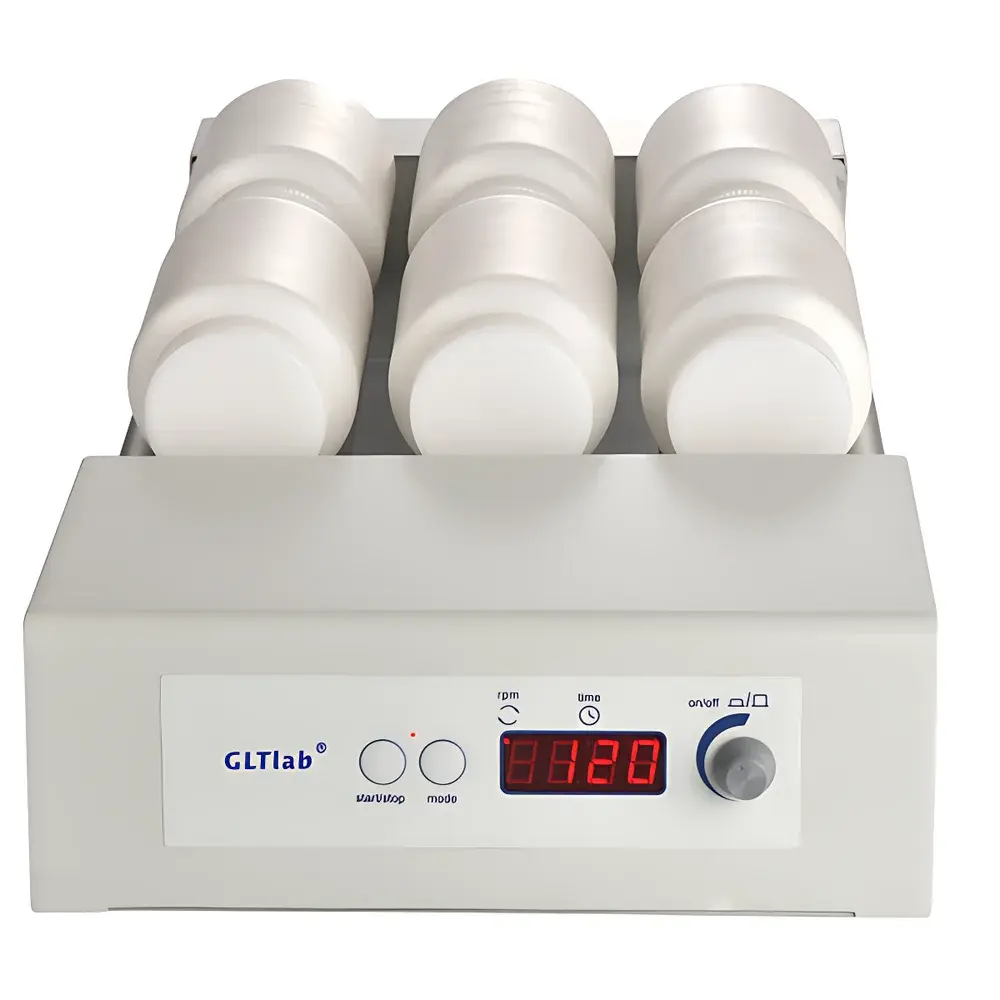
- Digital microprocessor control with intuitive LED interface for precise speed (5–300 rpm) and timer (1 min to 200 h) setting
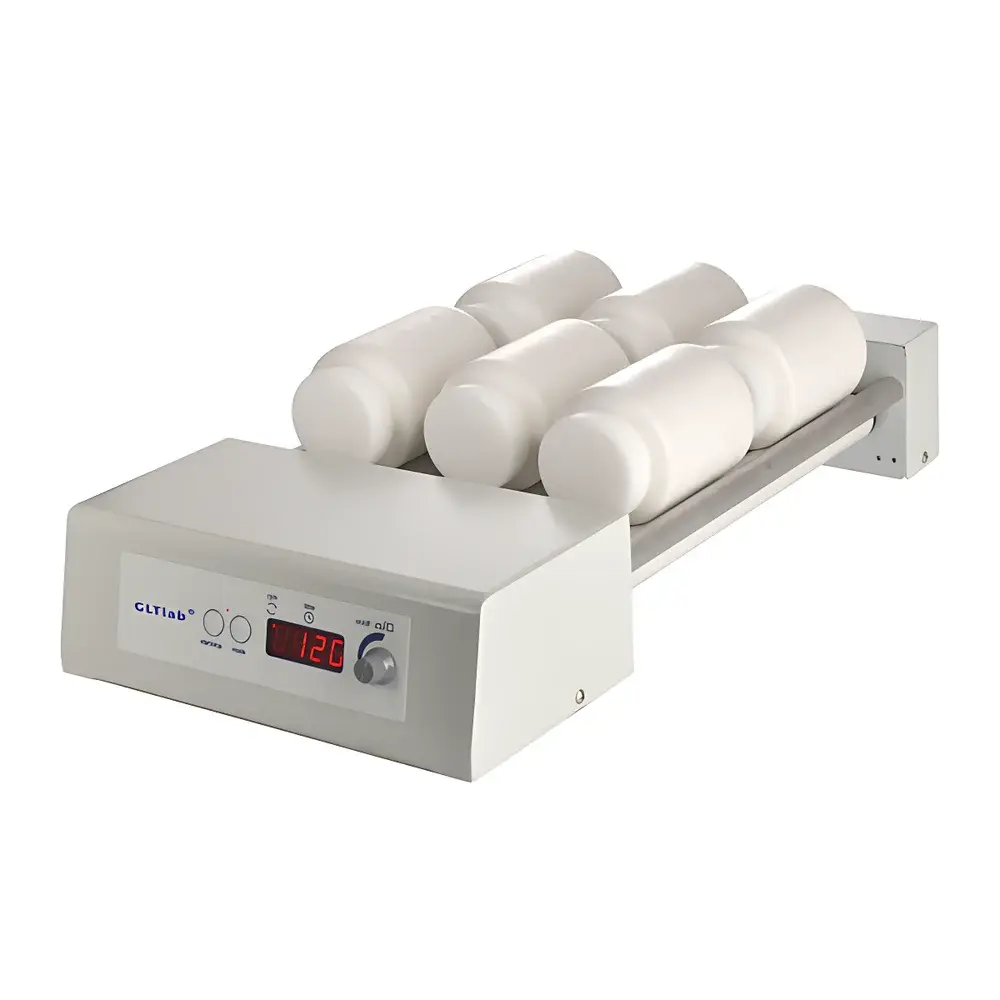
- Six independently aligned, corrosion-resistant stainless-steel rollers (340 × 30 mm), each capable of accommodating standard 50 mL–500 mL cylindrical vessels
- Bi-directional rotation mode programmable via front-panel controls—reversing direction at user-defined intervals to prevent sedimentation and improve particle suspension
- High-torque, low-noise brushless DC motor delivering consistent rotational output across full speed range with ±1 rpm repeatability
- Thermally stable chassis with non-slip rubber feet and integrated overheat protection circuitry compliant with IEC 61000-6-2 EMC standards
- Modular design allowing rapid reconfiguration: compatible with optional roller adapters for irregularly shaped containers (e.g., pouch cells, custom canisters)
Sample Compatibility & Compliance
The TR-6 accommodates a broad spectrum of container geometries—including borosilicate glass vials, polypropylene centrifuge tubes, stainless-steel grinding jars, and laminated battery slurry cans—provided they maintain axial symmetry and fit within the 340 mm length and 30 mm diameter envelope per roller. It is routinely employed in battery electrode manufacturing workflows conforming to ISO 12100 (machinery safety) and ASTM D7110 (standard practice for mixing electrode slurries). While not certified for GMP cleanroom use, its smooth, crevice-free housing meets ISO 14644-1 Class 8 surface requirements when operated in controlled environments. All electrical components comply with RoHS 2011/65/EU and CE marking directives; documentation includes factory calibration certificate traceable to NIM (National Institute of Metrology, China).
Software & Data Management
The TR-6 operates as a standalone instrument without proprietary software dependency. All operational parameters—including speed setpoint, elapsed time, direction sequence, and total runtime—are stored in non-volatile memory and retained after power cycling. For integration into automated lab networks, optional RS-232 or USB-to-serial interfaces support ASCII command protocols (e.g., “SPEED=120”, “DIR=BIDIR”, “TIMER=3600”) enabling remote scheduling via LabVIEW, Python scripts, or LIMS middleware. Audit trails are maintained locally via timestamped event logging (power-on, direction change, timer expiration), satisfying basic GLP documentation requirements. No cloud connectivity or firmware updates are provided—ensuring deterministic behavior and eliminating cybersecurity exposure vectors common in IoT-enabled lab equipment.
Applications
- Battery Materials Processing: Homogenizing cathode/anode slurries (e.g., NMC/LFP with PVDF binder and conductive carbon) prior to coating—maintaining particle integrity and preventing agglomeration
- Chemical Synthesis: Blending high-viscosity silicone elastomers, epoxy resins, and pigment dispersions where shear-thinning behavior demands non-turbulent agitation
- Pharmaceutical Development: Preparing sustained-release suspensions and semi-solid formulations (e.g., topical gels, ointments) requiring phase stability over extended mixing durations
- Materials Science: Mixing ceramic precursors, metal-organic frameworks (MOFs), and nanocomposite pastes for additive manufacturing feedstock preparation
- Quality Control Labs: Standardized sample conditioning per ASTM E2913 for rheological pre-treatment before viscosity or particle size analysis
FAQ
What is the maximum recommended fill volume per container on the TR-6?
For optimal rolling efficiency and minimal splashing, fill containers to no more than 60% of nominal capacity—e.g., ≤300 mL in a 500 mL jar.
Can the TR-6 be used with solvent-based slurries requiring inert atmosphere handling?
Yes—when paired with sealed, pressure-rated containers (e.g., Swagelok-capped vials or glove-box-compatible jars), the TR-6 maintains mechanical integrity under nitrogen or argon purge conditions.
Is calibration required before first use?
No routine calibration is needed; however, users should verify rotational speed accuracy using a handheld tachometer against the displayed value during initial setup.
Does the TR-6 support external trigger signals for synchronized operation with other instruments?
Not natively—but TTL-level start/stop signals can be implemented via optional relay module (sold separately) connected to the RS-232 control port.
What maintenance is recommended for long-term reliability?
Monthly inspection of roller alignment and motor ventilation grilles; annual lubrication of roller bearing housings with ISO VG 32 synthetic oil is advised for continuous-duty applications.



