
GLTLab RM-3PM Digital Programmable Tube Rotator
| Brand | GLTLab |
|---|---|
| Model | RM-3PM |
| Origin | Guangdong, China |
| Manufacturer Type | Direct Manufacturer |
| Power Supply | AC 100–240 V, 50/60 Hz |
| Rotation Speed Range | 1–120 rpm (adjustable in 1-rpm increments) |
| Rotation Modes | Clockwise, Counterclockwise, Bidirectional Oscillation |
| Oscillation Angles | 120°, 180°, 240°, 300°, 360° |
| Timer Range | 1 min – 9 h (digital preset) |
| Display | LED digital interface |
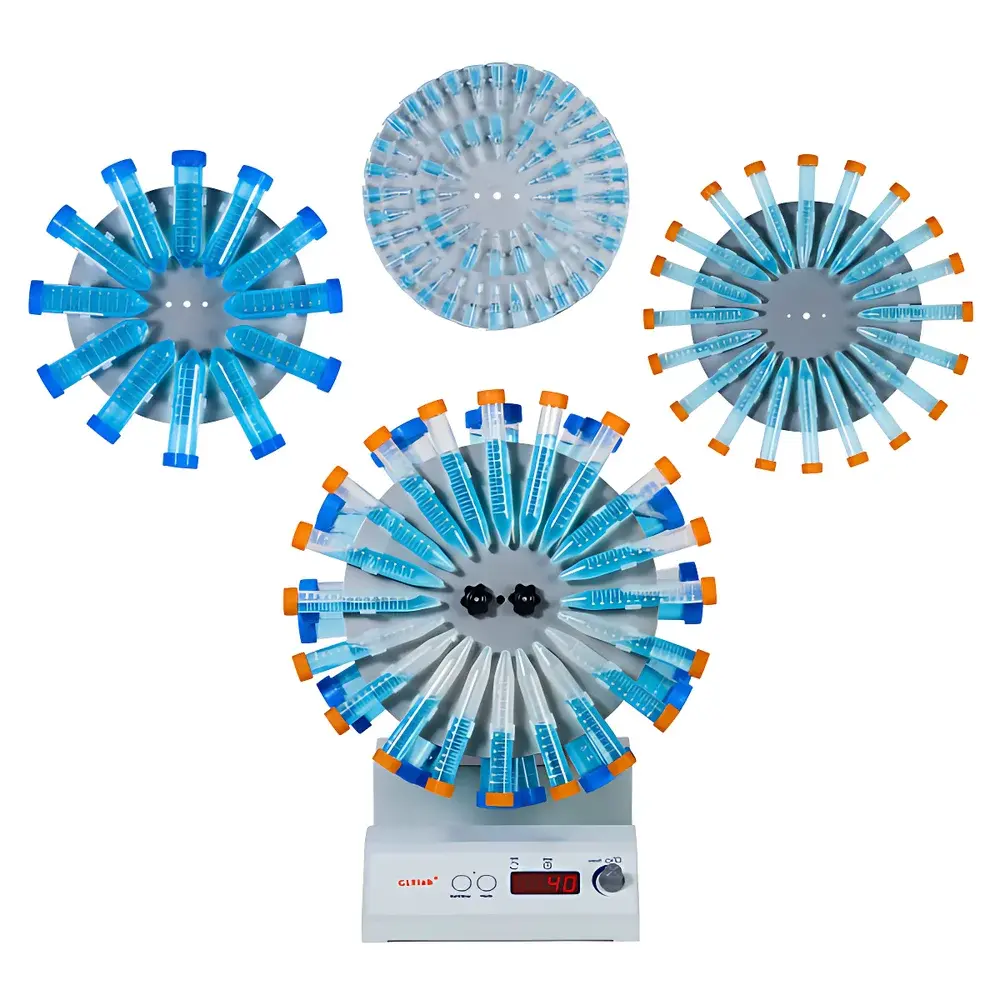
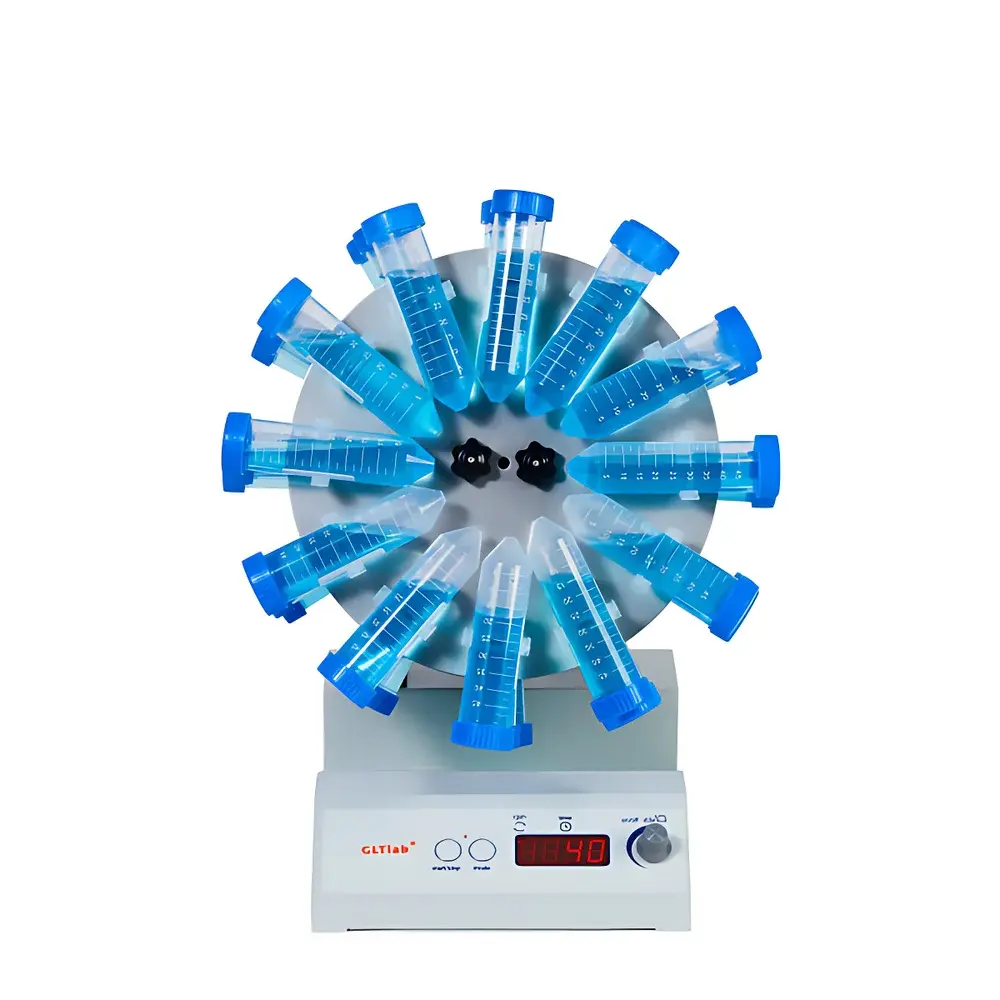
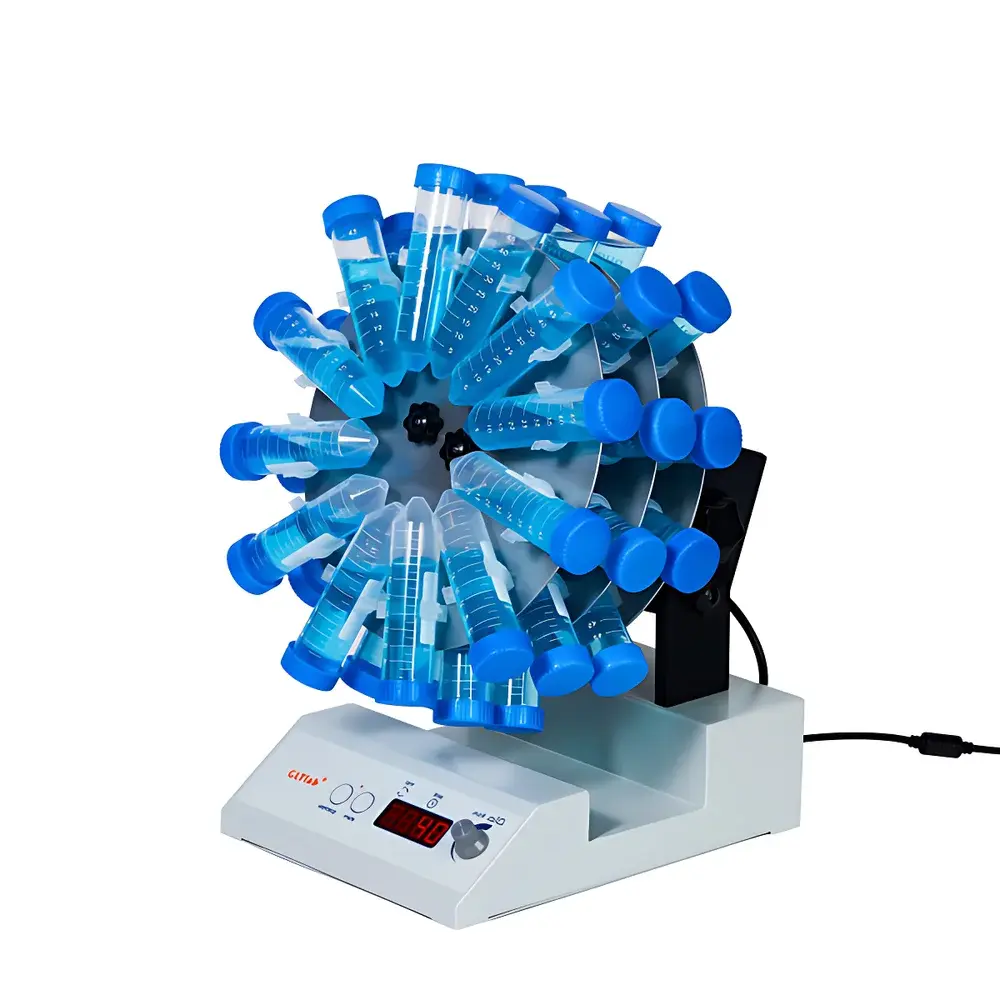
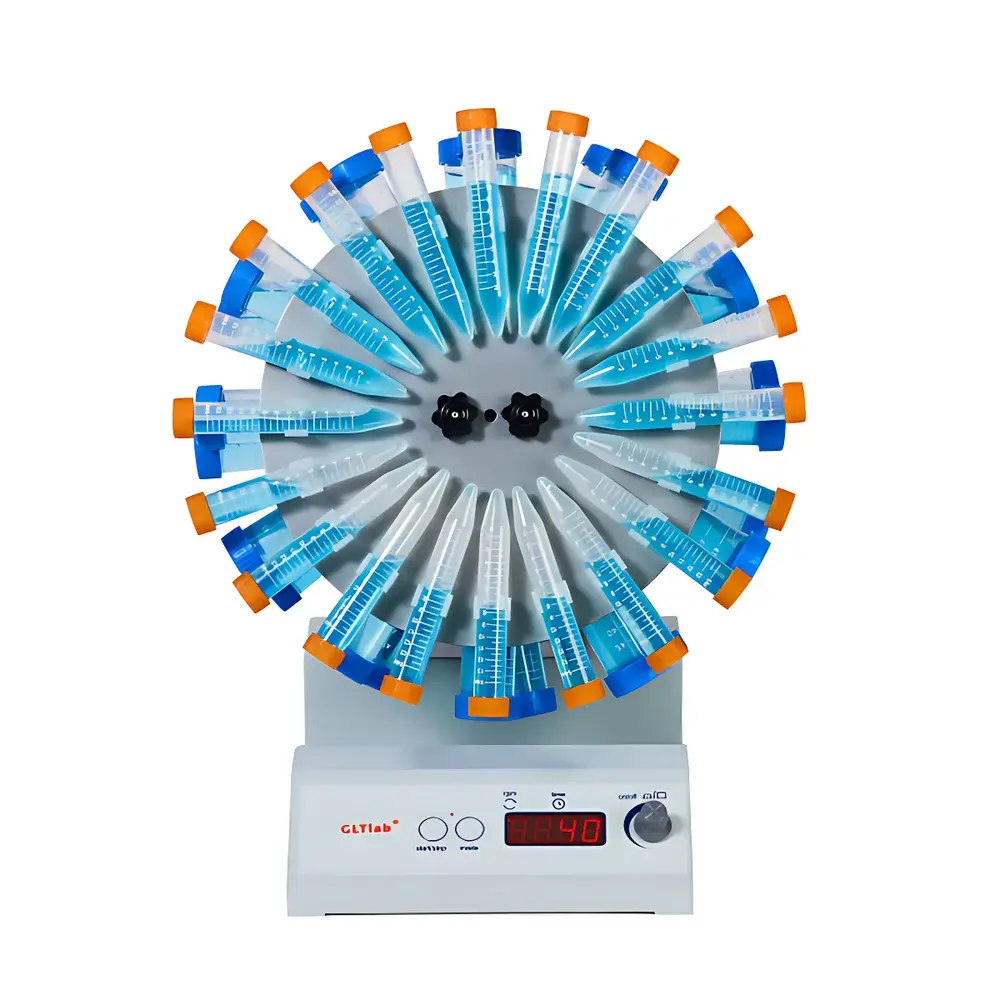
| Sample Capacity | Up to 36 × 50 mL centrifuge tubes (using optional 3-position 12-tube racks) |
| Operating Noise Level | <35 dB(A) |
| Motor Type | Brushless DC motor with closed-loop speed feedback |
| Compliance | CE-marked, RoHS-compliant, designed per IEC 61010-1 for laboratory equipment safety |
Overview
The GLTLab RM-3PM Digital Programmable Tube Rotator is an engineered solution for gentle, reproducible, and programmable end-over-end mixing of liquid samples in clinical, diagnostic, and research laboratories. Based on the principle of controlled rotational oscillation—where tubes are rotated along a fixed axis with precisely defined angular displacement and directional reversal—the RM-3PM ensures homogeneous suspension of particulates, prevention of sedimentation, and inhibition of coagulation in sensitive biological specimens such as whole blood, plasma, serum, and cell suspensions. Unlike vortex mixers or orbital shakers, this device applies low-shear, continuous motion ideal for fragile analytes, minimizing foaming, bubble formation, and cellular damage. Its brushless DC motor architecture delivers high torque at low speeds with exceptional stability across the full 1–120 rpm range, enabling consistent mixing performance even during extended incubation protocols.
Key Features
- Dual-mode operation: selectable unidirectional (CW/CCW) or bidirectional oscillatory rotation with five discrete angular profiles (120°, 180°, 240°, 300°, and 360°), supporting both gentle resuspension and thorough homogenization.
- Fine-grained speed control: digitally adjustable from 1 to 120 rpm in 1-rpm increments, with factory-calibrated speed accuracy ±2 rpm across the operating range.
- Extended digital timer: programmable from 1 minute to 9 hours with automatic shutdown and audible alert; memory retention preserves settings after power interruption.
- Ultra-quiet operation: acoustic emission <35 dB(A) at 1 m distance, suitable for shared lab environments, cleanrooms, and adjacent analytical workspaces.
- Modular rack compatibility: supports up to three independently mounted 12-position tube racks (each holding 50 mL centrifuge tubes), accommodating up to 36 tubes simultaneously without cross-contamination risk.
- LED digital interface: real-time display of set speed, elapsed time, remaining time, and active rotation mode; intuitive button navigation with tactile feedback.
Sample Compatibility & Compliance
The RM-3PM is validated for use with standard polypropylene and glass centrifuge tubes (10–50 mL), microcentrifuge tubes (0.5–2.0 mL) when used with adapter inserts, and diagnostic sample collection tubes including EDTA, citrate, and heparin vacutainers. It meets essential safety requirements under IEC 61010-1:2010 for electrical equipment used in laboratory environments and carries CE marking with RoHS 2011/65/EU compliance. While not classified as a medical device under EU MDR or FDA 21 CFR Part 820, its design aligns with CLIA and CAP pre-analytical guidelines for specimen handling—particularly for anticoagulated blood stabilization prior to hematocrit, coagulation panel, or flow cytometry analysis. The unit operates within ambient temperature ranges of 5–40 °C and relative humidity ≤80% non-condensing.
Software & Data Management
The RM-3PM is a standalone hardware platform with no embedded firmware update capability or PC connectivity. All operational parameters are configured via front-panel controls and retained in non-volatile memory. For laboratories requiring auditability under GLP or GMP frameworks, users may integrate the device into broader procedural documentation by recording run logs—including date/time stamp, speed, angle, duration, and operator ID—in electronic lab notebooks (ELN) or LIMS systems. No proprietary software is required, and no data export functionality is implemented, preserving simplicity and reducing cybersecurity exposure vectors typical of networked instrumentation.
Applications
- Clinical hematology: maintaining uniform distribution of formed elements in whole blood prior to automated CBC analysis or peripheral smear preparation.
- Coagulation testing: preventing premature clot formation during transport or delayed processing of citrated plasma samples for PT, aPTT, and fibrinogen assays.
- Immunoassay workflows: ensuring antigen-antibody complex stability during incubation steps in ELISA and chemiluminescent immunoassays (CLIA).
- Cell culture maintenance: gentle agitation of suspension cultures or antibody labeling reactions where shear stress must be minimized.
- Reagent reconstitution: uniform dissolution of lyophilized standards, calibrators, or quality control materials without vortex-induced denaturation.
- Blood bank operations: standardized mixing of crossmatch samples and antibody screening panels per AABB Technical Manual recommendations.
FAQ
Is the RM-3PM suitable for mixing viscous samples such as glycerol stocks or agarose solutions?
Yes—its high-torque brushless motor maintains stable rotation at low speeds (1–20 rpm), making it appropriate for moderate-viscosity liquids; however, highly viscous or particulate-laden suspensions may require validation for uniformity using endpoint turbidity or particle distribution assays.
Can the device be operated inside a refrigerated environment or cold room?
It is rated for operation between 5–40 °C; prolonged use below 10 °C may affect LCD response time and battery-backed memory retention—consult technical support before deployment in sub-10 °C conditions.
Does the RM-3PM support external triggering or integration with automated lab systems?
No—it lacks RS-232, USB, or Ethernet interfaces; automation integration requires mechanical or optical sensor-based external monitoring of rotation status.
What maintenance is required for long-term reliability?
No scheduled maintenance is specified; periodic cleaning of the rotor surface and tube holders with 70% ethanol is recommended; avoid abrasive cleaners or high-pressure washing.
Are replacement racks and adapters available for non-standard tube formats?
Yes—GLTLab offers optional accessories including 15-mL rack inserts, PCR strip holders, and custom-machined clamping fixtures for irregular vessel geometries; contact technical sales for dimensional specifications and lead times.



