
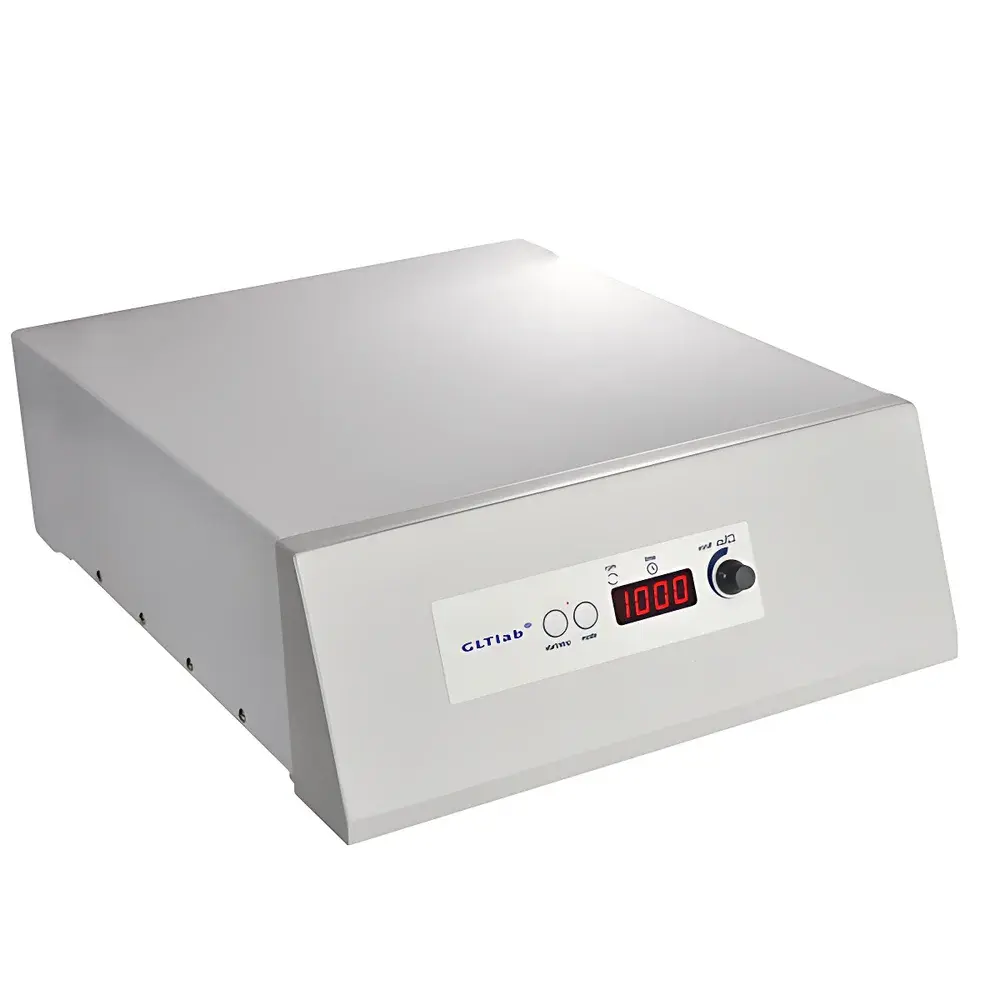
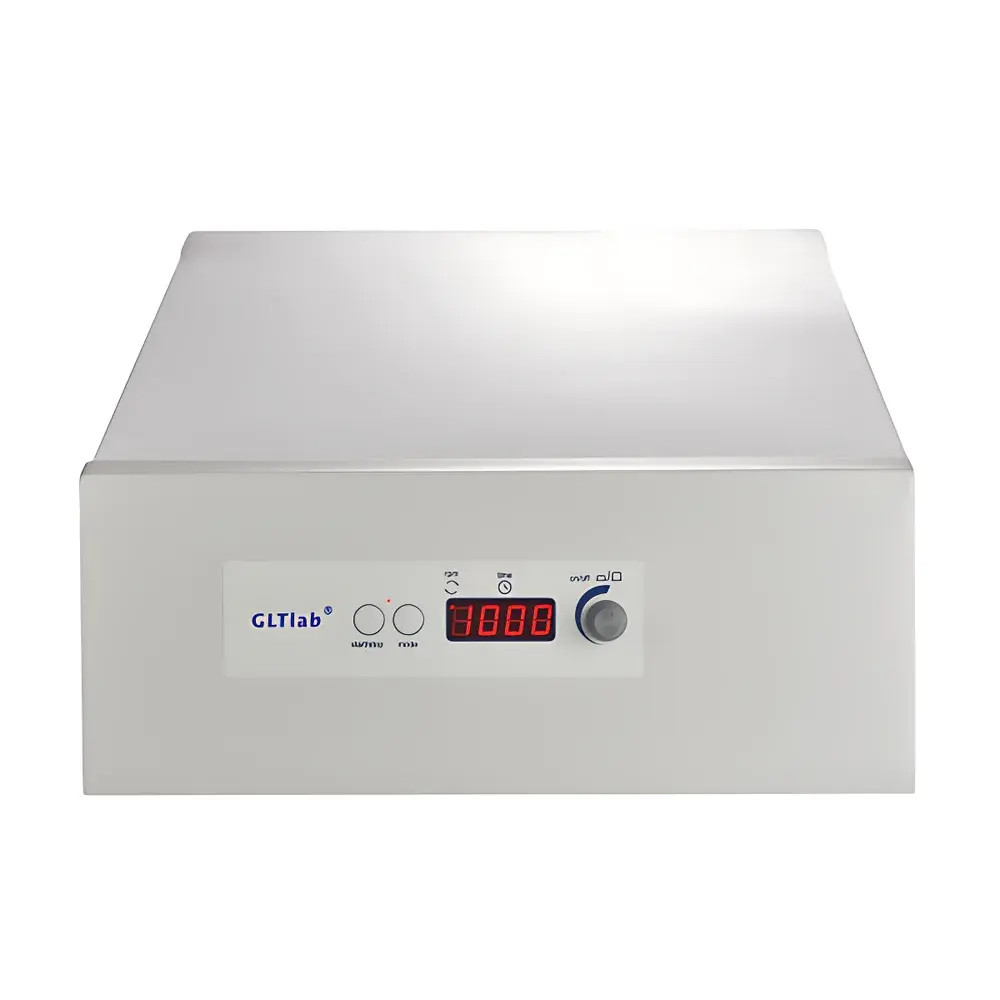
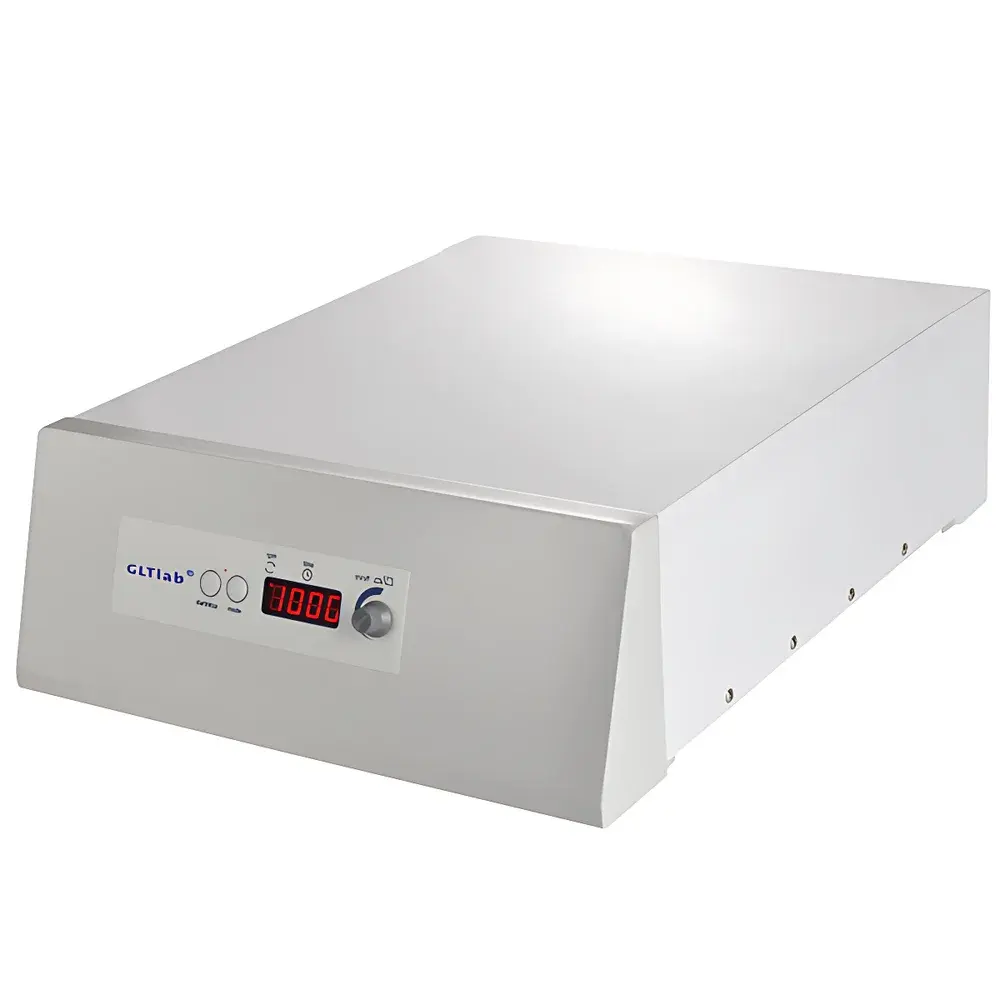
GLTlab SSL-90 High-Capacity Magnetic Stirrer with Integrated Temperature Control
| Brand | GLTlab |
|---|---|
| Model | SSL-90 |
| Type | Electric Magnetic Stirrer |
| Max. Stirring Volume | 90 L |
| Speed Range | 50–1200 rpm |
| Temp. Control Range | 5–40 °C |
| Motor | Brushless DC, 30 W Output |
| Plate Material | Ceramic-Coated Stainless Steel |
| Plate Size | 400 × 400 mm |
| IP Rating | IP56 |
| Power Input | 100–240 V AC, 50/60 Hz |
| Max. Power Consumption | 80 W |
| Dimensions (L×W×H) | 520 × 400 × 160 mm |
| Weight | 11 kg |
| Operating Humidity | ≤80% RH |
| Continuous Operation Time | Up to 9 h |
| Connectivity | Wi-Fi-enabled for remote control via GLTlabLinks software (supports up to 5 units simultaneously) |
| Programmable Profiles | Multi-step speed ramping and dwell timing |
| Compliance | CE-marked, RoHS-compliant, designed per IEC 61010-1 for laboratory electrical safety |
Overview
The GLTlab SSL-90 is an industrial-grade magnetic stirrer engineered for high-volume, temperature-sensitive mixing in analytical, quality control, and process development laboratories. Unlike conventional benchtop stirrers, the SSL-90 employs a robust brushless DC motor coupled with a large-area ceramic-coated stainless steel heating/stirring plate (400 × 400 mm), enabling uniform torque delivery across viscous or heterogeneous media up to 90 liters in volume. Its operation is based on the principle of rotating magnetic fields generated beneath the plate surface, which induce synchronous rotation of PTFE- or glass-coated magnetic stir bars immersed in the vessel. The integrated Peltier-based thermoregulation system provides precise, non-contact temperature control from 5 °C to 40 °C—ideal for applications requiring thermal stabilization without immersion heaters or external chillers. Designed for continuous-duty operation (up to 9 hours), the unit meets IEC 61010-1 safety standards for laboratory electrical equipment and carries CE and RoHS certifications.
Key Features
- High-torque brushless DC motor delivering consistent rotational force across the full 50–1200 rpm range, with digital speed feedback for ±2 rpm repeatability
- Ceramic-coated stainless steel stirring plate offering exceptional chemical resistance to acids, bases, and organic solvents—validated per ISO 15207 for corrosion performance under prolonged exposure
- Integrated Peltier thermoelectric module enabling bidirectional temperature regulation (cooling/heating) within 5–40 °C, with ±0.5 °C stability at setpoint under static load conditions
- IP56-rated enclosure ensuring protection against dust ingress and water jets—suitable for humid environments and splash-prone lab workflows
- Wi-Fi connectivity supporting secure TLS 1.2 communication; firmware-upgradable via over-the-air (OTA) protocol
- GLTlabLinks software platform compliant with FDA 21 CFR Part 11 requirements for electronic records and signatures, including audit trail logging, user role management, and exportable CSV/Excel data archives
Sample Compatibility & Compliance
The SSL-90 accommodates standard laboratory vessels—including polypropylene carboys, borosilicate glass reactors (up to 100 L capacity), and stainless steel jacketed tanks—provided magnetic stir bars of appropriate geometry (e.g., cross-shaped or oval, ≤150 mm length) are used. It supports both aqueous and non-aqueous systems, including suspensions of micronized APIs, polymer solutions, and colloidal dispersions. All electrical design and thermal management components conform to IEC 61010-1:2010 (Edition 3) for measurement, control, and laboratory use. The unit is CE-marked and RoHS 2011/65/EU compliant. While not intrinsically safe for Class I Division 1 environments, it is suitable for general-purpose GMP/GLP-aligned laboratories operating under ISO/IEC 17025 quality management frameworks.
Software & Data Management
GLTlabLinks is a browser-based control suite compatible with Windows, macOS, and Linux. It enables centralized monitoring and scheduling of up to five SSL-90 units from a single interface. Users can define multi-segment protocols—including ramp rates, dwell times, and conditional triggers (e.g., “hold at 800 rpm until internal plate sensor reads 25.0 °C”). All operational parameters, timestamps, and error logs are stored locally and synchronized to encrypted cloud storage with configurable retention policies. Audit trails capture operator ID, timestamp, parameter changes, and session duration—fully traceable for regulatory review. Data exports comply with ASTM E2500-13 guidelines for raw instrument data integrity.
Applications
- Preparation of large-batch calibration standards and reference materials in metrology labs
- Homogenization of cell culture media and buffer solutions prior to sterile filtration in bioprocessing QC
- Accelerated dissolution testing of extended-release pharmaceutical formulations (aligned with USP guidance)
- Mixing of high-viscosity coatings, adhesives, and battery slurry formulations in R&D pilot lines
- Controlled dilution and blending of environmental water samples for EPA Method 200.7 and 200.8 analysis
FAQ
What is the maximum recommended vessel height for stable operation?
Vessels up to 450 mm tall are supported when using stir bars ≤150 mm in length and maintaining liquid depth ≥100 mm above the stir bar centerline.
Does the unit support external temperature probe input for sample-specific feedback control?
No—the SSL-90 regulates plate surface temperature only; it does not accept external Pt100 or thermistor inputs. For sample-core temperature control, integration with a separate circulator is recommended.
Can GLTlabLinks be deployed on-premises rather than via cloud service?
Yes—local server deployment is supported using Docker containers; full documentation and API specifications are provided under NDA for enterprise IT integration.
Is the ceramic coating resistant to HF or hot concentrated HNO₃?
The coating resists 37% HCl, 98% H₂SO₄, and 65% HNO₃ at room temperature for ≤72 h; however, hydrofluoric acid and fuming nitric acid will degrade the surface and are not recommended.
What maintenance intervals are specified for long-term reliability?
Annual verification of motor encoder linearity, plate flatness (±0.1 mm tolerance), and thermal calibration against NIST-traceable reference standards is advised per GLTlab’s Preventive Maintenance Protocol GLT-PM-SSL90 Rev. 2.



