
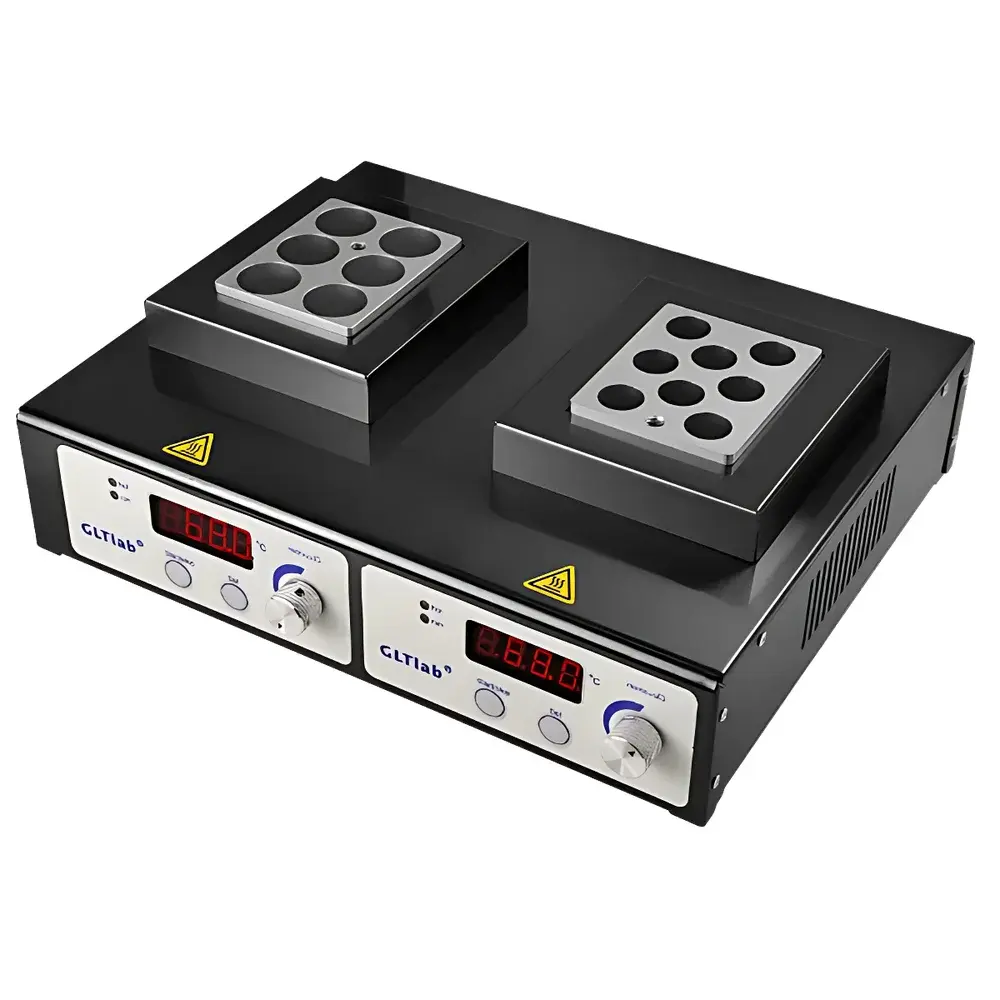
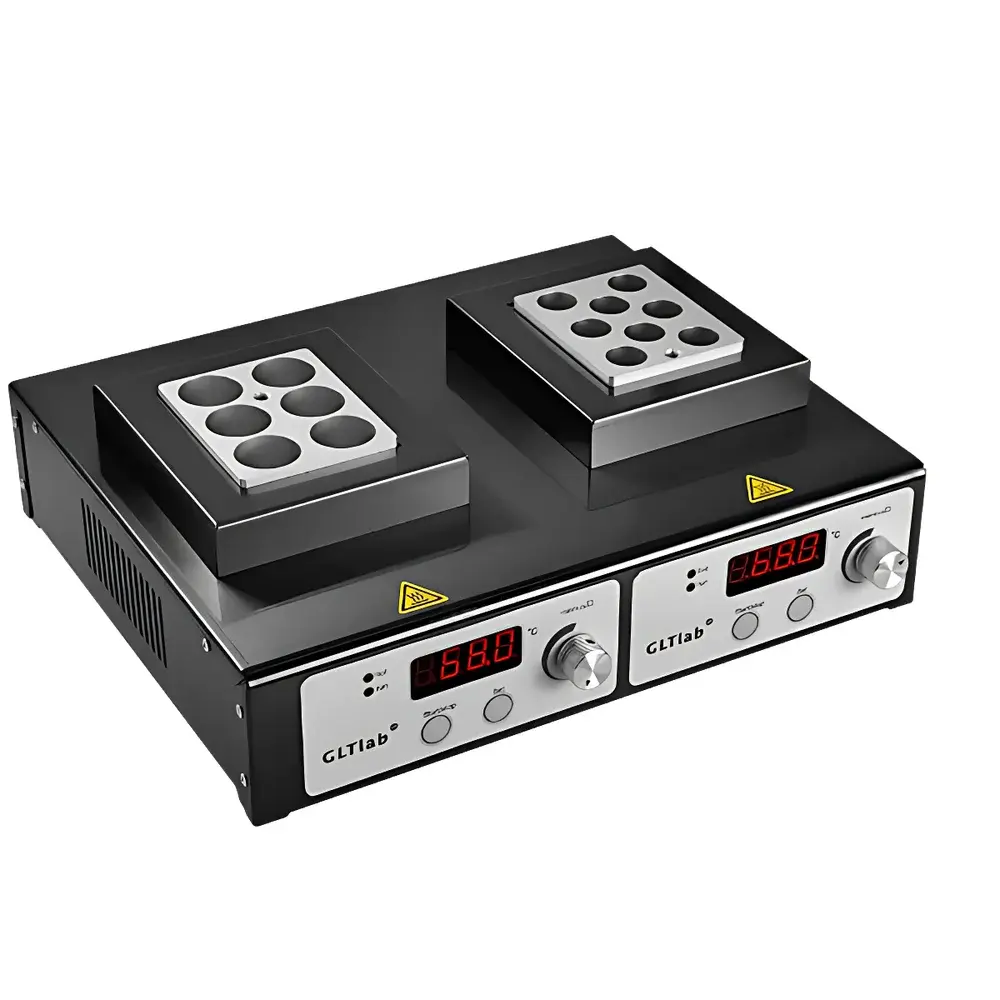
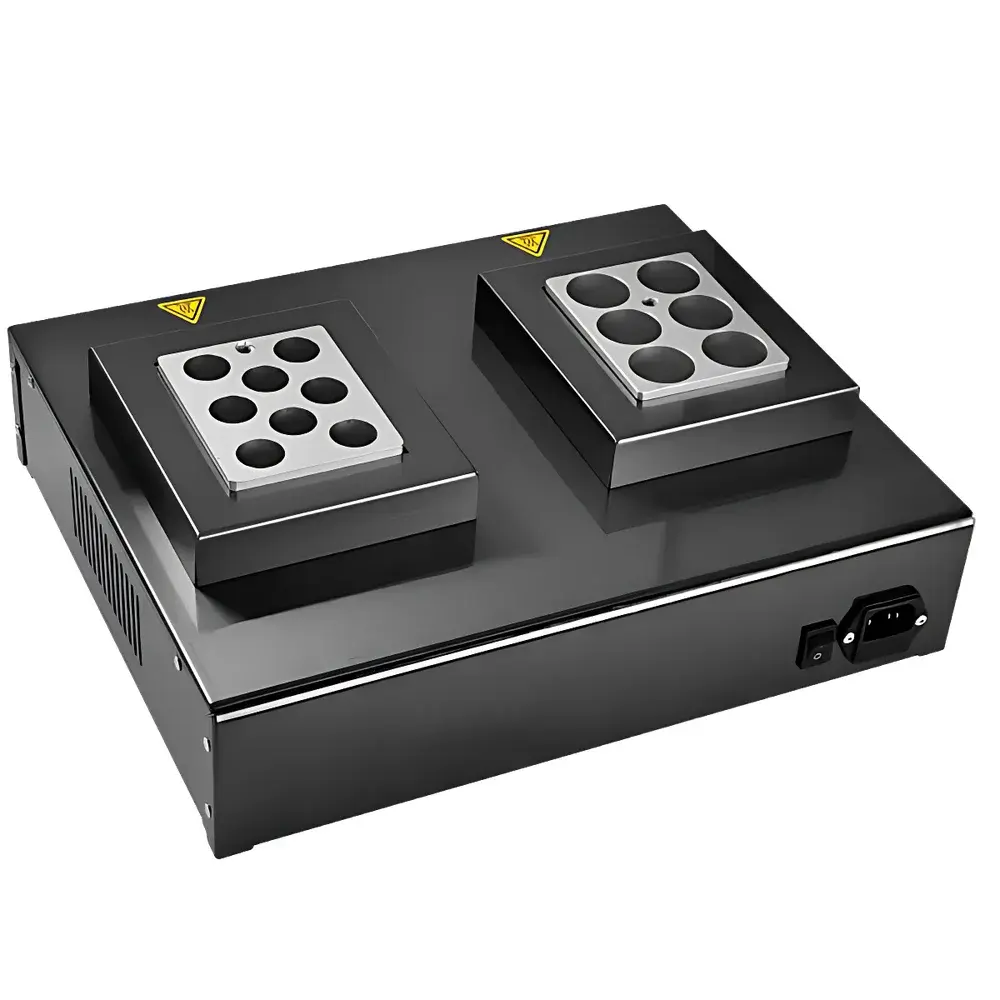
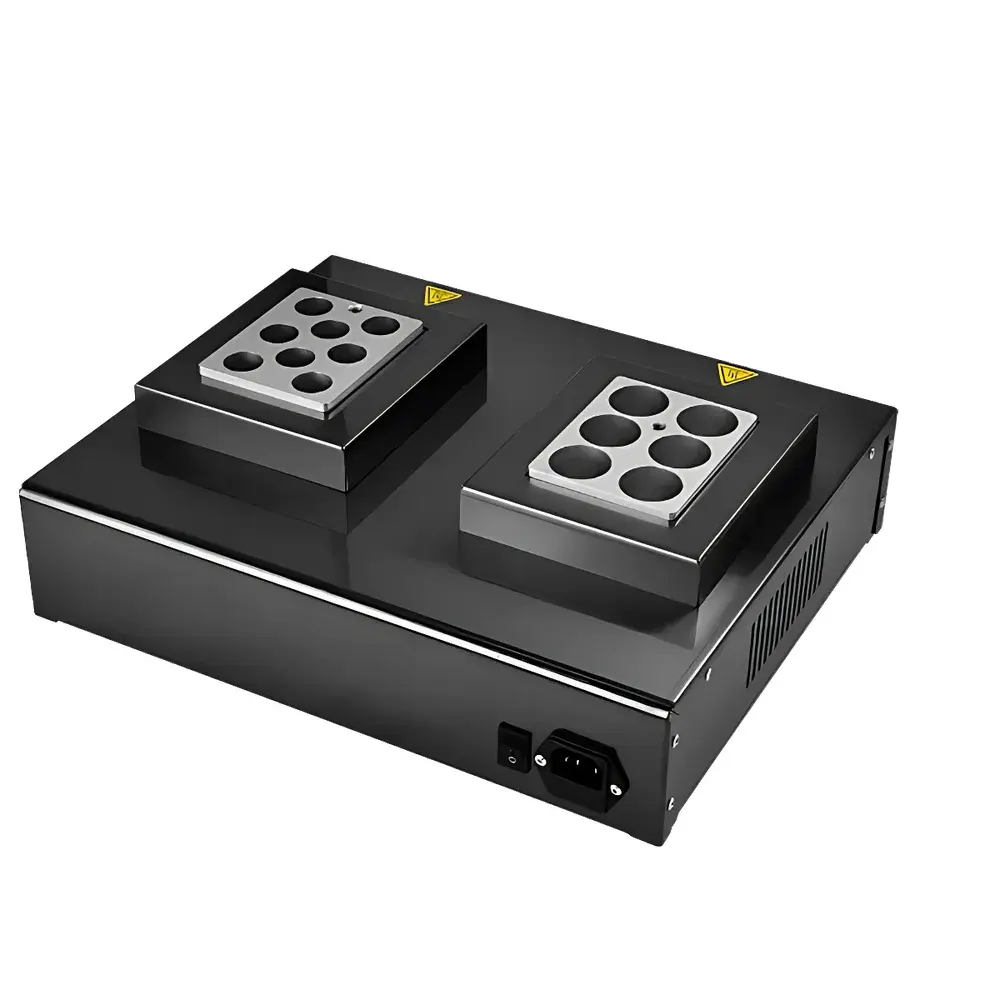
GLTLab DB-2T Dual-Zone Dual-Module Digital Dry Block Heater
| Brand | GLTLab |
|---|---|
| Origin | Guangdong, China |
| Model | DB-2T |
| Temperature Range | Ambient +5°C to 200°C |
| Temperature Accuracy | ±1°C |
| Heating Time (to 100°C) | ≤15 min |
| Dimensions (W×D×H) | 380 × 260 × 100 mm |
| Net Weight | 5 kg |
| Heating Power | 500 W |
| Block Material | Anodized Aluminum |
| Housing Material | Stainless Steel |
| Display | LED Digital Interface |
| Timer Function | Yes |
| Independent Dual-Zone Control | Yes |
| Module Size per Zone | 75 × 95 × 50 mm (L×W×H) |
Overview
The GLTLab DB-2T is a precision-engineered dual-zone digital dry block heater designed for laboratories requiring simultaneous yet independent thermal control of two sample sets. Unlike single-zone metal baths or water baths, the DB-2T employs two physically separate aluminum heating blocks—each with its own PID-controlled heating circuit and temperature sensor—enabling true parallel operation at different setpoints within the same instrument footprint. Its operating principle relies on direct conductive heat transfer from thermally optimized anodized aluminum blocks to sample tubes or vessels, eliminating liquid media and associated contamination, evaporation, or stability risks. This architecture delivers rapid thermal response, high spatial uniformity across each block surface (±0.5°C typical), and stable setpoint maintenance under load—critical for enzymatic assays, PCR pre-incubation, sample thawing, and reagent equilibration in molecular biology, clinical diagnostics, and QC labs.
Key Features
- Dual independent heating zones with fully isolated thermal control—no cross-zone interference; each zone supports individual setpoint programming (range: ambient +5°C to 200°C)
- High-performance anodized aluminum blocks (75 × 95 × 50 mm per zone) engineered for optimal thermal conductivity and corrosion resistance
- Digital PID temperature regulation with ±1°C accuracy and <0.3°C short-term stability (measured at center position, steady state)
- LED digital interface with intuitive keypad navigation; real-time display of setpoint, actual temperature, and remaining timer duration
- Programmable timer function (1 min to 99 hr 59 min) with auto-shutdown and audible alert upon completion
- Robust 304 stainless steel housing providing mechanical durability, chemical splash resistance, and compliance with ISO 13485 cleanroom-compatible surface finish standards
- 500 W total heating power distributed across both zones, enabling ≤15-minute ramp time from ambient to 100°C under standard loading conditions (e.g., 12 × 1.5 mL tubes per zone)
Sample Compatibility & Compliance
The DB-2T accommodates standard laboratory consumables via interchangeable aluminum modules (not included by default but available as accessories). Each zone accepts common tube formats—including 0.2 mL, 0.5 mL, 1.5 mL, and 2.0 mL microcentrifuge tubes—as well as 0.2 mL PCR strips and 96-well plates when paired with appropriate module inserts. The instrument operates without fluids, eliminating risk of cross-contamination between samples and reducing maintenance requirements. It complies with IEC 61010-1:2010 safety standards for electrical equipment for measurement, control, and laboratory use. While not certified for GMP or FDA-regulated environments out-of-the-box, its digital logging-capable firmware (via optional RS232/USB interface) supports implementation of 21 CFR Part 11-compliant audit trails when integrated into validated workflows under laboratory quality systems (e.g., ISO/IEC 17025, GLP).
Software & Data Management
The DB-2T operates as a standalone benchtop device with embedded firmware supporting local parameter storage (up to 5 user-defined protocols). For traceability-critical applications, optional communication interfaces (RS232 or USB-to-serial adapter) enable connection to PC-based data acquisition software. This allows remote temperature monitoring, real-time graphing, and export of timestamped temperature logs in CSV format—facilitating documentation for SOP adherence, internal audits, or regulatory submissions. Firmware updates are delivered via manufacturer-provided utility tools and maintain backward compatibility with existing configuration files.
Applications
- Parallel incubation of enzyme reaction mixtures at distinct optimal temperatures (e.g., restriction digests vs. ligations)
- Controlled thawing of cryopreserved cell suspensions and serum batches with minimized thermal shock
- Pre-heating of reagents prior to ELISA, Western blotting, or immunoassay workflows
- Stabilization of temperature-sensitive standards and calibrants in analytical chemistry labs
- Supporting sample preparation steps in ISO 17025-accredited testing laboratories where documented thermal profiles are required
- QC/QA verification of thermal performance in pharmaceutical manufacturing support labs (non-sterile processes)
FAQ
Can the two zones operate at significantly different temperatures simultaneously (e.g., 4°C and 95°C)?
No—the DB-2T is not a refrigerated unit. Its minimum operating temperature is ambient +5°C. Therefore, the lowest achievable setpoint depends on ambient lab conditions (e.g., ~25°C ambient → minimum ~30°C). Both zones can be set to different values within the full range (e.g., 37°C and 75°C), but neither can achieve sub-ambient temperatures.
Is calibration certificate included with purchase?
A factory calibration report (traceable to NIST-certified reference standards) is provided with each unit. Full ISO/IEC 17025-accredited calibration services are available as an optional add-on through authorized service centers.
Are custom modules available for non-standard tube formats?
Yes—GLTLab offers OEM module design and machining services for specialized vessel geometries (e.g., glass vials, microfluidic cartridges, or custom-shaped cuvettes) subject to minimum order quantities and lead time confirmation.
What safety protections are built into the system?
The DB-2T includes over-temperature cut-off (hardware-based independent thermal fuse), open-circuit detection for heating elements, and automatic shutdown upon lid removal (if equipped with optional safety interlock kit).
Does the unit support external temperature probes for sample-core monitoring?
Not natively—but the RS232 interface enables integration with third-party PT100 or thermocouple-based external probe systems via custom scripting or SCADA-level supervision.



