
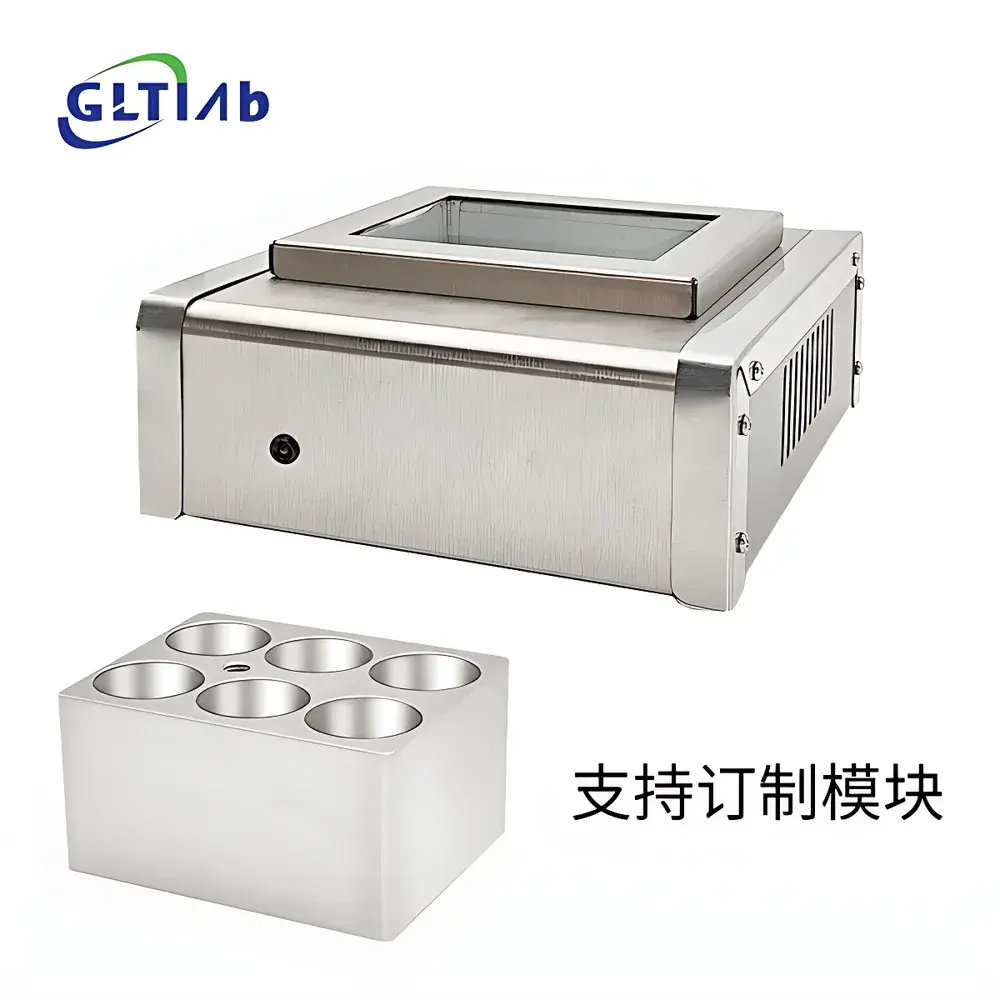
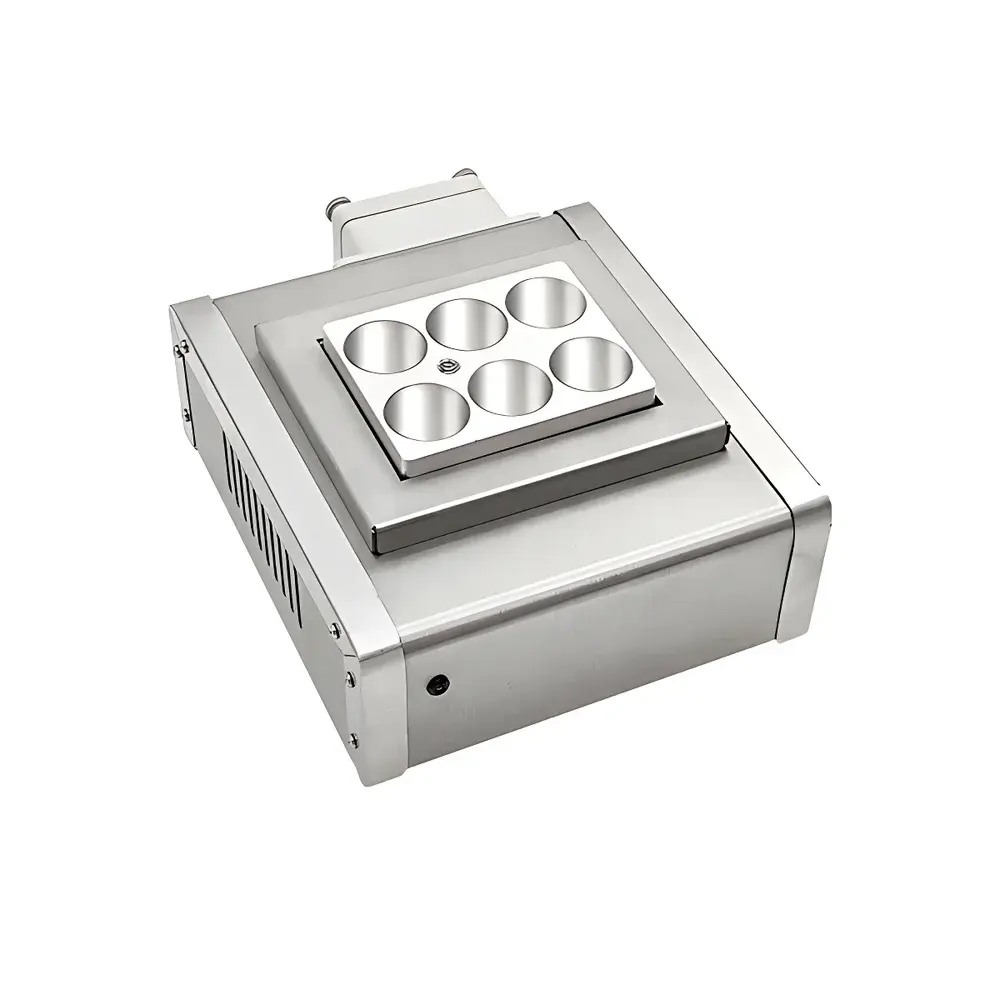
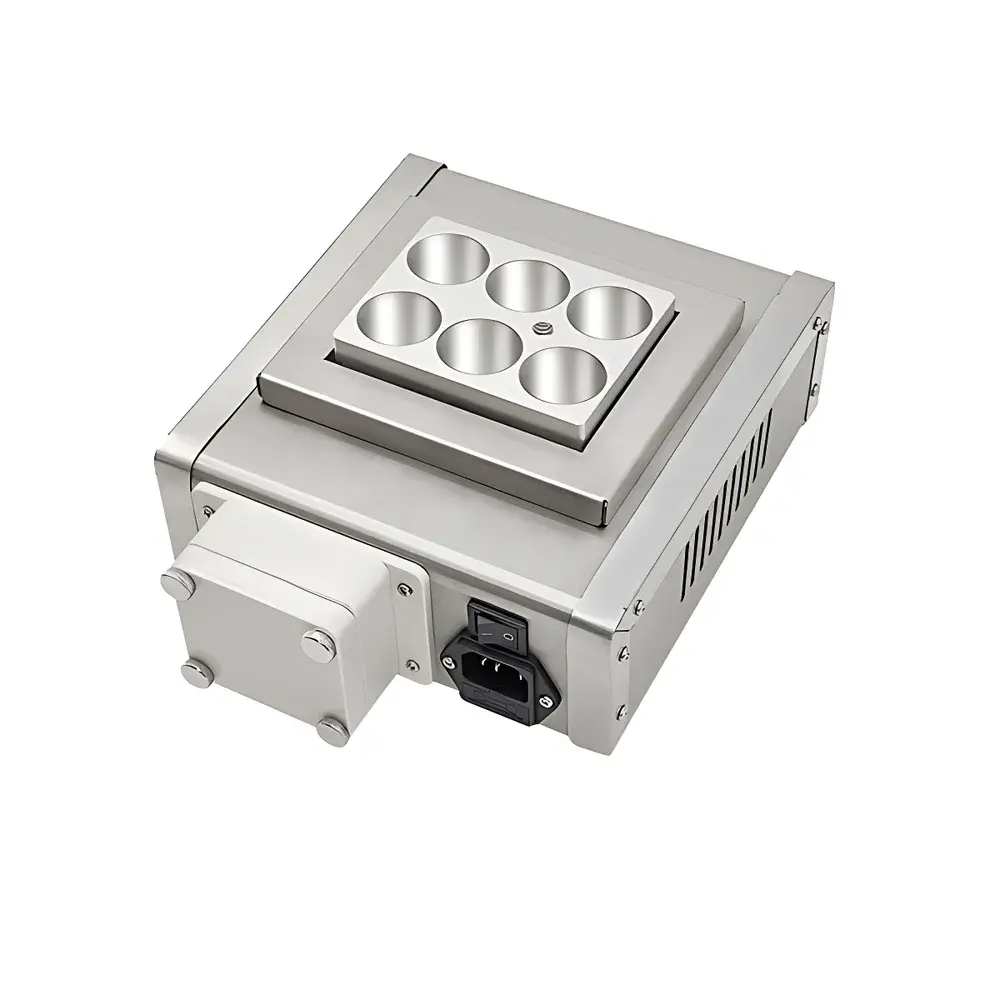
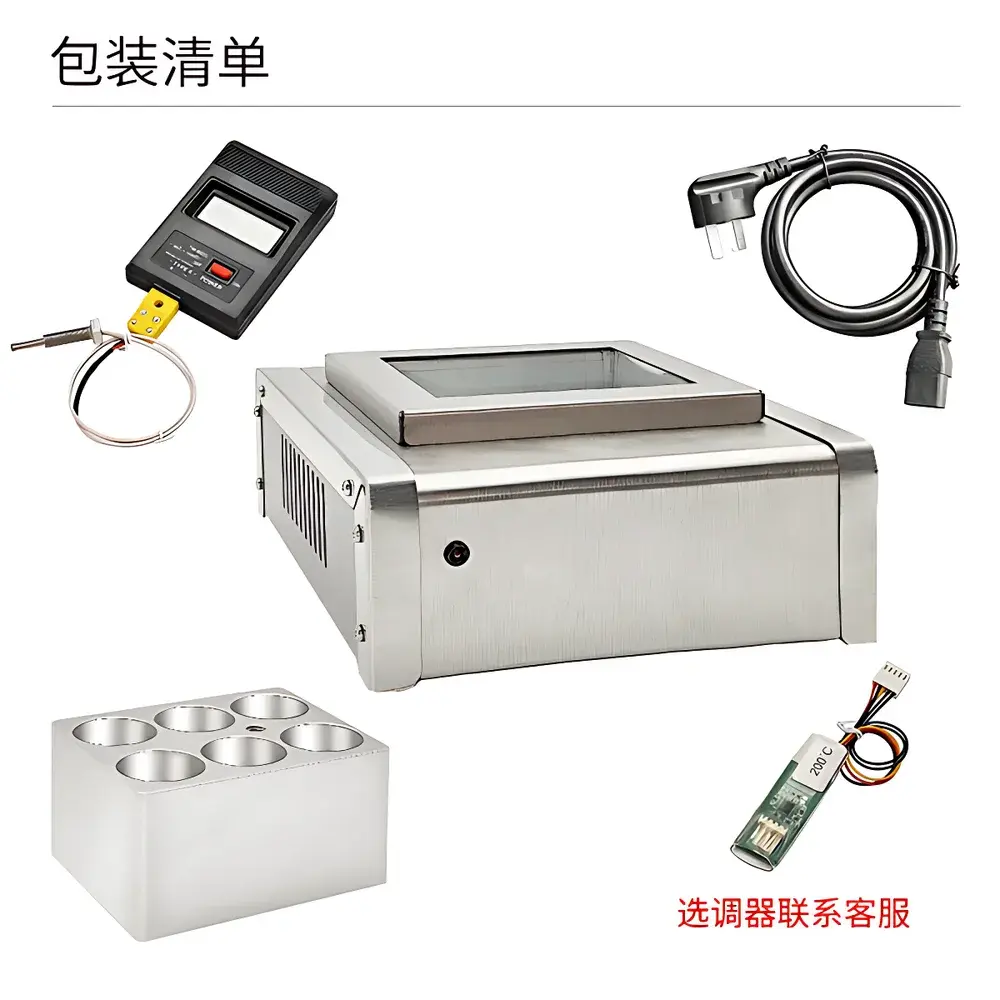
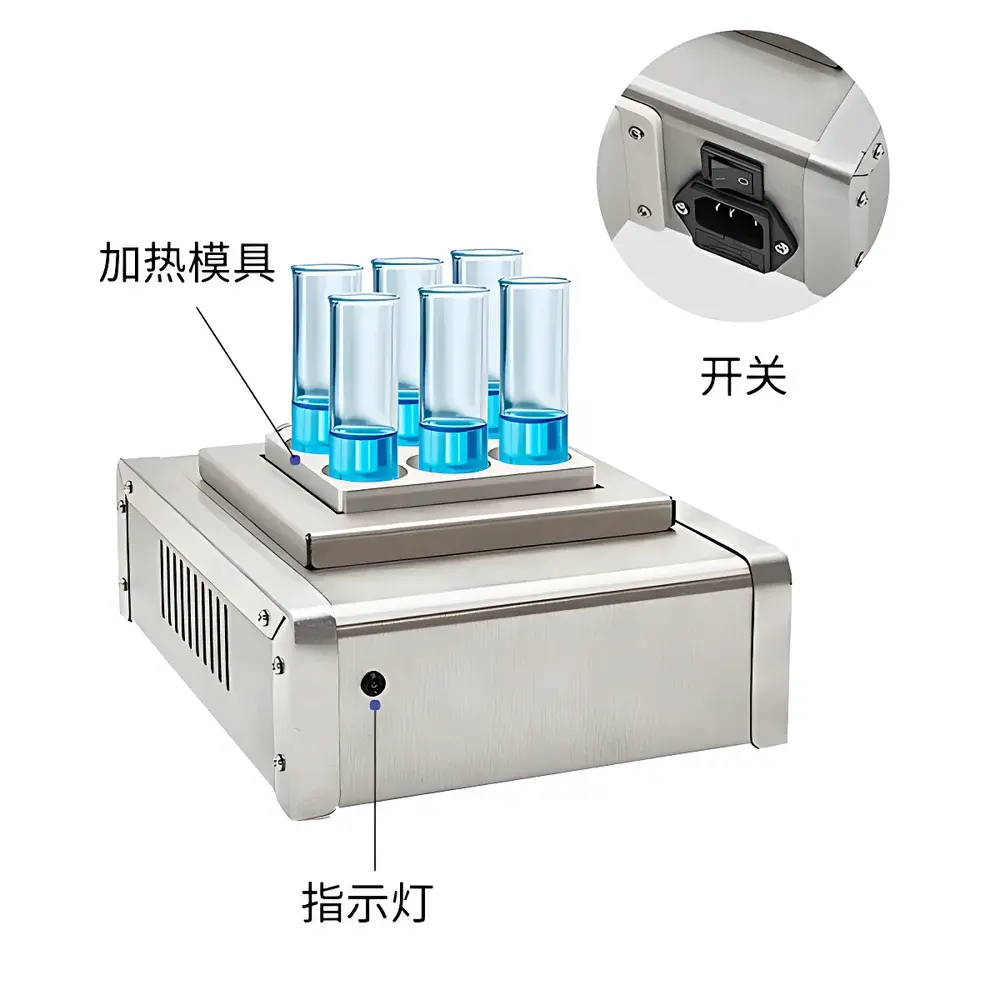
GLTlab DB-01-PAD Analog-Signal Controlled Metal Block Heater
| Brand | GLTlab |
|---|---|
| Origin | Guangdong, China |
| Manufacturer Type | Direct Manufacturer |
| Model | DB-01-PAD |
| Temperature Range | 35–200 °C |
| Temperature Accuracy | ±1 °C |
| Heating Time to 180 °C | ≤15 min |
| External Dimensions | 200 × 230 × 90 mm |
| Net Weight | 2 kg |
| Control Interface | Analog Signal Input (0–5 V or 4–20 mA configurable) |
| Communication | RS-485 Modbus RTU |
| Construction | Stainless Steel Housing with Interchangeable Aluminum Heating Blocks |
| Calibration | External Reference Thermometer-Compatible Offset Adjustment |
Overview
The GLTlab DB-01-PAD is a compact, analog-signal-controlled metal block heater engineered for stable, long-duration thermal maintenance of samples in routine laboratory workflows. Unlike digitally programmed units requiring menu navigation or touchscreen interaction, the DB-01-PAD accepts continuous analog input (0–5 V DC or 4–20 mA, user-selectable via internal jumper) to set and hold target temperature—enabling seamless integration into automated systems, PLC-controlled environments, or legacy instrumentation setups where digital communication protocols are unavailable or impractical. Its heating principle relies on resistive Joule heating within a precision-machined aluminum block, thermally coupled to a high-stability PID-controlled solid-state relay and calibrated NTC thermistor feedback loop. The unit maintains setpoint stability within ±1 °C across its full operational range (35–200 °C), with typical overshoot <2 °C and recovery time <90 s after sample insertion (tested with 1.5 mL tubes, n=3). Designed for unattended operation over extended periods, it meets functional requirements for enzyme incubation, sample thawing, reagent pre-warming, and controlled evaporation applications where repeatability—not rapid ramping—is prioritized.
Key Features
- True analog control interface: Accepts industry-standard 0–5 V or 4–20 mA signals for direct integration with process controllers, DAQ systems, or custom automation hardware.
- Pre-configurable default setpoints: Factory-programmable startup temperature (e.g., 37 °C, 65 °C, or 95 °C) eliminates manual initialization in high-throughput labs.
- Zero-touch operation: Powers on → heats to stored setpoint automatically; no buttons, menus, or software required.
- External temperature calibration: Supports offset adjustment using traceable reference thermometers per ISO/IEC 17025-compliant verification procedures.
- Modular aluminum blocks: Interchangeable blocks (e.g., 0.2 mL, 0.5 mL, 1.5/2.0 mL, 15/50 mL tube configurations) machined from 6061-T6 aluminum for uniform thermal conductivity and corrosion resistance.
- Robust mechanical design: 304 stainless steel chassis, IP20-rated enclosure, and vibration-damped mounting feet ensure stability on benchtops and within laminar flow hoods.
- RS-485 Modbus RTU interface: Optional readback of real-time block temperature, status flags, and fault codes for audit trail generation in GLP/GMP-aligned environments.
Sample Compatibility & Compliance
The DB-01-PAD accommodates standard microcentrifuge tubes (0.2–50 mL), PCR strips, vials, and small reaction vessels via user-swappable aluminum blocks. All contact surfaces comply with USP Class VI biocompatibility requirements for polymeric components (where applicable), and aluminum blocks undergo passivation per ASTM B912-22. The device operates within IEC 61010-1:2010 safety limits for laboratory electrical equipment. While not certified for medical device use, its temperature accuracy and stability support method validation under ISO 13485-2016 Annex C for ancillary lab equipment used in diagnostic assay preparation. No hazardous substances are employed in construction per RoHS Directive 2011/65/EU.
Software & Data Management
The DB-01-PAD operates autonomously without embedded firmware updates or proprietary drivers. When equipped with RS-485, it transmits real-time temperature (°C, 0.1 °C resolution), operational status (heating/idle/fault), and error codes (E01 = sensor open, E02 = overtemperature) via Modbus RTU function code 03 (read holding registers). Data logging is performed externally—compatible with LabVIEW™, Python (pymodbus), or SCADA platforms. Audit trails—including timestamped temperature readings and configuration changes—can be archived to meet FDA 21 CFR Part 11 requirements when paired with validated third-party acquisition software and electronic signature controls.
Applications
- Enzyme kinetics studies requiring sustained thermal conditions at 37 °C, 55 °C, or 65 °C.
- RNA/DNA sample thawing and stabilization prior to downstream qPCR or sequencing library prep.
- Controlled solvent evaporation in analytical sample preparation workflows (e.g., LC-MS residue concentration).
- Reagent pre-warming in clinical chemistry analyzers or ELISA processing lines.
- Calibration reference source for handheld infrared thermometers or thermocouple readers (using external probe verification).
- Teaching laboratories emphasizing fundamental thermal control principles without digital abstraction layers.
FAQ
Does the DB-01-PAD support digital programming or touchscreen operation?
No. It is intentionally designed as an analog-input-only device for deterministic, low-latency temperature control in fixed-setpoint applications.
Can multiple DB-01-PAD units be daisy-chained via RS-485?
Yes. Each unit supports unique Modbus slave ID assignment (default: 1–247), enabling multi-device monitoring on a single bus.
Is the aluminum block surface anodized?
Yes. All standard blocks feature hard-anodized (Type III) finish per MIL-A-8625F for enhanced wear resistance and chemical inertness.
What is the maximum load capacity per block configuration?
Thermal performance is rated for up to 12 × 1.5 mL tubes or 4 × 15 mL conical tubes without degradation in setpoint stability or uniformity (±0.8 °C across block surface, measured per ASTM E220-19).
Does GLTlab provide calibration certificates?
Factory calibration reports (as-found/as-left data against NIST-traceable standards) are available upon request at additional cost; on-site calibration services are not offered.
Related Products



