
RETSCH PM 300 Planetary Ball Mill
| Brand | Retsch |
|---|---|
| Origin | Germany |
| Model | PM 300 |
| Instrument Type | Planetary Ball Mill |
| Sample Suitability | Hard and brittle materials |
| Maximum Feed Size | < 10 mm |
| Final Particle Size | < 0.1 µm (nanoscale achievable under optimized wet-grinding conditions) |
| Batch Capacity | max. 2 × 220 mL |
| Sun Wheel Speed Range | 50–800 rpm |
| Speed Ratio (Sun Wheel | Jar Rotation): 1:−2 |
| Max. Centrifugal Acceleration | 64.4 g |
| Grinding Modes | Dry and Wet |
| Programmable Runtime | up to 99 h with intermittent cycles |
| Temperature & Pressure Monitoring | Optional GrindControl Kit |
| Safety Features | Torque-sensing clamping, mechanical sun wheel lock, FFCS vibration-damping base, audible/visual clamping confirmation at 25 N·m |
Overview
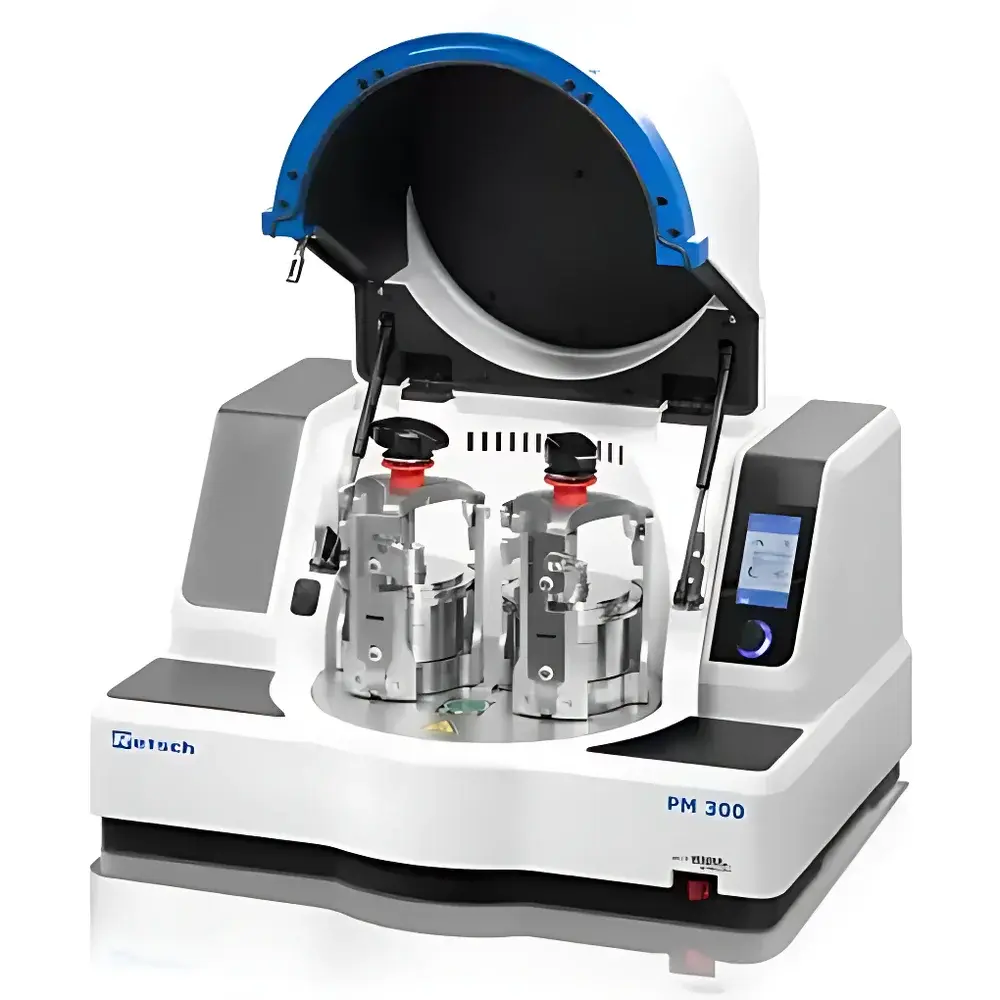
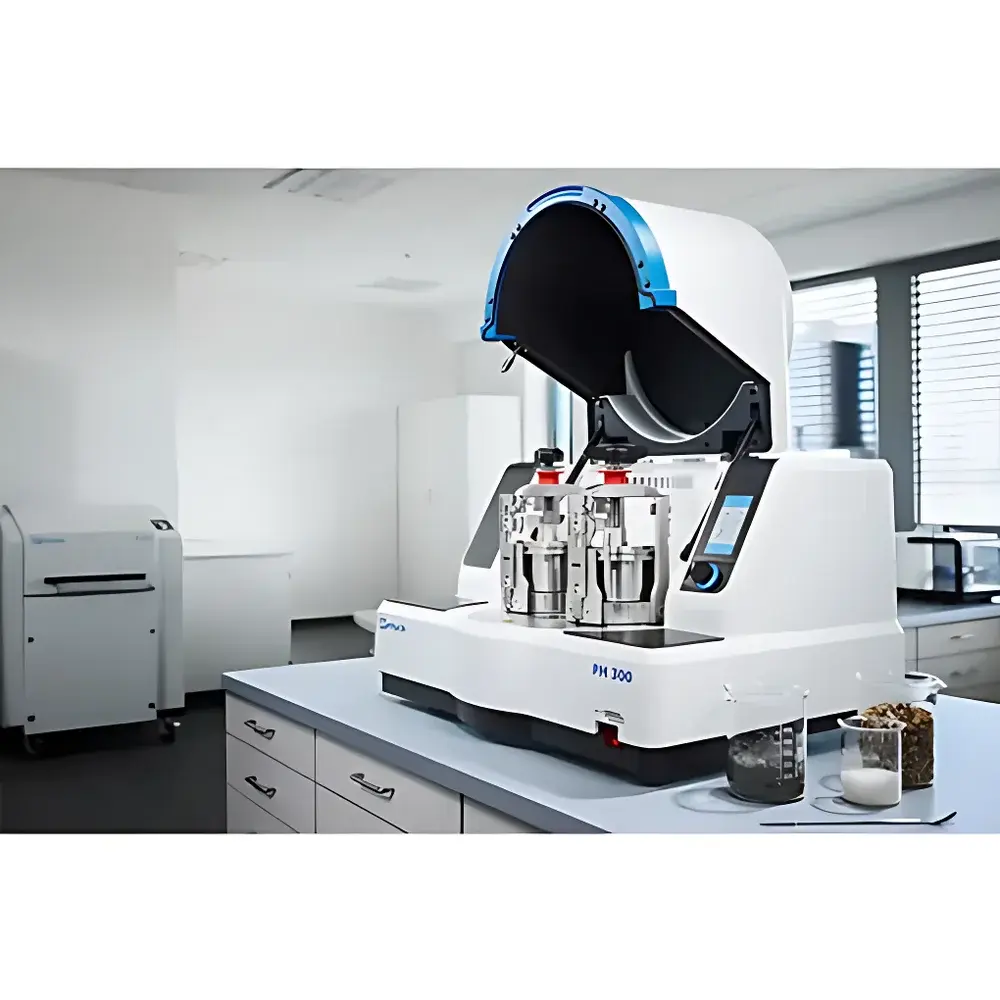
The RETSCH PM 300 Planetary Ball Mill is a high-performance, benchtop laboratory instrument engineered for reproducible, high-energy size reduction of hard, brittle, fibrous, or temperature-sensitive materials. Operating on the principle of planetary motion—where grinding jars rotate in the opposite direction to the sun wheel at a fixed 1:−2 speed ratio—the PM 300 generates centrifugal accelerations of up to 64.4 g. This kinematic configuration enables intense impact, shear, and friction forces essential for achieving sub-micron and nanoscale particle sizes. Unlike conventional shaker or vibratory mills, the PM 300’s dual-grinding-station architecture supports parallel processing while maintaining strict mechanical symmetry and thermal stability. Its design conforms to DIN EN 61000-6-2 (EMC immunity) and DIN EN 61000-6-4 (EMC emission), and all safety-critical functions—including jar clamping verification and emergency stop—are mechanically interlocked per EN 60204-1.
Key Features
- Two independent grinding stations accommodating jars from 12 mL to 500 mL; 12–80 mL jars may be stacked in pairs for quadruple small-batch processing
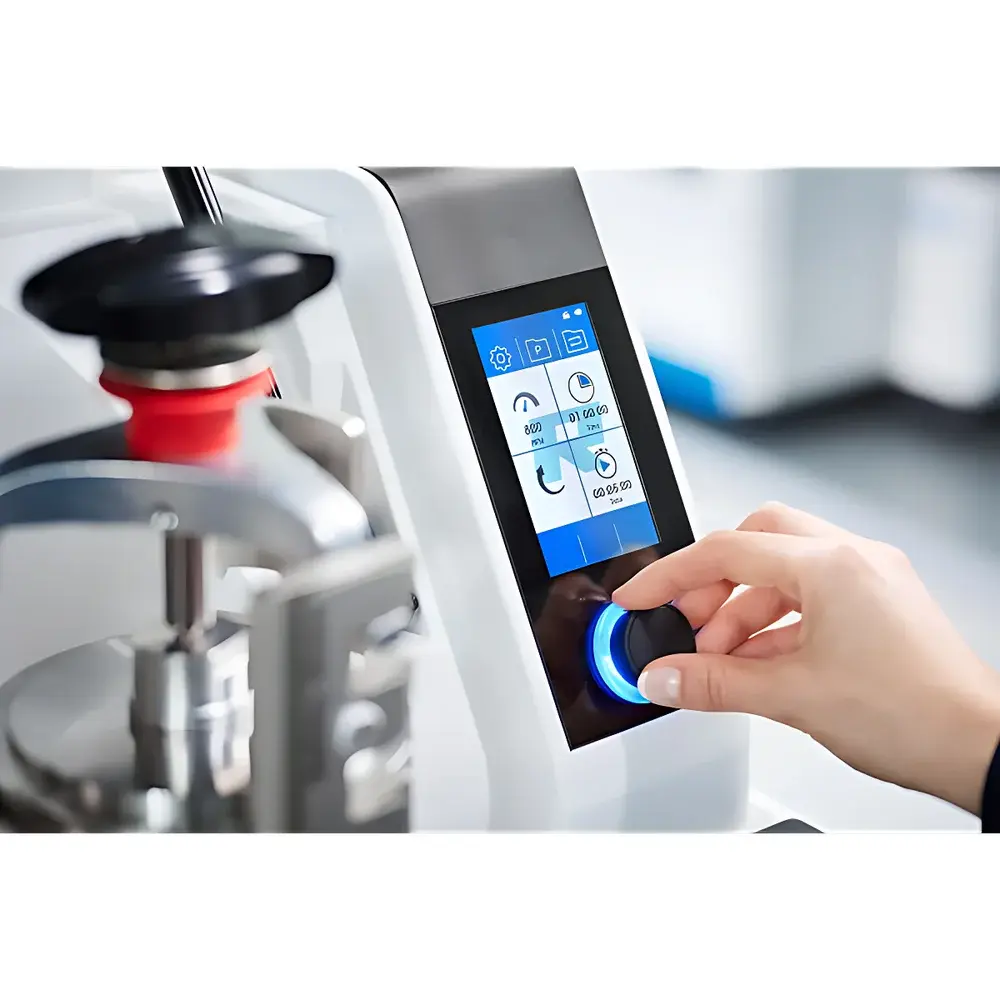
- Touchscreen HMI with intuitive navigation, supporting storage of up to 12 SOPs and 4 multi-step cycle programs
- Programmable operation including total runtime (up to 99 h), intermittent cycles, directional reversal (to minimize agglomeration), and automatic elapsed-time calculation
- Integrated dual-fan ventilation system directing laminar airflow across grinding jars to enhance thermal dissipation during extended runs
- Mechanical sun wheel locking mechanism ensuring precise jar positioning and eliminating reliance on electronic actuators—enhancing long-term reliability and service accessibility
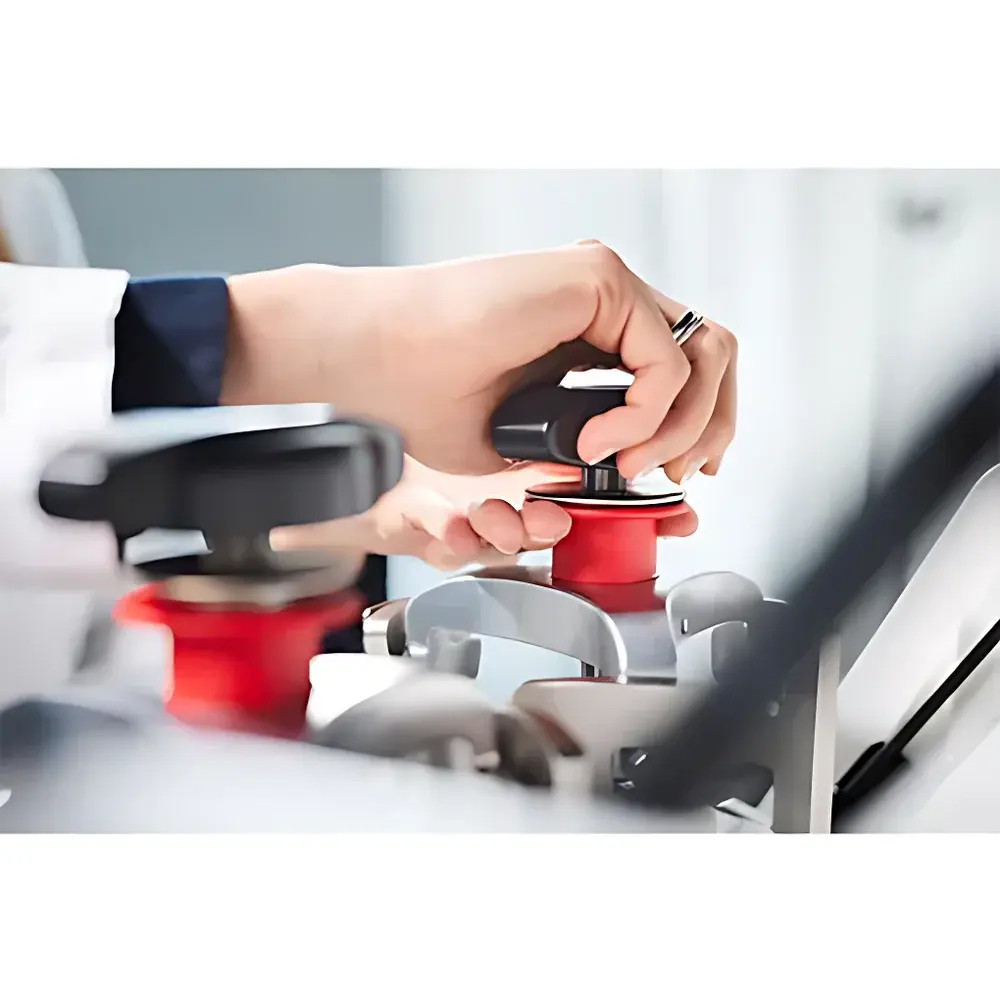
- Torque-sensing clamping system with audible alert and on-screen confirmation upon reaching 25 N·m, preventing inadvertent startup under insufficient fixation
- Free-Flow Compensation System (FFCS) base isolates operational vibrations, enabling stable placement on standard lab benches without anchoring
- Optional GrindControl sensor kit for real-time monitoring of internal jar temperature and pressure—critical for mechanochemical reaction control and thermal-sensitive materials
Sample Compatibility & Compliance
The PM 300 is validated for processing a broad spectrum of inorganic and organic solids, including oxides (e.g., TiO₂, SiO₂), metals, alloys, ceramics, pharmaceutical actives, and polymers. It accommodates both dry grinding (for coarse-to-fine reduction) and wet grinding (for nanoscale dispersion using solvents or surfactants). Jar materials include hardened steel, stainless steel, tungsten carbide, agate, and PTFE—each selected to avoid cross-contamination and support specific chemical compatibility requirements (e.g., acid resistance, non-magnetic operation). The instrument complies with ISO 17025 calibration traceability standards when used with certified torque wrenches and calibrated temperature probes. For regulated environments, audit trails of parameter changes, runtime logs, and user authentication can be exported via USB in CSV format—supporting GLP/GMP documentation workflows aligned with FDA 21 CFR Part 11 principles (when paired with secure networked data management systems).
Software & Data Management
The embedded firmware provides full parameter logging—including setpoints, actual rotational speeds (monitored independently of nominal values), torque status, fan duty cycle, and thermal profiles (when GrindControl is installed). All settings are retained after power loss due to non-volatile memory backup. Exportable logs contain timestamps, operator IDs (if configured), and cycle-specific metadata. While the PM 300 does not feature built-in Ethernet or cloud connectivity, its USB interface enables seamless integration into LIMS or ELN platforms via standardized file transfer protocols. SOP recall functionality ensures method consistency across operators and shifts—reducing inter-user variability in particle size distribution (PSD) results as verified per ISO 13320:2020 laser diffraction validation guidelines.
Applications
The PM 300 serves critical roles in materials science, pharmaceutical development, geochemistry, and catalysis research. In mechanochemistry, it facilitates solid-state synthesis of metal–organic frameworks (MOFs), intermetallic compounds, and amorphous phases without solvents. Its capacity for controlled wet grinding enables production of stable colloidal suspensions below 100 nm—essential for nanoparticle-enabled drug delivery systems and conductive inks. In quality control laboratories, it prepares homogenized reference powders for XRD, SEM-EDS, and BET surface area analysis. The instrument is routinely cited in peer-reviewed literature for applications such as crystallinity disruption in polymorphic screening, activation of catalyst precursors, and preparation of electrode slurries for battery R&D.
FAQ
What is the maximum recommended continuous runtime?
The PM 300 supports uninterrupted operation for up to 99 hours; however, thermal management must be evaluated per sample type—especially during high-speed (>600 rpm) wet grinding.
Can the PM 300 achieve true nanoscale particle sizes?
Yes—under optimized wet-grinding conditions (e.g., using 0.1–0.5 mm zirconia beads, 60% jar fill level, and solvent-assisted dispersion), median particle diameters <100 nm are routinely attainable, as confirmed by DLS and TEM cross-validation.
Is the torque clamping system calibrated and traceable?
The 25 N·m threshold is factory-set and mechanically defined; periodic verification using a certified torque wrench (e.g., DIN ISO 6789-compliant) is recommended every 6 months or 500 cycles.
How does directional reversal improve grinding efficiency?
Reversing jar rotation disrupts preferential particle alignment and reduces localized heat buildup, mitigating agglomeration and improving size distribution uniformity—particularly beneficial for cohesive or electrostatically charged materials.
What regulatory documentation is available for GxP environments?
RETSCH supplies a Factory Acceptance Test (FAT) report, IQ/OQ templates, and a Declaration of Conformity (DoC) covering EN 61000 and EN 60204-1. Full 21 CFR Part 11 compliance requires supplementary IT infrastructure and procedural controls implemented by the end user.



