
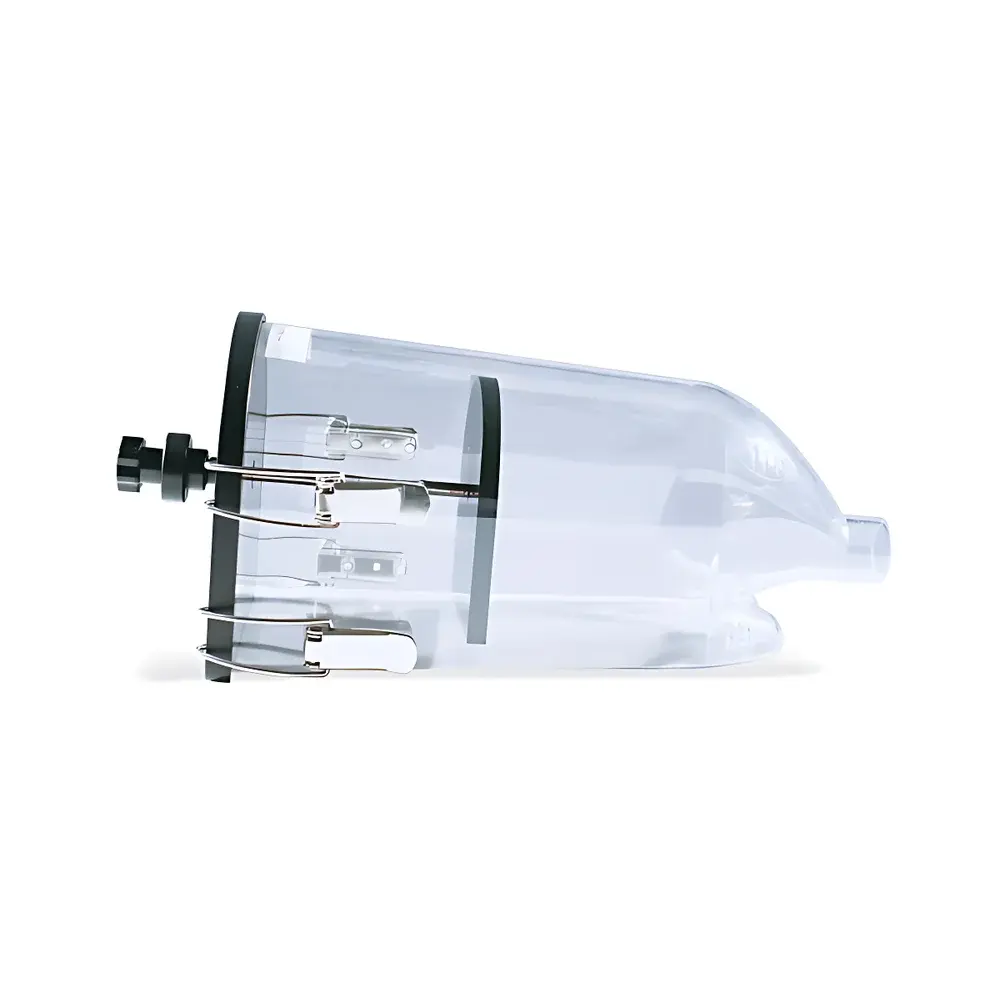
Rabbit Restraint Tube
| Brand | Huironghe |
|---|---|
| Origin | Beijing, China |
| Manufacturer Type | Authorized Distributor |
| Country of Origin | China |
| Model | HRH__ |
| Pricing | Available Upon Request |
Overview
The Rabbit Restraint Tube is a purpose-engineered device designed for safe, humane, and reproducible immobilization of rabbits during non-invasive or minimally invasive experimental procedures. Constructed in accordance with internationally recognized principles of laboratory animal welfare—including the Guide for the Care and Use of Laboratory Animals (NRC, 8th ed.) and Directive 2010/63/EU on the protection of animals used for scientific purposes—the tube provides consistent physical containment without compromising respiratory function, thermoregulation, or vascular access. Its design leverages passive restraint mechanics: the cylindrical geometry and tapered entry facilitate gentle insertion while minimizing stress-induced movement; internal contouring accommodates standard New Zealand White, Dutch Belted, or Californian rabbit body morphologies (typically 2–5 kg). The device operates on a mechanical restraint principle—no electrical components, pneumatic systems, or active feedback loops—and is intended for short-duration applications (≤30 minutes per session) under direct observer supervision.
Key Features
- Smooth, non-porous interior surface fabricated from medical-grade polypropylene to prevent fur entanglement and support routine disinfection (compatible with 70% ethanol, 0.5% sodium hypochlorite, and autoclaving at 121°C for 15 min).
- Ergonomic handle and integrated thumb-release latch enable one-handed operation and rapid deployment in high-throughput vivarium workflows.
- Modular end-cap system allows configurable access: solid cap for full containment, perforated cap for enhanced ventilation, or port-equipped cap for concurrent IV catheterization or sensor integration (e.g., rectal probe, ECG lead routing).
- Calibrated length-to-diameter ratio (L/D ≈ 4.2:1) optimized to restrict lateral torsion while permitting natural sternal recumbency and unobstructed thoracic expansion.
- Compliant with ISO 10993-5 (cytotoxicity) and ISO 10993-10 (irritation/sensitization) biocompatibility standards for prolonged skin contact.
Sample Compatibility & Compliance
The Rabbit Restraint Tube is validated for use with adult rabbits (Oryctolagus cuniculus) weighing 2.0–4.5 kg. It is not intended for neonatal, geriatric, or morbidly obese subjects (>5.5 kg), nor for conscious restraint during painful or distressing procedures without concurrent analgesia or sedation per IACUC-approved protocols. The device meets structural requirements outlined in AAALAC International accreditation standards for equipment used in acute pharmacokinetic sampling, ophthalmic dosing, dermal exposure studies, and serial blood collection via marginal ear vein or central venous catheters. All units are supplied with a traceable lot number and certificate of conformance indicating compliance with GB/T 16886 (Chinese equivalent of ISO 10993) and ISO 9001:2015 quality management system certification held by the distributor.
Software & Data Management
This is a standalone mechanical restraint device with no embedded electronics, firmware, or digital interface. Consequently, it generates no raw data streams, requires no software installation, and introduces zero risk of electromagnetic interference with adjacent instrumentation (e.g., EEG amplifiers, laser Doppler flowmeters, or MRI-compatible monitoring systems). Experimental metadata—including subject ID, restraint duration, cap configuration, and observer notes—must be recorded manually or imported into institutional ELN (Electronic Lab Notebook) platforms such as LabArchives or Benchling. For GLP-compliant studies, users are advised to document tube usage within audit trails that satisfy 21 CFR Part 11 requirements for electronic records, particularly when linked to PK/PD datasets or histopathology submission packages.
Applications
- Serial blood sampling via marginal ear vein or jugular cannula under visual guidance.
- Ophthalmic instillation and tear film assessment using slit-lamp biomicroscopy.
- Dermal application and occlusion testing per OECD TG 402 and ISO 18185-2 protocols.
- Non-invasive imaging preparation (e.g., high-resolution ultrasound of abdominal organs or cardiac function).
- Acute neurobehavioral observation during auditory/vibrational stimulus delivery.
- Training platform for novice technicians in species-specific handling techniques prior to terminal procedures.
FAQ
Is this device suitable for long-term housing or chronic restraint?
No. The Rabbit Restraint Tube is strictly intended for acute, supervised restraint during defined experimental interventions lasting ≤30 minutes. Prolonged immobilization violates ethical guidelines and may induce hyperthermia, pressure necrosis, or GI stasis.
Can it be sterilized using ethylene oxide (EtO)?
Ethylene oxide sterilization is not recommended due to residual gas absorption in polypropylene and potential cytotoxic leachables. Autoclaving or liquid chemical disinfection is preferred.
Does the manufacturer provide IACUC protocol language or SOP templates?
Yes—authorized distributors supply standardized IACUC appendices describing proper fitting, monitoring parameters (e.g., respiration rate, ear temperature), and emergency release procedures. These documents align with OLAW guidance and are available upon institutional verification.





