
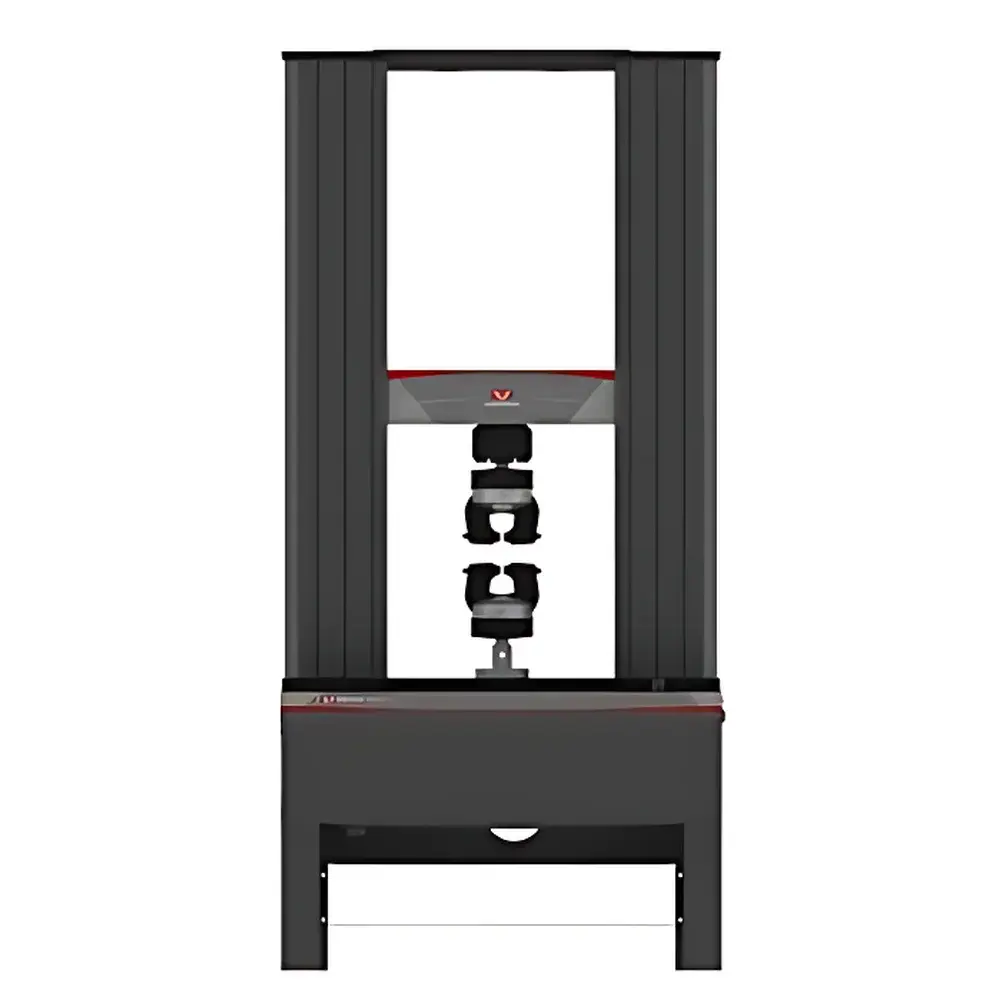
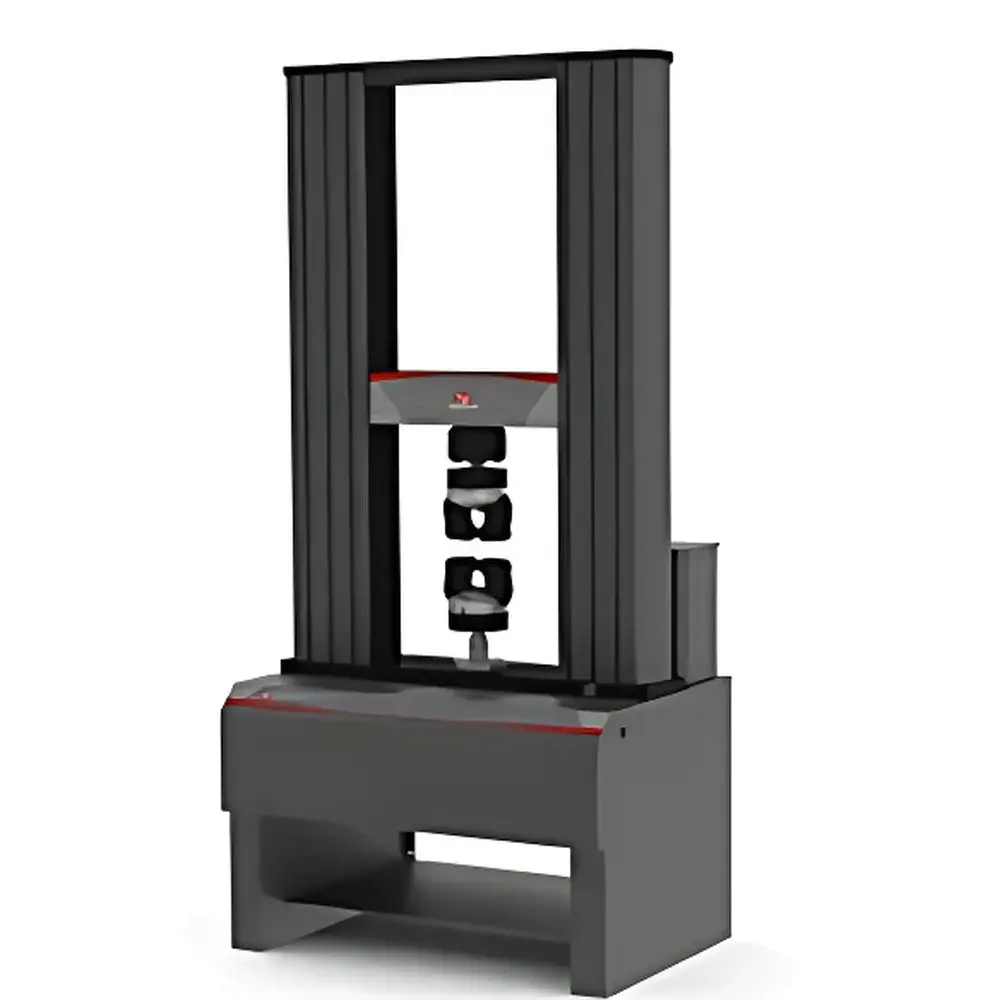
Instron 2380 Series Electromechanical Universal Testing System
| Brand | Instron |
|---|---|
| Origin | USA |
| Model | 2380 |
| Type | Electromechanical Tensile and Compression Testing Machine |
| Load Capacity | Up to 100 kN (22,500 lbf) |
| Load Accuracy | ±0.5% of indicated load |
| Force Resolution | 1/200 to full scale without accuracy loss |
| Data Acquisition Rate | 500 Hz |
| Crosshead Speed Range | Up to 500 mm/min (20 in/min) |
| Vertical Test Space | 1323 mm (51.3 in) |
| Compliance | CE-marked |
| Software | Bluehill Universal (fully integrated, sensor auto-recognition enabled) |
| Fixture Compatibility | Extensive catalog of ASTM-, ISO-, and ISO 17025-aligned grips and tooling |
Overview
The Instron 2380 Series is a high-performance electromechanical universal testing system engineered for precision mechanical property evaluation across research, quality control, and production environments. Designed around a robust dual-column frame architecture with precision-ground ball screws and high-fidelity servo-motor actuation, the system delivers repeatable force and displacement control under both tensile and compressive loading conditions. Its core measurement principle relies on closed-loop feedback control of crosshead position and load via calibrated load cells and encoder-based displacement sensing—ensuring traceable, NIST-referenced performance compliant with international standards including ASTM E4, ASTM E8/E8M, ISO 6892-1, and ISO 7500-1. The 2380 platform serves as the foundation for the floor-standing 2382 configuration (100 kN capacity), optimized for routine high-throughput testing of metals, polymers, composites, elastomers, and biomedical materials where reliability, regulatory readiness, and long-term stability are critical.
Key Features
- High-fidelity load measurement: Load cells maintain ±0.5% accuracy across the entire usable range—from 0.5% to 100% of full-scale capacity—without recalibration or range switching.
- Real-time data integrity: 500 Hz synchronized acquisition of load, displacement, and strain (when equipped with extensometers) ensures capture of transient deformation events, yield onset, and fracture dynamics.
- Intelligent hardware integration: Automatic sensor recognition eliminates manual configuration errors; Bluehill Universal software detects connected load cells, extensometers, environmental chambers, and video extensometers upon connection.
- Modular mechanical architecture: Rigid Meehanite cast-iron base and reinforced steel columns minimize frame deflection, supporting high-stiffness testing per ASTM E1012 requirements for system alignment verification.
- Regulatory-ready operation: Fully compliant with CE directives (2014/30/EU EMC & 2006/42/EC Machinery Directive); supports 21 CFR Part 11-compliant audit trails, electronic signatures, and user-access-level management when deployed with validated Bluehill configurations.
- Scalable test environment: Compatible with Instron’s full suite of environmental chambers (-70 °C to +350 °C), pneumatic grips, wedge-action grips, hydraulic tension grips, and custom fixtures designed for ISO 527, ASTM D638, ISO 178, and ASTM D790 protocols.
Sample Compatibility & Compliance
The 2380 Series accommodates specimens ranging from miniature metallic coupons (e.g., ASTM E8 sub-size) to full-section composite laminates and structural polymer components. Its 1323 mm vertical test space and 500 mm/min crosshead speed support both quasi-static and moderate-rate testing per ISO 26203-2. All standard configurations meet essential safety and electromagnetic compatibility requirements under EU Machinery and EMC Directives. When paired with certified calibration services and documented uncertainty budgets, the system satisfies ISO/IEC 17025 accreditation criteria for testing laboratories. Routine verification procedures—including frame stiffness checks, alignment verification per ASTM E1012, and load cell calibration traceable to NIST standards—are fully supported by Instron’s calibration and validation documentation packages.
Software & Data Management
Bluehill Universal software provides a validated, intuitive interface for method creation, real-time monitoring, automated calculations (modulus, yield strength, elongation at break, Poisson’s ratio), and standardized reporting. It supports multi-step test profiles (preload → ramp → hold → return), conditional branching, and pass/fail logic based on user-defined tolerances. Data export conforms to ASTM E1432 and ISO 10360-6 formats, with native CSV, PDF, XML, and database (ODBC) output options. Audit trail functionality records all user actions—including method edits, test starts/stops, and result overrides—with timestamps and operator IDs. For regulated industries, optional IQ/OQ/PQ documentation kits and 21 CFR Part 11 compliance modules are available to support FDA, ISO 13485, and GMP audits.
Applications
- Metallic material characterization: Tensile testing per ASTM E8/E8M, compression per ASTM E9, and bend testing per ASTM E290.
- Plastic and polymer validation: Determination of tensile properties (ASTM D638), flexural behavior (ASTM D790), and impact-modified ductility (ISO 527-2).
- Composite qualification: Laminate tensile strength, interlaminar shear (ASTM D2344), and compression-after-impact (CAI) per ASTM D7137.
- Medical device component testing: Suture tensile strength (ASTM D2256), balloon burst pressure (ASTM F2056), and orthopedic implant fixation testing.
- Automotive and aerospace QA: Batch release testing of fasteners, adhesives, gaskets, and thermoplastic structural parts under controlled temperature/humidity conditions.
FAQ
What is the maximum load capacity of the Instron 2380 Series?
The 2382 floor-standing configuration supports up to 100 kN (22,500 lbf); the 2386 variant extends capacity to 300 kN.
Does the system support extensometer integration?
Yes—both clip-on and non-contact video extensometers (e.g., Instron Advanced Video Extensometer AVX2) are natively supported with automatic calibration and real-time strain calculation.
Is Bluehill Universal software included with the system?
Yes—the base license is supplied standard; advanced modules (e.g., fatigue, creep, or Part 11 compliance) require separate validation and licensing.
Can the 2380 Series be used for dynamic or cyclic testing?
It is optimized for static and quasi-static tests; for high-cycle fatigue applications, Instron’s ElectroPuls or 8800 series servo-hydraulic systems are recommended.
How is traceability maintained for calibration and verification?
All load cells ship with NIST-traceable calibration certificates; annual verification kits and third-party accredited calibration services are available through Instron’s global service network.



