
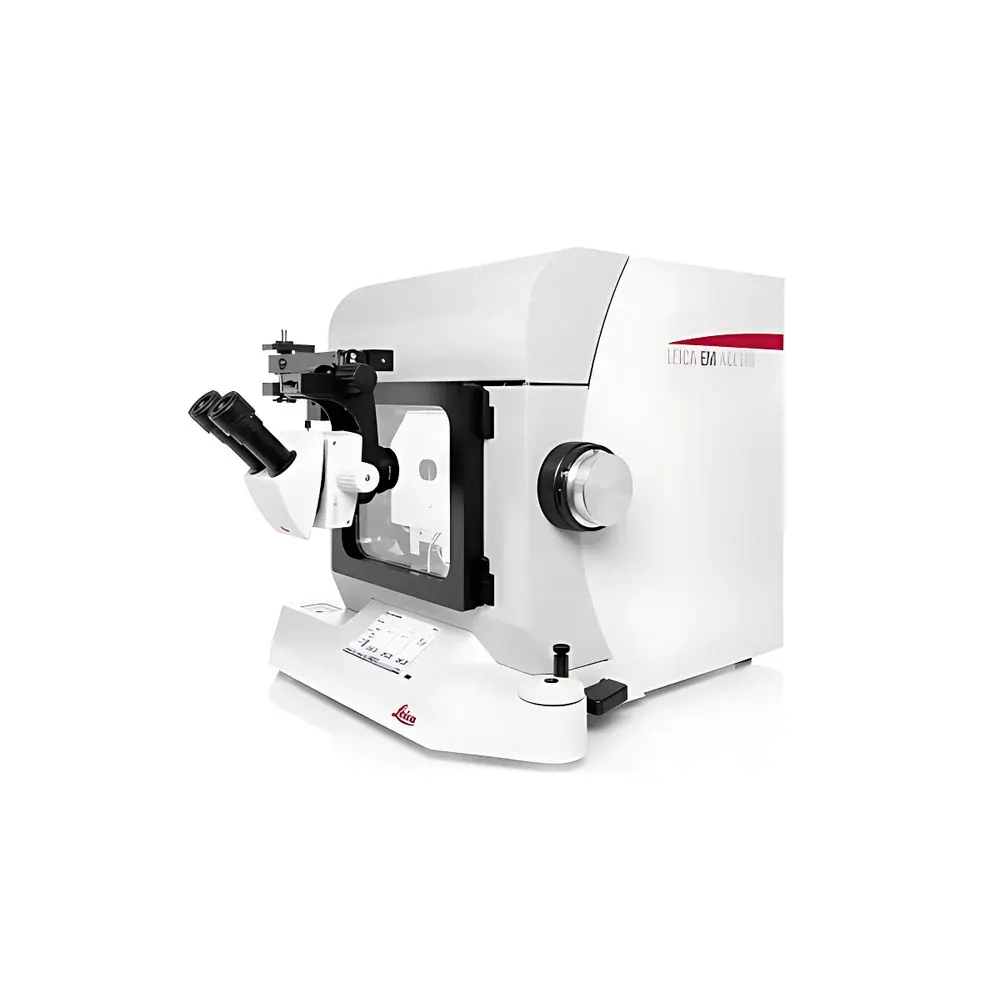
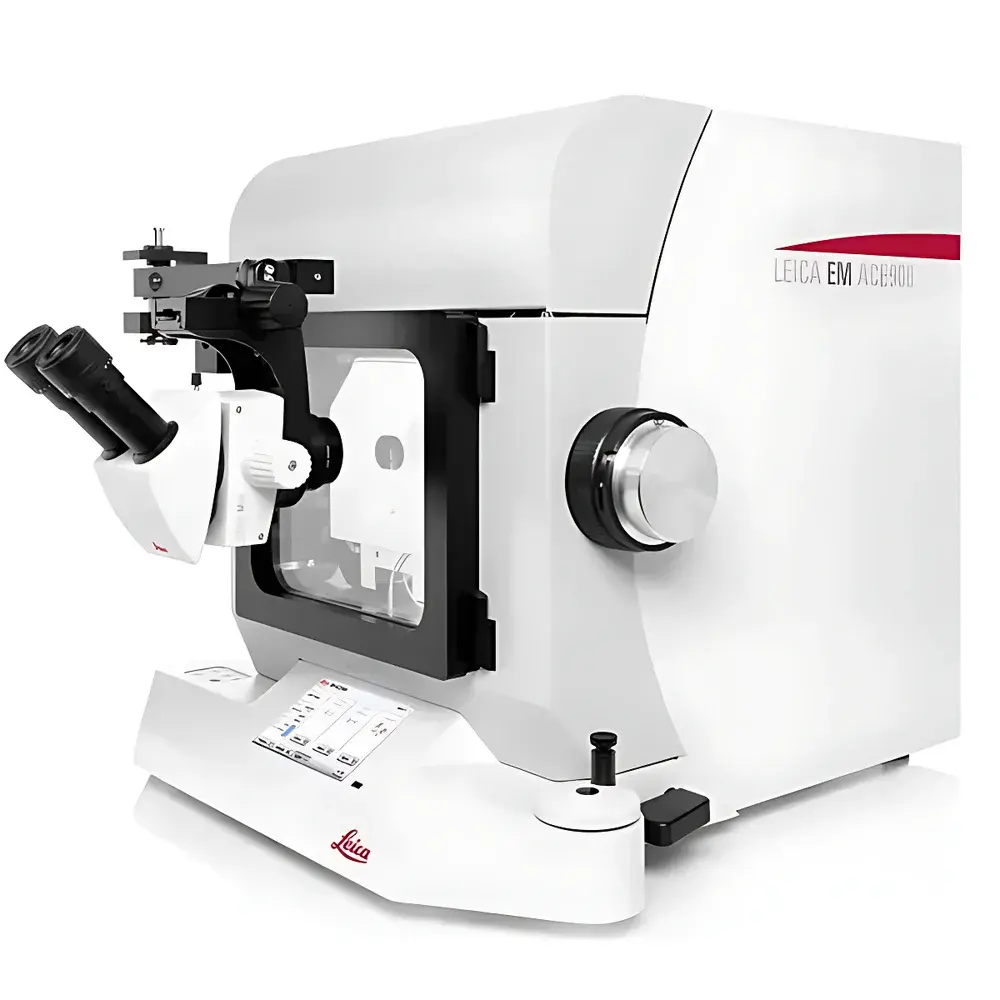
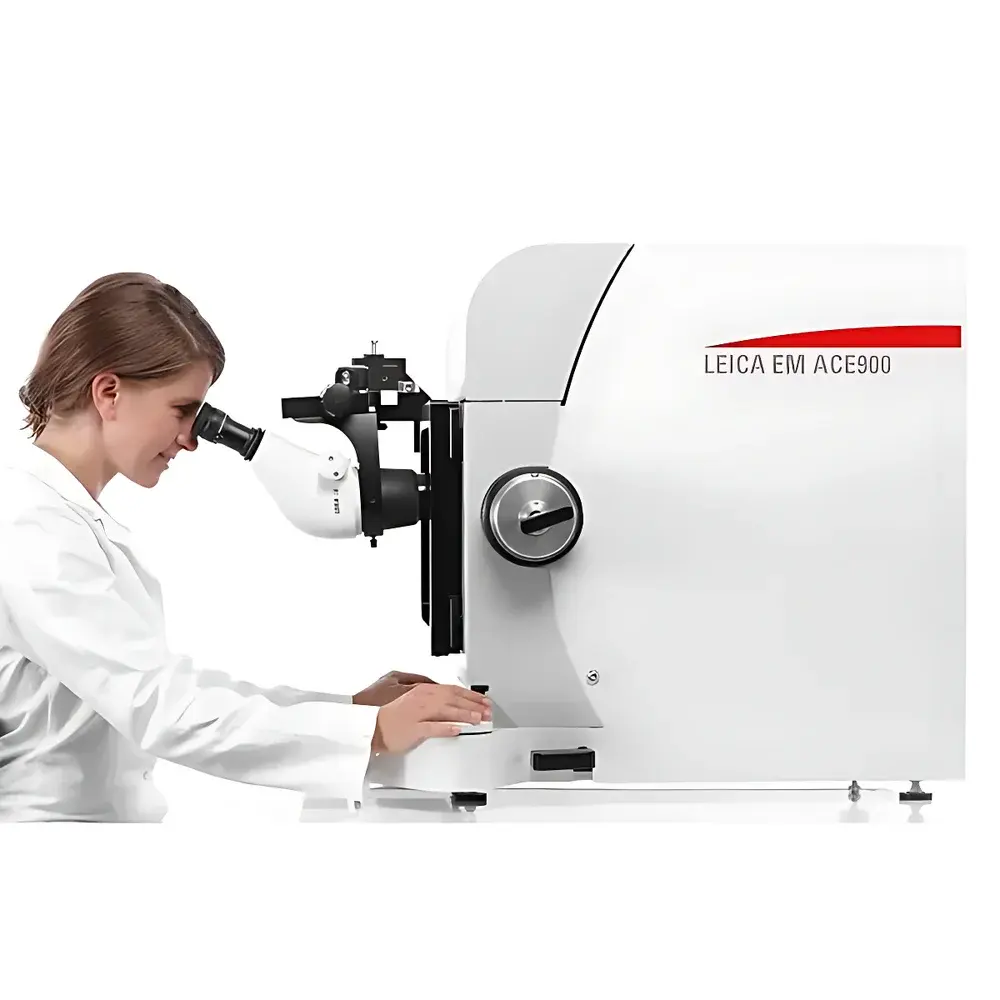
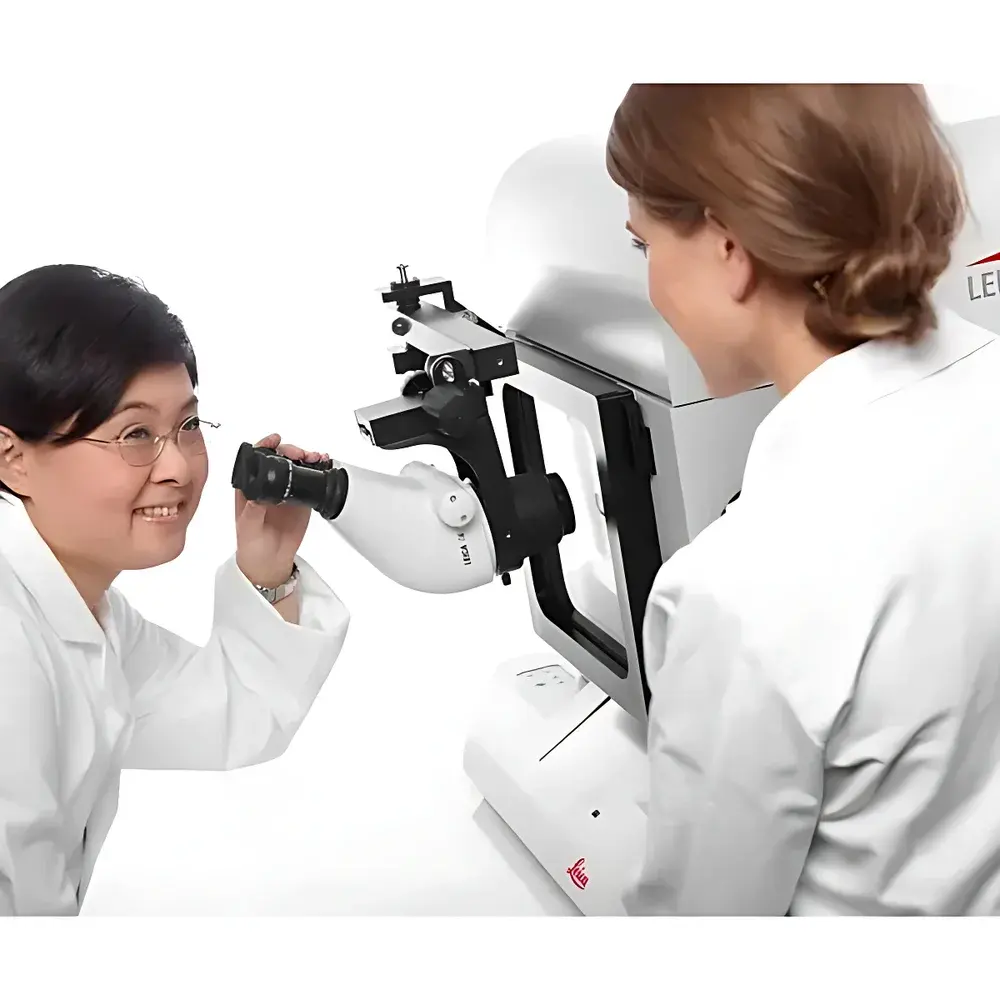
Leica EM ACE900 Cryo-Fracture System (Discontinued)
| Brand | Leica |
|---|---|
| Origin | Germany |
| Model | EM ACE900 |
| Category | Imported Cryo-Preparation Instrument for Electron Microscopy |
| Status | Discontinued |
Overview
The Leica EM ACE900 Cryo-Fracture System is a discontinued but historically significant high-precision cryogenic sample preparation platform engineered for transmission electron microscopy (TEM) replica preparation and cryo-scanning electron microscopy (cryo-SEM) workflows. It integrates three critical cryo-EM specimen preparation steps—cryo-fracturing, cryo-etching, and electron-beam evaporation coating—within a single ultra-high vacuum (UHV) chamber. The system operates on the principle of rapid vitrification followed by controlled brittle fracture at cryogenic temperatures (typically ≤ –140 °C), enabling preservation of native ultrastructure in biological membranes, soft polymers, and hydrated materials. Its design emphasizes thermal stability, contamination control, and reproducible fracture plane generation—key requirements for high-fidelity structural analysis in life sciences and advanced materials research.
Key Features
- Integrated cryo-fracture, cryo-etching, and dual-source electron-beam (e-beam) coating (C/Pt or C/Au) in one UHV chamber
- Rotating cryo-stage with precise angular positioning for directional shadowing and variable-angle metal/carbon replication
- Dual independent e-beam sources with individual gate valves—enabling sequential carbon undercoating and metal overcoating without breaking vacuum
- Vacuum lock systems for tool (knife), sample carrier, and cryo-shuttle transfer—ensuring <10–6 mbar base pressure maintenance during rapid sample exchange
- Redesigned cryo-cooling architecture reducing liquid nitrogen (LN2) consumption by ~87% during cooldown and ~58% per hour of operation versus prior-generation systems
- Cool-down time to operational temperature reduced by ~33% due to optimized thermal mass distribution and enhanced cold-stage efficiency
- Compliant with DIN EN ISO 14001 environmental management standards; certified in 2015
- Intuitive touchscreen interface with automated protocol storage, parameter logging (temperature, time, angle, e-beam current, vacuum level), and GLP-compliant audit trail capability
Sample Compatibility & Compliance
The EM ACE900 accommodates a broad range of cryo-sensitive specimens—including biological tissues (e.g., freeze-fractured plasma membranes, bacterial envelopes, mitochondrial cristae), soft materials (latex dispersions, block copolymers, hydrogels), pharmaceutical formulations (liposomal drug carriers), food matrices (frozen emulsions, ice crystal networks), and liquid crystal phases. All processes occur under ultra-high vacuum (<10–6 mbar) to prevent surface contamination and ice crystallization artifacts. The system supports ASTM E2015 (Standard Guide for Preparation of Specimens for Cryo-SEM), ISO 21720 (Electron microscopy — Cryo-SEM — Methodology for imaging frozen-hydrated specimens), and aligns with FDA 21 CFR Part 11 requirements when used with validated software configurations and electronic signature protocols. Its integration with the Leica EM VCT500 cryo-transfer system enables end-to-end GMP-aligned workflow traceability for regulated applications.
Software & Data Management
The embedded operating system records all critical process parameters—including stage temperature (±0.5 °C accuracy), etching duration, fracture initiation timing, e-beam deposition rates, vacuum history, and user ID—into timestamped, non-editable log files. Data export is supported via USB or network interface in CSV and XML formats for LIMS integration. Optional Leica Application Suite (LAS) X modules provide remote monitoring, SOP-driven batch processing, and digital signature validation for audit-ready documentation. The system maintains full traceability per GLP/GMP guidelines, including operator authentication, version-controlled method templates, and automatic backup of calibration logs.
Applications
- Membrane ultrastructure analysis: Freeze-fracture replication of lipid bilayers, tight junctions, and ion channel distributions
- Nanomaterial morphology: Visualization of phase separation in polymer blends, nanoparticle dispersion in matrices, and interfacial boundaries in composites
- Pharmaceutical development: Structural assessment of lyophilized protein formulations, micellar assemblies, and cryo-stabilized liposomes
- Food science: Ice crystal morphology mapping, fat globule network integrity, and starch gelatinization behavior under freezing stress
- Materials science: Investigation of grain boundaries, defect propagation, and nanoscale domain organization in liquid crystals and ferroelectrics
FAQ
Is the Leica EM ACE900 still commercially supported?
No—Leica Microsystems officially discontinued the EM ACE900 in 2019. Limited technical support may be available through authorized service partners for legacy instrument maintenance, but no new units or original spare parts are manufactured.
Can the EM ACE900 be integrated with modern cryo-SEM platforms?
Yes—its standardized flange interface (CF 100) and vacuum compatibility allow direct mechanical and operational coupling with the Leica EM VCT500 cryo-transfer system and compatible field-emission SEMs equipped with cryo-stages.
What are the minimum LN2 requirements for stable operation?
Typical consumption is ~1.2 L/h during steady-state cryo-etching and fracturing; the system includes real-time LN2 level monitoring and low-level alarms to prevent thermal drift.
Does the system comply with regulatory data integrity standards?
When configured with audit-trail-enabled software and user access controls, it meets core elements of FDA 21 CFR Part 11 and EU Annex 11 for electronic records and signatures in regulated environments.
What alternatives does Leica offer following the ACE900 discontinuation?
Leica’s current-generation solution is the EM ACE950, which extends the ACE900’s architecture with improved automation, expanded coating material options (including Cr and Ti), and enhanced vacuum pumping kinetics.
Related Products



