
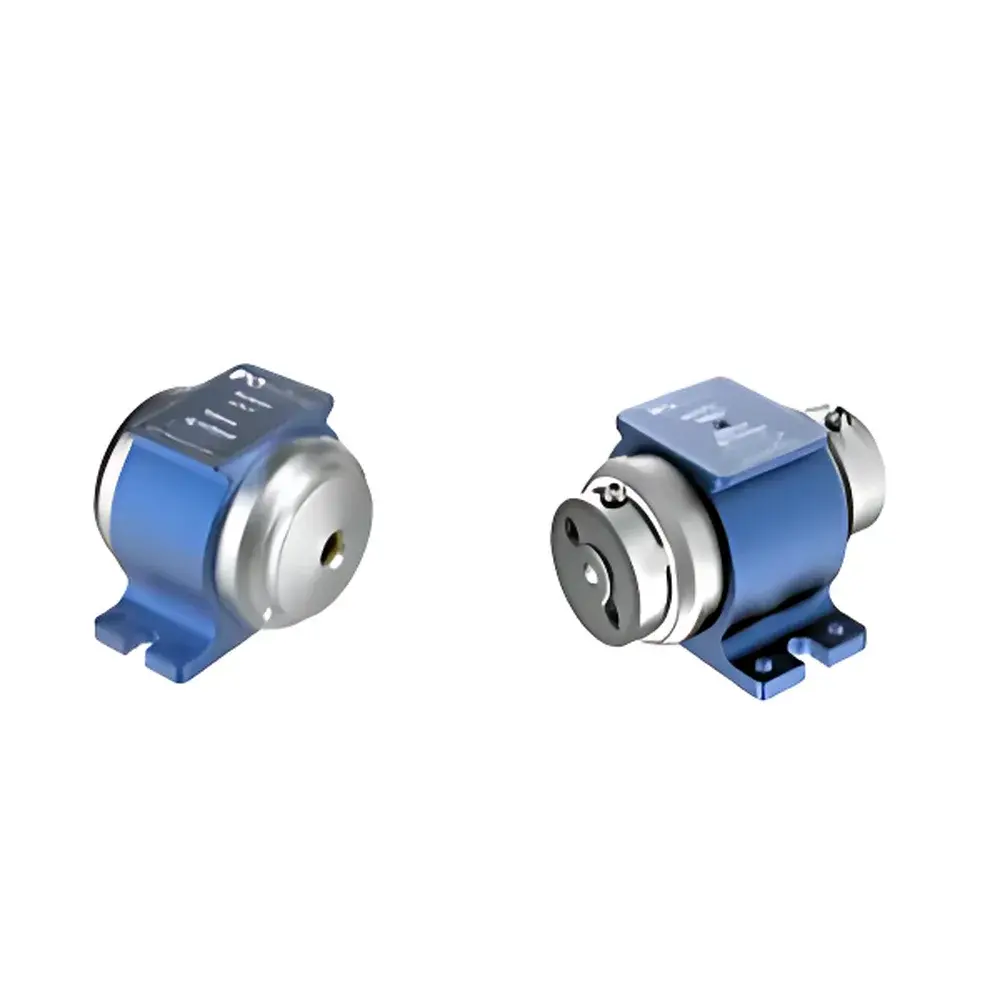
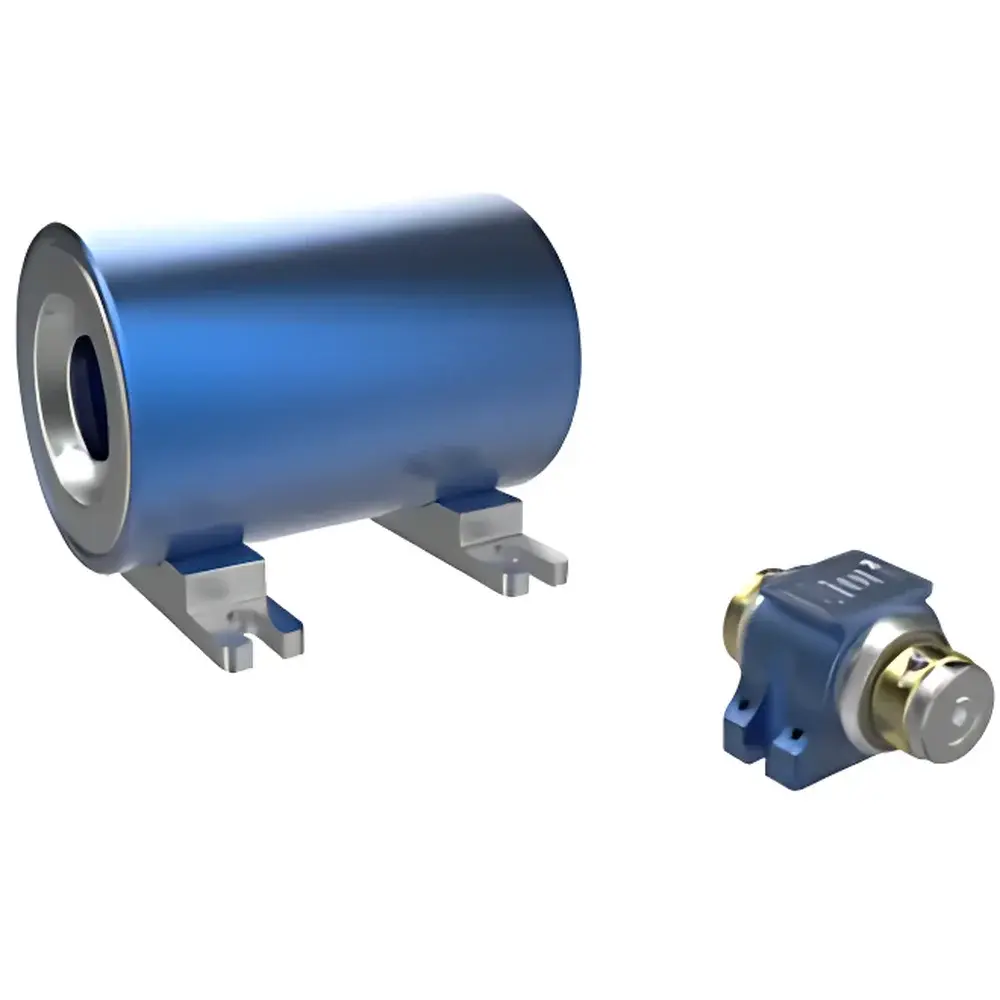
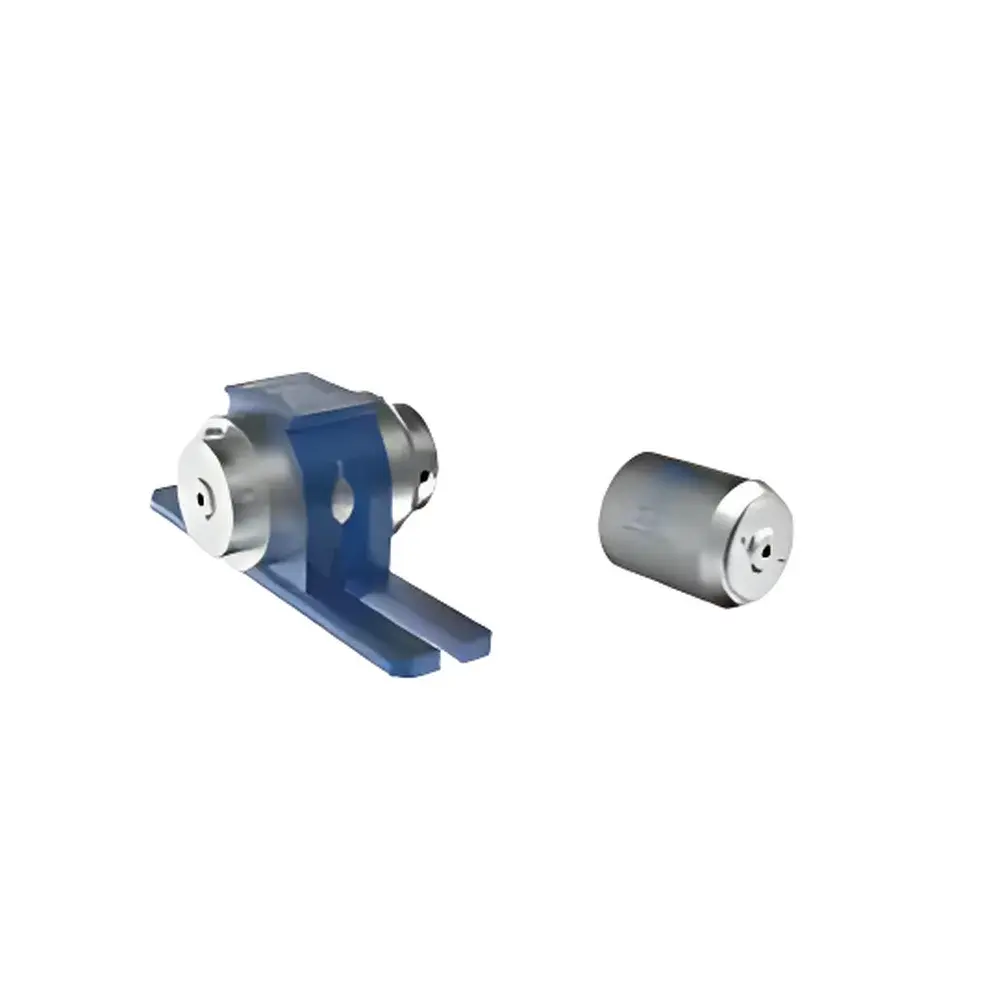
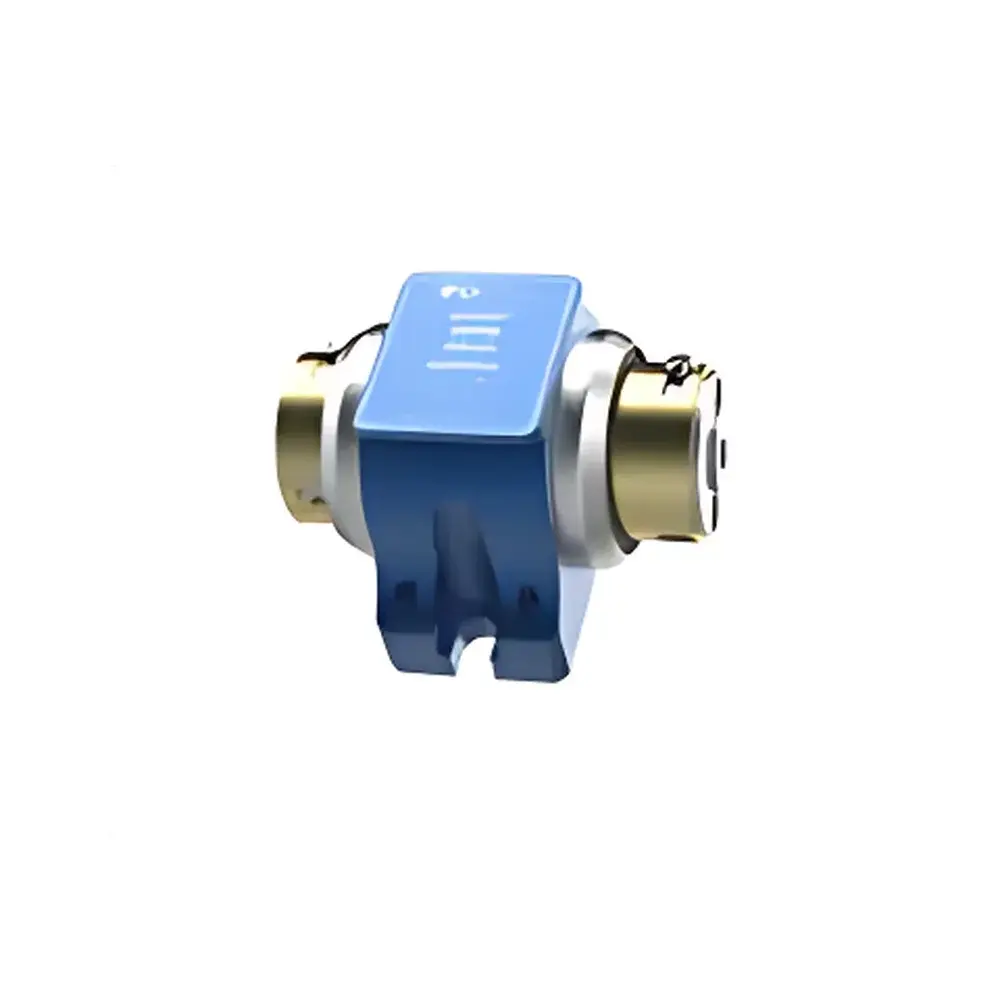
Auniontech IPOptica HPTG/HPKT/VITG Series High-Power, Large-Aperture Faraday Optical Isolators
| Brand | Auniontech (IPOptica) |
|---|---|
| Clear Aperture | Up to 70 mm |
| Operating Wavelength | 405–1100 nm (model-dependent) |
| Peak Rotation | 45° ± 0.5° |
| Damage Threshold | >7 J/cm² @ 10 ns (HPKT), >10 J/cm² @ 10 ns (HPTG), 3 J/cm² @ 10 ns (VITG) |
| Transmission | >98% (rotator), >96% (isolator) |
| Isolation | >35 dB (HPTG/HPKT), >30 dB (VITG) |
| Storage Temperature | −40°C to +70°C |
| Beam Pointing Stability | <5 mrad |
Overview
Auniontech IPOptica High-Power, Large-Aperture Faraday Optical Isolators are precision-engineered passive optical components designed to provide unidirectional transmission and robust back-reflection suppression in demanding laser systems. Based on the magneto-optic Faraday effect, these isolators rotate the polarization state of forward-propagating light by 45° within a terbium gallium garnet (TGG) or equivalent magneto-optic crystal under a precisely aligned axial magnetic field. Combined with input and output polarizers, this enables high-extinction isolation—preventing destabilizing feedback into oscillators, amplifiers, and frequency-conversion stages. Unlike fiber-pigtailed alternatives, these free-space isolators accommodate high-peak-power pulsed lasers (e.g., Nd:YAG, Yb:fiber, Ti:sapphire) and high-average-power CW sources (up to 400 W continuous, with HPKT models validated beyond 1.1 kW), while maintaining low thermal lensing, minimal absorption (<0.1%/cm), and long-term stability under thermal cycling.
Key Features
- Large clear apertures up to 70 mm diameter—enabling integration with high-beam-quality industrial and scientific lasers without clipping or diffraction-induced wavefront distortion
- High laser-induced damage threshold (LIDT): >10 J/cm² at 1064 nm, 10 ns pulse width (HPTG); >7 J/cm² (HPKT); >3 J/cm² (VITG)—validated per ISO 21254-1 and calibrated using raster-scan methodology
- Ultra-low insertion loss: >98% transmission for Faraday rotators; >96% for full isolator assemblies—minimizing thermal loading and power waste
- Thermally stable design: Optimized magnetic circuit geometry and low-absorption crystal bonding reduce thermal gradient buildup; beam pointing deviation remains <5 mrad over operational temperature range
- Wavelength-flexible architecture: Three dedicated series—HPTG (1000–1090 nm), HPKT (1000–1090 nm, enhanced thermal management), and VITG (405–980 nm, multi-line broadband support)—each qualified across specified bands per manufacturer spectral calibration reports
- Passive, alignment-free operation: No active electronics or real-time control required—ensuring reliability in vacuum, radiation-hardened, or EMI-sensitive environments
Sample Compatibility & Compliance
These isolators are compatible with TEM00 and multimode beams from solid-state lasers (Nd:YAG, Nd:YVO4, Yb:YAG), fiber lasers (single-mode and large-mode-area), ultrafast amplifiers (regenerative, CPA), and diode-pumped visible sources (e.g., 532 nm SHG, 355 nm THG). All models comply with RoHS 2015/863/EU and REACH SVHC regulations. Mechanical housings meet ISO 10110-7 surface quality standards (scratch-dig 10–5), and optical surfaces are coated with ion-beam-sputtered (IBS) dielectric AR layers optimized for specified wavelength bands (R < 0.25% per surface). For GMP/GLP-regulated environments, traceable calibration certificates—including LIDT verification reports, isolation vs. wavelength plots, and rotation angle mapping—are available upon request. While not inherently FDA 21 CFR Part 11 compliant (as a hardware-only component), system integrators may embed these isolators into Part 11–compliant laser platforms with appropriate audit-trail documentation.
Software & Data Management
As purely passive optical elements, Auniontech IPOptica isolators require no firmware, drivers, or proprietary software. Performance specifications—including spectral transmission, isolation ratio, and thermal drift coefficients—are delivered as standardized PDF test reports with NIST-traceable reference measurements. Each unit is serialized and accompanied by a Certificate of Conformance (CoC) listing measured parameters at 22°C ambient, including peak isolation (dB), insertion loss (dB), rotation accuracy (±0.5°), and beam deviation (mrad). For system-level modeling, Zemax OpticStudio-compatible .ZAR files (including realistic thermal expansion and index dispersion models for TGG and SF10 glass) are available under NDA. Integration into LabVIEW, MATLAB, or Python-based automation frameworks is supported via third-party motion controllers (e.g., Thorlabs KDC101) when used with motorized rotation mounts or temperature-stabilized ovens—though such accessories are not included with the isolator itself.
Applications
- Protection of high-power oscillator cavities against retroreflected light in MOPA architectures
- Stabilization of single-frequency fiber lasers and semiconductor disk lasers (VECSELs)
- Isolation between amplifier stages in picosecond and femtosecond laser systems (e.g., chirped-pulse amplification chains)
- Prevention of self-lasing and mode hopping in external-cavity diode lasers (ECDLs)
- Beam routing in multi-wavelength biomedical imaging systems (e.g., confocal microscopy with simultaneous 405/488/561/640 nm excitation)
- Front-end protection in EUV lithography light sources and high-energy physics diagnostics
FAQ
What is the maximum average power this isolator can handle continuously?
For HPTG-series units with 70 mm aperture, continuous-wave (CW) operation up to 400 W has been verified under forced-air cooling at 25°C ambient. HPKT-series units demonstrate no measurable degradation at 1.1 kW CW under water-cooled mounting conditions.
Can I use this isolator outside its specified wavelength band?
Operation outside the designated band (e.g., using an HPTG model at 785 nm) results in reduced rotation angle and degraded isolation—typically below 20 dB—and is not recommended. Custom designs for non-standard wavelengths (e.g., 1550 nm or 2 µm) are available under engineering consultation.
Do these isolators require temperature stabilization?
The Faraday rotation angle exhibits a temperature coefficient of ~0.015°/°C for TGG. While passive stabilization suffices for most lab applications, temperature-controlled mounts (±0.1°C) are advised for metrology-grade isolation stability or when operating near LIDT limits.
Is magnetic shielding necessary for integration near sensitive equipment?
Yes. The permanent magnet array generates a stray field of ~15–30 mT at 50 mm distance. Magnetic shielding (Mu-metal enclosures) or spatial separation ≥100 mm is recommended when placed adjacent to electron optics, atomic clocks, or MRI-compatible instrumentation.
How is isolation performance affected by input polarization state?
Maximum isolation (>35 dB) requires linearly polarized input light aligned to the input polarizer axis. Deviations >±2° reduce extinction by ~3–5 dB. For unpolarized or elliptically polarized sources, a pre-isolator polarizer is required.




