
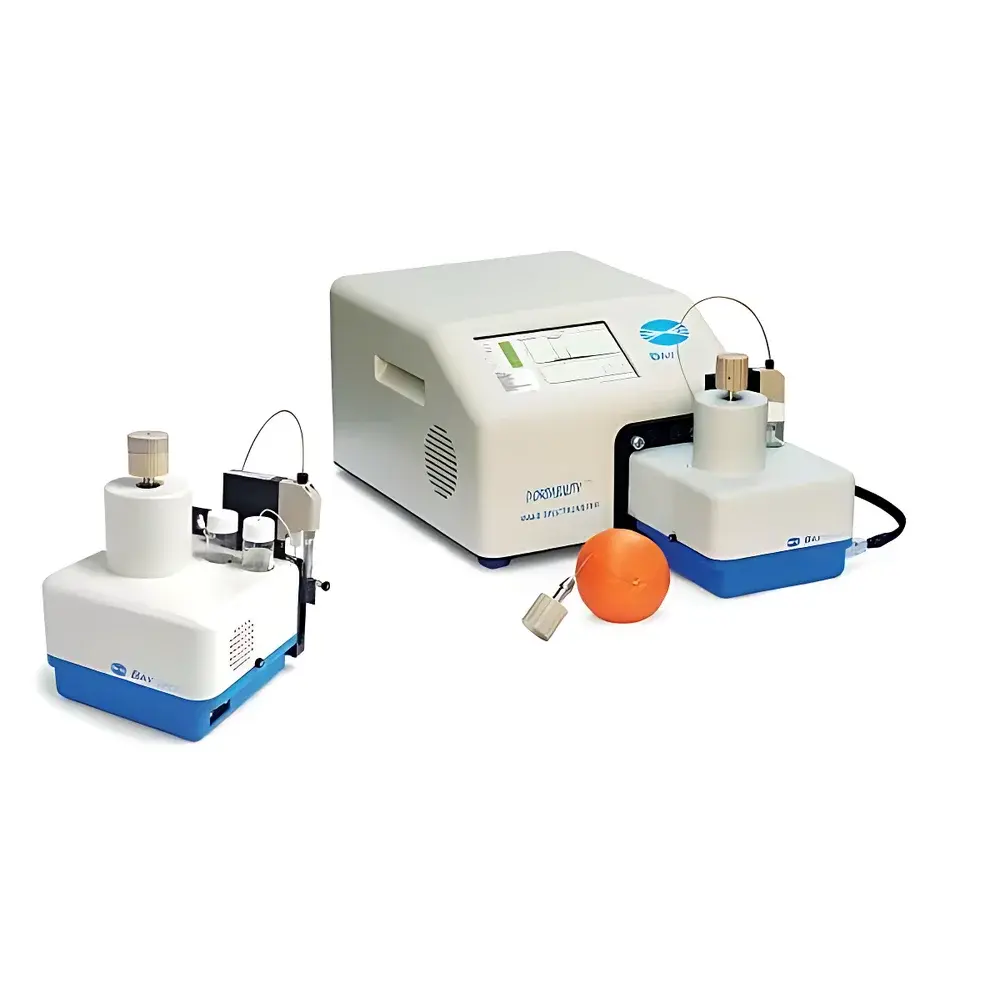
BaySpec Portable Linear Ion Trap Mass Spectrometer
| Brand | auniontech |
|---|---|
| Origin | Imported |
| Manufacturer Type | Authorized Distributor |
| Instrument Type | Magnetic Sector Mass Spectrometer |
| Mass Range | 50–1200 amu |
| Ionization Compatibility | EI, ESI, APCI, TD, DART, DESI |
| Detection Limit | Sub-ppt (trace-level) |
| Sample Inlets | Dual (low-pressure & atmospheric pressure) |
| Architecture | Compact linear ion trap |
| Weight & Form Factor | Lightweight, field-deployable design |
| Resolution | Not specified (nominal mass accuracy typical of linear ion trap systems) |
Overview
The BaySpec Portable Linear Ion Trap Mass Spectrometer is an engineered solution for real-time, on-site molecular identification and quantification in demanding field environments. Unlike conventional benchtop magnetic sector or time-of-flight instruments, this system leverages a miniaturized linear ion trap architecture—optimized for high ion storage capacity, efficient fragmentation (MS/MS capability), and robust signal-to-noise performance under variable ambient conditions. Its operational principle relies on radiofrequency (RF) and direct-current (DC) electric fields to confine, isolate, excite, and eject ions within a compact quadrupole-based trap structure. This enables sequential mass selection, collision-induced dissociation (CID), and detection without requiring ultra-high vacuum maintenance between analyses—making it uniquely suited for rapid screening of volatile organic compounds (VOCs), chemical warfare agent simulants, pharmaceutical impurities, and environmental contaminants. Designed for deployment beyond the laboratory—including hazmat response, customs inspection, and process monitoring—the instrument maintains analytical fidelity while operating on battery power or standard AC input.
Key Features
- Lightweight, ruggedized chassis with integrated shock-absorbing housing—certified for MIL-STD-810G transport durability
- Dual independent sample introduction paths: one optimized for low-pressure (10−3–10−1 mbar) gas-phase analysis; the other configured for direct atmospheric sampling via heated capillary interface
- Modular ion source compatibility: factory-aligned interfaces for electron ionization (EI), electrospray ionization (ESI), atmospheric pressure chemical ionization (APCI), thermal desorption (TD), direct analysis in real time (DART), and desorption electrospray ionization (DESI)
- On-board calibration routine with per-run internal standard referencing for long-term mass axis stability
- Embedded ARM-based acquisition controller enabling autonomous operation, including trigger-based acquisition, spectral averaging, and onboard peak deconvolution
- Real-time spectral library matching against NIST MS Search 2.4-compatible databases with configurable match thresholds and retention time windows
Sample Compatibility & Compliance
The BaySpec portable mass spectrometer supports gaseous, vapor-phase, and thermally labile liquid samples introduced via syringe, sorbent tube, or direct headspace probe. It complies with IEC 61326-1 for electromagnetic compatibility in industrial environments and meets CE marking requirements for portable instrumentation. While not certified for Class I Div 1 hazardous locations, its intrinsically safe configuration options (e.g., Ex ib IIB T4 Ga-rated variants) are available upon request. Data integrity protocols align with GLP and GMP expectations: audit trails record user actions, method parameters, calibration events, and raw spectral metadata. The system supports optional 21 CFR Part 11-compliant software modules with electronic signatures, role-based access control, and immutable data archiving.
Software & Data Management
Instrument control, data acquisition, and post-processing are managed through BaySpec’s proprietary SpectraView™ v4.x platform—deployed on Windows 10 IoT Enterprise. The software provides synchronized multi-channel visualization (TIC, BPC, extracted ion chromatograms), automated background subtraction, isotopic pattern fitting, and customizable reporting templates exportable to PDF, CSV, or mzML (Proteomics Standards Initiative format). Raw data files are stored in vendor-neutral HDF5 containers with embedded instrument configuration and environmental sensor logs (temperature, pressure, battery voltage). Remote diagnostics and firmware updates are supported via TLS-secured HTTPS API endpoints, enabling integration into centralized laboratory information management systems (LIMS) or enterprise asset monitoring platforms.
Applications
- Hazardous material identification during emergency response (e.g., chlorine release, ammonia leaks, organophosphate exposure)
- Pharmaceutical raw material verification at receiving docks using spectral fingerprinting against reference standards
- Field-based environmental forensics: detection of polycyclic aromatic hydrocarbons (PAHs) in soil headspace, chlorinated solvents in groundwater vapor, or per- and polyfluoroalkyl substances (PFAS) degradation products
- Food safety screening for pesticide residues, adulterants, or spoilage metabolites directly from packaging headspace
- Defense-related applications including standoff detection of explosive vapors and verification of chemical agent decontamination efficacy
- Academic research requiring mobility: isotopic labeling studies in plant physiology, microbial volatile profiling in rhizosphere experiments, or reaction monitoring in flow chemistry setups
FAQ
What vacuum system does the instrument use?
It employs a hybrid two-stage pumping architecture: a miniature turbomolecular pump backed by a non-evaporable getter (NEG) pump—eliminating oil contamination and enabling rapid pump-down (<60 s) after atmospheric exposure.
Is method transfer possible from benchtop Q-TOF or GC-MS platforms?
Yes—SpectraView™ includes a method migration wizard that maps retention times, isolation windows, and collision energies from common vendor formats (e.g., .mzXML, .cdf) to the linear ion trap’s operational constraints.
Can the system operate unattended for extended periods?
With external power and environmental enclosure, continuous operation up to 72 hours is validated; onboard memory stores >10,000 full-scan spectra before automatic rollover.
Does it support quantitative analysis?
Quantitative workflows are supported via internal standard addition, standard addition, or external calibration curves—with precision (RSD) ≤8% across three orders of magnitude for validated analytes.
What maintenance intervals are recommended?
Ion trap cleaning and RF amplifier recalibration are recommended every 12 months or after 2,000 operating hours; no consumables (e.g., filaments, columns) require replacement under normal usage.





