
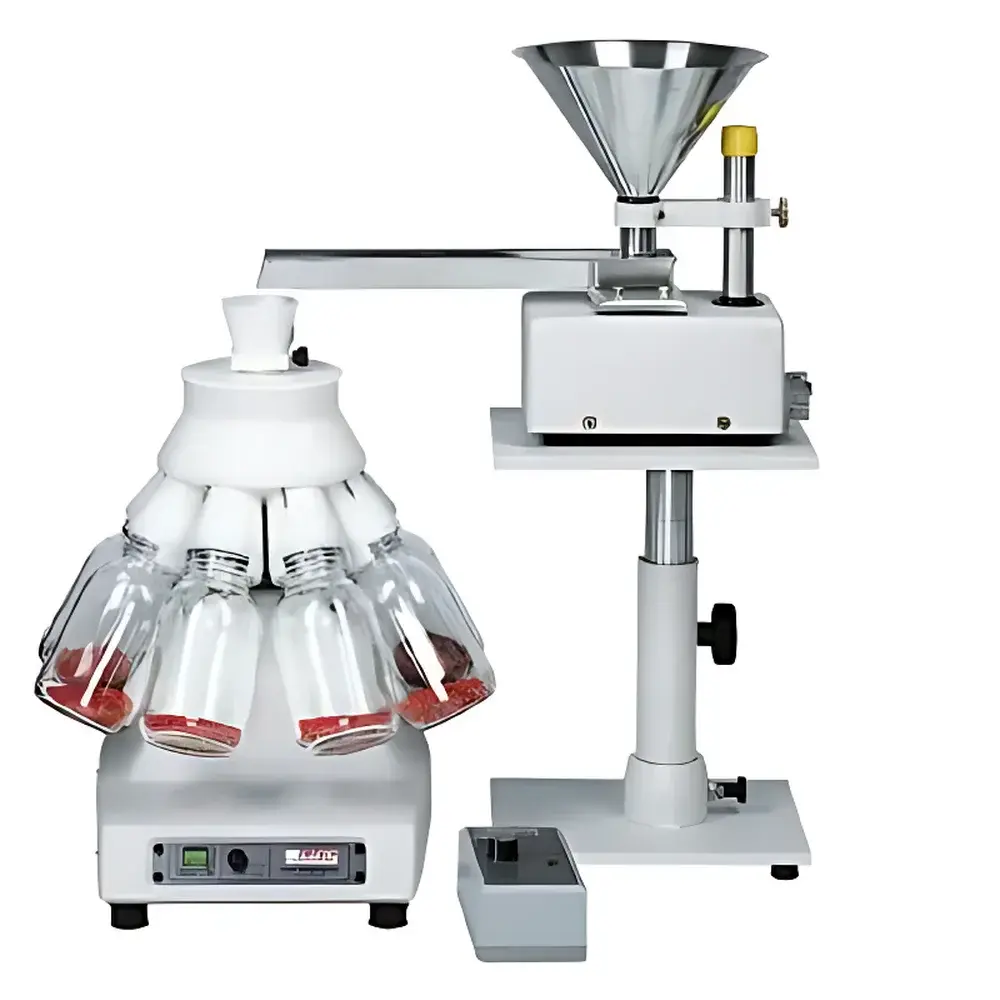
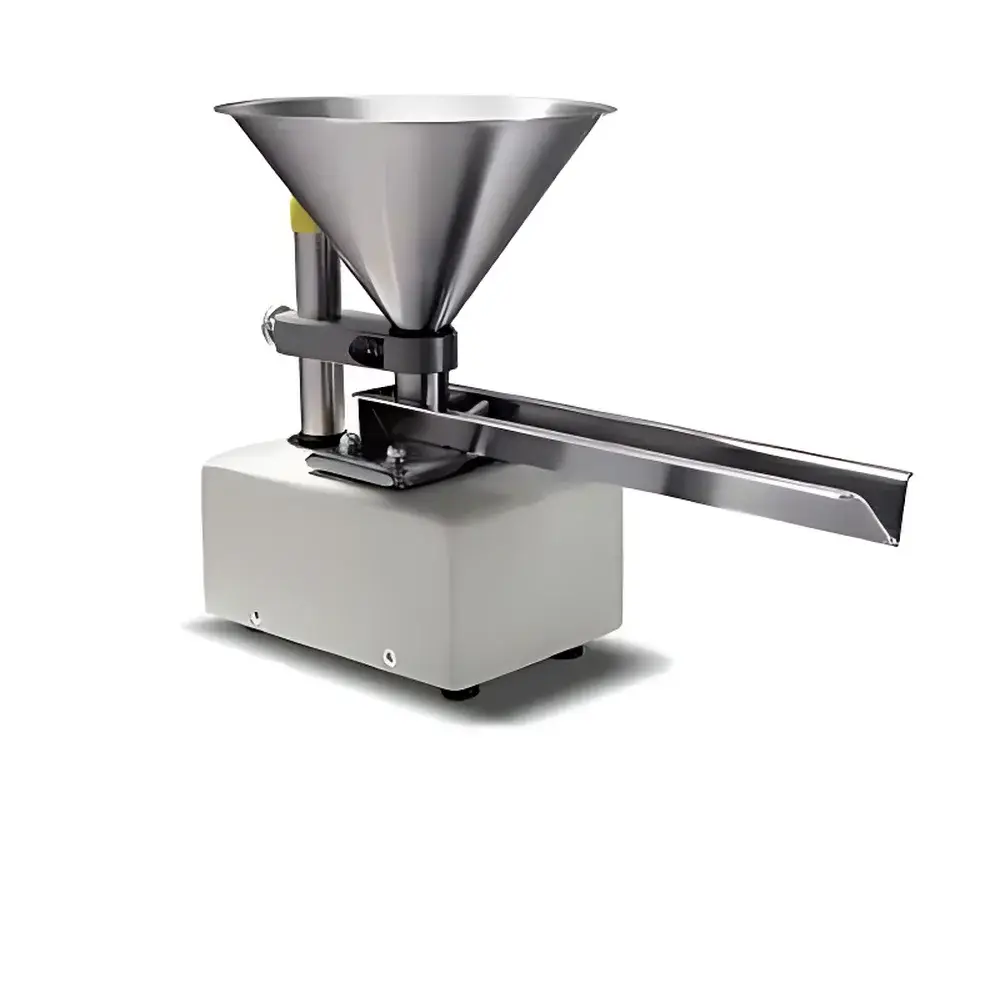
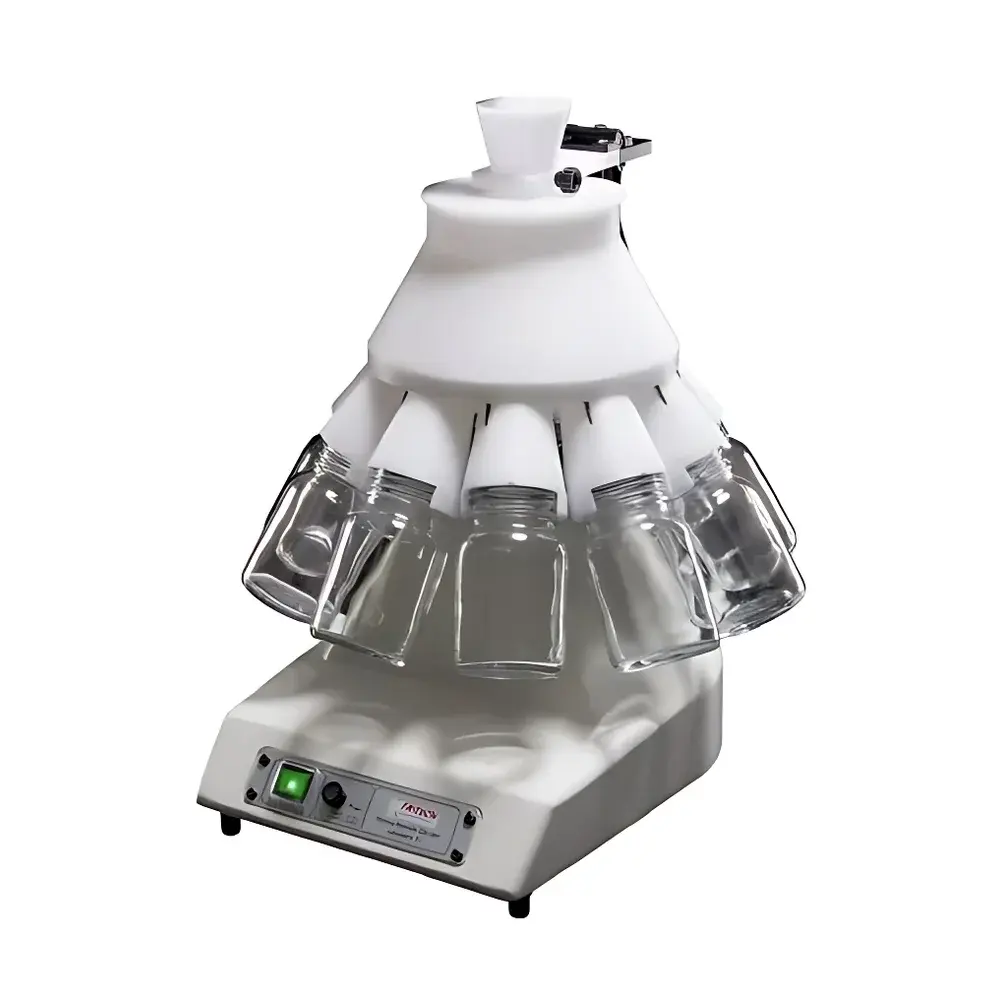
Fritsch L24 Vibratory Feeder & L27 Rotary Sample Divider
| Brand | Fritsch |
|---|---|
| Origin | Germany |
| Model | L24 (Vibratory Feeder) + L24/L27 Integrated System |
| Feed Funnel Length | 215 mm |
| Splitting Ratios | 1:8, 1:10, 1:30 |
| Max. Feed Size | 10 mm |
| Max. Sample Volume | 4000 mL |
| Collection Vessel Capacities | 15, 20, 30, 250, and 500 mL |
| Feeding Speed | Adjustable via Independent Drive |
| Rotational Speed | Up to 100 rpm (equivalent to ~3000 splits/min) |
| Material Contact Surfaces | Electropolished Stainless Steel |
| Feed Funnel Types | V-shaped and U-shaped |
| Compliance | Designed for ISO 13320, ASTM E11, and GLP-compliant sample preparation workflows |
Overview
The Fritsch L24 Vibratory Feeder and L27 Rotary Sample Divider constitute a fully integrated, precision-engineered sample handling system designed for reproducible, bias-free subsampling of bulk particulate and fluidic materials in analytical and quality control laboratories. The L24 operates on controlled vibratory motion—employing electromagnetic excitation—to generate consistent, pulse-free linear flow of dry powders, granules, suspensions, emulsions, or low-viscosity liquids through a polished stainless-steel feed channel. This principle ensures mass-proportional delivery without segregation, agglomeration, or static-induced bridging. Complementing this, the L27 implements rotary splitting based on centrifugal dispersion: material fed axially onto a rotating conical splitter surface is radially accelerated and distributed across eight, ten, or thirty equidistant collection sectors—achieving geometrically exact division with minimal cross-contamination and no manual intervention. Together, these units eliminate human error inherent in manual cone quartering or riffle splitting, satisfying the metrological requirements of ISO 13320 (particle size analysis sampling), ASTM E11 (specification for wire cloth and sieves), and regulatory frameworks demanding auditable, traceable sample preparation (e.g., USP , FDA 21 CFR Part 11–compatible workflows).
Key Features
- Electromagnetic drive system with zero-maintenance operation and stable frequency control over full speed range (0–100 rpm for L27; continuously variable vibration amplitude for L24)
- Electropolished 316L stainless-steel contact surfaces—including feed funnels (V- and U-type), splitter cone, and distribution channels—ensuring chemical resistance, non-reactivity, and rapid, residue-free cleaning
- Modular integration capability: L24 mounts directly upstream of L27 via standardized flange interface, enabling seamless inline feeding into the rotary divider
- Precision-adjustable feed rate independent of splitter speed—critical for maintaining laminar flow conditions during high-viscosity or cohesive sample introduction
- True 360° radial symmetry in splitting geometry, guaranteeing statistically representative sub-aliquots regardless of particle size distribution or density heterogeneity
- Dual-mode operational flexibility: L24 functions standalone for gravimetric feeding into analyzers (e.g., laser diffraction, XRD, elemental analyzers); L27 operates independently for batch-wise division of pre-homogenized samples
Sample Compatibility & Compliance
The system accommodates a broad spectrum of physical forms: free-flowing and slightly cohesive powders (e.g., pharmaceutical actives, catalysts, metal oxides), granules up to 10 mm diameter (e.g., crushed ores, polymer pellets), aqueous/organic suspensions, milk-based emulsions, and low-viscosity solutions. Its design adheres to international standards governing representative sampling—particularly ISO 13320 Annex B (sampling for particle size analysis), ASTM D7429 (standard practice for sampling airborne particles), and EU Pharmacopoeia 2.9.17 (sampling of medicinal products). All wetted components meet FDA-compliant material certifications, and the microprocessor-controlled interface supports audit trails, user access levels, and parameter logging required under GLP and GMP environments.
Software & Data Management
While the L24/L27 operates via embedded microcontroller with tactile membrane keypad and LED status indicators, optional digital integration is available via RS-232 or USB-to-serial interface for connection to laboratory information management systems (LIMS). Firmware supports timestamped event logging—including start/stop times, split ratio selection, rotational speed, and total number of splits—enabling full traceability. When deployed in regulated settings, the system’s deterministic mechanical operation (no software-dependent decision logic) satisfies FDA 21 CFR Part 11 criteria for electronic records where hardware-based process control replaces algorithmic interpretation.
Applications
- Preparation of representative sub-samples for laser diffraction particle size analysis (PSA), BET surface area measurement, and SEM/EDS characterization
- Homogenization-independent division of blended pharmaceutical batches prior to content uniformity testing (USP )
- Reduction of geological core or mineral ore samples to analytical portions while preserving geochemical integrity
- Division of food-grade powders (e.g., flour, dairy powder, spices) for microbiological or nutritional assay
- Generation of statistically valid replicates in R&D screening of battery cathode materials, ceramic precursors, or additive manufacturing feedstocks
- Automated feeding of continuous analyzers such as online NIR spectrometers or XRF flow cells
FAQ
Can the L24 feeder handle abrasive or corrosive materials?
Yes—the electropolished 316L stainless-steel feed channel and funnels provide high resistance to abrasion and common laboratory solvents, acids, and alkalis.
Is calibration required before use?
No routine calibration is needed; however, verification of split ratio accuracy using tracer particles or dye dilution is recommended per ISO 13320 guidance prior to critical applications.
What maintenance does the electromagnetic drive require?
None—the solid-state electromagnetic actuator has no brushes, gears, or lubricants and is rated for >10,000 hours of continuous operation.
Can I use custom collection vessels beyond the standard glass options?
Yes—vessel holders accept any cylindrical container with outer diameter between 12 mm and 55 mm and height ≤ 120 mm, provided it fits within the safety enclosure.
Does the system support IQ/OQ documentation packages?
Fritsch provides factory-issued Installation Qualification (IQ) templates and Operational Qualification (OQ) test protocols aligned with ISO/IEC 17025 and ASTM E2500, supporting validation in regulated labs.



