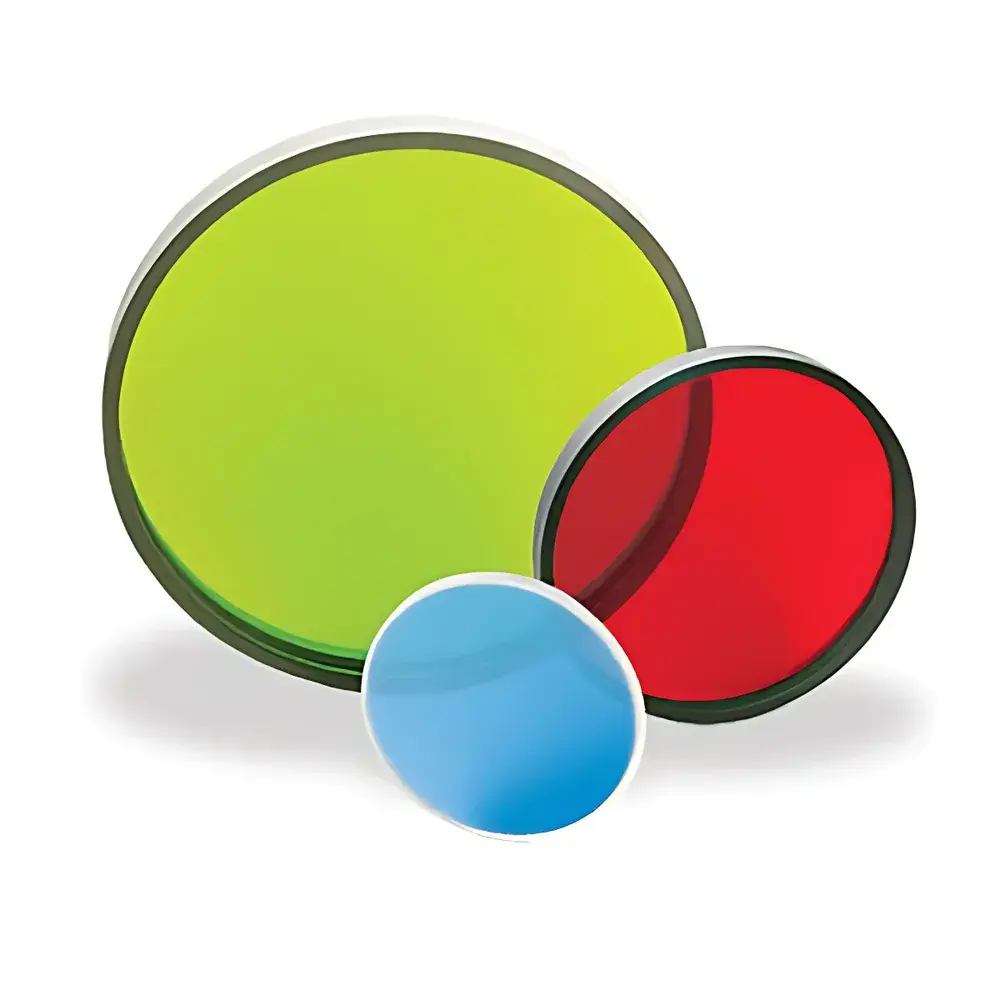
Chroma ZT488dcrb Dichroic Mirror (Beamsplitter)
| Brand | Auniontech (Authorized Distributor of Chroma) |
|---|---|
| Origin | Shanghai, China |
| Manufacturer Type | Authorized Distributor |
| Product Category | Domestic |
| Model | ZT488dcrb |
| Price | Upon Request |
Overview
The Chroma ZT488dcrb Dichroic Mirror is a high-precision, laser-grade interference filter engineered for wavelength-selective beam routing in demanding optical systems. Based on multi-layer thin-film interference principles, it delivers sharp spectral transitions between high-reflectance and high-transmittance bands—enabling precise separation or combination of excitation and emission light paths. Designed specifically for 488 nm laser applications (e.g., argon-ion or solid-state diode lasers), the ZT488dcrb exhibits ≥98% reflectance at its center wavelength (CWL = 488 nm) and >90% average transmission across the 365–750 nm band. Its performance is realized through Chroma’s proprietary ion-assisted magnetron sputtering process, producing dense, stoichiometric dielectric stacks of 200–300 layers on UV-grade fused silica substrates. This architecture ensures exceptional environmental stability—resisting thermal drift, humidity-induced shift, and mechanical degradation—making it suitable for long-term deployment in regulated environments including GLP-compliant imaging labs and ISO 13485-certified medical device OEMs.
Key Features
- Laser-optimized design: CWL = 488 nm, R ≥98% @ 488 nm, T >90% avg. from 365–750 nm
- Steep edge transition: Optical density (OD) ≥6 in blocking regions, with edge steepness <1% Δλ/ΔOD
- High laser damage threshold: Certified for continuous-wave and pulsed operation at 488 nm (tested per ISO 21254-1)
- Superior wavefront fidelity: Surface flatness λ/10 @ 633 nm, ensuring minimal beam distortion in collimated paths
- Robust hard-coated architecture: Ion-beam-sputtered Ta₂O₅/SiO₂ multilayer stack; no epoxy bonding, no delamination risk
- Environmental resilience: Stable performance across –40°C to +85°C operating range; humidity-resistant per MIL-STD-810G Method 507.6
- Standard 45° angle of incidence configuration; optional custom AOI and substrate thickness available
Sample Compatibility & Compliance
The ZT488dcrb is compatible with standard optical mounts (e.g., Thorlabs KM100, Newport UMB1) and integrates seamlessly into fluorescence microscopy platforms (e.g., Nikon Ti2-E, Zeiss LSM 900), confocal scanners, flow cytometers, and DNA sequencers requiring stringent spectral isolation. It meets critical industry specifications including ASTM E275 for optical filter characterization, ISO 10110-7 for surface quality (scratch-dig 10-5), and RoHS 2015/863/EU for hazardous substance restriction. For regulated life science instrumentation, its batch-to-batch consistency (<±0.3 nm CWL tolerance, <±0.5 nm FWHM variation) supports FDA 21 CFR Part 11-compliant validation protocols when paired with Chroma’s traceable calibration certificates.
Software & Data Management
While the ZT488dcrb is a passive optical component, Chroma provides full spectral data packages—including measured transmittance/reflectance curves (200–3500 nm), OD spectra, and angular sensitivity plots—in CSV and SDF format via Chroma’s online Filter Finder Tool. These datasets are compatible with optical design software such as Zemax OpticStudio, CODE V, and FRED for system-level modeling. Auniontech (as Chroma’s authorized distributor in China) supplies NIST-traceable calibration reports and offers custom spectral validation services aligned with ISO/IEC 17025-accredited laboratories.
Applications
- Fluorescence microscopy: Separation of 488 nm excitation from GFP/YFP/CFP emission in widefield, confocal, and TIRF systems
- Flow cytometry: Multiplexed detection using 488 nm-excited fluorophores (FITC, PE, Alexa Fluor 488) with minimal crosstalk
- Genomic sequencing instruments: Signal conditioning in Illumina-style bridge amplification and detection modules
- Laser combiners: Integration into multi-laser sources for coherent Raman scattering (CARS) and stimulated emission depletion (STED)
- Aerospace remote sensing: Spectral filtering in compact LIDAR receivers where thermal and vibration stability are mission-critical
- Astronomy instrumentation: Narrowband rejection in adaptive optics wavefront sensors operating near H-β (486.1 nm)
FAQ
What is the difference between ZT, AT, and T series dichroics?
ZT mirrors are laser-grade, optimized for high-power CW/pulsed operation with superior surface flatness (λ/10) and tighter spectral tolerances. AT series use magnetron sputtering but target mid-range cost/performance; T series are general-purpose, non-laser-qualified filters.
Can this mirror be used at angles other than 45°?
Yes—custom designs are available for AOIs from 0° to 60°, though spectral shift must be modeled; standard ZT488dcrb is specified at 45° ±0.5°.
Is the substrate material fused silica?
Yes—all ZT-series mirrors use Corning 7980 or equivalent UV-fused silica with polished front/back surfaces and AR coating on the rear to suppress ghost reflections.
Do you provide mounting options or kinematic adapters?
Auniontech offers standard SM1-threaded mounts, kinematic mirror holders, and OEM-ready unmounted substrates with laser-etched part numbers and lot IDs.
How is batch consistency verified?
Every production lot undergoes full-spectrum spectrophotometric testing (PerkinElmer Lambda 1050+); spectral reports and QC certificates are shipped with each order.
Related Products