
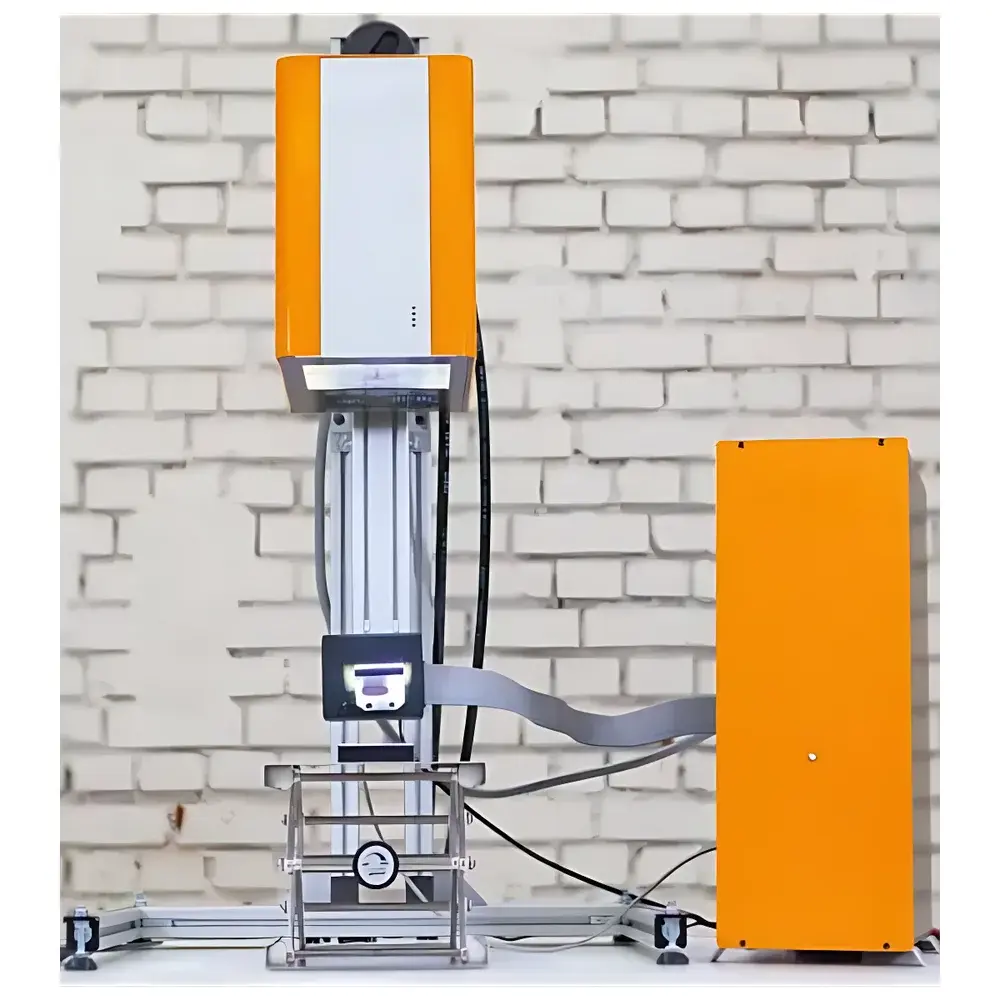
Auniontech AD70 LED-Based Solar Simulator for Photovoltaic R&D
| Brand | Auniontech |
|---|---|
| Origin | Shanghai, China |
| Model | AD70 |
| Spectral Match Class | A+ (IEC 60904-9 Ed. 3) |
| Spatial Uniformity (51 × 51 mm²) | < 2% |
| Long-Term Instability (LTI) | < 0.5% |
| Temporal Stability (Flash Mode) | < 0.5% |
| Flash Duration | > 0.5 s |
| Irradiance Range | Adjustable from 10 ms to continuous |
| Calibration Reference | Certified Si reference cell, AM1.5G, 1000 W/m² |
| Working Distance | 335 mm |
| Spectral Match Range (IEC 60904-9) | 0.95–1.05 (Class A+), 0.875–1.125 (Class AA+) |
| Optical Engine | Multi-channel independently tunable LEDs with integrated spectrometer and photodiode feedback loop |
| Software Compatibility | RapidWAVE®-EQE, MPP-tracking module |
Overview
The Auniontech AD70 LED-Based Solar Simulator is an engineered solution for high-fidelity photovoltaic (PV) research and development. Designed around a multi-spectral LED light engine, it delivers programmable, spectrally accurate illumination compliant with IEC 60904-9 Ed. 3 requirements for Class A+ and AA+ solar simulators. Unlike traditional xenon or halogen-based systems, the AD70 employs discrete, narrow-band LEDs—each with independently controllable intensity—to synthesize the AM1.5G reference spectrum (300–1200 nm) with exceptional fidelity. This architecture enables precise spectral tuning for emerging PV technologies including perovskite, organic, tandem, and multi-junction cells. The system integrates real-time optical feedback via an embedded miniature spectrometer and calibrated photodiode array, ensuring traceable irradiance stability and spectral repeatability across extended operational cycles. Its compact, air-cooled design supports benchtop integration in controlled laboratory environments without requiring external chillers or complex exhaust infrastructure.
Key Features
- Multi-channel LED light engine with independent current control per spectral band (e.g., UV, visible, NIR), enabling dynamic spectral reshaping for device-specific calibration
- Optical homogenization system featuring custom aspheric lenses and diffuser optics to achieve <2% spatial non-uniformity over a 51 × 51 mm² test area
- Real-time closed-loop irradiance stabilization using integrated reference photodiodes and spectral feedback—ensuring long-term instability (LTI) <0.5% over 8 hours
- Compliance with IEC 60904-9 Ed. 3: A+ spectral match (0.95–1.05), AA+ uniformity and temporal stability specifications
- Adjustable exposure duration from 10 ms pulse mode to continuous DC operation, supporting both flash IV and steady-state characterization
- Rugged industrial-grade mechanical housing validated through >1,000 field deployments; designed for 24/7 lab operation with minimal maintenance
Sample Compatibility & Compliance
The AD70 accommodates standard PV test geometries—including single-junction silicon, thin-film CIGS/CdTe, perovskite, organic photovoltaics (OPV), and monolithic or mechanically stacked tandem devices. Its 51 × 51 mm² uniform illumination zone aligns with common laboratory-scale cell formats (e.g., 1 cm² reference cells, mini-modules up to 4 cm²). All irradiance calibrations are traceable to NIST-traceable reference cells (e.g., KG5-filtered Si diodes) under AM1.5G conditions at 1000 W/m². The system supports GLP-compliant documentation workflows: irradiance logs, spectral snapshots, and calibration certificates are timestamped and exportable in CSV or HDF5 format. Hardware-level audit trails and user-access controls align with FDA 21 CFR Part 11 readiness when deployed with optional secure software modules.
Software & Data Management
The AD70 operates natively with two dedicated software suites: RapidWAVE®-EQE and MPP-tracking. RapidWAVE®-EQE enables monochromatic quantum efficiency (QE) mapping by sequentially activating individual LED channels while synchronizing with a source-measure unit (SMU), eliminating the need for external monochromators. MPP-tracking provides automated maximum power point detection and time-resolved monitoring of Voc, Isc, Pmax, FF, and efficiency under stabilized illumination—critical for assessing operational stability of emerging PV materials. Both applications generate structured metadata (wavelength, intensity, integration time, ambient T/RH) and support batch processing, statistical reporting, and export to MATLAB, Python (via PySolarSim API), or LabVIEW environments. Raw spectral data and irradiance logs are stored with SHA-256 checksums to ensure data integrity.
Applications
- High-accuracy current–voltage (I–V) characterization of next-generation solar cells under standardized AM1.5G illumination
- Spectral mismatch correction for multi-junction and tandem devices using channel-selective LED excitation
- Light-soaking and operational stability testing (ISOS-L-1/L-2 protocols) with programmable intensity ramping and hold profiles
- External quantum efficiency (EQE) and incident photon-to-current efficiency (IPCE) measurements via LED-based monochromatic scanning
- Development and validation of novel encapsulation materials under controlled UV-rich or NIR-enhanced spectra
- Photoelectrochemical cell testing where spectral selectivity enables mechanistic studies of charge-transfer kinetics
FAQ
What spectral standards does the AD70 comply with?
The AD70 meets IEC 60904-9 Ed. 3 Class A+ for spectral match (300–1200 nm), Class A+ for spatial uniformity (<2% over 51 × 51 mm²), and Class A+ for temporal stability (<0.5% LTI). Full compliance reports include spectral deviation plots and uncertainty budgets.
Can the AD70 simulate non-AM1.5G spectra, such as AM0 or customized indoor lighting?
Yes—the LED channel architecture allows user-defined spectral profiles beyond AM1.5G, including AM0 (space), AM1.0 (vertical incidence), and custom spectra matching LED-based indoor illumination (e.g., for building-integrated PV evaluation).
Is the system compatible with third-party source-measure units (SMUs) and data acquisition hardware?
The AD70 features TTL-triggered synchronization I/O, analog voltage output for irradiance monitoring, and Ethernet-based SCPI command interface—fully interoperable with Keysight B2900 series, Keithley 2450/2460, and National Instruments DAQ systems.
How is calibration maintained over time?
Each unit ships with a factory calibration certificate referencing NIST-traceable standards. Users may perform in-lab recalibration using optional reference cells and the built-in spectrometer; all calibration events are logged with operator ID, date, and measurement uncertainty.
Does the AD70 support automated MPP tracking for long-duration stability tests?
Yes—MPP-tracking mode continuously adjusts bias voltage to maintain maximum power extraction, logging V, I, P, and efficiency at user-defined intervals (1 s to 1 h) for durations exceeding 1,000 hours.





