
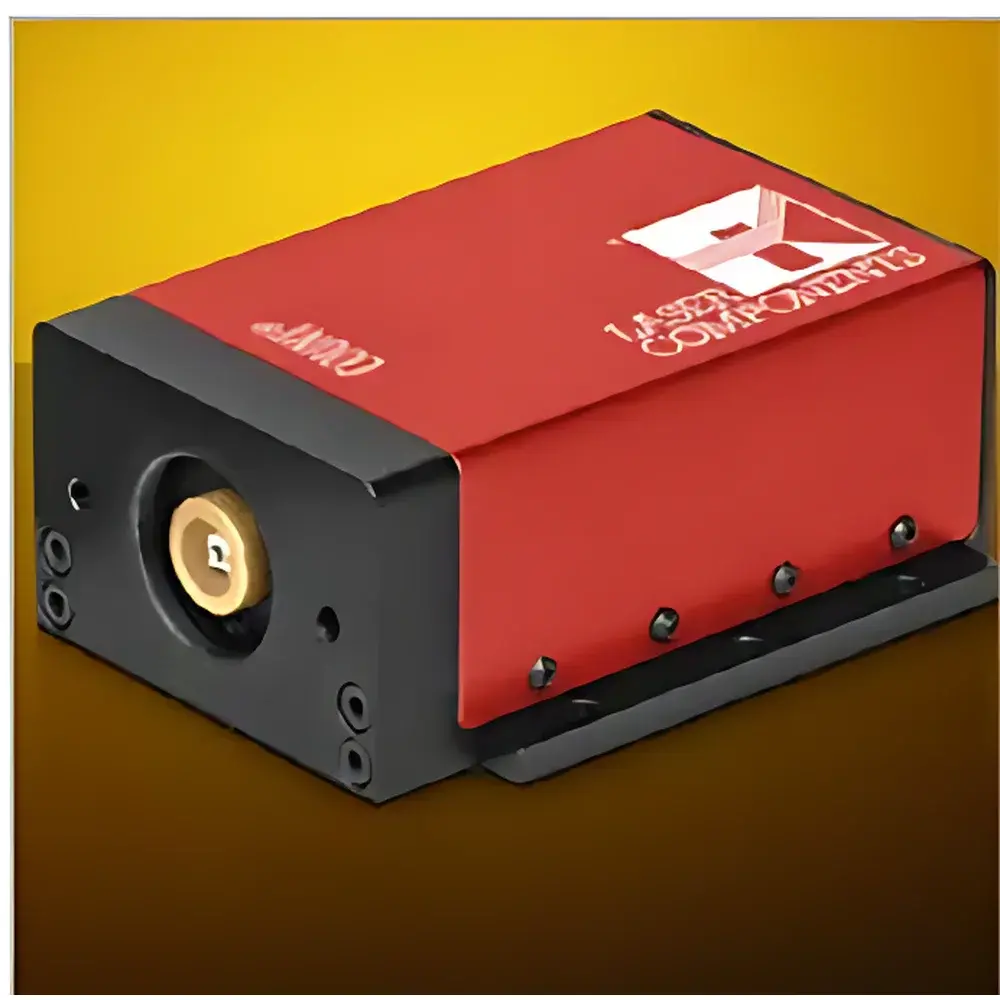
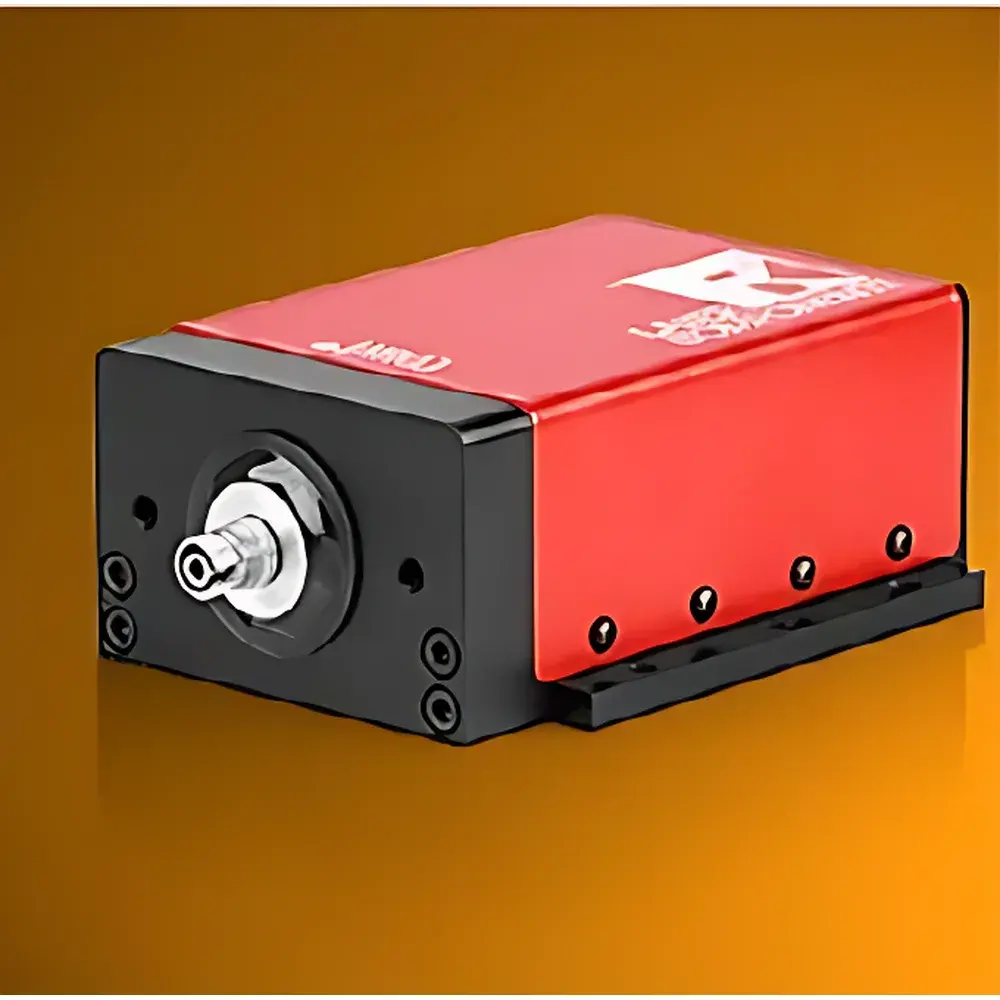
Auniontech 400–1000 nm Visible–NIR Single-Photon Counting Module (SPCM)
| Brand | Auniontech |
|---|---|
| Spectral Range | 400–1000 nm |
| Dark Count Rate (Typ. @ −20 °C) | 20 cps |
| Photon Detection Efficiency (PDE) | 55% @ 405 nm, 75% @ 520 nm, 50% @ 670 nm, 15% @ 810 nm |
| Active Area | 100 µm diameter |
| Timing Resolution | 1000 ps FWHM |
| Dead Time | 45 ns |
| Afterpulsing Probability | 0.2% |
| Gating Input | TTL-compatible (Low < 0.5 V, High > 2.4 V), Response Time ≤ 65 ns |
| TTL Output Pulse Width | 17 ns, Amplitude: 3 V into 50 Ω |
| Supply Voltage | 12.0 V ± 0.5 V |
| Supply Current | 0.8 A |
| Operating Temperature | −25 °C to +40 °C (thermoelectrically cooled) |
Overview
The Auniontech 400–1000 nm Visible–NIR Single-Photon Counting Module (SPCM) is a compact, thermoelectrically cooled detection system engineered for high-fidelity photon counting in quantum optics, time-resolved spectroscopy, and low-light imaging applications. At its core lies a custom-optimized silicon-based avalanche photodiode (Si-APD) operated in Geiger mode, delivering single-photon sensitivity across the visible and near-infrared spectrum. Unlike conventional photomultiplier tubes or uncooled detectors, this module integrates ultra-low-noise quenching electronics and real-time pulse discrimination circuitry to achieve sub-50 cps dark count rates at −20 °C—enabling reliable operation in demanding environments where signal-to-noise ratio is critical. Its spectral response spans 400–1000 nm, with peak photon detection efficiency exceeding 75% at 520 nm and maintaining usable sensitivity up to 810 nm, making it particularly suitable for applications involving visible lasers (e.g., 405 nm, 488 nm, 532 nm) and telecom-band sources (e.g., 785 nm, 808 nm).
Key Features
- Ultra-low dark count rate: ≤20 cps (typical at −20 °C), scalable to ≤10 cps at −50 °C via active thermoelectric cooling
- High photon detection efficiency: 55% @ 405 nm, 75% @ 520 nm, 50% @ 670 nm, 15% @ 810 nm — optimized for common excitation wavelengths in fluorescence and quantum light sources
- Sub-nanosecond timing resolution: 1000 ps FWHM jitter enables precise time-of-flight measurements and time-correlated single-photon counting (TCSPC)
- Stable, non-bistable counting behavior: No gain hysteresis or dual-stability issues across temperature or bias variations
- Integrated TTL gating interface: Enables synchronized detection windows with <65 ns turn-on/turn-off latency; compatible with standard digital logic controllers and pulsed laser drivers
- Standard TTL output: 3 V amplitude into 50 Ω load, 17 ns pulse width — directly compatible with time-tagging electronics (e.g., PicoQuant HydraHarp, Becker & Hickl SPC-130EM)
- Single 12 V DC power supply requirement: Simplifies integration into lab-scale and OEM systems without complex biasing infrastructure
- Optional FC/PC fiber coupling: Facilitates alignment-free interfacing with multimode optical fibers (core diameter ≥ 50 µm), supporting flexible sample illumination and collection geometries
Sample Compatibility & Compliance
This SPCM is designed for use with free-space beams and multimode fiber-coupled inputs (via optional FC connector). It supports detection of weak coherent, thermal, or non-classical light fields—including attenuated laser pulses, spontaneous parametric down-conversion (SPDC) photon pairs, and fluorescence emission from single emitters (e.g., NV centers, quantum dots, dye molecules). The module complies with CE marking requirements for electromagnetic compatibility (EN 61326-1) and safety (EN 61010-1). While not certified for medical or industrial safety-critical use out-of-the-box, its stable bias architecture and built-in overvoltage protection make it suitable for GLP-compliant laboratory environments. For regulated applications requiring audit trails (e.g., quantum key distribution validation or pharmaceutical fluorescence assays), integration with timestamped data acquisition software meeting FDA 21 CFR Part 11 criteria is recommended.
Software & Data Management
The module operates as a hardware-level photon event generator with no embedded firmware or proprietary drivers. All timing and counting functionality is handled at the analog/digital interface level, ensuring deterministic latency and full compatibility with third-party data acquisition platforms. Users typically interface the TTL output with time-to-digital converters (TDCs), FPGA-based correlators, or commercial TCSPC systems. Auniontech provides detailed electrical interface specifications, including rise/fall time budgets, impedance matching guidance, and grounding recommendations—essential for minimizing timing walk and preserving picosecond-level resolution. Raw photon timestamps can be exported in standard formats (e.g., .ptu, .sdt) for post-processing in MATLAB, Python (using qutip, photonlib), or OriginLab. No vendor-specific SDK is required; integration follows IEEE 1159-compliant digital I/O conventions.
Applications
- Quantum Information Science: Hanbury Brown–Twiss (HBT) interferometry, Bell-state measurement, quantum random number generation, and entanglement verification using heralded photons
- Laser Scanning Microscopy: Confocal and multiphoton fluorescence lifetime imaging (FLIM), where high PDE at visible wavelengths improves signal yield per excitation pulse
- LIDAR & Time-of-Flight Sensing: Short-range, high-resolution ranging in atmospheric monitoring or biomedical tissue characterization
- Astronomical Photometry: Low-light stellar photometry and adaptive optics wavefront sensing in ground-based observatories equipped with visible–NIR filter sets
- Fluorescence Correlation Spectroscopy (FCS): Diffusion coefficient and concentration analysis of nanoscale biomolecules in solution
- Single-Molecule Spectroscopy: Real-time tracking of conformational dynamics in labeled proteins or nucleic acids under ambient or cryogenic conditions
FAQ
What cooling method does the module use?
It employs a two-stage thermoelectric cooler (TEC) integrated with a precision temperature controller, enabling stable operation between −25 °C and +40 °C. No liquid nitrogen or external chiller is required.
Is the detector sensitive to polarization?
The Si-APD exhibits minimal polarization dependence (<5% variation across 0–90° linear polarization states) within its specified spectral range, making it suitable for unpolarized or arbitrarily polarized input light.
Can multiple modules be synchronized for coincidence counting?
Yes—each unit features identical TTL gating and output timing characteristics. When driven by a common clock and delay-matched cabling, coincidence windows down to ~100 ps are achievable with appropriate external logic.
Does the module support continuous-wave (CW) or only pulsed operation?
It supports both modes. In CW mode, dark count statistics and photon arrival times are recorded continuously; in gated mode, detection is enabled only during user-defined intervals synchronized to external triggers.
What is the maximum sustainable count rate?
Due to its 45 ns dead time, the theoretical maximum count rate is ~22 MHz. However, practical throughput is limited by afterpulsing accumulation and electronic pile-up; sustained operation above 5 MHz requires careful pulse shaping and post-processing correction.




