HOPE-MED 8190B In Vitro Transepidermal Electrical Resistance (TEER) Measurement System for Excised Skin
| Key | Brand: HOPE-MED |
|---|---|
| Model | 8190B |
| Origin | Tianjin, China |
| Instrument Type | TEER Measurement System |
| Measurement Frequencies | 100 Hz, 1000 Hz |
| Applied Voltage Range | 0.01–3.00 V (0.01 V step resolution) |
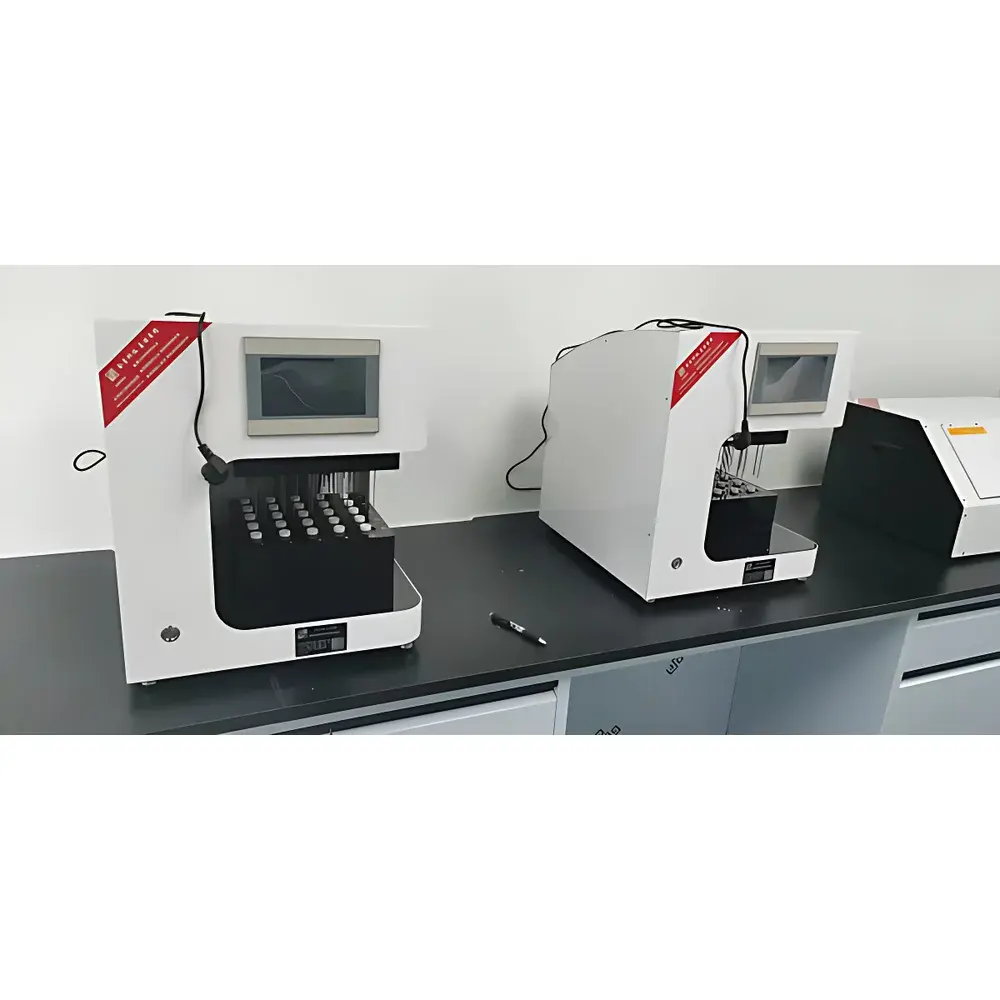
| Sample Capacity | 25 parallel excised skin mounts |
| Data Export | USB flash drive interface |
| Compliance Context | Designed for OECD TG 439 / ISO 10993-10 pre-screening workflows |
Overview
The HOPE-MED 8190B In Vitro Transepidermal Electrical Resistance (TEER) Measurement System is an engineered solution for quantitative assessment of barrier integrity in excised mammalian skin specimens—primarily used in regulatory-compliant pre-screening of dermal corrosivity and irritation potential of chemical substances. Operating on the principle of low-frequency alternating current impedance spectroscopy, the system applies a controlled sinusoidal voltage across paired Ag/AgCl or stainless-steel electrodes positioned on opposite sides of a mounted skin sample, then measures the resulting current to calculate electrical resistance (Ω·cm²). This resistance value correlates directly with stratum corneum integrity: intact, viable epidermis exhibits high TEER (>1–5 kΩ·cm² depending on species and preparation), while compromised or chemically damaged tissue shows significant reduction. The 8190B is purpose-built for standardized in vitro protocols aligned with OECD Test Guideline 439 (In Vitro Skin Irritation: Reconstructed Human Epidermis Test Method) and ISO 10993-10 (Biological evaluation of medical devices — Part 10: Tests for irritation and skin sensitization), supporting early-stage hazard identification without animal use.
Key Features
- Parallel 25-channel measurement architecture enables simultaneous TEER acquisition across 25 excised skin specimens—dramatically increasing throughput for batch screening and dose-response studies.
- Dual-frequency capability (100 Hz and 1000 Hz) allows differentiation between capacitive effects (e.g., electrode-skin interface polarization) and true resistive barrier properties; 100 Hz is recommended for routine barrier integrity assessment per standard operating procedures.
- Precisely adjustable electrode positioning mechanism ensures consistent inter-electrode distance and contact pressure across all 25 wells, minimizing mechanical variability and enhancing inter-run reproducibility.
- Programmable voltage output from 0.01 V to 3.00 V in 0.01 V increments provides flexibility for optimizing signal-to-noise ratio across diverse skin thicknesses and hydration states.
- Robust mechanical design features corrosion-resistant stainless-steel fixtures, linear-motion guide rails, and maintenance-free stepper motor actuation—engineered for >50,000 operational cycles under laboratory conditions.
- Integrated USB host port supports direct data logging to standard FAT32-formatted USB flash drives, eliminating dependency on proprietary software or PC tethering during routine measurements.
Sample Compatibility & Compliance
The 8190B accommodates full-thickness or dermatomed excised skin from porcine, bovine, or human donor sources (including cryopreserved or freshly excised specimens), mounted in standard Franz-type diffusion cells or custom multi-well holders with 0.6–1.2 cm² exposure area. Electrode compatibility includes reusable Ag/AgCl pellet electrodes and disposable stainless-steel probes calibrated per ASTM F2715-18 (Standard Practice for Measuring Transepidermal Electrical Resistance of Human Skin In Vitro). The system’s measurement traceability aligns with GLP principles: raw voltage/current values are recorded with timestamp, channel ID, and user-defined metadata (e.g., specimen ID, treatment group). While not FDA-cleared as a diagnostic device, its operational parameters satisfy technical requirements for non-clinical safety testing referenced in ICH S5(R3) and EU CLP Regulation Annex I Section 3.2.1.
Software & Data Management
Data acquisition is performed via embedded firmware with real-time resistance calculation using Ohm’s Law (R = V/I) and automatic normalization to effective electrode surface area. Each measurement session generates a CSV-formatted log file containing: channel index, timestamp (YYYY-MM-DD HH:MM:SS), applied frequency (Hz), test voltage (V), measured current (µA), calculated resistance (Ω), derived TEER (Ω·cm²), and operator annotation field. No proprietary runtime environment is required—files are natively readable in Excel, Python (pandas), or statistical platforms (JMP, GraphPad Prism). Audit trail functionality is implemented at firmware level: all configuration changes (voltage setting, frequency selection, zero calibration) are logged with user ID and timestamp. For regulated environments, optional integration with LIMS via serial RS-232 output (ASCII protocol) supports 21 CFR Part 11–compliant electronic records when paired with validated middleware.
Applications
- OECD TG 439-compliant pre-screening of cosmetic, pharmaceutical, and industrial chemicals for skin irritation potential.
- Quality control of reconstructed epidermal models (e.g., EpiDerm™, SkinEthic™) prior to cytotoxicity or permeation assays.
- Method development and validation for TEER-based endpoints in dermal absorption studies (e.g., supporting IVPT—In Vitro Percutaneous Transport).
- Investigation of barrier-disrupting mechanisms: surfactant action, enzymatic degradation, or nanoparticle-induced tight junction modulation.
- Teaching laboratories requiring robust, repeatable instrumentation for biomedical engineering and toxicology curricula.
FAQ
What skin types and thicknesses are compatible with the 8190B?
Porcine ear or abdominal skin (typically 0.8–1.5 mm thick), bovine udder skin, and human cadaver skin (dermatomed to 300–500 µm) are routinely used. Thickness variation is accommodated by the adjustable electrode travel range (±2 mm), ensuring consistent contact force without compression artifact.
Is calibration traceable to national standards?
Yes—system-level verification uses NIST-traceable precision resistors (100 Ω to 10 kΩ, ±0.1% tolerance) at both 100 Hz and 1000 Hz. A calibration certificate is issued with each unit, including uncertainty budget per ISO/IEC 17025 guidelines.
Can the 8190B be integrated into automated liquid handling workflows?
The instrument supports TTL-level trigger input for synchronized start/stop commands and provides digital status outputs (busy/done/error), enabling coordination with robotic arms or programmable incubators in high-throughput screening labs.
Does the system support temperature-controlled measurements?
While the 8190B itself does not regulate temperature, its mechanical design permits seamless integration with externally heated/circulated Franz cell jackets (32 ± 1 °C), and all electronics are rated for continuous operation at ambient temperatures up to 40 °C.
How is electrode drift compensated during extended assays?
The firmware implements periodic open-circuit zero checks (every 5 minutes by default) and allows user-defined baseline correction intervals. Raw current/voltage waveforms are preserved in raw-data mode for post-hoc drift analysis if required.