
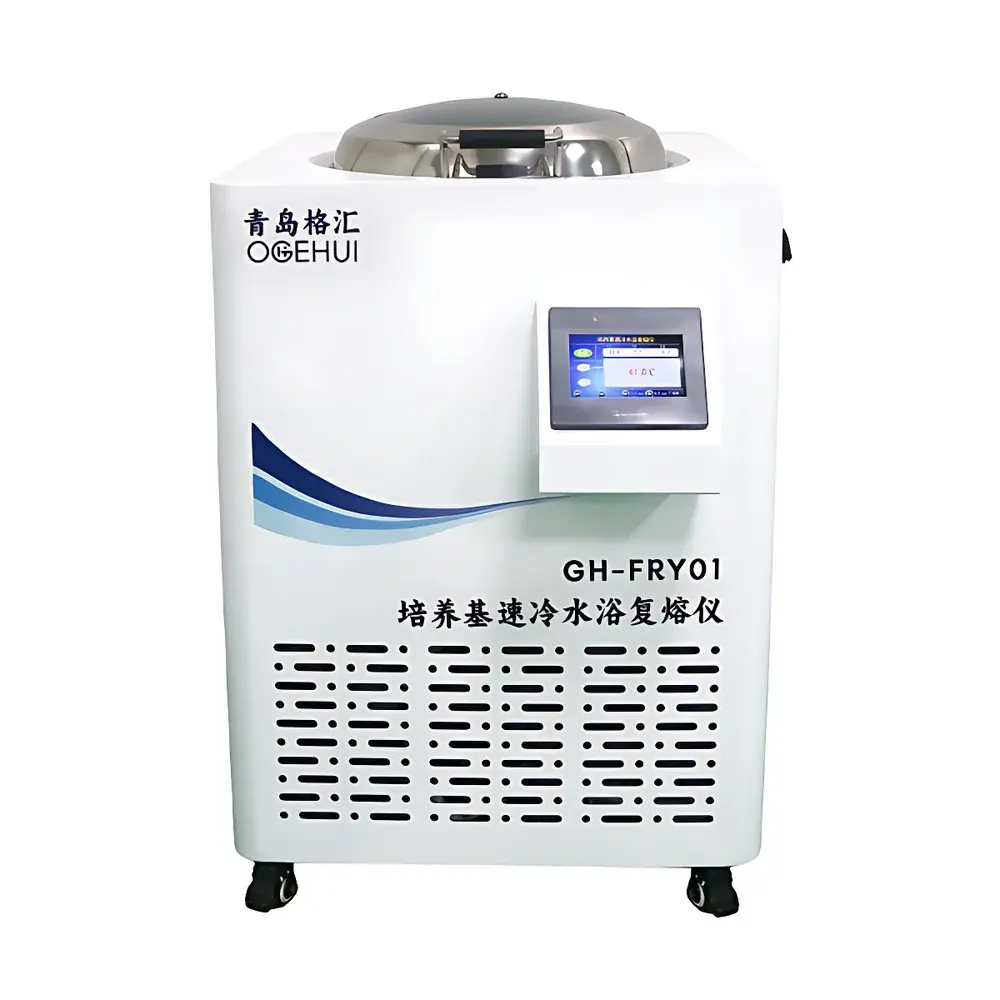
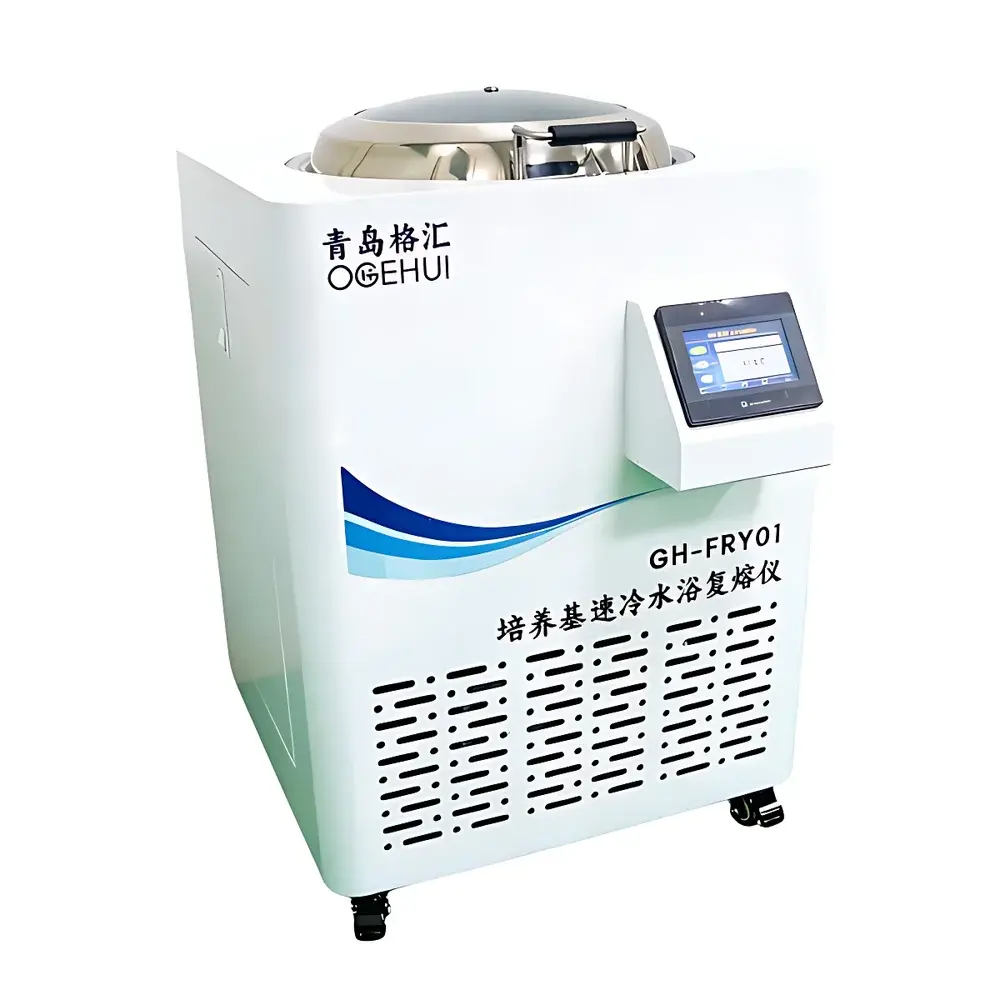
Hopebio GH-FRY01 Rapid-Cool Agar Medium Re-Melting Water Bath
| Brand | Hopebio |
|---|---|
| Model | GH-FRY01 |
| Temperature Range | Ambient to 100 °C |
| Heating Method | Immersion Water Bath |
| Cooling Method | Integrated Condenser + Circulating Pump |
| Temperature Control | PID with High-Sensitivity RTD Sensor |
| Temperature Stability | ±0.3 °C (at 48 °C, steady-state) |
| Timer Function | 0–999 min (heating, cooling, holding stages independently programmable) |
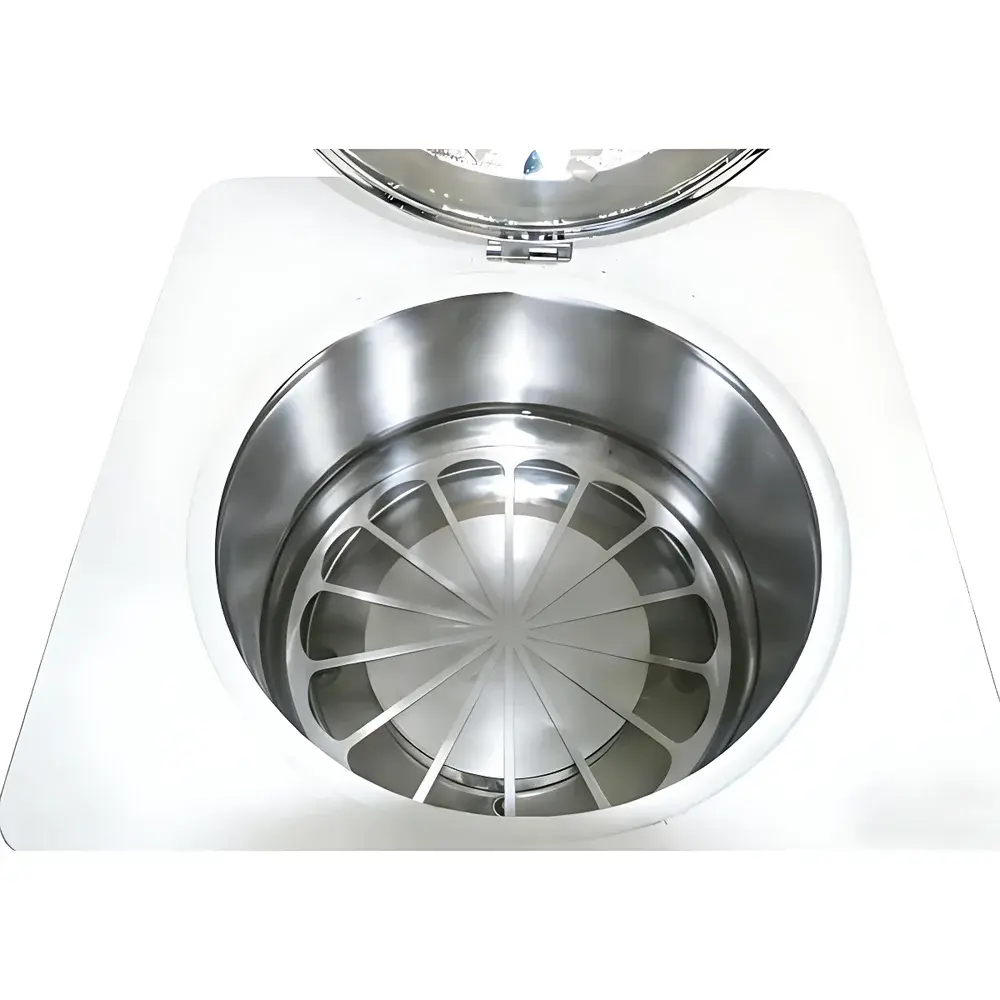
| Chamber Dimensions | Ø350 mm × 250 mm depth |
| External Dimensions | 503 mm × 503 mm × 680 mm (W×D×H) |
| Net Weight | 42.5 kg |
| Power Supply | 220 V AC, 50/60 Hz, 3 kW |
| Operating Ambient | 5–40 °C, <90% RH (non-condensing) |
| Max Load Capacity | 9 × 500 mL glass bottles |
| Safety Features | Dual-level liquid level detection, dry-run protection, over-temperature cutoff, audible/visual alarm |
Overview
The Hopebio GH-FRY01 Rapid-Cool Agar Medium Re-Melting Water Bath is an integrated thermal processing system engineered for the precise, reproducible, and unattended preparation of solidified microbiological growth media—primarily agar-based formulations. Unlike conventional water baths that provide only heating functionality, the GH-FRY01 implements a three-stage thermodynamic cycle: controlled re-melting (0–100 °C), active rapid cooling (down to 45–50 °C), and stable temperature holding. This sequence aligns directly with ISO 11133:2014 and USP requirements for consistent agar viscosity, uniform nutrient distribution, and avoidance of thermal degradation or premature gelation during media dispensing. The unit operates on the principle of convective heat transfer via immersion in a temperature-regulated water medium, enhanced by 360° circumferential heating elements and a closed-loop refrigeration circuit—enabling deterministic thermal profiles without manual intervention or vessel relocation.
Key Features
- Three-Stage Automated Thermal Protocol: Programmable sequence includes independent setpoints and durations for melting, cooling, and holding phases—eliminating manual transfers and minimizing operator-induced variability.
- 360° Uniform Heating Architecture: Stainless-steel sheathed immersion heaters arranged radially ensure homogeneous thermal distribution across the entire chamber volume, preventing localized overheating or incomplete agar dissolution.
- Integrated Active Cooling System: A hermetically sealed condenser module coupled with a high-flow recirculating pump achieves ≤15-minute cooldown from 95 °C to 48 °C within the same chamber—avoiding exposure to ambient fluctuations and eliminating stratification or micro-gelation risks.
- PID-Controlled Thermal Stability: Real-time feedback from a Class A Pt100 RTD sensor enables ±0.3 °C stability at critical holding temperatures (e.g., 47–49 °C), meeting CLSI M44-A3 and EU GMP Annex 1 thermal consistency criteria for pour plates and membrane filtration media.
- Dual-Level Liquid Safety Monitoring: Redundant float sensors detect low water levels and trigger immediate heater deactivation plus visual/audible alerts—preventing dry-run operation and extending heater service life.
- Modular Rack Compatibility: Interchangeable stainless-steel support racks accommodate standardized culture vessels: 500 mL and 1000 mL borosilicate bottles, 200–500 mL gamma-irradiated polypropylene pouches, and conical flasks (up to 1000 mL).
Sample Compatibility & Compliance
The GH-FRY01 supports all common sterile packaging formats used in accredited microbiology laboratories—including vacuum-sealed plastic bags, screw-cap glass bottles, and wide-mouth Erlenmeyer flasks. Its chamber geometry and rack design maintain vertical orientation and mechanical stability during thermal transitions, minimizing sediment resuspension or air entrapment. All wetted surfaces are electropolished 304 stainless steel (ASTM A240), compliant with FDA 21 CFR Part 117 (food contact) and ISO 13485 (medical device manufacturing). The control firmware logs timestamped temperature profiles per run, supporting GLP/GMP audit readiness and traceability under ISO/IEC 17025 Clause 7.8.2.
Software & Data Management
The GH-FRY01 features a 7-inch capacitive touch interface with intuitive icon-driven navigation. Each protocol stores up to 20 user-defined programs, each containing separate parameters for melt temperature/ramp rate, target cool temperature, hold duration, and safety limits. All operational events—including start/stop timestamps, temperature deviations >±0.5 °C, and alarm triggers—are recorded internally with non-volatile memory retention (>10,000 cycles). Optional RS-485 Modbus RTU output enables integration into laboratory information management systems (LIMS) or centralized HVAC monitoring platforms for remote status verification and preventive maintenance scheduling.
Applications
- Preparation of pour-plate and spread-plate media in clinical microbiology labs (CLIA-certified and CAP-accredited environments)
- Thawing and conditioning of commercial dehydrated media (e.g., Tryptic Soy Agar, MacConkey Agar, Sabouraud Dextrose Agar)
- Temperature-controlled holding of molten media prior to membrane filtration in pharmaceutical water testing (USP )
- Standardized re-melting of quality control reference cultures in food safety laboratories (ISO 6579, ISO 11290)
- Supporting AOAC Official Methods requiring precise agar phase transition control (e.g., 977.27, 986.27)
FAQ
Does the GH-FRY01 meet regulatory requirements for pharmaceutical media preparation?
Yes—the unit’s temperature accuracy, data logging capability, and hardware redundancy (dual liquid level sensing, over-temperature cutoff) align with FDA 21 CFR Part 11 expectations for electronic records and signatures when paired with validated SOPs.
Can it handle pre-sterilized pouches without compromising sterility?
The chamber maintains positive pressure during operation and supports aseptic loading protocols; however, final sterility assurance remains the responsibility of upstream sterilization validation per ISO 11135 or ISO 11137.
Is calibration traceable to NIST standards?
The embedded Pt100 sensor is factory-calibrated against NIST-traceable references; users may perform field verification using a certified secondary standard thermometer per ISO/IEC 17025 Clause 6.6.
What maintenance is required for the cooling system?
The sealed condenser requires no routine refrigerant servicing; annual inspection of pump impeller integrity and condenser coil cleanliness is recommended per manufacturer guidelines.
How does it compare to traditional water baths with external chillers?
Unlike add-on chiller solutions, the GH-FRY01 integrates thermal management into a single validated platform—reducing footprint, eliminating inter-unit communication latency, and ensuring synchronized ramp/hold/cool transitions per ISO 8601-compliant time stamps.



