
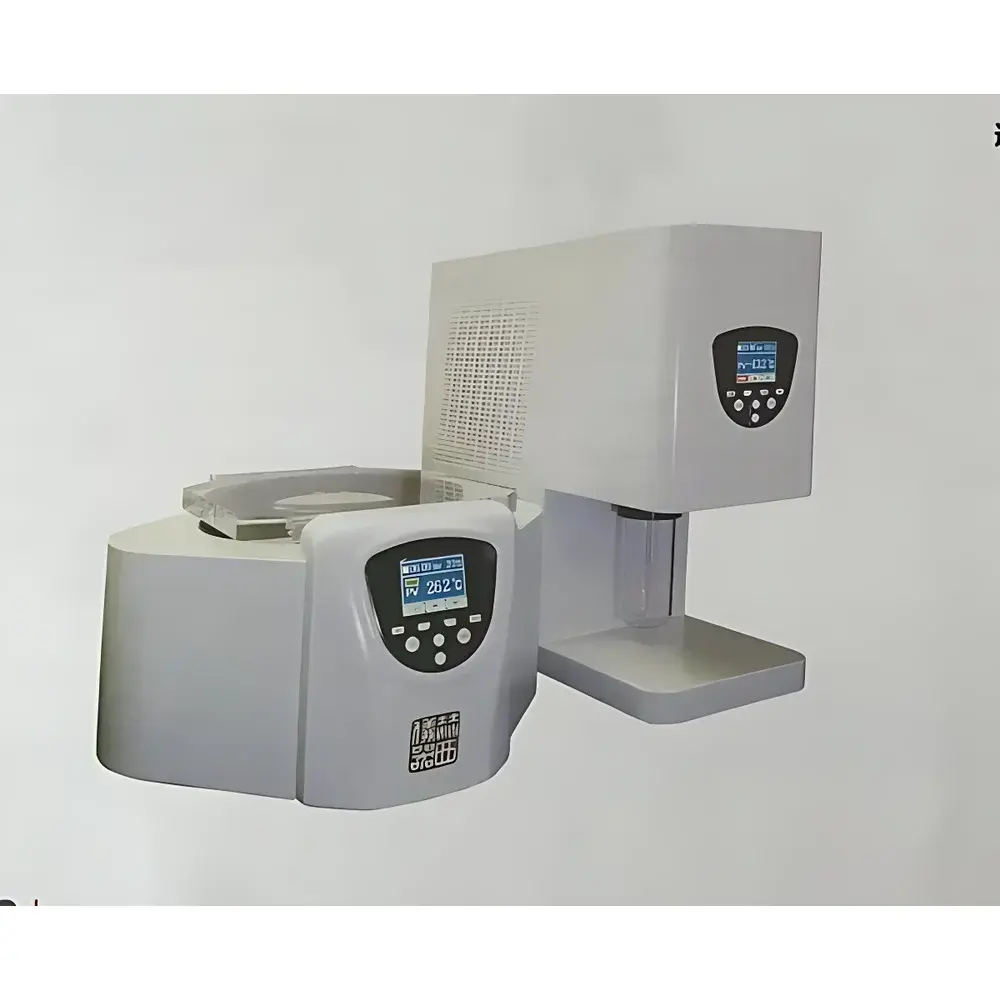
Hettich ZLS-4 Vacuum Centrifugal Concentrator
| Brand | Hettich |
|---|---|
| Model | ZLS-4 |
| Type | Vacuum Centrifugal Concentrator |
| Temperature Range | Ambient to +60 °C (optional heating) |
| Temperature Control Accuracy | ±1 °C |
| Rotors | 2×96-well plates / 62×1.5 mL / 12×10 mL / 6×50 mL / 6×250 mL / 6×2×50 mL |
| Optional Adapters | 6×5×20 mL |
| Power | 1.5 kW |
| Noise Level | <50 dB(A) |
| Vacuum Interface | φ12 mm |
| Cold Trap Options | CT40 or CT50 |
| Compatible Vacuum Pumps | Diaphragm pump / Domestic oil-sealed pump / Imported oil-sealed pump |
| Ambient Operating Temperature | 0–40 °C |
| Power Supply | AC 220 V / 50 Hz |
Overview
The Hettich ZLS-4 Vacuum Centrifugal Concentrator is an engineered solution for gentle, efficient, and scalable removal of volatile solvents—including water, ethanol, methanol, acetonitrile, and ethyl acetate—from biological, chemical, and pharmaceutical samples. It operates on the principle of simultaneous centrifugal force, vacuum-induced boiling point depression, and controlled thermal energy input—enabling rapid solvent evaporation while minimizing sample denaturation, oxidation, or foaming. Unlike conventional nitrogen blow-down or rotary evaporation methods, the ZLS-4 maintains sample integrity across sensitive biomolecules (e.g., proteins, nucleic acids, peptides, metabolites) by avoiding direct heat exposure and mechanical shear. Its modular architecture supports integration into high-throughput workflows in core facilities, QC laboratories, and regulated R&D environments where reproducibility, traceability, and compliance are critical.
Key Features
- Modular, split-system design allows independent configuration of concentrator, cold trap (CT40 or CT50), and vacuum source—facilitating flexible lab layout and future scalability.
- Aluminum alloy rotor chamber with anodized electrophoretic coating provides exceptional resistance to corrosion from organic solvents and acidic/basic reagents commonly used in extraction and purification protocols.
- Intelligent microprocessor control with dual-mode interface: TFT-LCD true-color display with both capacitive touch and physical keypad operation; real-time display of setpoints (temperature, time, vacuum status) and actual parameters (rotor speed equivalent, chamber temperature, elapsed time).
- Precise temperature regulation from ambient up to +60 °C (±1 °C accuracy) via uniform radiant heating—optimized for low-boiling solvents without localized overheating or sample degradation.
- Non-contact, maintenance-free magnetic drive system ensures long-term rotational stability and eliminates lubricant contamination risks in sterile or ultra-clean applications.
- Transparent PMMA lid enables unobstructed visual monitoring of sample status throughout the concentration cycle—critical for detecting foam formation, bumping, or unexpected condensation patterns.
- Programmable timer range: 1 minute to 99 hours 59 minutes—supporting overnight processing and multi-step protocols with automatic termination and audible alert.
- Over-temperature safety cutoff with audible/visual warning prevents thermal runaway during extended runs or pump failure scenarios.
Sample Compatibility & Compliance
The ZLS-4 accommodates a broad spectrum of sample formats through interchangeable rotors and optional adapters: 1.5 mL microcentrifuge tubes, 10 mL and 20 mL conical tubes, 50 mL and 250 mL round-bottom tubes, as well as 96-well microplates (2× plate capacity). This versatility supports workflows in nucleic acid purification (DNA/RNA), oligonucleotide synthesis, SPE cartridge eluate concentration, LC-MS sample prep, immunoglobulin enrichment, forensic toxicology screening, and ADMET studies. The system is compatible with common laboratory solvents (e.g., chloroform, DCM, acetone, THF) when paired with appropriate cold traps and chemically resistant vacuum pumps. While not certified to specific ISO or ASTM standards out-of-the-box, its operational repeatability, temperature traceability, and programmable parameter logging support alignment with GLP, GMP, and FDA 21 CFR Part 11 requirements when integrated with validated software and audit trail configurations.
Software & Data Management
The ZLS-4 features embedded firmware supporting full parameter logging—including start/stop timestamps, target and actual temperature profiles, vacuum level trends (when connected to compatible pressure sensors), and rotor speed equivalents. Raw data export is available via USB interface in CSV format for downstream analysis in LIMS or ELN platforms. Optional PC-based control software (sold separately) enables remote scheduling, multi-instrument fleet monitoring, electronic signature capture, and automated report generation compliant with ALCOA+ principles. All user actions—including method edits, parameter overrides, and emergency stops—are timestamped and recorded in a non-erasable event log, fulfilling essential data integrity requirements for regulated environments.
Applications
- Nucleic acid concentration and desalting post-phenol-chloroform extraction or column-based purification
- Pre-concentration of low-abundance analytes prior to LC-MS/MS or GC-MS analysis
- Removal of residual solvents after solid-phase extraction (SPE) or QuEChERS preparation
- Stabilization of thermolabile compounds (e.g., labile metabolites, unstable APIs) during formulation development
- High-throughput sample preparation for biobanking, clinical trial sample archiving, and biomarker discovery pipelines
- Concentration of antibody fragments, cytokines, and other recombinant proteins without aggregation
- Forensic drug screening workflows requiring quantitative recovery of volatiles and semi-volatiles from biological matrices
FAQ
What vacuum pump options are recommended for optimal performance with the ZLS-4?
For aqueous and low-boiling organic solvents (e.g., methanol, acetonitrile), a chemically resistant diaphragm pump is sufficient. For high-boiling solvents (e.g., DMSO, DMF) or large-volume evaporation, an oil-sealed pump—preferably imported with high ultimate vacuum (<0.1 mbar) and vapor handling capability—is advised.
Can the ZLS-4 be used under inert gas conditions?
The standard configuration does not include gas purging ports; however, custom inlet/outlet modifications can be implemented at the vacuum line interface to introduce nitrogen or argon for oxygen-sensitive applications.
Is the rotor balance requirement strict, and how is imbalance detected?
Yes—rotor load must be balanced to within ±5% mass difference per opposing position. The system continuously monitors vibration amplitude and will automatically decelerate and halt if excessive imbalance is detected, displaying an error code.
Does the ZLS-4 meet CE or UL safety certification standards?
The instrument complies with IEC 61010-1:2010 for laboratory electrical equipment and carries CE marking for the European Economic Area. UL listing is available upon request for North American deployment.
How often does the cold trap require defrosting or maintenance?
Defrosting frequency depends on solvent load and trap capacity: CT40 requires manual defrost every 8–12 hours under continuous use with aqueous solvents; CT50 extends this interval to 16–24 hours. No consumables or filters are required—only periodic cleaning with isopropanol.



