
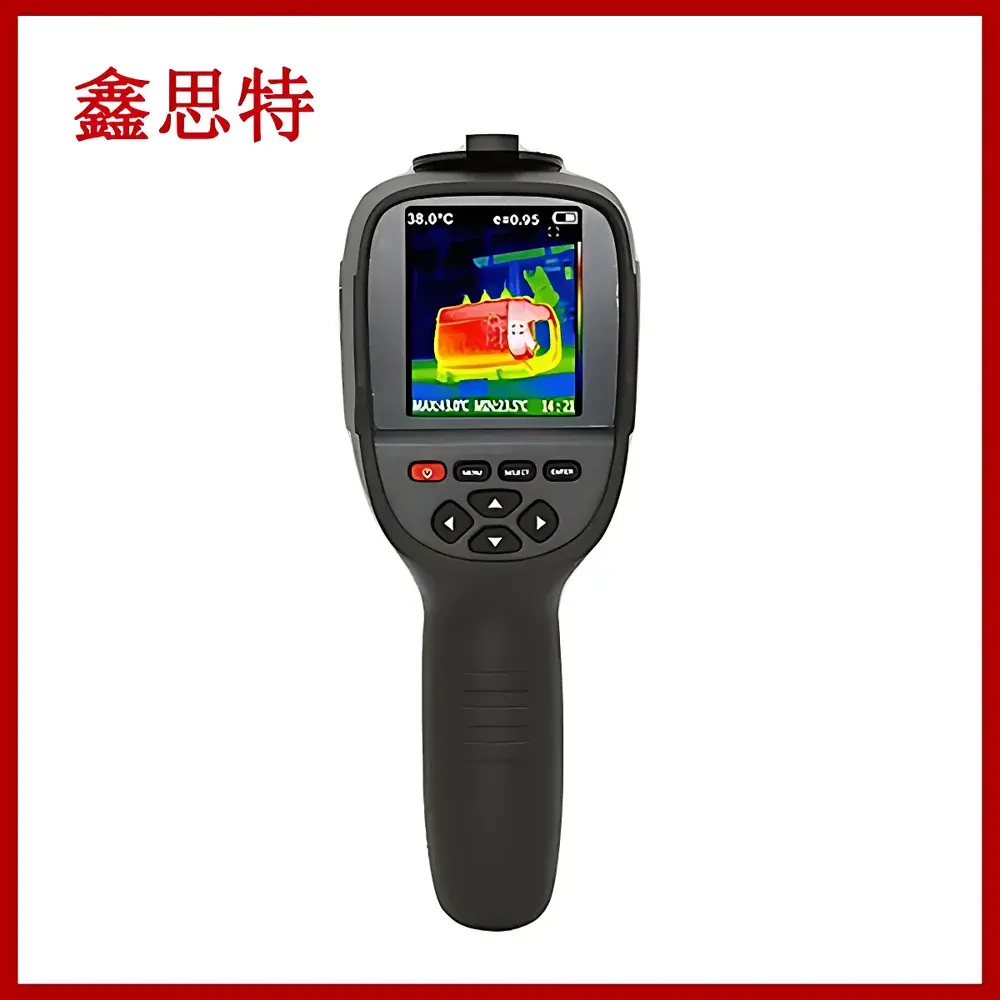
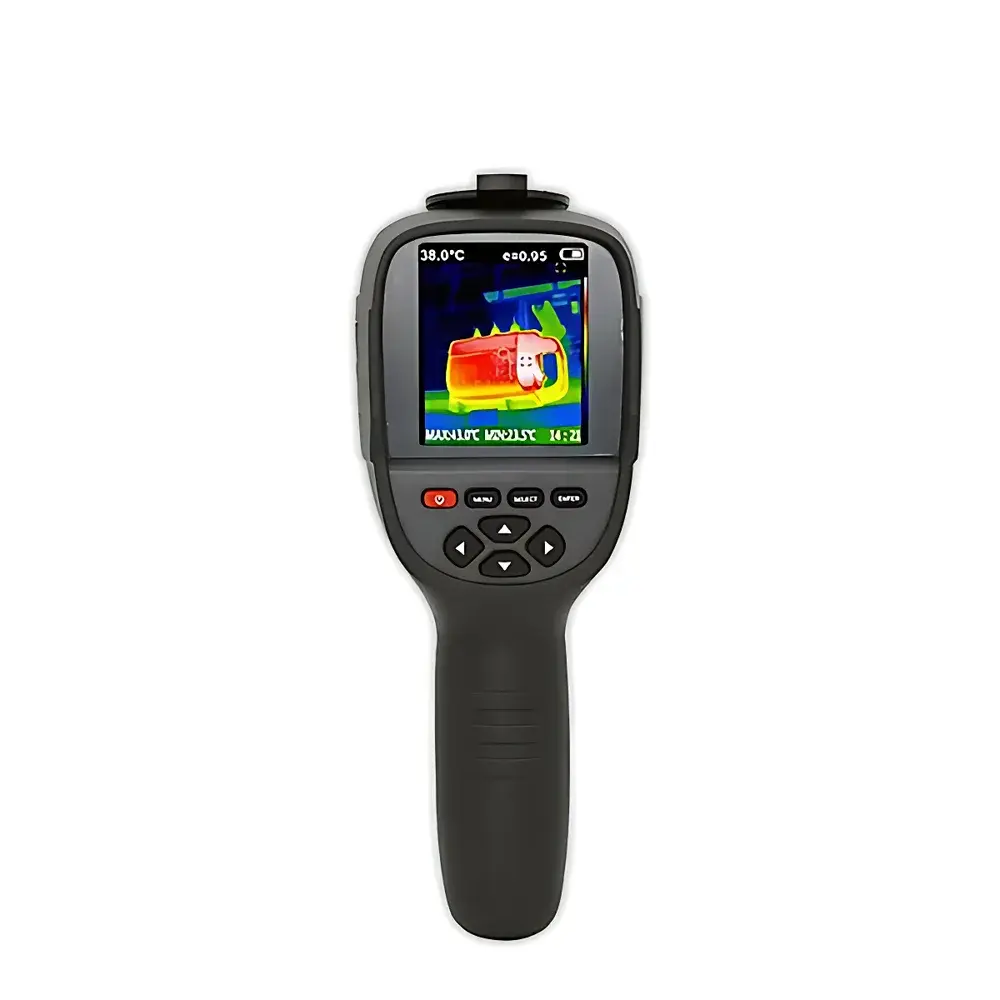
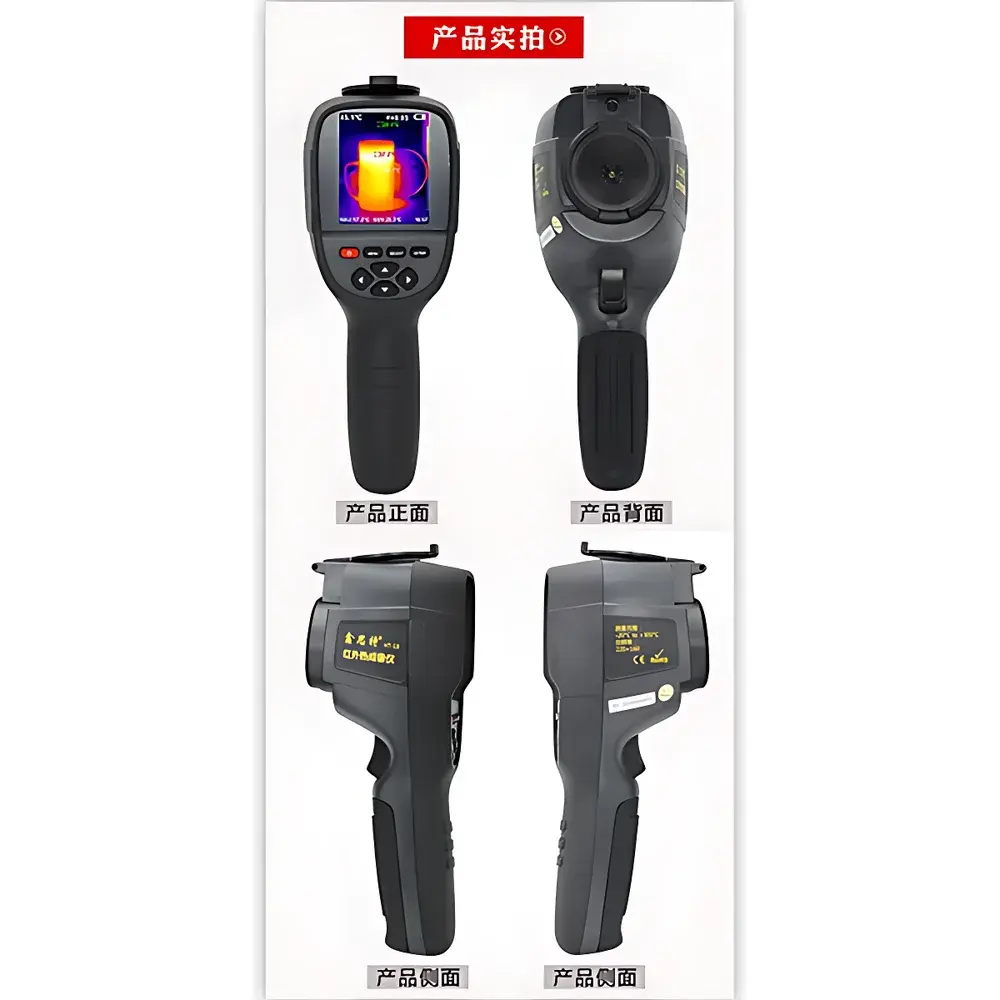
Drick HT-18 Non-Contact Infrared Thermal Imaging Camera
| Brand | Drick |
|---|---|
| Origin | Shandong, China |
| Manufacturer Type | Original Equipment Manufacturer (OEM) |
| Country of Origin | China |
| Model | HT-18 |
| Operating Principle | Uncooled Microbolometer-Based Infrared Radiation Detection |
| Measurement Method | Non-Contact |
| Detector Type | Single-Element Thermopile Sensor |
| Temperature Range | −20 °C to 300 °C (−4 °F to 572 °F) |
| Accuracy | ±2 °C or ±2% of reading (whichever is greater) |
| Frame Rate | 9 Hz |
| Compliance | CE, RoHS, ISO 18434-1 (Condition Monitoring — Infrared Thermography) |
Overview
The Drick HT-18 is a compact, handheld infrared thermal imaging camera engineered for reliable non-contact surface temperature measurement in industrial maintenance, quality assurance, and field diagnostics. Unlike cooled quantum detector systems, the HT-18 employs an uncooled microbolometer-based sensing architecture—specifically a single-element thermopile detector—optimized for cost-effective, low-power operation without cryogenic cooling. Its core principle relies on Planck’s law of blackbody radiation: incident infrared energy emitted from a target surface is focused via germanium-coated optics onto the thermopile sensor, where minute temperature-induced voltage differentials are converted into calibrated temperature values. Designed for ambient operational stability, the HT-18 operates without active cooling mechanisms, making it suitable for extended battery-powered use in factory floors, electrical substations, HVAC inspections, and R&D prototyping environments where portability and rapid deployment are critical.
Key Features
- Portable form factor with ergonomic grip and integrated LCD display for real-time thermal visualization
- Uncooled thermopile detector ensures stable performance across −10 °C to +50 °C ambient operating conditions
- Fixed-focus optical system with standard field-of-view optimized for 0.5–5 m working distance
- Dual-scale output: simultaneous °C and °F readouts with emissivity correction (adjustable from 0.10 to 1.00 in 0.01 increments)
- Real-time measurement logging at 9 Hz frame rate, enabling dynamic thermal trend capture during transient events
- IP54-rated enclosure for dust and splash resistance, supporting use in non-hazardous industrial zones
- Built-in rechargeable Li-ion battery providing ≥4 hours of continuous operation under typical duty cycles
Sample Compatibility & Compliance
The HT-18 is compatible with non-reflective, opaque, and semi-opaque surfaces including painted metal, concrete, rubber, plastic housings, and composite insulation materials. It is not intended for transparent media (e.g., glass, quartz) or highly reflective polished metals without surface treatment or emissivity calibration. The instrument conforms to ISO 18434-1:2008 for condition monitoring applications using infrared thermography, and meets electromagnetic compatibility (EMC) requirements per EN 61326-1. It carries CE marking under the EU Low Voltage Directive (2014/35/EU) and RoHS 2011/65/EU compliance for restricted hazardous substances. While not certified for intrinsically safe environments, its design supports routine use in Class I, Division 2 areas when operated per manufacturer guidelines.
Software & Data Management
Data export is supported via USB 2.0 interface to Windows-compatible analysis software (included). Captured thermal images and time-stamped temperature logs can be exported in CSV and BMP formats for integration into enterprise CMMS, LIMS, or statistical process control (SPC) platforms. The software provides basic post-processing tools—including region-of-interest (ROI) analysis, isotherm highlighting, and emissivity mapping—and maintains audit-ready metadata (date/time stamp, operator ID, ambient conditions). All firmware updates are delivered through signed binary packages to ensure integrity; no cloud connectivity or remote telemetry is implemented, preserving data sovereignty in regulated environments such as GLP-compliant laboratories or FDA-regulated manufacturing facilities.
Applications
- Electrical infrastructure inspection: identification of hotspots in switchgear, busbars, transformer terminations, and PV module interconnects
- Mechanical maintenance: detection of bearing overheating, misalignment-induced friction, and lubrication failure in rotating equipment
- Building diagnostics: thermal bridging assessment, moisture intrusion mapping, and HVAC duct leakage verification
- Process validation: monitoring of extrusion die temperatures, curing oven uniformity, and packaging seal integrity
- Educational and vocational training: hands-on thermography fundamentals for technical institutes and certification prep (e.g., ISO 18436-7 Level 1)
FAQ
What is the minimum spot size measurable with the HT-18?
The effective spatial resolution depends on working distance and target emissivity; at 1 m distance, the IFOV-derived spot size is approximately 12 mm diameter for reliable ±2 °C accuracy.
Can the HT-18 measure through glass or plastic enclosures?
No—standard silicate glass and most transparent polymers are opaque to the 8–14 µm spectral band used by the HT-18. Measurements must be performed on exposed surfaces.
Is the device compliant with FDA 21 CFR Part 11 for electronic records?
The HT-18 does not implement electronic signatures or audit-trail functionality required under Part 11; however, raw CSV exports may be imported into validated Part 11-compliant systems for review and approval.
Does the unit support radiometric video recording?
No—the HT-18 captures discrete still frames at 9 Hz; continuous radiometric video streaming is not supported due to hardware architecture constraints.
What calibration standards are applied during factory verification?
Each unit undergoes traceable calibration against NIST-traceable blackbody sources at three points (−20 °C, 100 °C, and 300 °C) prior to shipment, with certificate of conformance included.





