
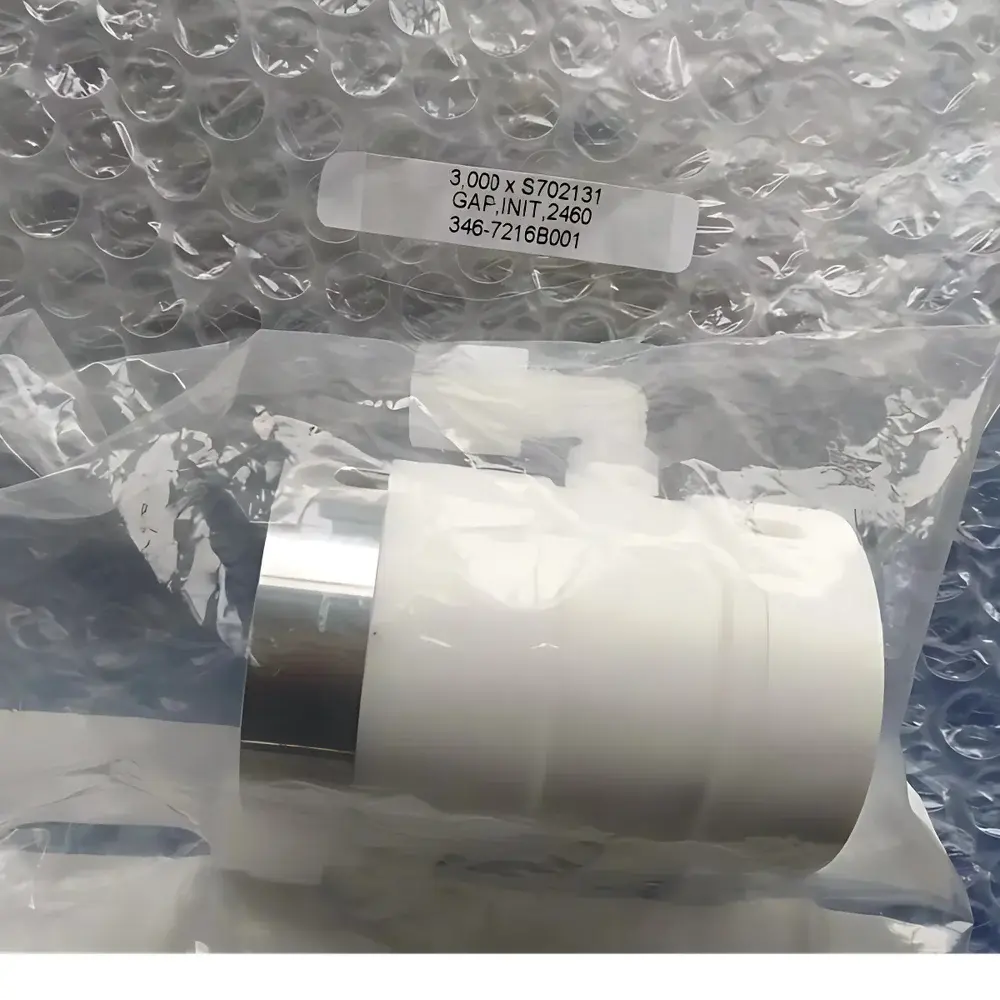
Thermo Fisher Scientific Auxiliary Electrode S702131
| Brand | Thermo Fisher Scientific |
|---|---|
| Origin | USA |
| Model | S702131 |
| Category | Auxiliary Electrode for Arc/Spark Optical Emission Spectrometry (OES) |
| Intended Instrument Platforms | ARL 8860 Direct-Reading Spectrometer, Other Thermo Fisher OES Systems |
| Compliance | Designed to meet ASTM E1184, ISO 11577, and IEC 61000-4-3 electromagnetic compatibility requirements for analytical instrumentation |
Overview
The Thermo Fisher Scientific Auxiliary Electrode S702131 is a precision-engineered consumable component designed exclusively for use with arc/spark optical emission spectrometers—most notably the Thermo Fisher ARL 8860 direct-reading metal analyzer. As a critical element of the excitation circuit, this auxiliary electrode functions in conjunction with the sample (acting as the counter-electrode) to establish a stable, reproducible plasma discharge during solid metallic sample analysis. Its geometry, material composition (tungsten-based alloy with controlled trace impurities), and surface finish are optimized to ensure consistent spark initiation, minimal spectral background noise, and long-term signal stability across repeated analyses. Unlike generic electrodes, the S702131 is manufactured under strict process controls to maintain dimensional tolerances within ±2 µm and surface roughness below Ra 0.4 µm—parameters essential for minimizing inter-run variability in quantitative elemental analysis of ferrous and non-ferrous alloys.
Key Features
- Material specification: High-purity tungsten-cerium alloy with certified low blank levels for key interferents (e.g., Al, Cu, Mn, Cr & Ni ≤ 0.05 ppm by ICP-MS verification)
- Electrode geometry: Conical tip with 1.2 mm apex diameter and 90° included angle—engineered for optimal plasma confinement and spatial resolution in the ARL 8860’s optical path
- Surface treatment: Electropolished and vacuum-baked to eliminate organic residues and adsorbed moisture, ensuring stable discharge characteristics from first spark to end-of-life
- Traceability: Each batch carries full CoA (Certificate of Analysis) including SEM-EDS verification of surface composition and spark erosion rate testing per ASTM E2721
- Compatibility: Pre-calibrated for integration into ARL 8860’s electrode positioning system; requires no manual alignment or firmware adjustment
Sample Compatibility & Compliance
The S702131 is validated for use with standardized solid metallic samples conforming to ISO 11577 (metallurgical spectrometric analysis — sampling of cast iron and steel) and ASTM E1184 (standard practice for sampling and sample preparation of metals for spectrochemical analysis). It supports analysis of billets, ingots, machined coupons, and certified reference materials (CRMs) with diameters ≥ 10 mm and flatness ≤ 0.02 mm. The electrode meets RoHS Directive 2011/65/EU and REACH Annex XIV restrictions on hazardous substances. Its design complies with IEC 61000-4-3 for immunity to radiated RF fields—critical for stable operation in multi-instrument laboratory environments where adjacent ICP-OES or XRF systems may generate electromagnetic interference.
Software & Data Management
While the S702131 itself contains no embedded electronics, its performance is fully integrated into Thermo Fisher’s ARL SpectraGraph software suite (v5.2+). The software logs electrode usage cycles, correlates spark energy profiles with intensity drift metrics, and triggers maintenance alerts when spectral line RSD exceeds 1.8% over 10 consecutive measurements—indicative of electrode wear or contamination. Audit trails generated during calibration and daily standardization routines comply with FDA 21 CFR Part 11 requirements when operated in validated GMP environments. Full traceability is maintained via unique batch ID linkage to instrument log files and LIMS export protocols (ASTM E1461-compliant XML schema).
Applications
- Quality control of high-alloy steels (e.g., stainless, tool, and maraging grades) in foundries and rolling mills
- Grade identification and positive material identification (PMI) in petrochemical plant piping and pressure vessel fabrication
- Research-grade trace element quantification (ppm-level detection) in aluminum aerospace alloys (e.g., 2xxx, 7xxx series)
- Monitoring of residual elements (Sn, Pb, As, Sb) in recycled copper feedstocks per EN 13698-1
- Validation of homogeneity in powder metallurgy compacts prior to sintering
FAQ
What is the recommended replacement interval for the S702131 electrode?
Electrode lifetime depends on sample matrix and daily throughput; typical service life ranges from 1,200–2,500 sparks for low-alloy steels and 600–1,000 sparks for high-carbon or abrasive matrices (e.g., cast iron). ARL SpectraGraph software provides real-time wear diagnostics.
Can the S702131 be used with non-Thermo Fisher spectrometers?
No. Its mechanical interface, thermal expansion profile, and plasma coupling characteristics are specifically engineered for the ARL 8860’s excitation chamber geometry and high-frequency generator output (400 kHz, 500 W peak). Use with other platforms voids warranty and compromises measurement uncertainty.
Is cleaning required between sample analyses?
No routine cleaning is needed. However, if analyzing high-silicon or high-titanium alloys, a 15-second argon purge at 12 L/min is recommended after every 50 sparks to prevent oxide buildup on the tip.
Does the S702131 require recalibration of the spectrometer upon installation?
Yes. A full standardization using certified CRMs (e.g., NIST SRM 1251 series) must be performed following electrode replacement to re-establish intensity-to-concentration calibration curves.






