
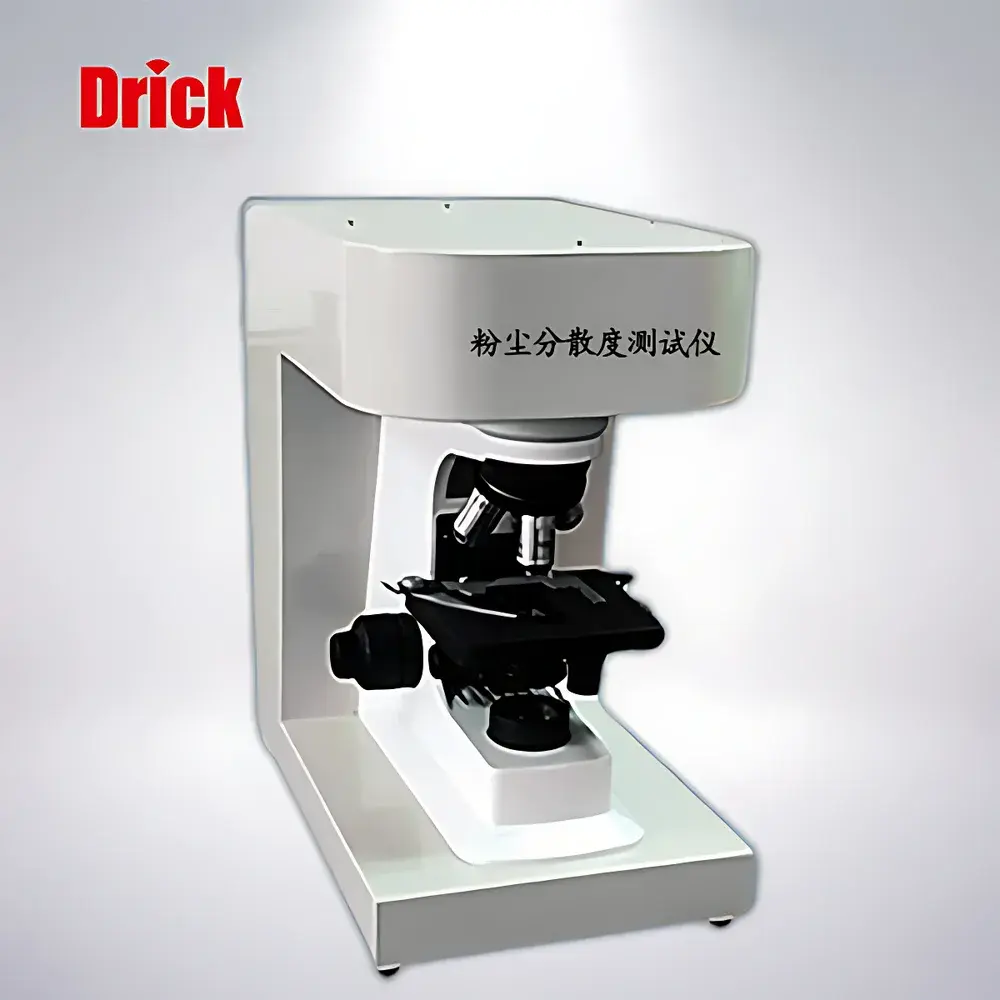
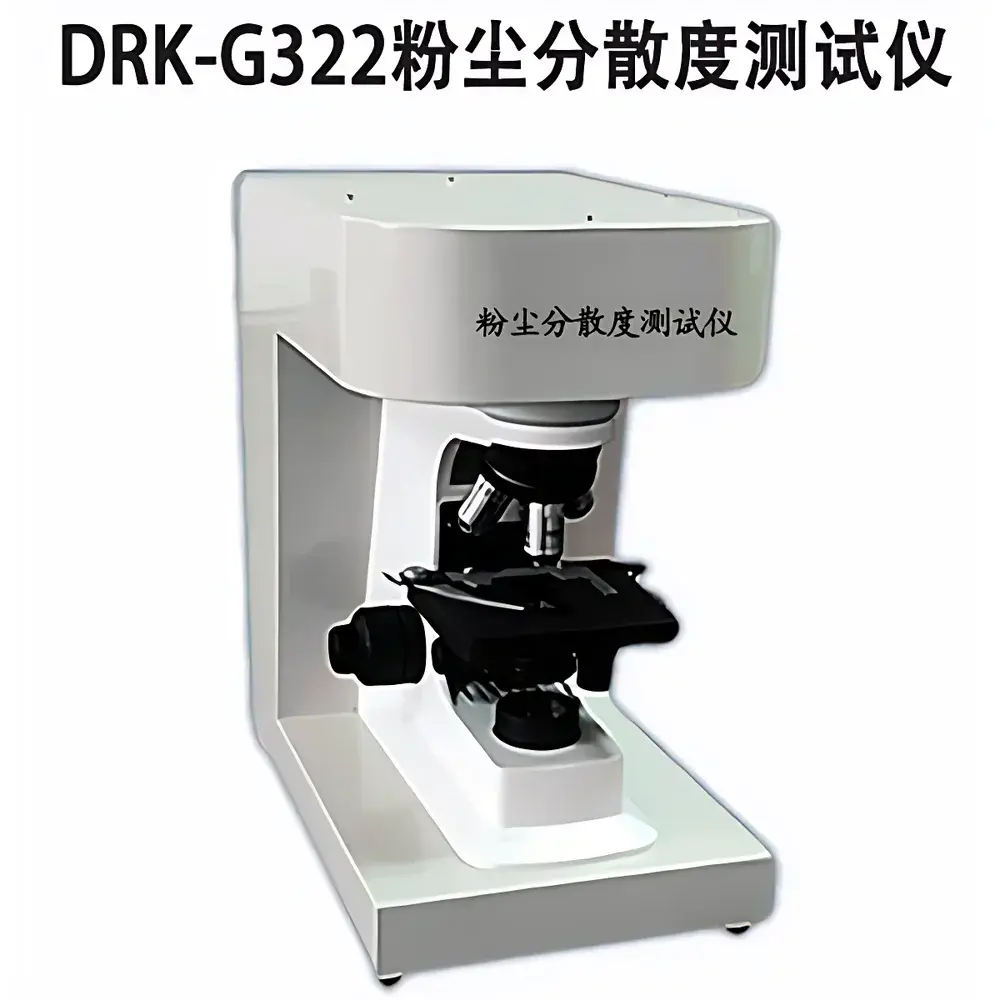
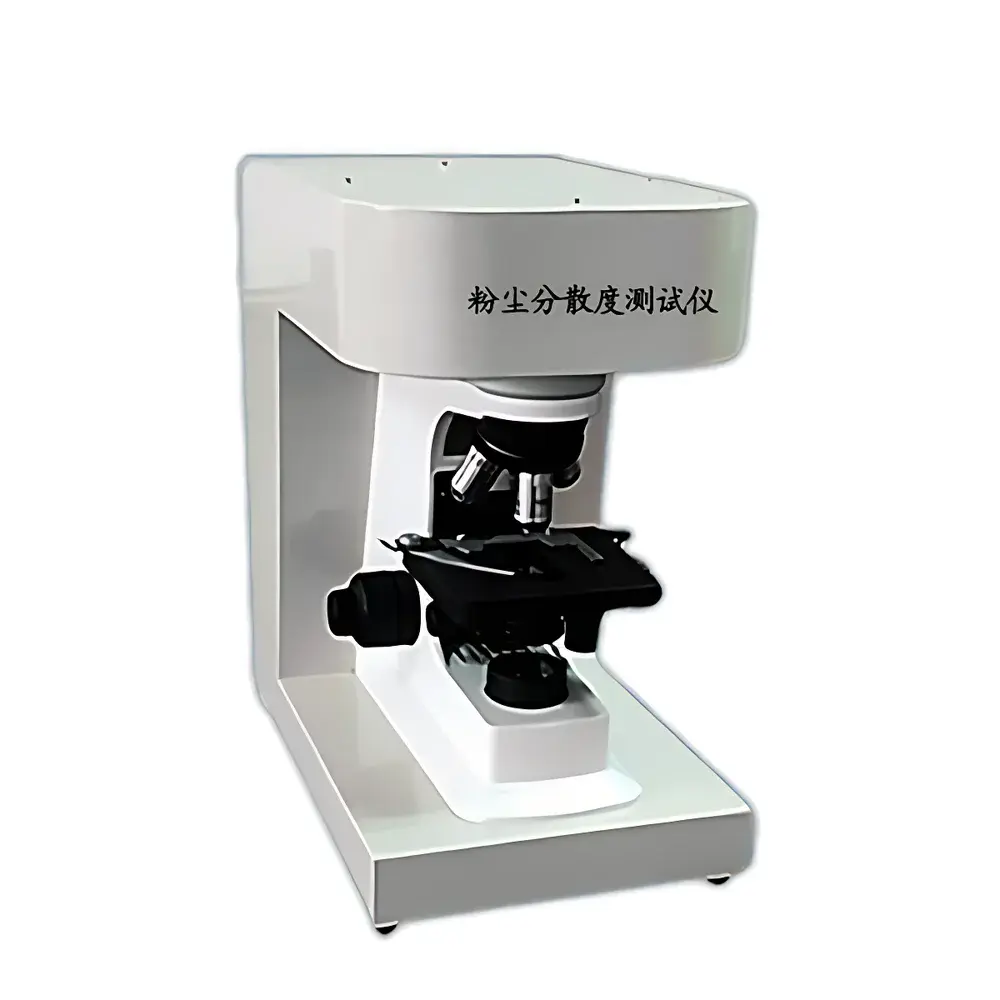
Drick DRK-G322 Image-Based Dust Dispersion Analyzer
| Brand | Drick |
|---|---|
| Origin | Shandong, China |
| Manufacturer Type | Direct Manufacturer |
| Regional Classification | Domestic (China) |
| Model | DRK-G322 |
| Price Range | USD 11,000 – 14,000 |
Overview
The Drick DRK-G322 Image-Based Dust Dispersion Analyzer is a dedicated laboratory instrument engineered for quantitative characterization of airborne particulate matter morphology and size distribution. It employs high-resolution digital microscopy coupled with automated image acquisition and particle segmentation algorithms to determine dust dispersion characteristics—primarily particle size distribution (PSD), aspect ratio, circularity, and agglomeration state—based on ISO 13322-1 (Particle size analysis — Image analysis methods — Part 1: Static image analysis) and ASTM D7619 (Standard Practice for Determining Particle Size Distribution of Powders Using Static Image Analysis). Unlike laser diffraction or dynamic light scattering systems, this analyzer captures static two-dimensional projections of individual particles deposited on standardized substrates under controlled environmental conditions, enabling direct morphological assessment critical for occupational health monitoring, industrial hygiene compliance, and material safety data sheet (MSDS) development.
Key Features
- High-magnification optical imaging system with motorized stage and auto-focus capability for repeatable field-of-view positioning
- Integrated LED illumination with adjustable contrast and backlighting modes to enhance edge detection of low-contrast dust particles
- Automated particle recognition engine using threshold-based segmentation and morphological filtering, compliant with ISO/IEC 17025 traceability requirements for image analysis workflows
- Calibration traceable to NIST-traceable microsphere standards (e.g., 5–100 µm polystyrene reference particles)
- Modular sample preparation station supporting standardized deposition protocols per EN 481 (Workplace atmospheres — Size fraction definitions for measurement of airborne particles)
- Rugged benchtop architecture with ESD-safe housing and vibration-dampened optical baseplate for stable imaging in non-ISO-classified lab environments
Sample Compatibility & Compliance
The DRK-G322 supports analysis of dry, non-cohesive, and moderately cohesive dust samples collected via filter-based sampling (e.g., PVC, mixed cellulose ester, or quartz fiber filters) following OSHA Method ID-142 or NIOSH Method 0600. Sample substrates are mounted on precision glass slides compatible with standard microscope stages. The system complies with regulatory frameworks governing occupational exposure limit (OEL) assessment, including alignment with EU Directive 2004/37/EC (carcinogens and mutagens), ACGIH TLV® documentation requirements, and China’s GBZ/T 192 series for workplace dust monitoring. Data output formats support audit-ready reporting for GLP-compliant laboratories and FDA 21 CFR Part 11–enabled environments when deployed with optional secure user authentication and electronic signature modules.
Software & Data Management
The proprietary Drick ImageAnalysis Suite v3.2 provides full control over acquisition parameters, real-time preview, batch processing, and statistical reporting. Software features include customizable particle classification rules (e.g., by Feret diameter, convex hull area, or solidity), histogram generation with logarithmic binning, cumulative distribution curves (Rosin-Rammler and log-normal fits), and export to CSV, PDF, and XML formats. Audit trail functionality logs all operator actions, parameter changes, and calibration events with timestamps and user IDs—meeting requirements for ISO 9001 quality management systems and internal QA/QC validation protocols. Raw image archives are stored with embedded EXIF metadata, ensuring full traceability from acquisition to final report.
Applications
- Quantitative assessment of respirable and inhalable dust fractions in mining, construction, and pharmaceutical manufacturing environments
- Morphological evaluation of metalworking fluid mists, wood dust, silica-containing aggregates, and carbon black powders
- Verification of engineering control efficacy (e.g., local exhaust ventilation performance) through pre- and post-intervention dust morphology comparison
- Supporting REACH registration dossiers with particle shape descriptors required under Annex VI of Regulation (EC) No 1907/2006
- Method development and validation for in-house dust monitoring programs aligned with ISO 4226 (Air quality — General aspects — Definitions)
FAQ
What sample preparation method is recommended for optimal image clarity?
Standardized filter deposition followed by gentle solvent-free drying and mounting on conductive glass slides is required. Optional gold sputter coating may be applied for non-conductive samples to reduce charging artifacts.
Does the system support dynamic (in-flight) particle imaging?
No—the DRK-G322 is designed exclusively for static image analysis of deposited particles. Real-time aerosol imaging requires complementary instrumentation such as aerodynamic particle sizers or time-of-flight mass spectrometers.
Is software validation documentation available for regulated industries?
Yes—IQ/OQ documentation packages, including installation qualification checklists and operational qualification test scripts, are provided upon request for GMP/GLP-aligned deployments.
Can the system be integrated into a LIMS environment?
Yes—via configurable RESTful API endpoints and HL7-compatible data export modules, enabling bidirectional synchronization with laboratory information management systems.
What is the minimum detectable particle size under standard configuration?
With 20× objective lens and pixel resolution of 0.45 µm/pixel, the practical lower detection limit is approximately 1.5 µm for well-contrasted, spherical particles under optimal lighting conditions.





