
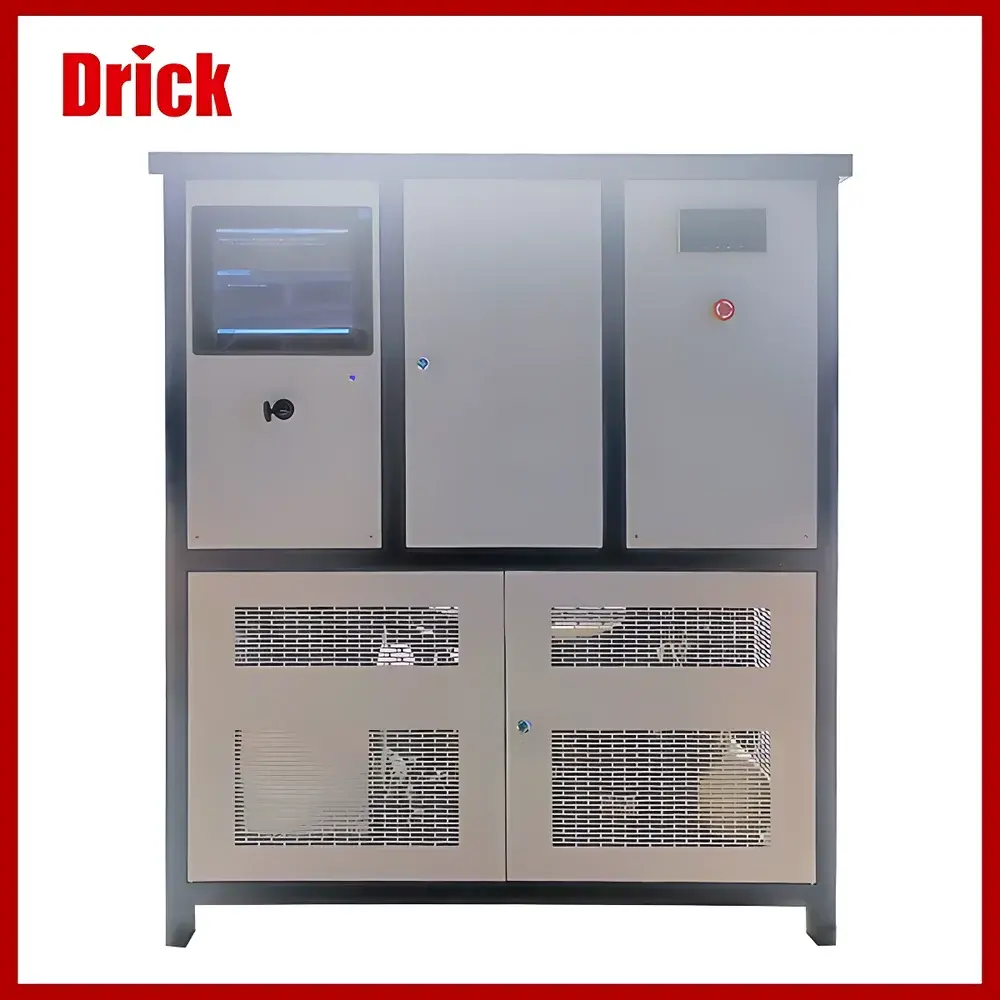
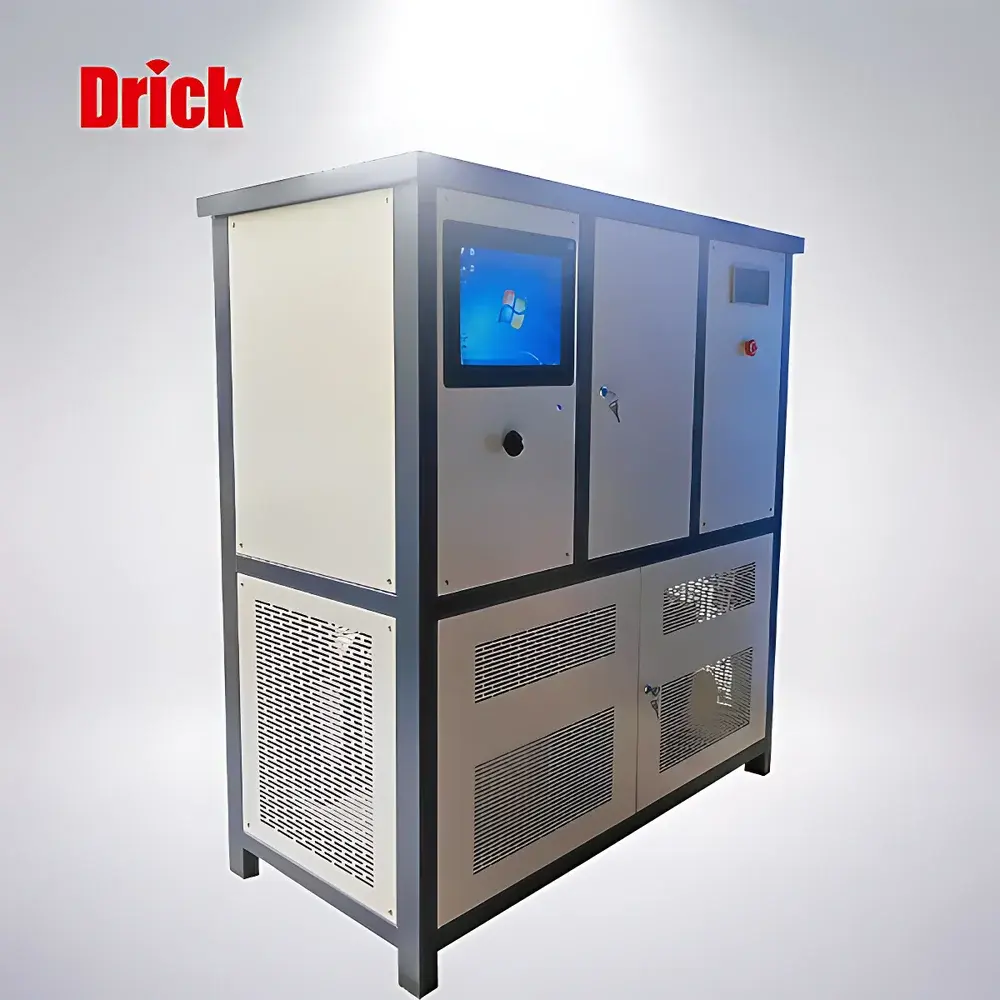
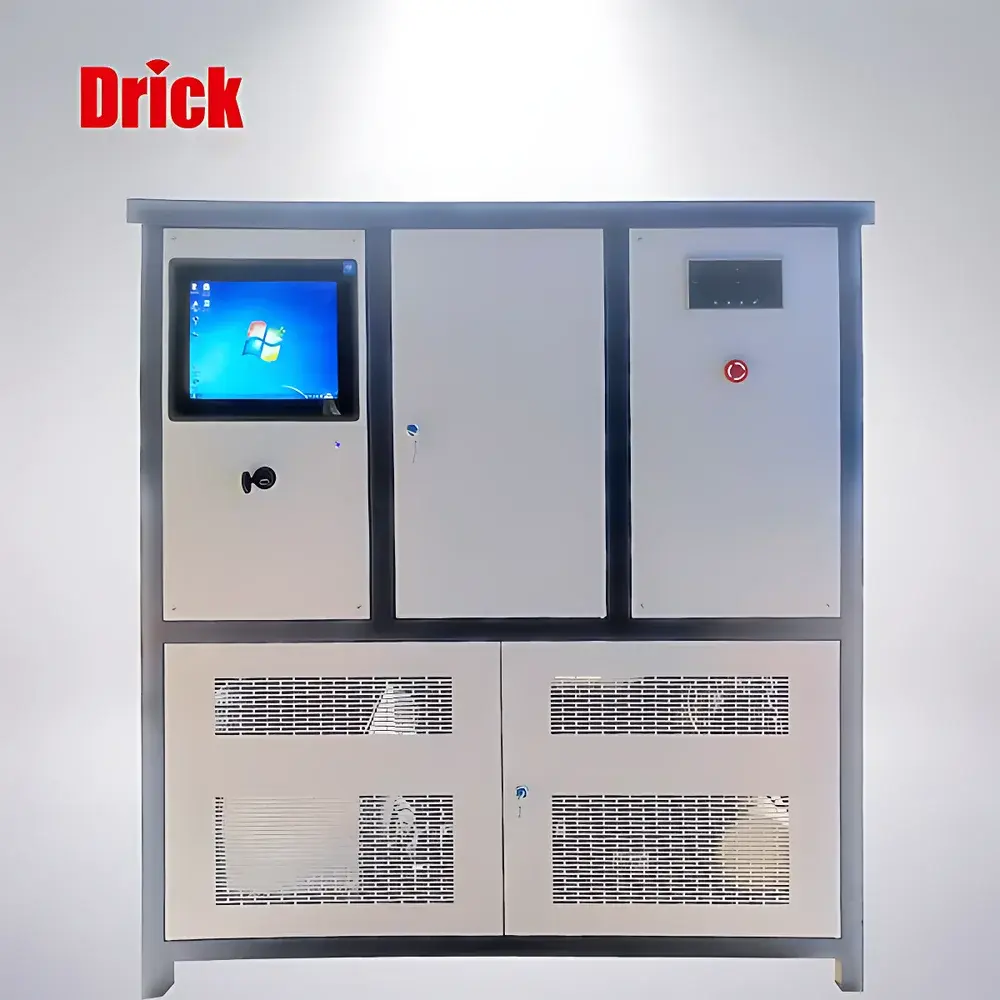
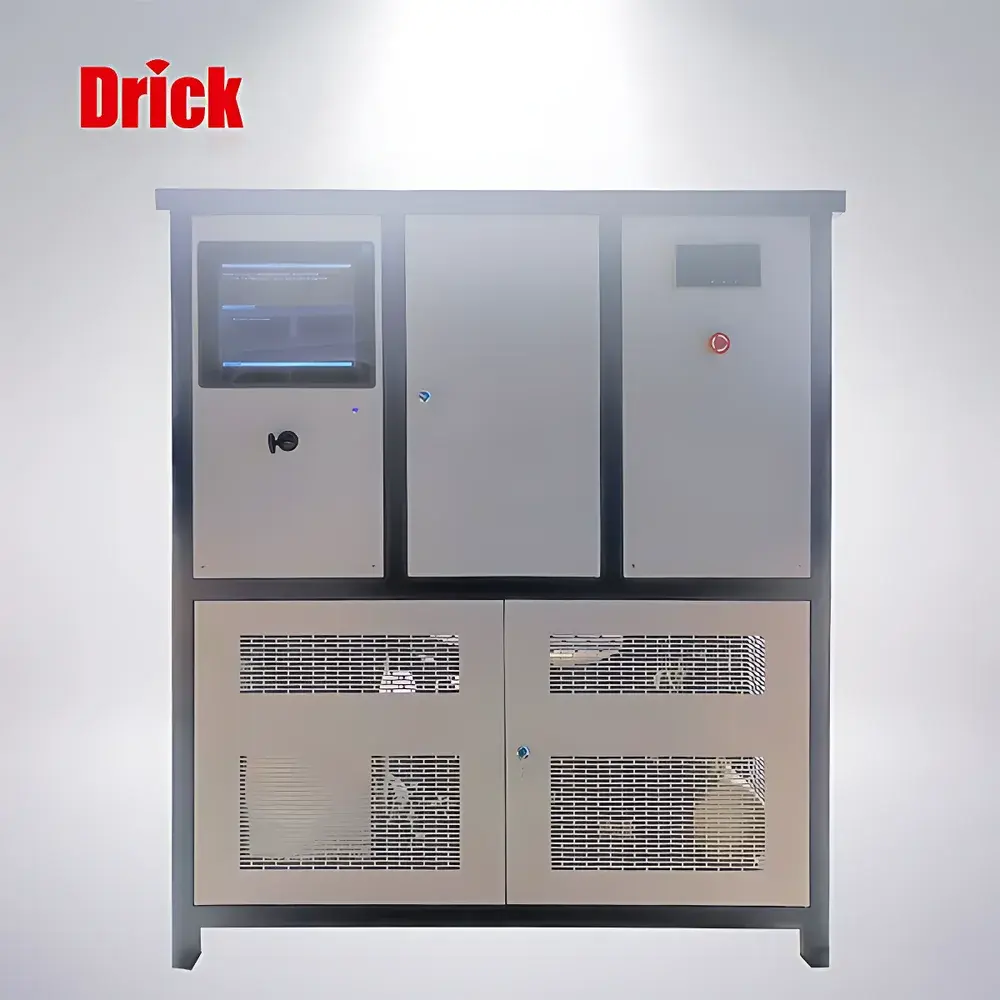
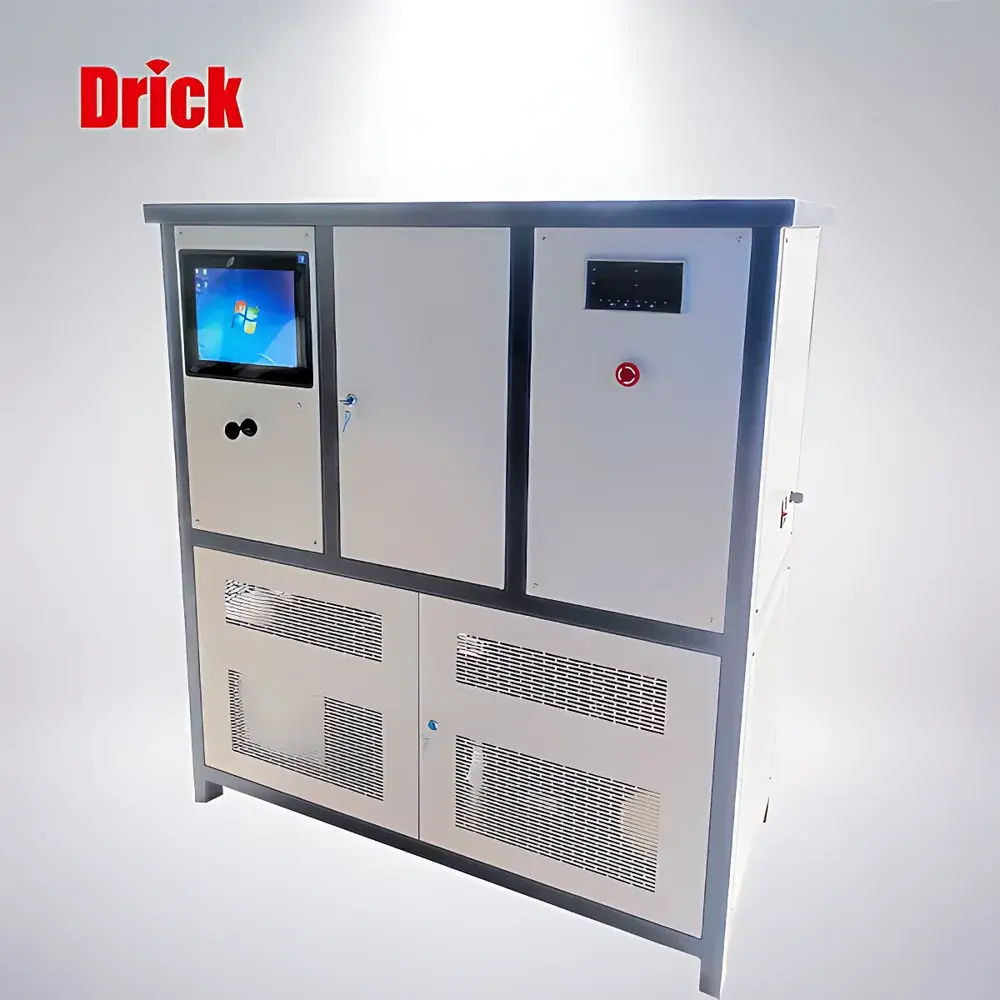
Drick DRK3 Guarded Hot Plate Thermal Conductivity Analyzer
| Brand | Drick |
|---|---|
| Origin | Shandong, China |
| Manufacturer Type | Direct Manufacturer |
| Country of Origin | China |
| Model | DRK3 |
| Price | USD 7,000 (FOB) |
| Test Method | Guarded Hot Plate (GHP) |
| Standard Compliance | GB/T 10294–2002 |
| Specimen Size | 300 mm × 300 mm × (0–100) mm |
| Measurable Materials | Homogeneous or composite insulating materials |
| Thermal Conductivity Range | 0.001–3 W/(m·K) |
| Hot Plate Temp Range | Ambient to 80 °C |
| Cold Plate Temp Range | 0–60 °C |
| Temperature Control Accuracy | ±0.2 °C |
| Measurement Uncertainty | ≤3% (k=2, per ISO/IEC 17025 guidance) |
| Heating Area | 0.09 m² (300 mm × 300 mm) |
| Thickness Measurement Resolution | 0.01 mm |
Overview
The Drick DRK3 Guarded Hot Plate Thermal Conductivity Analyzer is a precision laboratory instrument engineered for the steady-state determination of thermal conductivity (λ) of low-to-medium conductivity insulation materials. It operates in strict accordance with the guarded hot plate (GHP) principle defined in GB/T 10294–2002, which aligns methodologically with international standards ISO 8302 and ASTM C177. The system establishes a one-dimensional, steady-state heat flux across a flat, parallel-surface specimen sandwiched between a centrally heated metering plate and a temperature-controlled cold plate. A surrounding guarded heater—maintained at the same temperature as the metering plate—eliminates lateral heat loss, ensuring that >99% of the measured heat flow traverses the specimen perpendicularly. This architecture delivers high reproducibility and traceable measurement performance essential for quality control, R&D validation, and regulatory documentation in building material certification.
Key Features
- Integrated dual-plate thermal control system with independent PID regulation for hot plate (ambient to 80 °C) and cold plate (0–60 °C), achieving ±0.2 °C stability under load
- Automated pneumatic clamping mechanism ensures consistent, repeatable specimen contact pressure without manual torque variation
- Guarded heater ring actively synchronized to metering plate temperature, minimizing edge losses and enabling accurate thermal resistance partitioning
- Digital thickness measurement module (0.01 mm resolution) integrated into the frame for real-time d-value input during test setup
- Modular thermal insulation shroud with low-conductivity aerogel lining reduces environmental thermal drift and improves measurement repeatability
- Self-calibrating power measurement circuitry for center heating plate (Q), traceable to NIST-traceable watt standards via internal verification routines
Sample Compatibility & Compliance
The DRK3 accommodates rigid, semi-rigid, and layered flat specimens measuring 300 mm × 300 mm in planar dimension and up to 100 mm thick—including mineral wool, expanded polystyrene (EPS), extruded polystyrene (XPS), phenolic foam, vacuum insulation panels (VIPs), and multi-layer composites used in building envelope systems. Specimens must exhibit planarity ≤0.2 mm deviation across the surface and thermal homogeneity within the tested volume. The instrument satisfies mandatory testing requirements for CE-marked construction products under EN 12664 and supports conformity assessment per ISO 10456 for declared λ-values in EPDs (Environmental Product Declarations). All measurement data logs include full metadata (temperature setpoints, Q, d, A, timestamps) compliant with GLP audit trails and 21 CFR Part 11 electronic record integrity guidelines when paired with validated software configuration.
Software & Data Management
DRK3 is operated via Windows-based DrickTherm v3.2 software, supporting automated test sequencing, real-time convergence monitoring (dQ/dt < 0.05 W/min for ≥15 min), and auto-stabilization detection. The software calculates λ using the fundamental relation λ = Q·d / [A·(TH − TC)], where Q is measured heating power (W), d is specimen thickness (m), A is metering area (0.09 m²), and (TH − TC) is the mean temperature gradient (K). Raw sensor data (10 Hz sampling), intermediate parameters, and final λ-values are stored in encrypted .tdb binary format with SHA-256 checksums. Export options include CSV, PDF reports (with customizable headers, lab ID, operator signature field), and XML files compatible with LIMS integration. Audit log records all user actions, parameter changes, and calibration events with timestamp and login ID.
Applications
- Quality assurance of thermal insulation boards prior to construction site delivery
- Comparative evaluation of novel aerogel- or bio-based insulants against reference materials
- Validation of λ-values for BBA (British Board of Agrément) or DIBt certification submissions
- Temperature-dependent λ profiling (e.g., λ vs. T from 10 °C to 70 °C at 10 °C intervals)
- Interlaboratory round-robin studies under ISO/IEC 17043 proficiency testing frameworks
- Supporting ISO 527-2 tensile property correlation studies where thermal history affects mechanical behavior
FAQ
What international standards does the DRK3 comply with beyond GB/T 10294–2002?
It implements the guarded hot plate method equivalent to ISO 8302 and ASTM C177, and its uncertainty budgeting follows ISO/IEC 17025:2017 Annex A.5 guidance for thermal transport measurements.
Can the DRK3 measure anisotropic materials such as wood fiberboards?
Yes—provided the principal thermal axis is oriented perpendicular to the plates and specimen geometry allows full coverage of the 300 mm × 300 mm metering area without gaps or overhang.
Is third-party calibration certification available?
Drick provides factory calibration certificates (traceable to CNAS-accredited labs) and optional on-site verification by ISO/IEC 17025-certified metrology providers.
How is specimen thickness measured, and what tolerance is required?
A motorized micrometer gauge with 0.01 mm resolution measures thickness at four corners and center; maximum allowable thickness variation across the specimen is ±0.5 mm.
Does the system support automated multi-sample batch testing?
Yes—DrickTherm v3.2 includes queue-based scheduling, automatic clamping/unclamping cycles, and pass/fail logic based on user-defined λ and convergence thresholds.






