
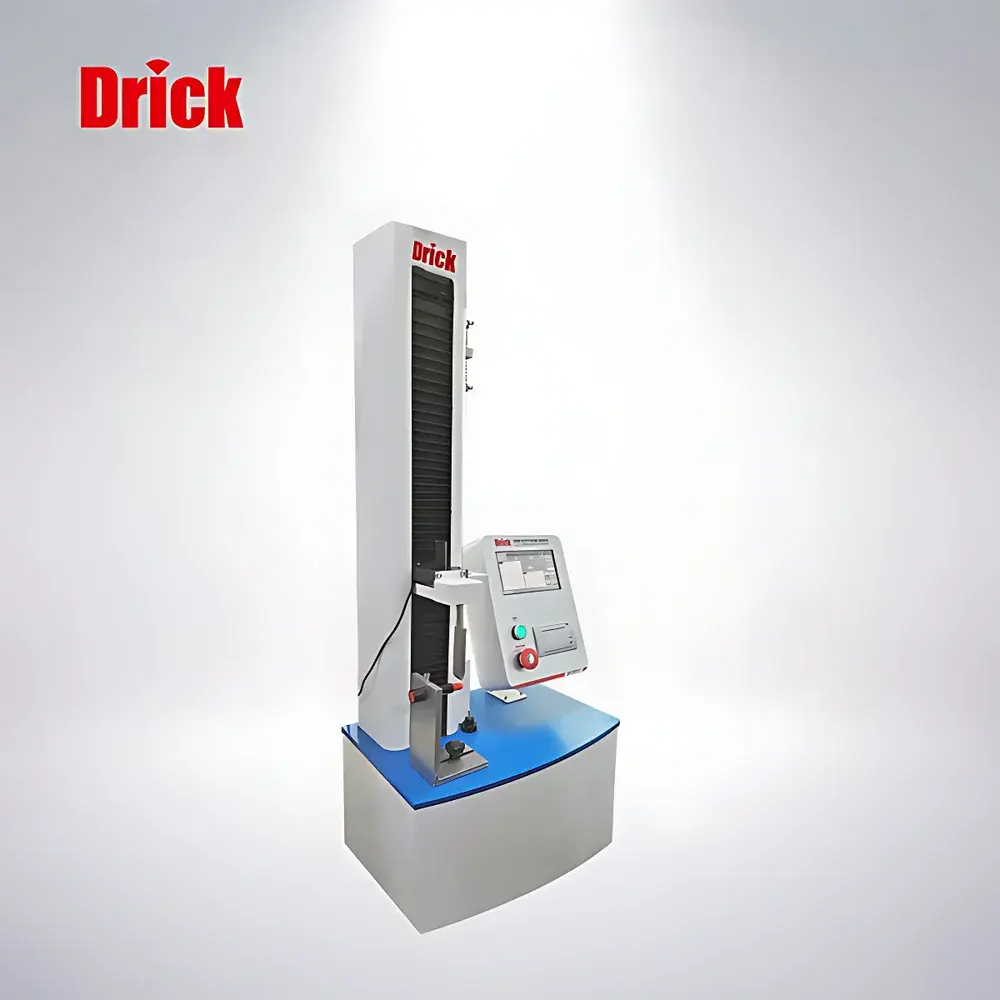
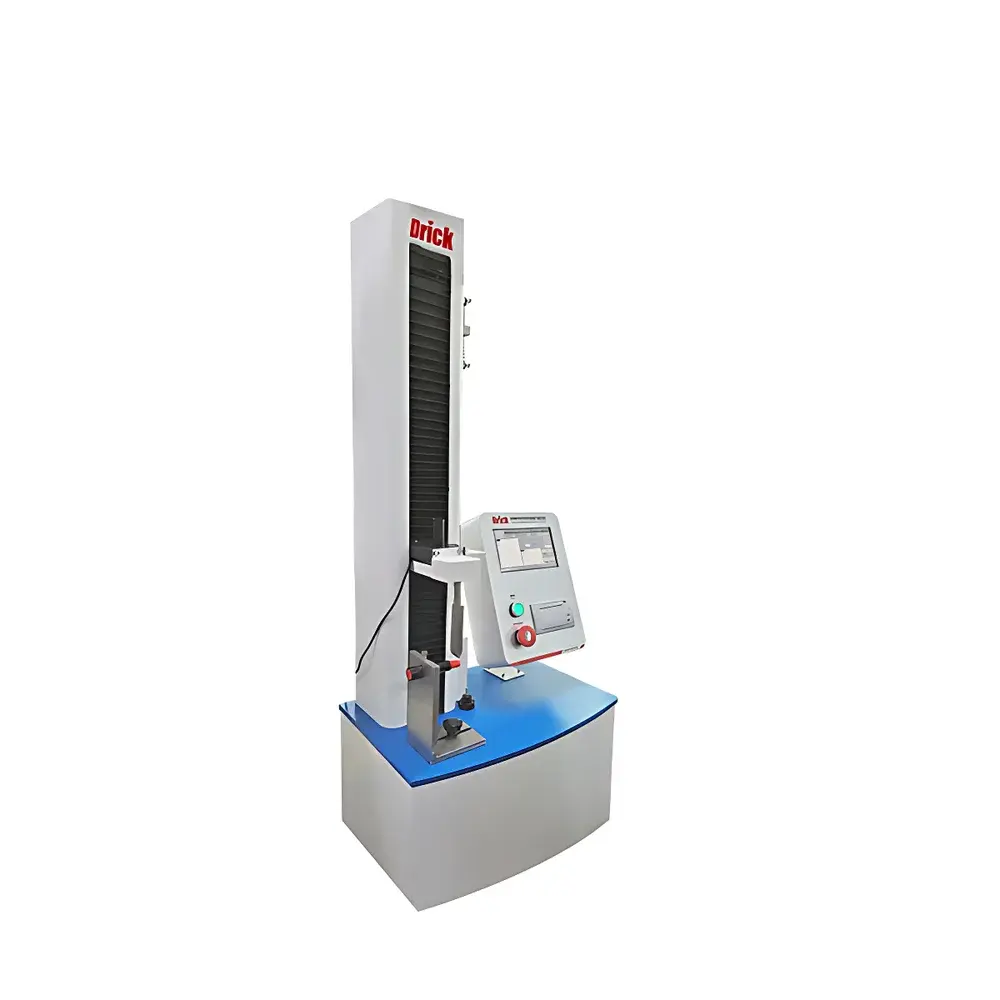
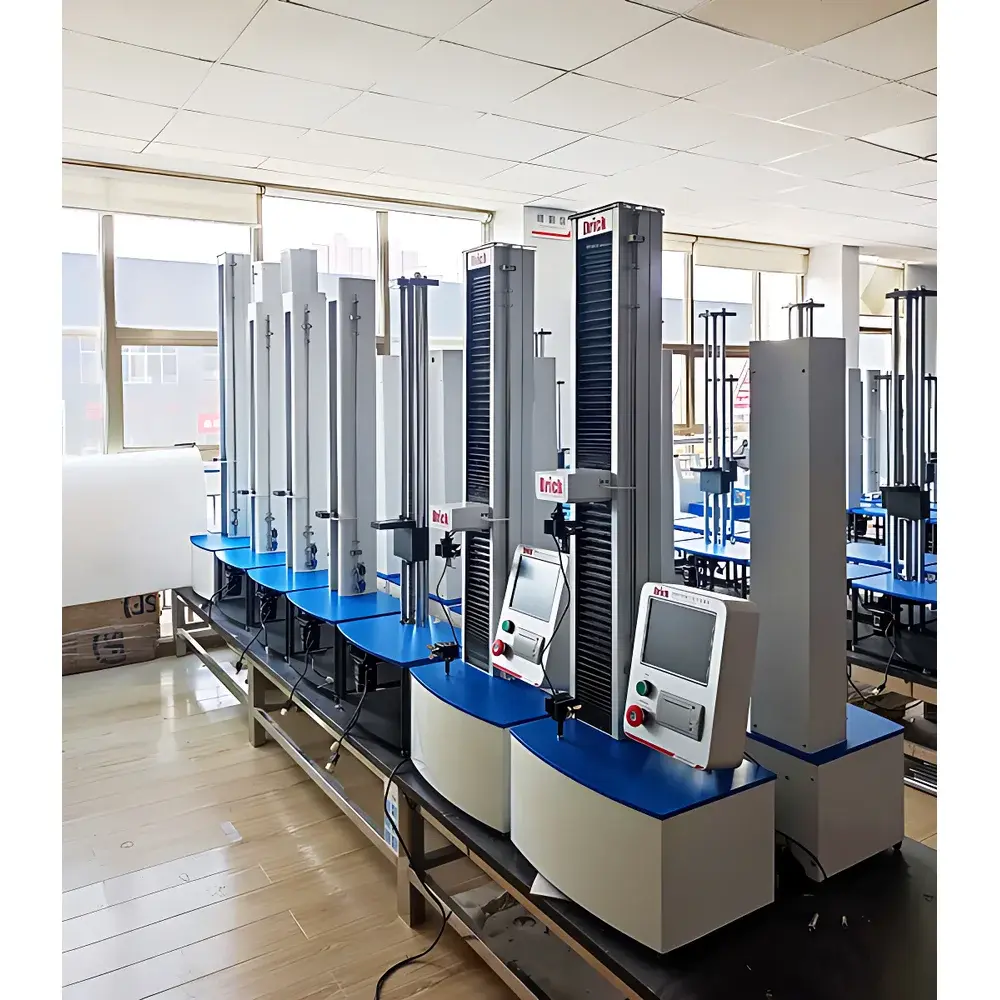
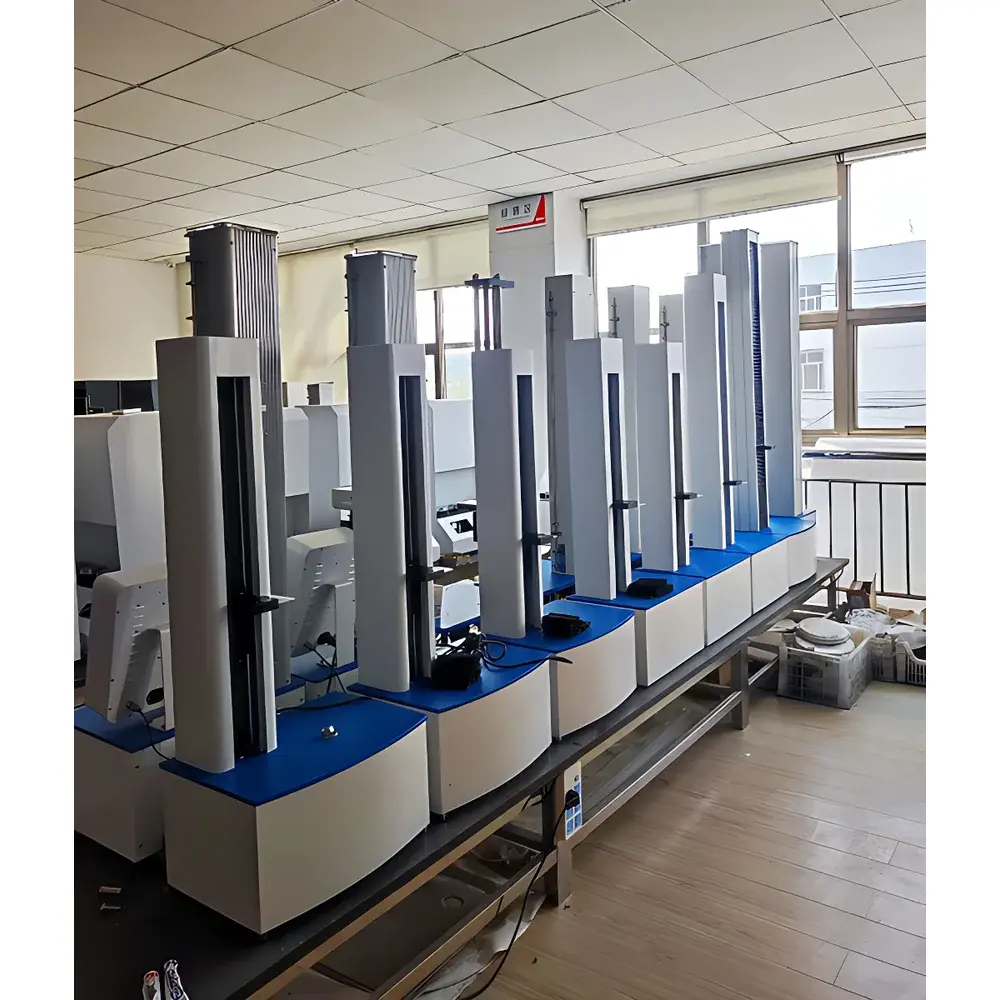
Drick DRK101 Touchscreen Lipstick Breakage Force Tester
| Brand | Drick |
|---|---|
| Origin | Shandong, China |
| Manufacturer Type | Direct Manufacturer |
| Country of Origin | China |
| Model | DRK101 |
| Price | USD 7,000 (FOB Qingdao) |
| Force Resolution | 1/200,000 (7-digit display including decimal) |
| Force Accuracy | ±0.3% FS |
| Sampling Rate | 200 Hz |
| Displacement Accuracy | ±0.5% FS |
| Speed Accuracy | ±1% |
| Display Lifespan | ~100,000 hours |
| Touch Endurance | ~50,000 actuations |
| Data Storage | 500 test batches (10 tests per batch) |
| Language Support | English, Chinese |
| Unit Options | N, kgf, lbf |
| Software Interface | Optional PC-based data export and curve visualization |
| Statistical Functions | Max, Min, Mean, Standard Deviation, Coefficient of Variation |
| User Management | Up to 10 configurable user accounts with role-based permissions (optional) |
Overview
The Drick DRK101 Touchscreen Lipstick Breakage Force Tester is a dedicated mechanical testing instrument engineered for the precise quantification of fracture resistance in cosmetic lipstick formulations under controlled axial loading conditions. It operates on the principle of quasi-static compression testing—applying a steadily increasing uniaxial force perpendicular to the longitudinal axis of a vertically mounted lipstick sample until structural failure occurs. The system captures real-time load–displacement data at 200 Hz, enabling accurate identification of peak breakage force (N), yield point, and post-yield behavior. Designed specifically for QC laboratories in cosmetics R&D and manufacturing, the DRK101 meets the functional requirements of ASTM D6988 (Standard Test Method for Determining the Break Strength of Lipsticks) and supports internal validation protocols aligned with ISO/IEC 17025 competency criteria. Its ARM-based embedded architecture eliminates dependency on external PCs during routine operation, ensuring deterministic response time and measurement repeatability across shifts.
Key Features
- High-resolution 800 × 480 color TFT touchscreen interface with intuitive icon-driven navigation—designed for glove-compatible operation in cleanroom or production-floor environments.
- Integrated 24-bit A/D converter and low-noise signal conditioning circuitry delivering true 1/200,000 force resolution (7-digit display), enabling detection of sub-mN variations critical for low-force cosmetic testing.
- Dual-layer protection architecture: hardware-based overload cutoff (mechanical stop + current-limiting driver) and software-defined safety thresholds prevent transducer damage during accidental overloading.
- Multi-language UI (English/Chinese) and dual-unit support (N, kgf, lbf) facilitate global deployment and cross-regional team collaboration without reconfiguration.
- On-device statistical engine computes maximum, minimum, mean, standard deviation, and coefficient of variation automatically per test batch—eliminating manual post-processing for routine release testing.
- Configurable user access levels (up to 10 accounts) support GLP-compliant audit trails when paired with optional PC software; password-protected parameter editing prevents unauthorized method changes.
Sample Compatibility & Compliance
The DRK101 accommodates standard commercial lipstick diameters (8–12 mm) using interchangeable anvil fixtures with flat or V-groove contact surfaces. Sample height range: 40–90 mm. Fixture alignment is maintained within ±0.1° via precision-ground mounting rails, minimizing bending moment artifacts during compression. All mechanical components comply with RoHS Directive 2011/65/EU. While not certified to IEC 61000-4 electromagnetic immunity standards, the device meets EN 61326-1:2013 Class B emission limits for laboratory equipment. Test reports generated by the system satisfy internal SOPs for cosmetic physical stability assessment and are admissible as supporting evidence in FDA cosmetic facility inspections (21 CFR Part 701).
Software & Data Management
An optional Windows-compatible application provides USB or RS-232 connectivity for raw data export in CSV format, graphical overlay of multiple test curves, and customizable report templates compliant with 21 CFR Part 11 requirements (when used with electronic signature modules). Local storage retains 500 batches (each containing up to 10 individual tests) with timestamped metadata (date, operator ID, test speed, fixture ID). Batch-level encryption ensures data integrity during transfer; no cloud upload or remote access capabilities are implemented—maintaining full data sovereignty per GDPR and CCPA guidelines.
Applications
- Quality control of lipstick hardness consistency across production lots (batch-to-batch comparability).
- R&D evaluation of wax-to-oil ratio effects on structural integrity during thermal cycling (e.g., 25°C → 45°C → 25°C).
- Stability assessment of novel pigment dispersion systems under mechanical stress.
- Validation of packaging-induced deformation effects (e.g., twist-up mechanism torque vs. core fracture threshold).
- Supplier qualification testing for raw material suppliers providing waxes, emollients, or structuring agents.
FAQ
What is the recommended calibration frequency for the DRK101?
Annual calibration against traceable NIST-certified force standards is advised; interim verification using calibrated deadweight checks is recommended before each shift.
Can the DRK101 test lip gloss or solid perfume sticks?
No—the mechanical design and force range (0–50 N typical) are optimized exclusively for cylindrical lipstick cores with Shore A hardness >30; non-cylindrical or highly viscous samples require alternative instrumentation.
Is firmware upgrade supported in-field?
Yes—via USB flash drive using signed binary files distributed through Drick’s authorized service portal; no internet connection required.
Does the system meet FDA 21 CFR Part 11 requirements out-of-the-box?
No—Part 11 compliance requires implementation of the optional PC software with configured electronic signatures, audit trail logging, and role-based access controls.
What is the warranty coverage period?
Three years limited warranty covering parts and labor for defects in materials and workmanship under normal laboratory use conditions.




