
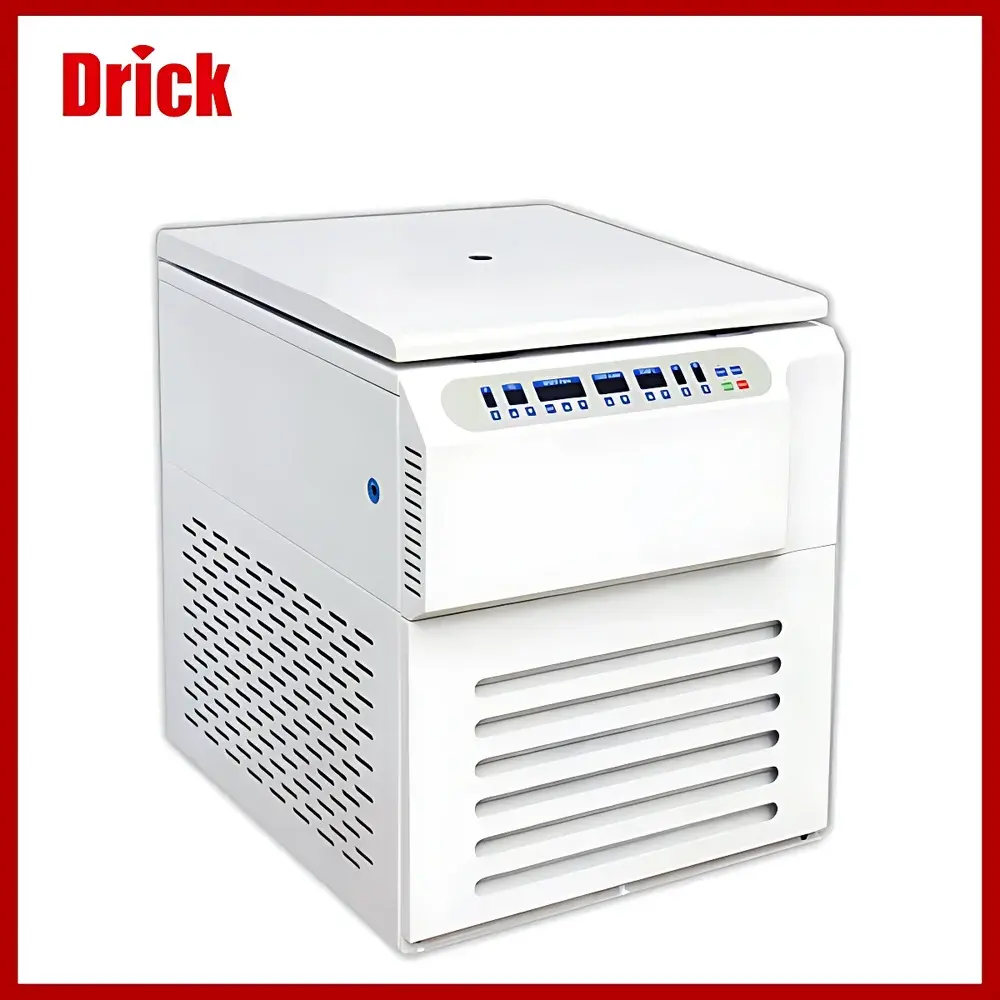
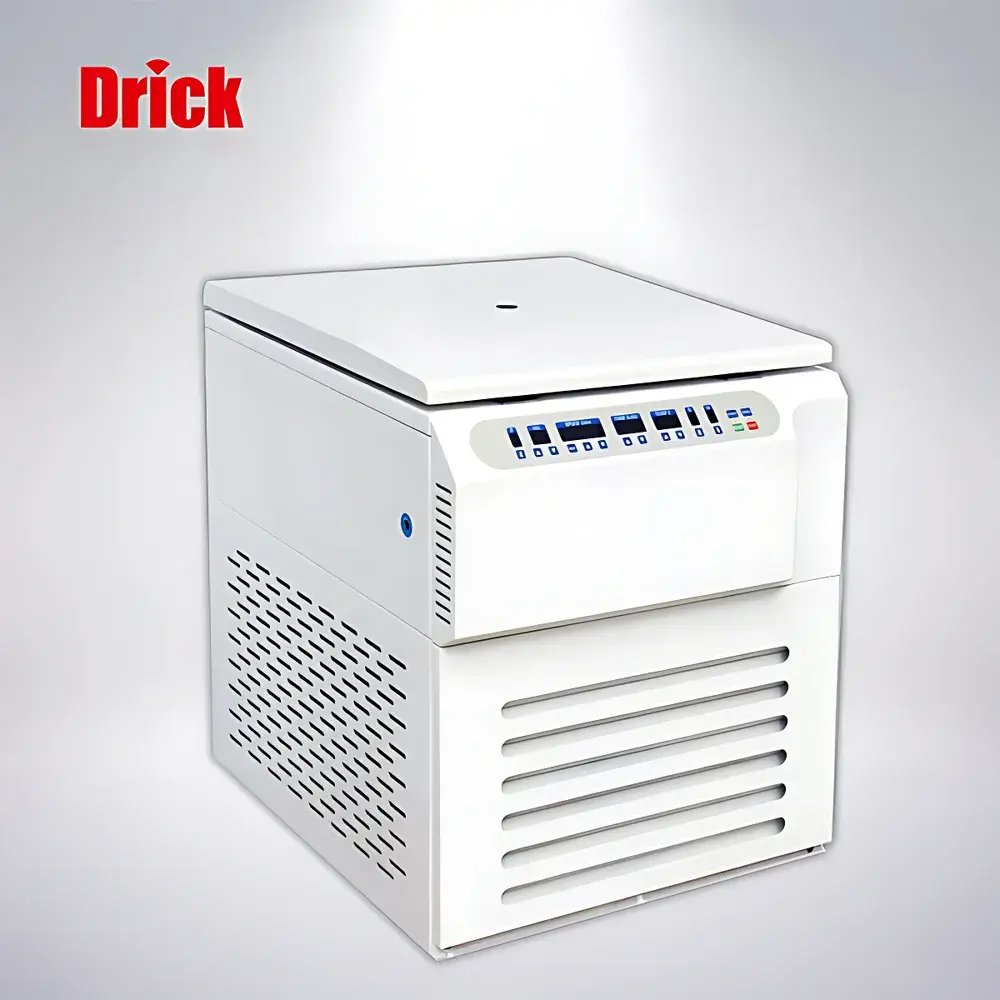
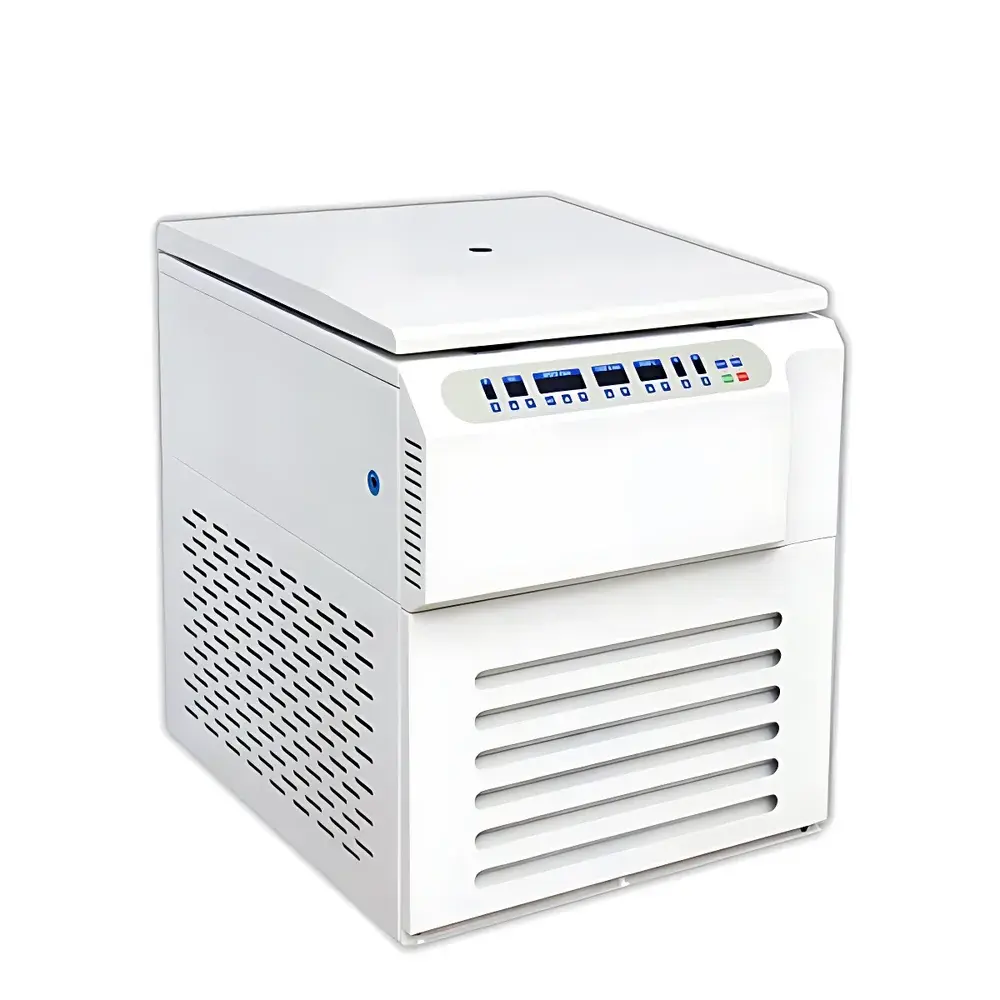
Drick DRK-GL12 Floor-standing High-speed Refrigerated Centrifuge
| Brand | Drick |
|---|---|
| Origin | Shandong, China |
| Manufacturer Type | Direct Manufacturer |
| Product Category | Domestic |
| Model | DRK-GL12 |
| Instrument Type | Floor-standing Centrifuge |
| Speed Class | High-speed Centrifuge (10,000–30,000 rpm) |
| Function | Refrigerated Centrifuge |
| Maximum Capacity | 4 × 1000 mL (horizontal rotor) |
| Maximum Speed | 12,000 rpm |
| Maximum RCF | 23,670 × g |
| Dimensions | 780 × 674 × 830 mm |
Overview
The Drick DRK-GL12 is a floor-standing high-speed refrigerated centrifuge engineered for reproducible, high-throughput separation of biological, clinical, and industrial samples under precisely controlled low-temperature conditions. It operates on the principle of sedimentation acceleration via rotational force (RCF), enabling efficient particle separation based on density, size, and shape differences in liquid suspensions. Designed for laboratories requiring robust performance at scale—such as QC labs in pharmaceutical manufacturing, bioprocessing facilities, and university core facilities—the DRK-GL12 delivers stable thermal management (typically −20 °C to +40 °C range, standard configuration), high rotor inertia control, and mechanical safety compliance per IEC 61010-2-020 (safety requirements for centrifuges). Its structural architecture supports continuous operation at rated speed with minimal vibration transmission, critical for maintaining sample integrity during extended runs.
Key Features
- Floor-standing rigid chassis with reinforced steel frame and anti-vibration damping feet for stable operation at maximum RCF
- Brushless frequency-controlled motor delivering precise speed regulation (±10 rpm accuracy across full range) and extended service life
- Intelligent refrigeration system with dual-stage compressor and PID-controlled temperature stabilization (±1 °C uniformity across chamber volume)
- Microprocessor-based control panel with real-time display of speed, RCF, time, temperature, and rotor identification
- Automatic rotor recognition via embedded RFID tags to prevent mismatched rotor–speed combinations and enforce safety interlocks
- Emergency lid lock release mechanism compliant with EN 61010-1 mechanical safety standards
- Multi-stage imbalance detection with automatic deceleration and audible/visual alarm activation
Sample Compatibility & Compliance
The DRK-GL12 accommodates a broad spectrum of sample containers including 15 mL and 50 mL conical tubes, blood collection tubes (EDTA, heparin, serum separator), and custom 1000 mL bottles using its standard horizontal rotor (4-place, swing-out design). It supports protocols aligned with ISO 15189 (medical laboratories), CLSI GP45-A4 (centrifuge performance verification), and ASTM D4057 (standard practice for manual sampling of petroleum and petroleum products). All rotor materials comply with ISO 10993-5 cytotoxicity testing, and the unit meets electromagnetic compatibility (EMC) requirements per IEC 61326-1. Optional validation documentation packages—including IQ/OQ protocols and traceable calibration certificates—are available for GLP/GMP-regulated environments.
Software & Data Management
While the base DRK-GL12 operates via standalone front-panel interface, optional USB data export enables transfer of run logs (start/stop time, set parameters, actual RCF, temperature profile, error codes) for audit trail generation. The exported CSV files are compatible with LIMS integration and support 21 CFR Part 11-compliant electronic record retention when paired with validated third-party laboratory informatics systems. Firmware updates are performed via secure USB key, with version history and change logs retained in internal non-volatile memory. Audit trail functionality includes timestamped operator ID (via optional RFID badge reader module), parameter modification history, and run abort/restart events.
Applications
- Preparative isolation of plasma, PBMCs, and exosomes from whole blood in clinical diagnostics and translational research
- Clarification of microbial lysates and purification of plasmid DNA or viral vectors in biomanufacturing upstream processing
- Sedimentation of nanoparticles and colloidal dispersions for material science characterization
- Phase separation in emulsion stability studies for food, cosmetic, and pharmaceutical formulation development
- High-volume cell harvesting in fermentation and cell culture workflows (e.g., CHO, HEK293, insect cells)
- Environmental sample processing—e.g., microplastic concentration from wastewater effluent or soil extracts
FAQ
What is the minimum operating temperature and how quickly does the chamber reach setpoint?
The standard refrigeration system achieves −20 °C nominal setpoint; cooling from ambient (25 °C) to −20 °C typically requires ≤18 minutes with empty chamber and door closed.
Is rotor balancing required manually before each run?
Yes—while electronic imbalance detection is active, users must still perform gross mass balance (≤1 g difference between opposing buckets) per ISO 21501-4 guidelines to ensure optimal bearing longevity and vibration control.
Can the DRK-GL12 be integrated into a networked lab environment?
Native Ethernet or Wi-Fi connectivity is not included; however, USB-exported logs can be ingested by centralized lab data servers via scheduled scripts or middleware gateways.
Does Drick provide factory-verified calibration reports?
Yes—traceable speed (tachometer-calibrated), temperature (NIST-traceable PT100 probe), and timer calibration certificates are available upon request with additional lead time and fee.
What maintenance intervals are recommended for routine operation?
Centrifuge vacuum grease reapplication every 12 months, rotor inspection per ISO 21501-4 every 500 runs or annually (whichever occurs first), and full drive belt and compressor performance check every 24 months.



