
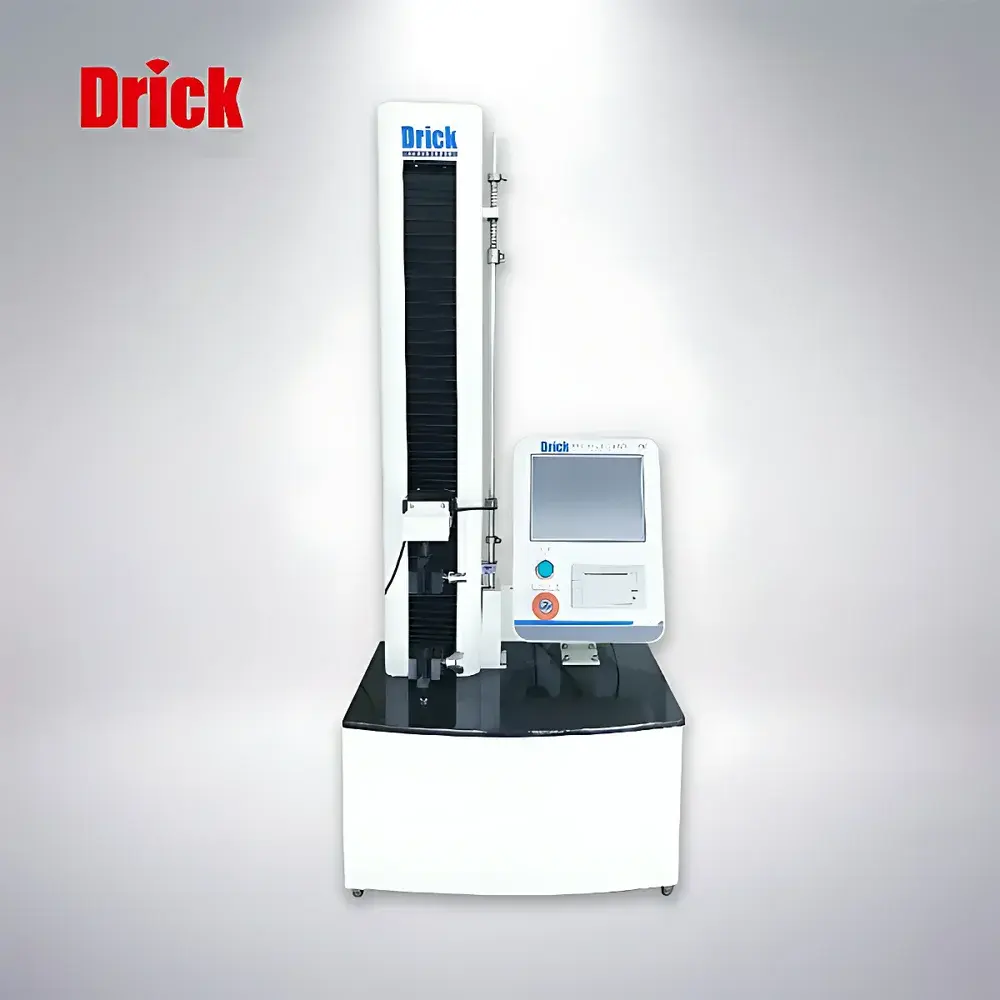
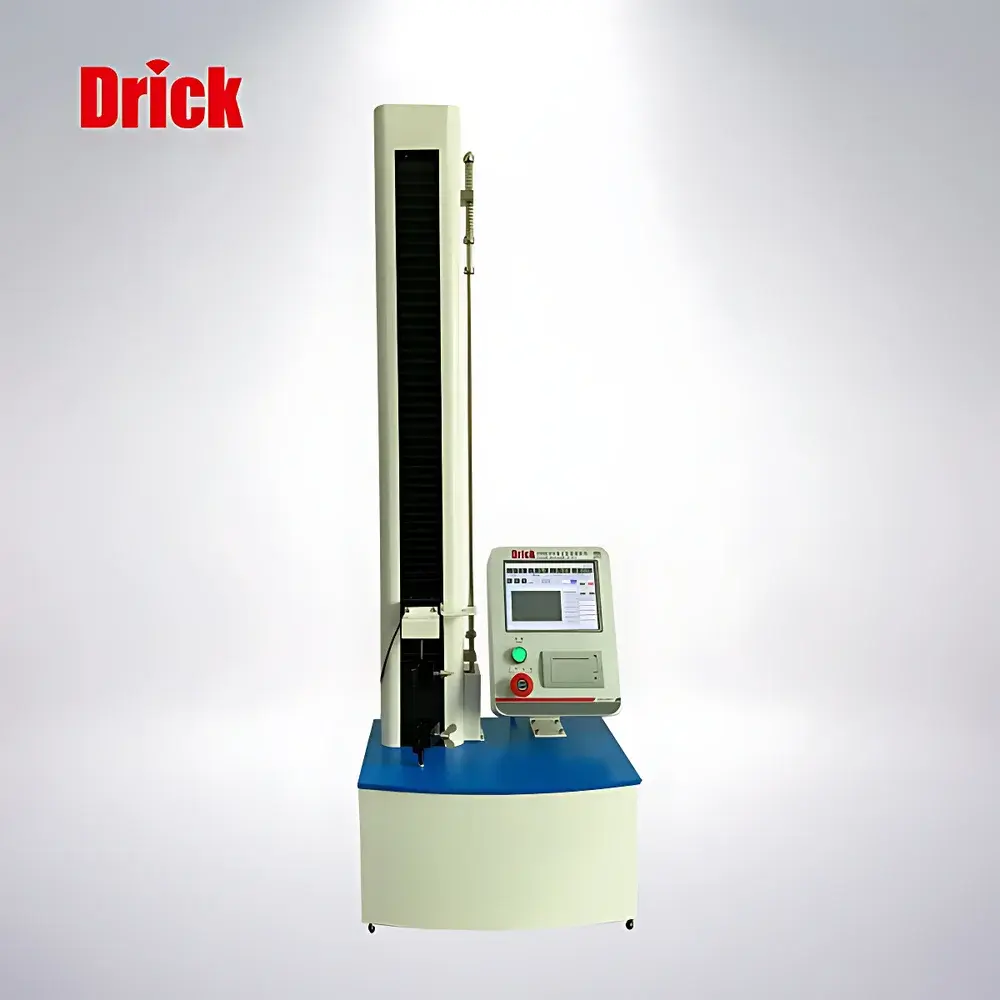
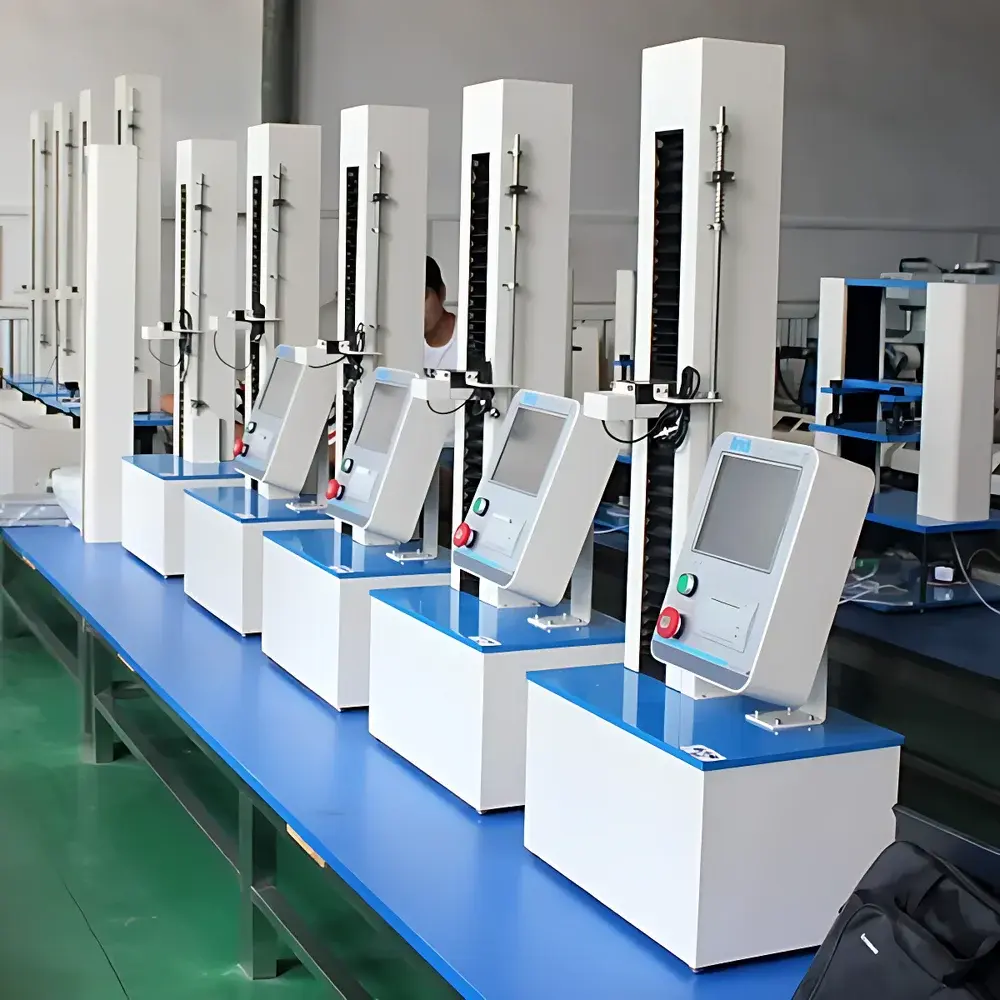
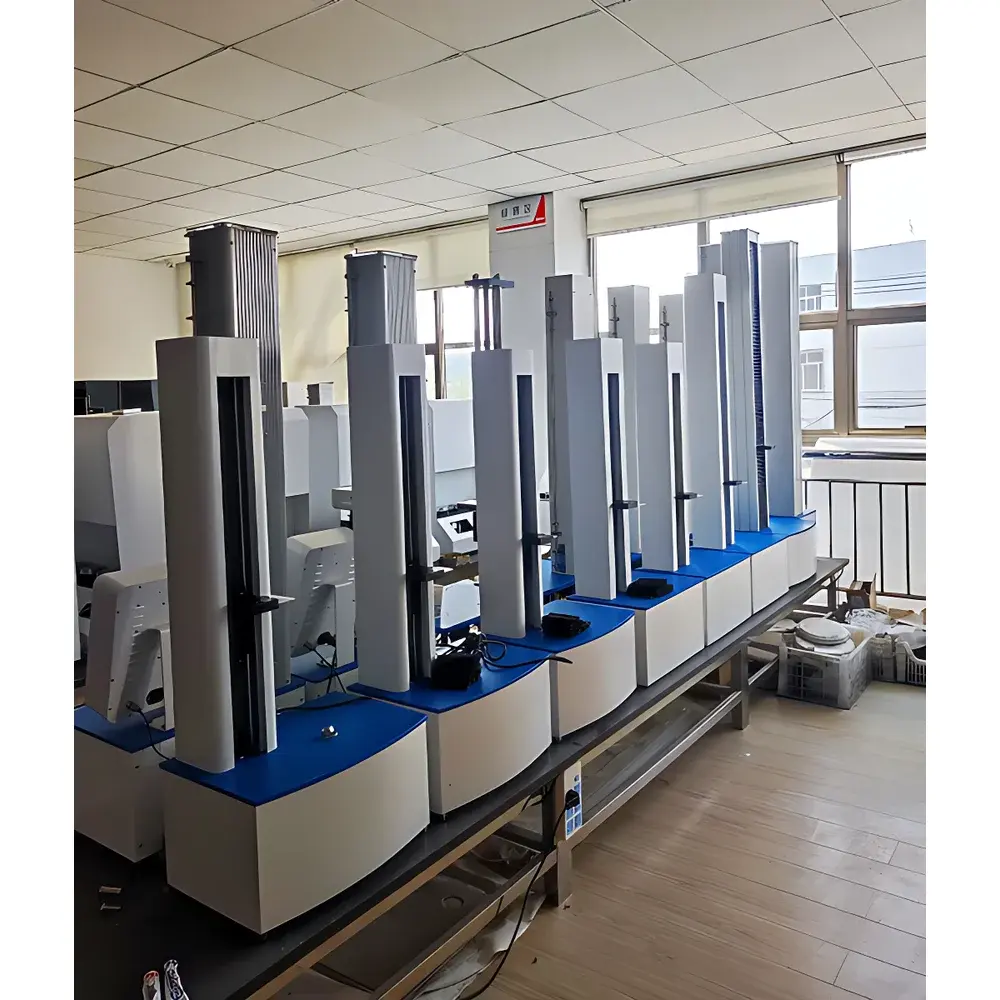
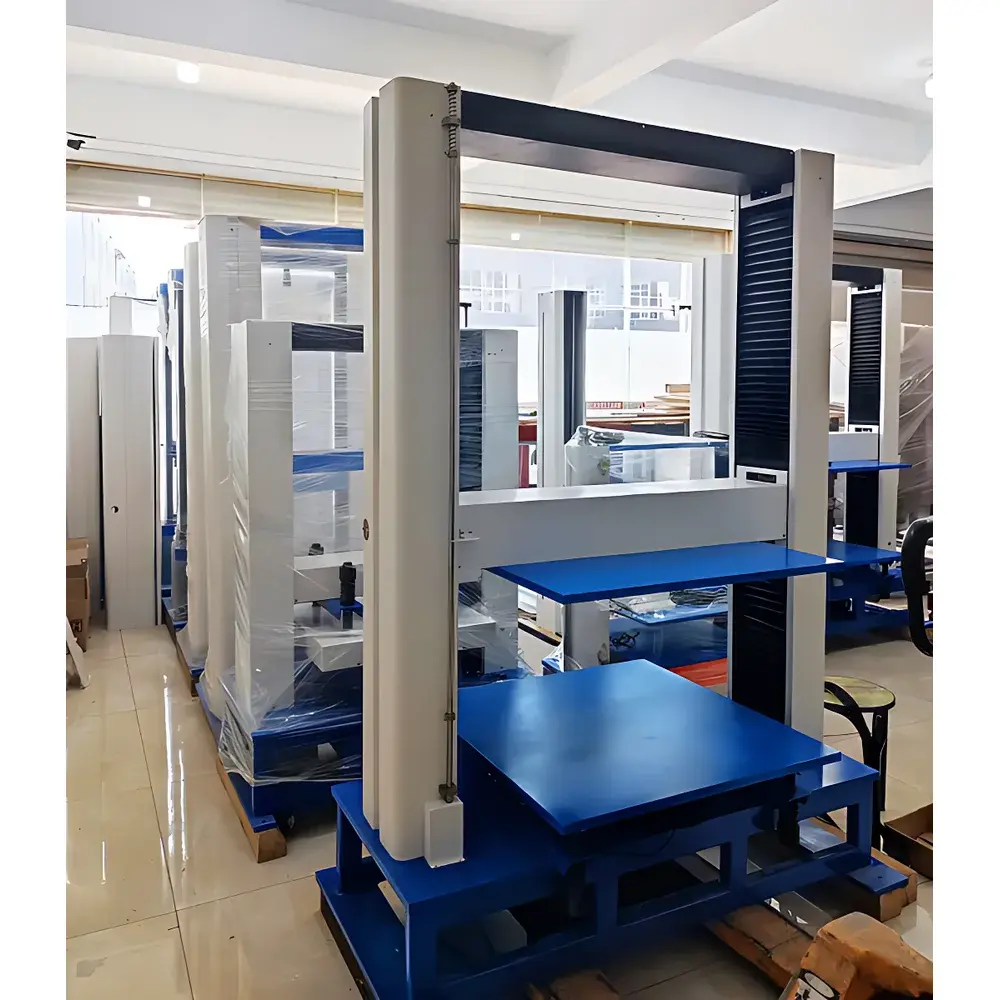
Drick DRK-101 Cork Pull-Out Tester for Wine Bottles
| Brand | Drick |
|---|---|
| Origin | Shandong, China |
| Manufacturer Type | Direct Manufacturer |
| Country of Origin | China |
| Model | DRK-101 |
| Force Capacity Options | 100 N / 500 N / 1000 N / 5000 N |
| Accuracy | Better than Class 0.5 |
| Force Resolution | 0.1 N |
| Displacement Resolution | 0.001 mm |
| Test Speed Range | 1–500 mm/min (infinitely variable) |
| Specimen Count per Test | 1 |
| Standard Grip Configuration | Manual Clamp |
| Maximum Travel | 700 mm (customizable) |
| Dimensions (L×W×H) | 500 mm × 300 mm × 1500 mm |
| Form Factor | Benchtop Universal Testing System |
Overview
The Drick DRK-101 Cork Pull-Out Tester is a benchtop universal mechanical testing system engineered specifically for quantitative measurement of axial extraction force required to remove natural cork stoppers from wine bottles. It operates on the fundamental principle of uniaxial tensile force application under controlled displacement rate, conforming to standardized pull-out test methodologies used in cork quality assurance and packaging integrity validation. The instrument implements a servo-controlled electromechanical drive system coupled with high-fidelity load cell sensing and real-time displacement tracking, enabling precise determination of peak pull force, yield behavior, and post-yield deformation characteristics of cork specimens. Designed in alignment with GB/T 23438–2009 (“Test Methods for Physical Properties of Natural Cork Stoppers”) and referencing ISO 9001-compliant manufacturing practices, the DRK-101 delivers repeatable, traceable, and auditable mechanical data essential for QC/QA laboratories in cork production facilities, bottling plants, and third-party certification bodies.
Key Features
- Modular force capacity selection: Four calibrated load cell options (100 N, 500 N, 1000 N, or 5000 N) ensure optimal signal-to-noise ratio across diverse cork density and diameter ranges.
- High-resolution measurement architecture: 0.1 N force resolution and 0.001 mm displacement resolution support detection of subtle mechanical transitions during cork–glass interface separation.
- Infinitely variable crosshead speed control (1–500 mm/min) enables compliance with multiple international test protocols—including ASTM F1576 (for closure retention), ISO 22332 (cork physical testing), and internal SOPs requiring ramped or constant-rate extraction profiles.
- Benchtop footprint with 700 mm vertical travel accommodates standard 750 mL wine bottles and allows customization for non-standard container geometries (e.g., magnums, splits, or specialty glassware).
- Manual clamping system with ergonomic grip design ensures consistent specimen alignment and minimizes operator-induced variability during setup—critical for GLP-aligned testing environments.
- Embedded microprocessor-based controller with LCD interface provides local test initiation, real-time curve display, and immediate parameter readout without dependency on external PCs.
Sample Compatibility & Compliance
The DRK-101 is validated for use with natural, agglomerated, and technical cork stoppers ranging from 24 mm to 30 mm in diameter and 38 mm to 54 mm in length. Its mechanical configuration supports direct mounting of standard wine bottles (e.g., Bordeaux, Burgundy, Champagne profiles) using optional bottle-holding fixtures. While primarily intended for cork pull-out evaluation, the system’s structural rigidity and modular gripping interface permit adaptation—via accessory grips—to test related materials including synthetic closures, screw caps (torque-to-release assessment), and elastomeric sealing gaskets. All hardware complies with CE machinery directive requirements (2006/42/EC), and firmware supports audit-trail generation compatible with FDA 21 CFR Part 11–aligned data integrity workflows when integrated with compliant PC software.
Software & Data Management
The DRK-101 includes optional PC-based data acquisition software (Windows-compatible, USB or RS-232 interface) that captures full force–displacement curves at ≥100 Hz sampling rate. Software features include automatic peak detection, customizable pass/fail thresholds, statistical reporting (mean, SD, CV%), batch export to CSV/XLSX, and PDF certificate generation with embedded digital signatures. Raw data files retain metadata such as operator ID, timestamp, environmental conditions (if linked to optional temperature/humidity sensor), and calibration certificate traceability. The software architecture supports role-based access control and electronic signature enforcement—meeting minimum requirements for GMP/GLP documentation standards in regulated winemaking and packaging supply chains.
Applications
- Quantitative verification of cork batch conformity against GB/T 23438, ISO 22332, and proprietary brand specifications.
- Correlation studies between cork density, moisture content, and extractive force profiles for raw material qualification.
- Stability assessment of cork–glass adhesion under accelerated aging conditions (e.g., post-sterilization or thermal cycling).
- Comparative analysis of alternative closures (e.g., Twin Top, Colmated, or micro-agglomerated corks) under identical test parameters.
- Supporting R&D activities in closure engineering, including interface lubrication optimization and compression-set characterization.
- Extended functionality via interchangeable grips enables supplementary testing per ISO 1798 (flexural strength of foams), ASTM D882 (tensile properties of thin plastics), and ISO 8510-2 (peel resistance of laminates).
FAQ
What standards does the DRK-101 comply with for cork testing?
It is designed to meet GB/T 23438–2009 and aligns with key elements of ISO 22332, ASTM F1576, and EU Regulation (EC) No 178/2002 regarding material safety in food contact applications.
Can the system be calibrated internally or does it require third-party service?
The unit supports user-performed zero and span calibration using NIST-traceable deadweight standards; full metrological calibration is recommended annually by an accredited laboratory per ISO/IEC 17025.
Is the 700 mm travel distance fixed or adjustable?
Standard travel is 700 mm, but custom configurations up to 1000 mm are available upon request to accommodate oversized containers or multi-bottle fixtures.
Does the DRK-101 support automated data export to LIMS?
Yes—when used with the optional software package, it supports ODBC-compliant database connectivity and structured XML output for seamless integration into laboratory information management systems.
What maintenance is required for long-term accuracy?
Routine maintenance includes periodic lubrication of lead screws, visual inspection of load cell mounting integrity, and verification of grip surface wear—no scheduled recalibration is needed between annual certifications if operated within specified environmental conditions (23 ± 5 °C, <70% RH).





