
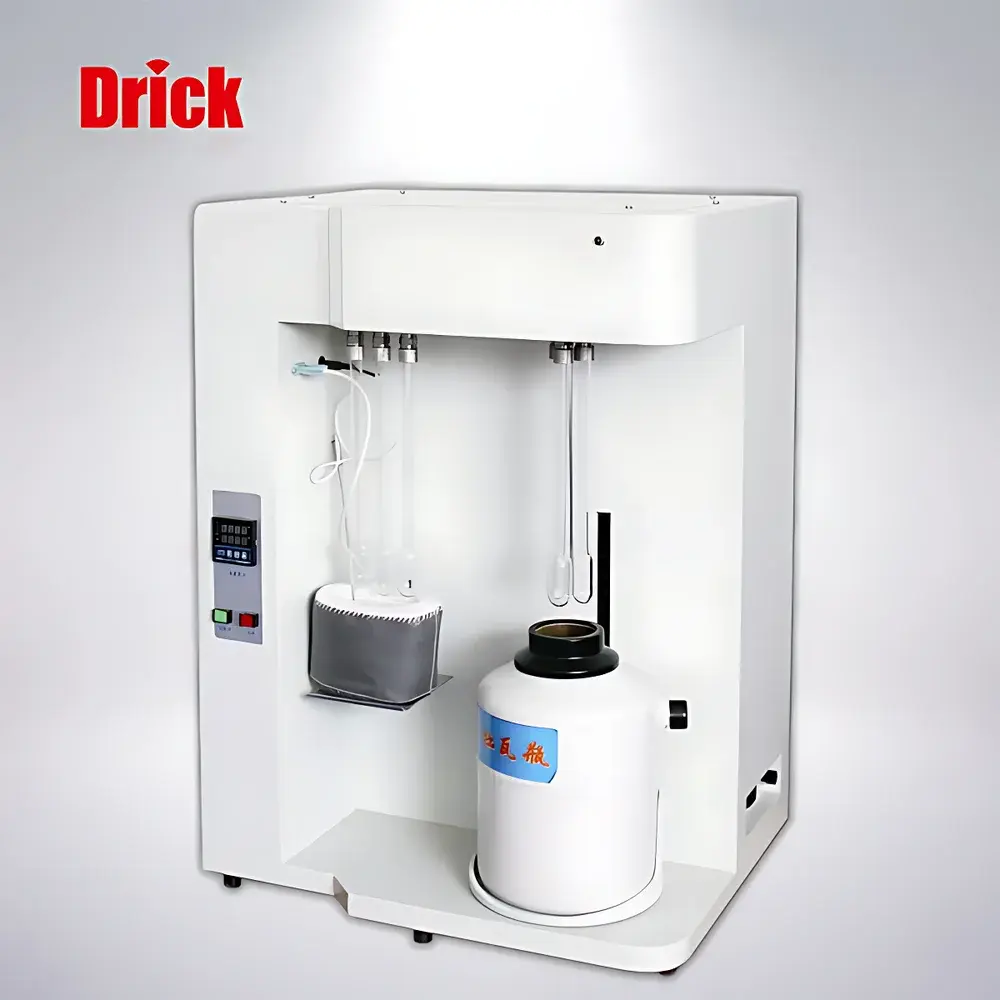
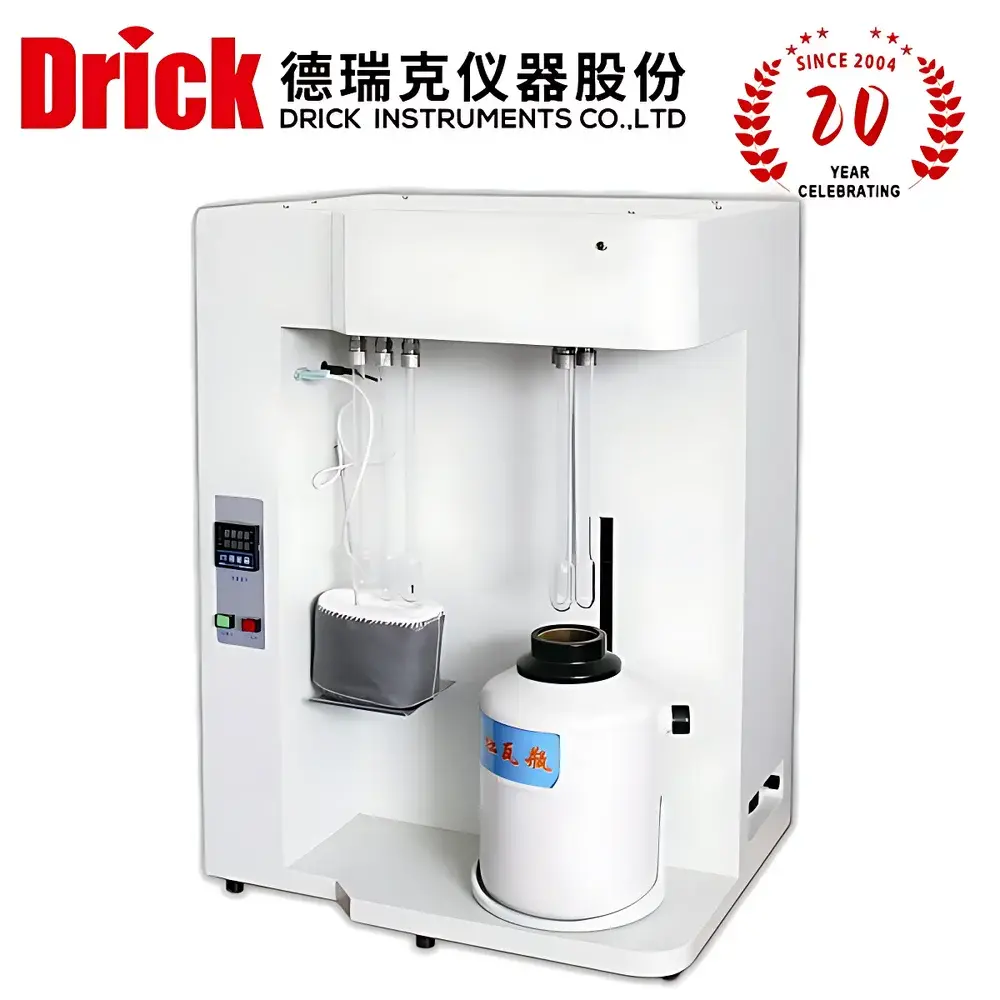
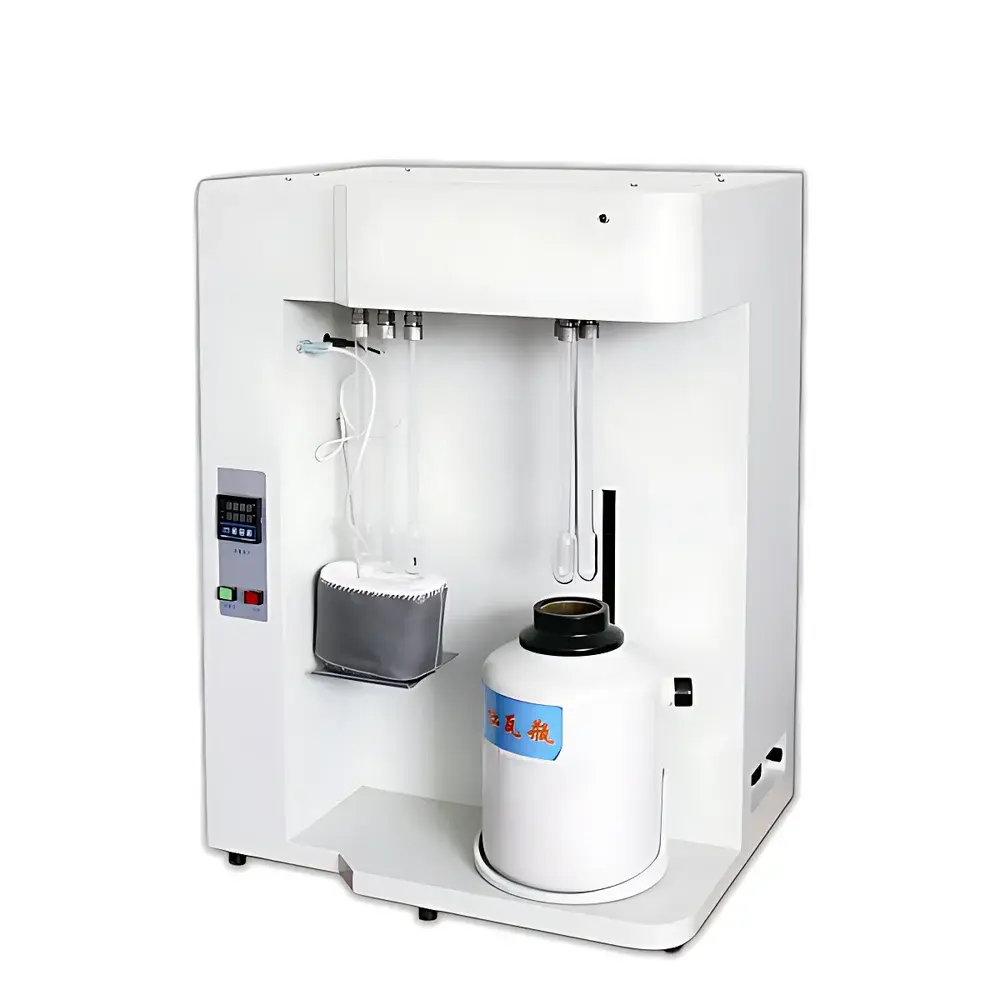
Drick DRK-GS103 Automated Surface Area and Porosity Analyzer with Low-Temperature Nitrogen Physisorption
| Brand | Drick |
|---|---|
| Origin | Shandong, China |
| Manufacturer Type | Direct Manufacturer |
| Country of Origin | China |
| Model | DRK-GS103 |
| Price Range | USD 11,200 – 14,000 |
Overview
The Drick DRK-GS103 is an automated surface area and porosity analyzer engineered for precise characterization of solid materials using low-temperature nitrogen physisorption (77 K). It operates on the Brunauer–Emmett–Teller (BET) theory for specific surface area determination and employs Barrett–Joyner–Halenda (BJH), Dollimore–Heal (DH), and Non-Local Density Functional Theory (NLDFT) models for pore size distribution analysis across microporous, mesoporous, and macroporous regimes. Designed for routine QC laboratories and academic research facilities, the system integrates high-stability cryogenic dosing, multi-point degassing control, and real-time pressure monitoring to ensure measurement reproducibility in compliance with ISO 9277, ASTM D3663, and IUPAC recommendations.
Key Features
- Automated dual-station configuration enabling concurrent sample analysis and degassing—reducing total turnaround time by up to 40% compared to single-station systems.
- Integrated high-vacuum manifold with ultimate pressure ≤5 × 10⁻⁷ mbar, equipped with oil-free turbomolecular pumping and automatic valve sequencing to minimize operator intervention.
- Precision volumetric gas dosing system with calibrated reference volumes (10 mL and 50 mL) and digital pressure transducers (±0.05% full scale) for accurate adsorption isotherm acquisition.
- Programmable thermal desorption module supporting ramp rates from 1°C/min to 10°C/min and holding temperatures up to 400°C under inert gas purge—compatible with ASTM E1131 for thermal stability assessment.
- Robust stainless-steel sample tubes with standardized 6 mm OD geometry, compatible with standard liquid nitrogen dewars and certified reference materials (e.g., NIST SRM 1891).
Sample Compatibility & Compliance
The DRK-GS103 accommodates powdered solids, granules, monoliths, and thin-film substrates with mass ranges from 0.05 g to 2.0 g per analysis. Sample holders support both loose-fill and pelletized configurations. All measurement protocols adhere to ISO 15901-2 (pore size distribution by gas adsorption) and align with GLP documentation requirements through built-in audit trail logging. System validation includes as-received calibration verification using certified silica gel (BET SA = 198 ± 5 m²/g) and activated carbon (micropore volume = 0.42 ± 0.03 cm³/g), traceable to NIST-traceable standards.
Software & Data Management
Control and analysis are performed via Drick’s proprietary GS-Analyzer v4.2 software, a Windows-based platform compliant with FDA 21 CFR Part 11 for electronic records and signatures. The software provides automated isotherm smoothing, multi-model pore analysis comparison, batch report generation (PDF/Excel), and raw data export in ASTM E1348-compliant ASCII format. Audit trails record user actions, method parameters, calibration events, and instrument status timestamps—retained for ≥36 months. Remote diagnostics and firmware updates are supported over secure HTTPS connections without requiring on-site service visits.
Applications
This analyzer serves critical roles in catalyst development (e.g., Pt/Al₂O₃ surface dispersion quantification), battery electrode material optimization (LiFePO₄ pore network mapping), pharmaceutical excipient characterization (microcrystalline cellulose BET surface correlation with dissolution rate), and environmental sorbent evaluation (activated carbon iodine number prediction from micropore volume). It is routinely deployed in R&D labs accredited to ISO/IEC 17025 and manufacturing sites operating under GMP frameworks where surface property consistency directly impacts product performance and regulatory filing completeness.
FAQ
What cryogen is required for operation?
Liquid nitrogen (LN₂) at 77 K is the standard adsorbate; optional helium cooling modules are not supported.
Can the system perform CO₂ adsorption at 273 K?
No—the DRK-GS103 is configured exclusively for nitrogen physisorption at 77 K. CO₂-based micropore analysis requires dedicated low-temperature controllers and gas handling not included in this model.
Is third-party software integration available?
Yes—via OPC UA server interface for integration into LIMS or MES platforms; API documentation is provided under NDA.
How often does the system require recalibration?
Annual calibration verification is recommended using supplied reference standards; full sensor recalibration is performed during scheduled preventive maintenance every 24 months.
Does the analyzer meet USP requirements for pharmaceutical surface area testing?
Yes—when operated using validated methods and documented procedures, it satisfies USP criteria for apparatus qualification, system suitability, and reporting of relative standard deviation (RSD) ≤3% for replicate analyses.




