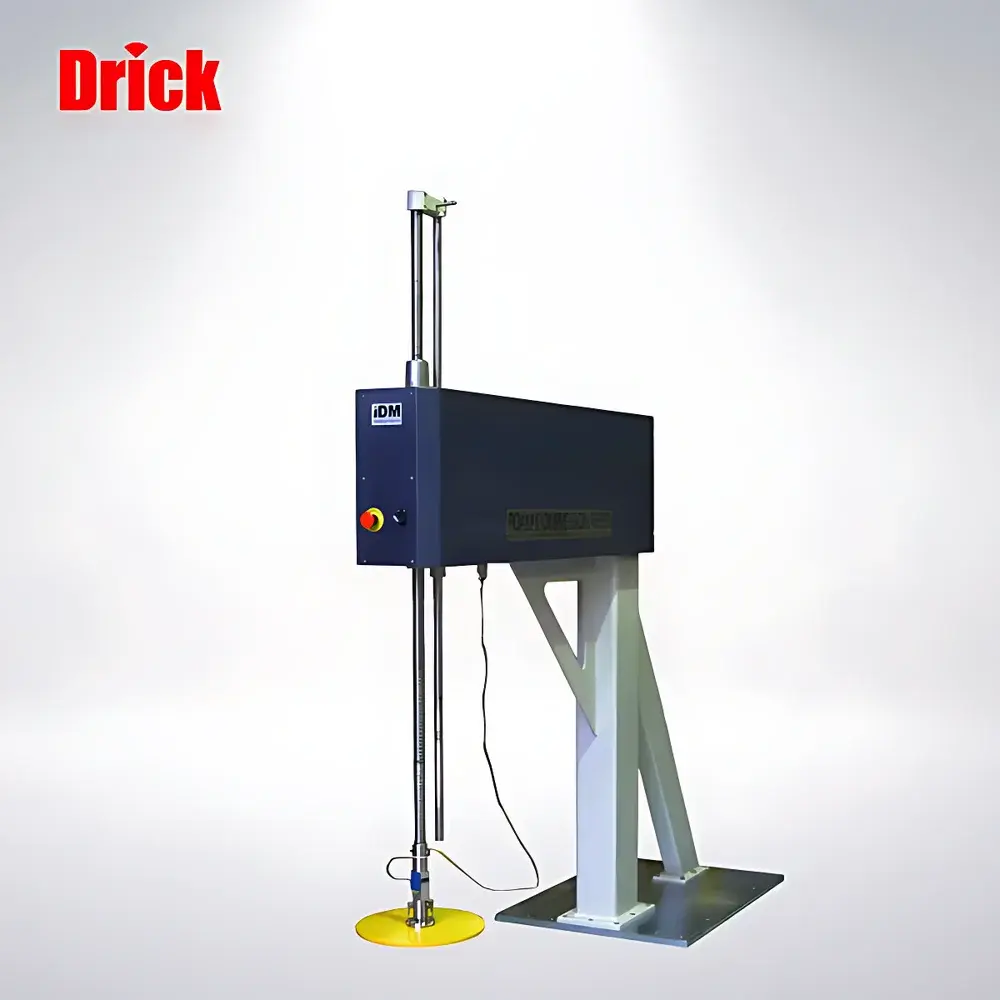
IDM F0024 Mattress Compression Tester
| Brand | IDM |
|---|---|
| Origin | Shandong, China |
| Manufacturer Type | Authorized Distributor |
| Country of Origin | China |
| Model | F0024 |
| Load Capacity | 0–2450 N (250 kgf) |
| Indentor Diameter | 344 mm (934 ± 5 cm² contact area) |
| Max Stroke | 1056 mm |
| Specimen Height Capacity | 652 mm |
| Speed Range | 0.05–500 mm/min (±0.2% accuracy) |
| Return Speed | 500 mm/min |
| Load Measurement Accuracy | ±0.5% of reading or ±0.1% of full scale |
| Displacement Resolution | ≤ 0.01 mm |
| Control System | Closed-loop servo control with auto-zero and auto-calibration |
| Safety Features | Overload-triggered emergency stop |
| Power Supply | 220/240 VAC @ 50 Hz or 110 VAC @ 60 Hz |
| Dimensions (W×D×H) | 1912 × 700 × 2196 mm |
| Weight | 450 kg |
| Compliant Standards | ASTM D3574 (Test B), ASTM F1566, ISO 2439, ISO 3386:1984, BS EN 1957:2000, AS 2281, AS 2282.8 |
Overview
The IDM F0024 Mattress Compression Tester is a precision-engineered mechanical testing system designed to quantify the compressive behavior of resilient bedding materials—including polyurethane foam, innerspring units, hybrid mattress cores, and upholstered seating components—according to internationally recognized indentation force-deflection (IFD) methodology. Based on the fundamental principle of controlled quasi-static compression, the instrument applies a calibrated, axially aligned force via a large-diameter circular indentor (Ø344 mm) onto standardized specimens while continuously measuring both load and displacement with high-fidelity transducers. Its closed-loop servo-controlled actuation architecture ensures minimal hysteresis, repeatable loading profiles, and traceable force application—critical for compliance-driven quality assurance in manufacturing and third-party certification laboratories.
Key Features
- High-capacity dual-range load cell (0–2450 N) with ±0.5% reading accuracy and automatic full-scale calibration routine
- Programmable crosshead speed from 0.05 to 500 mm/min (±0.2% linearity), enabling precise replication of standard test rates defined in ASTM D3574 and ISO 2439
- Fixed-diameter indentor (344 mm, nominal contact area 934 ± 5 cm²) conforming to ISO 3386 and BS EN 1957 geometric requirements
- Full-stroke travel of 1056 mm accommodates thick multi-layer mattress assemblies up to 652 mm in height
- Integrated safety interlocks including overload-triggered emergency stop, mechanical limit switches, and software-enforced parameter boundaries
- Modular base platform allowing direct floor-mounting of specimens—eliminating fixture-induced boundary constraints during low-modulus foam evaluation
- Real-time dual-channel data acquisition synchronized at user-selectable sampling frequencies (up to 100 Hz)
Sample Compatibility & Compliance
The F0024 supports standardized test specimens per ISO 2439 (150 × 150 × 50 mm for foam), ASTM D3574 (Test B: 380 × 380 × 100 mm for mattresses), and BS EN 1957:2000 (minimum 350 × 350 mm surface area). Its large footprint and vertical clearance enable evaluation of full-size mattress sections without sectioning—preserving structural integrity and interface effects inherent in composite constructions. The system is validated for conformance with regulatory frameworks requiring documented metrological traceability, including ISO/IEC 17025-compliant laboratory accreditation, FDA-recognized testing protocols for medical support surfaces, and EU-based CE-marking verification workflows. All firmware and calibration certificates are maintained under version-controlled revision history aligned with GLP documentation standards.
Software & Data Management
The bundled Windows-compatible test control software (v5.x) provides full IEC 62304-compliant architecture with audit-trail functionality compliant with FDA 21 CFR Part 11 requirements—including electronic signatures, time-stamped event logging, and immutable raw data archives. Users define test sequences using intuitive drag-and-drop logic blocks: pre-conditioning dwell, ramp-to-load, hold-at-force, cyclic loading (up to 999 cycles), and recovery monitoring. Real-time plots display load vs. displacement, stress vs. strain, and hysteresis loops with overlay capability for comparative analysis. Export options include native .CSV, Excel (.xlsx), PDF reports with embedded metadata (operator ID, calibration date, environmental conditions), and XML-formatted datasets for LIMS integration. Statistical post-processing includes mean IFD values at 25%, 40%, and 65% indentation depths, coefficient of variation (CV%), and pass/fail flagging against configurable specification limits.
Applications
- Indentation Load Deflection (ILD/IFD) characterization of flexible polyurethane foams per ASTM D3574 Test B
- Durability assessment of mattress core systems through progressive compression cycling (e.g., 10,000–50,000 cycles)
- Compression set measurement for viscoelastic memory foams under sustained load per ISO 1856
- Load distribution profiling across heterogeneous mattress zones (e.g., lumbar support regions)
- Quality gate validation for automotive seat cushioning prior to final assembly
- Raw material qualification for furniture OEMs referencing AS 2282.8 and EN 1334
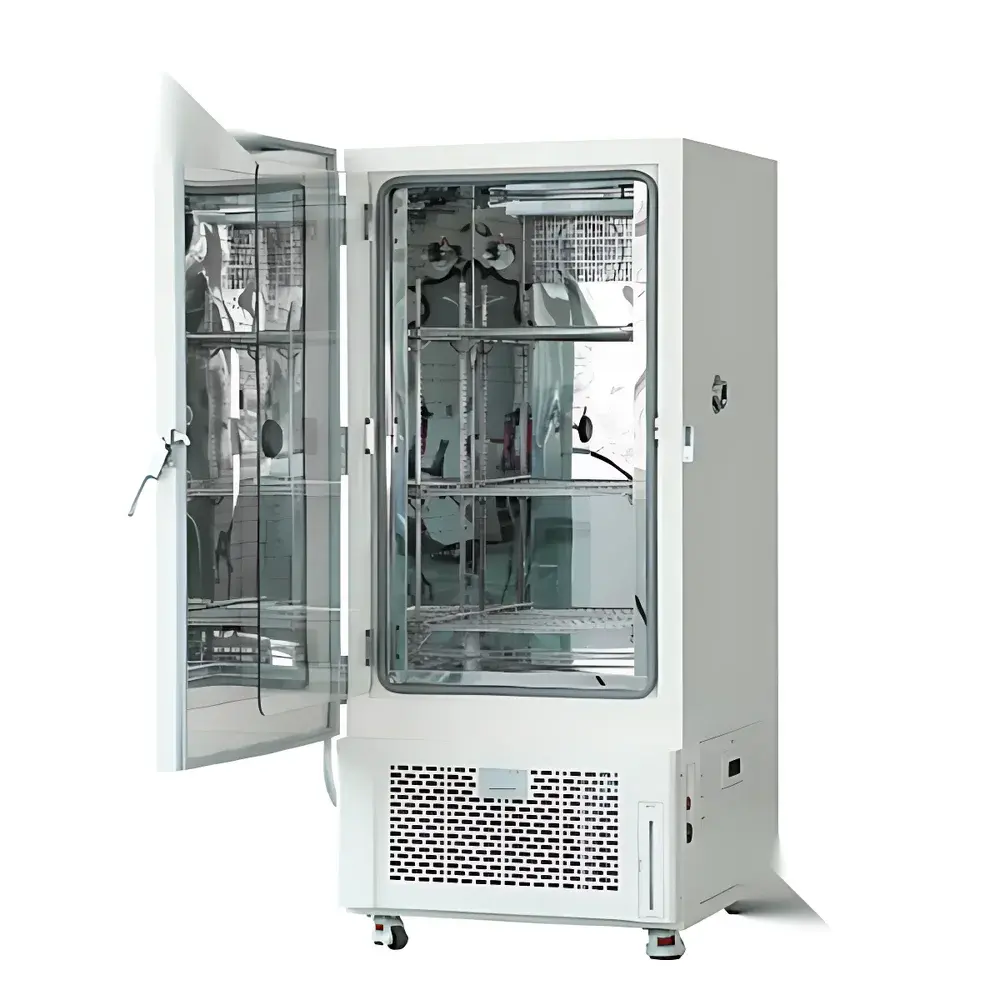
- Research-grade mechanical mapping of layered foam-spring hybrids under variable temperature/humidity conditions (when integrated with environmental chamber)
FAQ
What standards does the F0024 natively support in its test method library?
The instrument’s software includes preconfigured test templates for ASTM D3574 (B, C, H), ASTM F1566, ISO 2439, ISO 3386:1984, BS EN 1957:2000, and AS 2281—each with correct ramp rates, dwell times, and calculation algorithms.
Can the system perform dynamic fatigue testing beyond static IFD?
Yes—via programmable cyclic mode with adjustable frequency (0.01–5 Hz), amplitude control, and cycle-count-based termination; raw waveform data is retained for Fourier analysis of energy dissipation characteristics.
Is remote operation and data export possible for centralized lab networks?
The software supports TCP/IP communication for LAN-based instrument control and features automated FTP/SFTP upload of test reports to designated servers upon completion.
How is force calibration maintained over time?
The system performs automatic zero-balance compensation before each test and supports NIST-traceable deadweight verification using optional certified calibration kits (sold separately).
Does the F0024 meet electrical safety requirements for international deployment?
Yes—CE marking per EN 61000-6-2/6-4 and UL/CSA recognition are available upon request; power supply modules are field-configurable for 110 V / 60 Hz or 220–240 V / 50 Hz operation.