

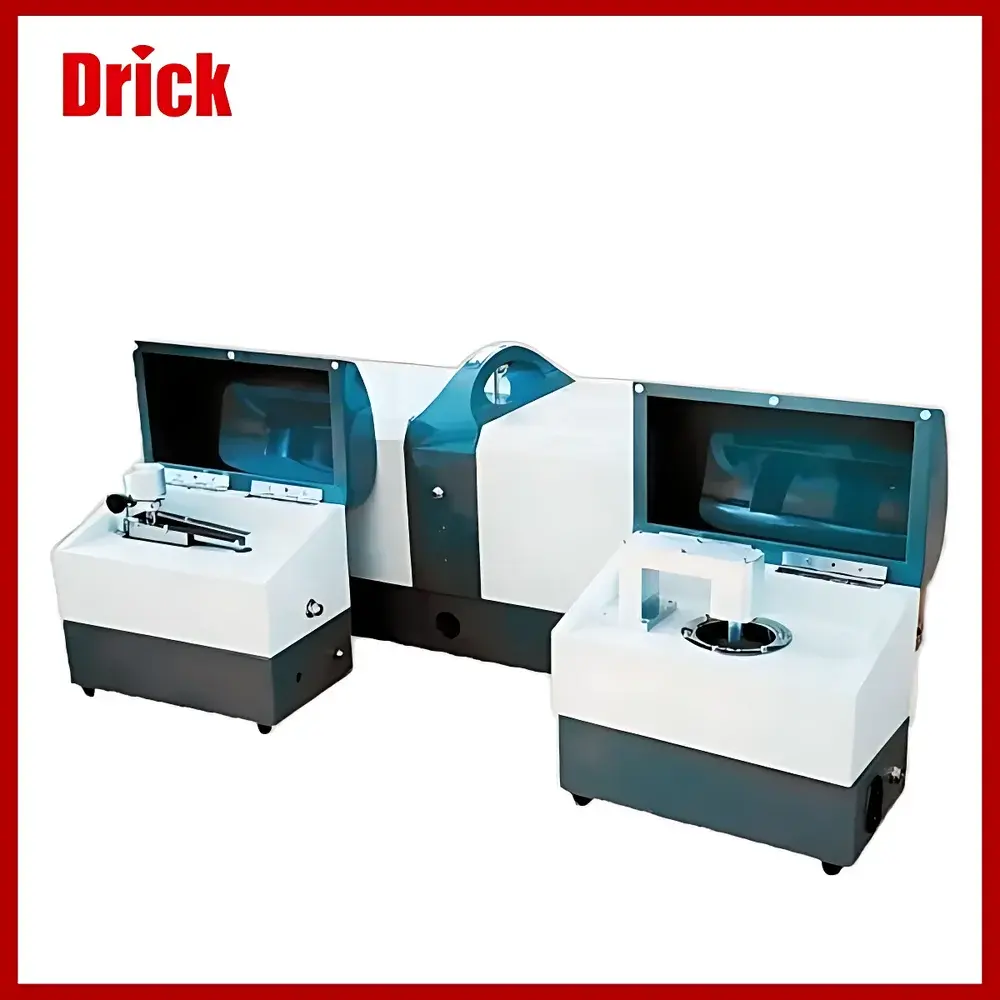
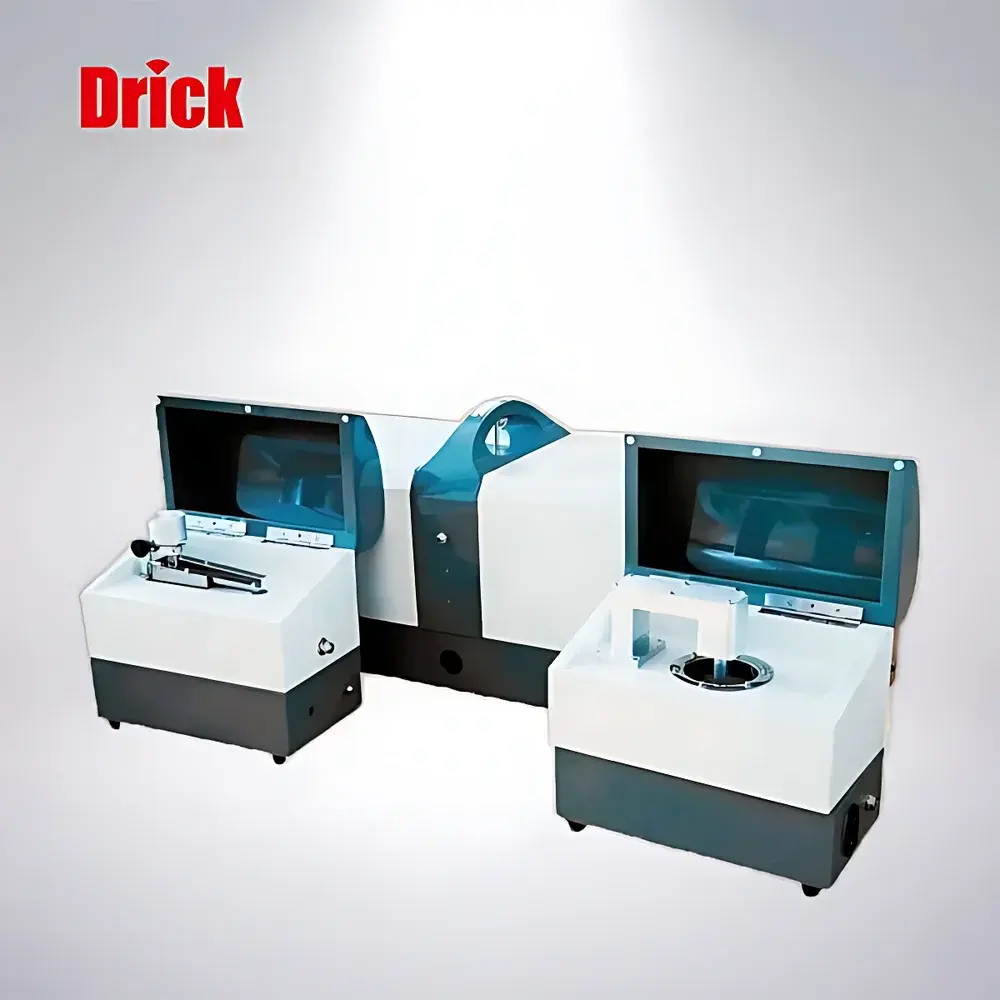
Drick DRK-G300 Comprehensive Laser Particle Size Analyzer for Solid Powders and Mixed Suspensions
| Brand | Drick |
|---|---|
| Origin | Shandong, China |
| Manufacturer Type | Direct Manufacturer |
| Product Category | Domestic |
| Model | DRK-G300 |
| Pricing | USD 42,000 (FOB Qingdao) |
| Dispersion Method | Dry & Wet Dispersion |
| Instrument Type | Laboratory-Grade Laser Particle Size Analyzer |
| Measurement Range | Wet Mode: 0.02–2600 µm |
| Dry Mode | 0.1–2600 µm |
Overview
The Drick DRK-G300 Comprehensive Laser Particle Size Analyzer is an engineered solution for high-fidelity particle size distribution (PSD) characterization of both dry powders and liquid-based suspensions. Based on the Mie scattering theory and Fraunhofer diffraction principles, the system employs a dual-optical-path design with a high-stability He-Ne laser (632.8 nm) and multi-angle forward/side/backward scattered light detection array (up to 105 photodetector elements). This architecture enables robust resolution across an exceptionally broad dynamic range—spanning from sub-20 nm colloidal nanoparticles in aqueous dispersions to coarse granules exceeding 2.6 mm in dry aerosolized samples. The instrument is designed for routine operation in regulated laboratory environments, supporting method development, batch release testing, and stability-indicating studies in accordance with ISO 13320:2020 (Laser diffraction methods for particle size analysis) and ASTM D4294–22 (Standard Test Method for Particle Size Distribution of Powders by Laser Diffraction).
Key Features
- Dual dispersion modules: Integrated wet dispersion unit with ultrasonic probe (20–100 W adjustable), peristaltic circulation pump (flow rate 0–8 L/min), and temperature-controlled sample cell (±0.2 °C); plus dry dispersion module with gravity-fed powder feeder, variable-pressure dispersing nozzle (0.1–0.6 MPa), and turbulent airflow control for de-agglomeration without thermal degradation.
- Optical system: Dual-laser alignment verification, automatic optical path calibration via internal reference standard, and real-time background noise subtraction algorithm to minimize signal drift during extended measurement sequences.
- Robust mechanical architecture: All-optical bench mounted on vibration-damped granite base; sealed detector housing with desiccant chamber to prevent moisture-induced signal attenuation; IP54-rated enclosure for controlled lab environments.
- Compliance-ready operation: Built-in audit trail logging (user actions, parameter changes, calibration events), electronic signature support, and exportable raw scattering data (ASCII/CSV) compatible with 21 CFR Part 11-compliant LIMS integration.
Sample Compatibility & Compliance
The DRK-G300 accommodates a wide spectrum of sample types—including inorganic oxides (e.g., TiO₂, SiO₂), pharmaceutical actives and excipients, polymer microspheres, metal alloys, ceramic precursors, food-grade starches, and emulsion-based agrochemical formulations. Its wet dispersion system supports aqueous, organic (e.g., ethanol, isopropanol), and surfactant-stabilized media; the dry module handles free-flowing, slightly cohesive, and electrostatic-prone powders without requiring pre-drying or solvent removal steps. The analyzer complies with ISO 13320:2020 for methodology validation, meets GLP documentation requirements for QC labs, and provides traceable calibration using NIST-traceable polystyrene latex standards (e.g., 100 nm, 1 µm, 10 µm, 100 µm). Full compliance documentation—including factory calibration certificate, uncertainty budget report, and IQ/OQ protocol templates—is supplied with each unit.
Software & Data Management
Equipped with Drick ParticleMaster v4.2 software (Windows 10/11 compatible), the system delivers ISO-compliant data processing using iterative non-negative least-squares (NNLS) inversion algorithms. Software features include customizable reporting (PDF/Excel), statistical comparison of up to 12 distributions (t-test, ANOVA), SOP-driven workflow templates, and automated pass/fail evaluation against user-defined specification limits. Raw intensity data and intermediate matrix files are stored in vendor-neutral HDF5 format, enabling third-party reprocessing in MATLAB, Python (scikit-learn, PyMieScatt), or commercial analytics platforms. Audit trail records are encrypted and time-stamped, with configurable retention policies aligned with FDA and EMA data integrity expectations.
Applications
- Pharmaceutical development: PSD monitoring of milled APIs, spray-dried dispersions, and inhalation powder blends per USP <788> and ICH Q5A guidelines.
- Materials science: Characterization of battery cathode/anode powders (NMC, graphite), catalyst supports, and additive manufacturing feedstocks (Ti-6Al-4V, Inconel 718).
- Quality control: Routine release testing of pigment dispersions, cement clinker fineness, and dairy protein aggregates in UHT milk formulations.
- Research laboratories: Multi-modal analysis of nanoparticle agglomeration kinetics, shear-induced breakage behavior, and environmental particulate matter (PM₁₀/PM₂.₅) source apportionment.
FAQ
Does the DRK-G300 support GMP/GLP-compliant data handling?
Yes—the system includes full 21 CFR Part 11-aligned electronic signatures, immutable audit trails, and secure user role management (admin/operator/analyst) with password complexity enforcement.
Can the instrument measure samples with high refractive index contrast (e.g., metals or carbon black)?
Yes—Mie theory-based calculation engine allows input of complex refractive index (n + ik) values; default libraries include >120 common materials, and custom indices can be imported.
What maintenance is required for long-term accuracy?
Annual optical alignment verification and detector sensitivity recalibration are recommended; wet module seals and dry dispersion nozzles should be inspected quarterly per operating hours log.
Is remote diagnostics supported?
Yes—optional Ethernet-enabled remote access module permits secure technician-assisted troubleshooting and firmware updates under IT department policy approval.
How is method transfer validated between DRK-G300 units?
Method equivalence is demonstrated via ISO 13320 Annex B inter-instrument reproducibility protocols, including identical sample preparation, dispersion parameters, and data inversion settings across sites.



