
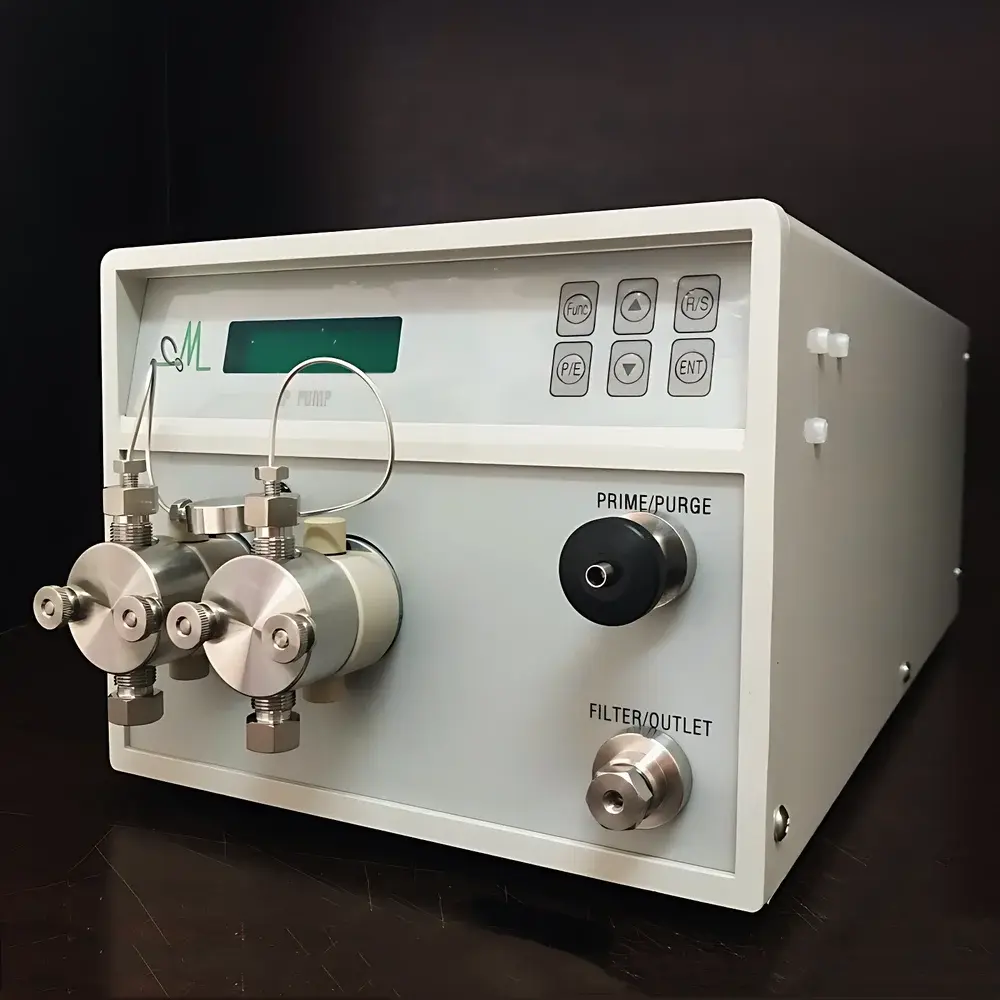
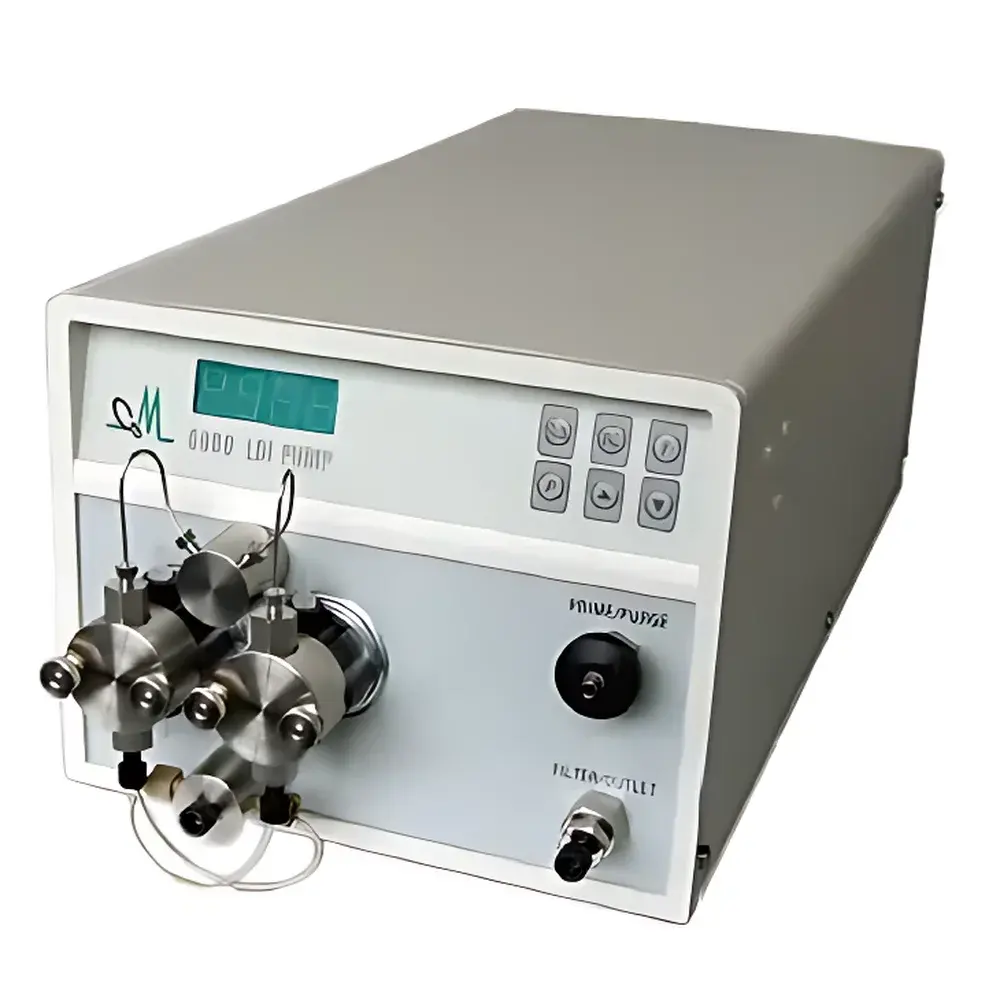
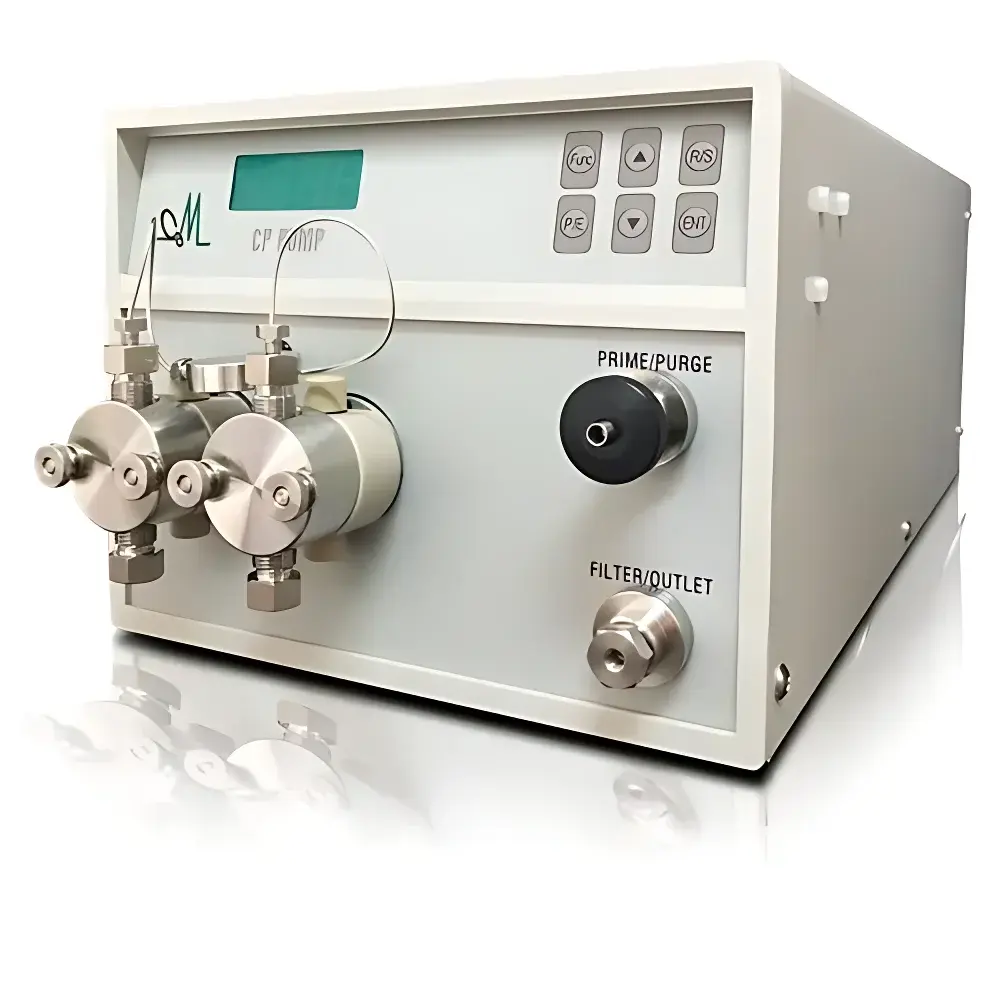
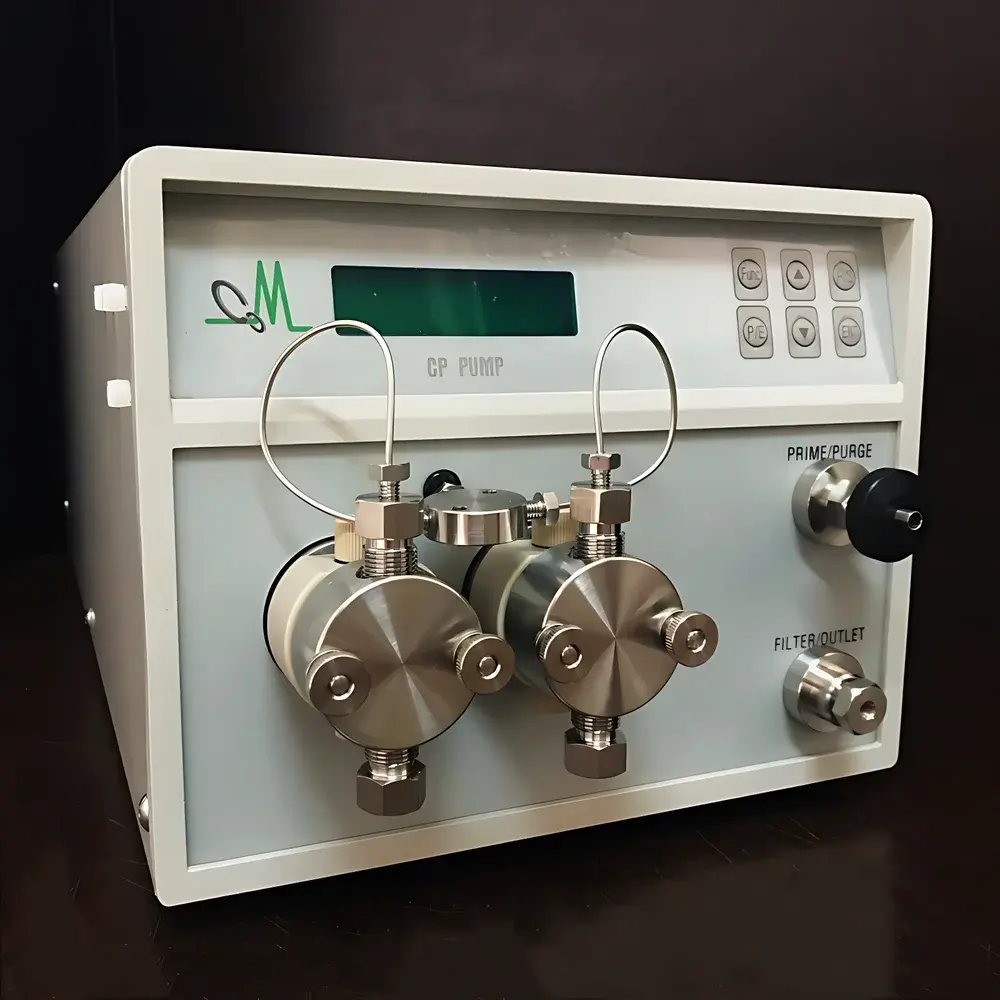
CoMetro CP-LDI Parallel Dual-Head High-Pressure Prep HPLC Pump
| Brand | CoMetro |
|---|---|
| Origin | Imported |
| Manufacturer Type | Authorized Distributor |
| Instrument Type | Isocratic Pump |
| Max Pressure | 6000 psi |
| Flow Rate Range | 0.001–12 mL/min |
| Pump Head Configuration | Parallel Dual-Head |
| Flow Accuracy | ±1% |
| Flow Precision | ≤0.1% RSD |
| Pressure Units | psi, MPa, bar |
| Control Modes | Front-panel keypad, RS-232/USB PC interface, analog input (0–5 V / 4–20 mA) |
| Compressibility Compensation | Adjustable |
| Auto-Purge & Solvent Flush | Supported |
| Optional Multi-Pump Gradient Expansion | Up to 4 units |
Overview
The CoMetro CP-LDI Parallel Dual-Head High-Pressure Prep HPLC Pump is an engineered solution for preparative-scale liquid chromatography requiring precise, stable, and scalable solvent delivery under elevated backpressure conditions. Designed around a dual-piston, parallel-flow architecture, the CP-LDI operates on positive displacement principles with synchronized reciprocating plunger motion—minimizing pulsation and enabling continuous flow without interruption during refill cycles. Its core hydraulic design incorporates high-strength sapphire-ruby check valves, chemically resistant PEEK and stainless-steel wetted materials, and precision-machined pump heads rated for sustained operation up to 6000 psi (414 bar). This pressure capability supports demanding applications including flash chromatography, peptide purification, natural product isolation, and method transfer from analytical to preparative scale. The pump’s electronic control system integrates real-time pressure feedback, adaptive motor torque regulation, and dynamic compressibility compensation—ensuring consistent volumetric delivery across solvent compositions (e.g., water/acetonitrile gradients) and temperature fluctuations.
Key Features
- Parallel dual-head configuration delivers uninterrupted flow with <0.1% RSD flow precision and ±1% absolute accuracy across the full 0.001–12 mL/min range
- High-pressure capability up to 6000 psi enables compatibility with sub-10 µm particle size columns and high-resolution prep systems
- Intelligent compressibility compensation algorithm adjusts stroke volume in real time based on solvent compressibility tables—critical for accurate gradient formation with mixed organic/aqueous mobile phases
- Front-panel LED interface with adjustable brightness supports clear remote monitoring of flow rate, real-time pressure, and system status (e.g., low/high pressure alarms)
- Multi-mode control: local keypad operation, PC-based control via RS-232 or USB, and analog signal input (0–5 V DC or 4–20 mA) for integration into custom automation platforms
- Onboard purge and solvent flush routines—including programmable low/high-pressure exhaust sequences—reduce manual maintenance and extend seal and plunger lifetime, especially when using buffer-containing mobile phases
- Modular scalability: multiple CP-LDI units can be synchronized (2-, 3-, or 4-pump configurations) to support binary, ternary, or quaternary gradient elution without external mixing hardware
Sample Compatibility & Compliance
The CP-LDI is compatible with standard HPLC and prep-HPLC solvents—including aqueous buffers (e.g., ammonium acetate, phosphate), polar organics (acetonitrile, methanol), and moderately aggressive solvents (THF, DCM) when used within material compatibility limits. All fluidic pathways comply with USP Class VI biocompatibility requirements for PEEK components and 316L stainless steel. The pump meets electromagnetic compatibility (EMC) standards per IEC 61326-1 and safety requirements under IEC 61010-1. While not inherently 21 CFR Part 11 compliant, its PC interface supports audit-trail-capable software (e.g., third-party chromatography data systems) configured for GLP/GMP environments. System logs—including pressure excursions, flow deviations, and purge events—can be timestamped and exported for regulatory documentation.
Software & Data Management
The CP-LDI communicates via ASCII-based command protocol over RS-232 or virtual COM port (USB), enabling seamless integration with industry-standard CDS platforms (e.g., Chromeleon, Empower, OpenLab). A dedicated CoMetro Pump Control Utility (Windows-compatible) provides intuitive setup of flow profiles, pressure limits, auto-purge schedules, and compressibility parameters. All operational parameters—including setpoints, actual readings, error codes, and runtime hours—are logged internally and exportable as CSV. Remote monitoring is supported through TCP/IP-enabled gateway modules (optional accessory), allowing centralized supervision in multi-instrument labs. Firmware updates are performed via USB stick with version-controlled checksum validation.
Applications
- Preparative purification of synthetic intermediates, APIs, and oligonucleotides using C18, phenyl-hexyl, or ion-exchange columns
- Method development and scale-up studies where analytical-to-prep transfer requires identical dwell volume and gradient fidelity
- Automated fraction collection systems requiring precise, pulse-free flow synchronization with UV/ELSD detection
- Multi-solvent screening workflows leveraging modular pump expansion for orthogonal solvent programming
- Quality control labs performing compendial assays (e.g., USP , EP 2.2.46) requiring documented flow stability and pressure traceability
FAQ
What is the minimum programmable flow rate and its corresponding accuracy?
The CP-LDI achieves stable delivery down to 0.001 mL/min, with flow accuracy maintained at ±1% across the entire specified range when calibrated with certified reference standards.
Can the pump be integrated into a GMP-compliant chromatography system?
Yes—when paired with validated CDS software supporting 21 CFR Part 11 audit trails and electronic signatures, the CP-LDI serves as a compliant flow module; all critical parameters are digitally logged and exportable.
How does the dual-head architecture improve performance over single-head prep pumps?
Parallel dual-head operation eliminates flow interruption during plunger refill, reduces pulsation amplitude by >90% versus sequential designs, and improves long-term reproducibility—particularly critical for mass-directed or UV-triggered fraction collection.
Is automatic seal cleaning supported for buffer-based methods?
Yes—the built-in solvent flush protocol allows programmable post-run washing of pump heads with water or weak acid solutions to prevent salt crystallization and prolong seal life.
What gradient delay volume can be expected when configuring two CP-LDI units for binary operation?
Typical system dwell volume remains below 1.2 mL when using standard 1/16″ PTFE tubing and zero-dead-volume mixers—enabling sharp gradient transitions suitable for complex natural product separations.
Related Products





