
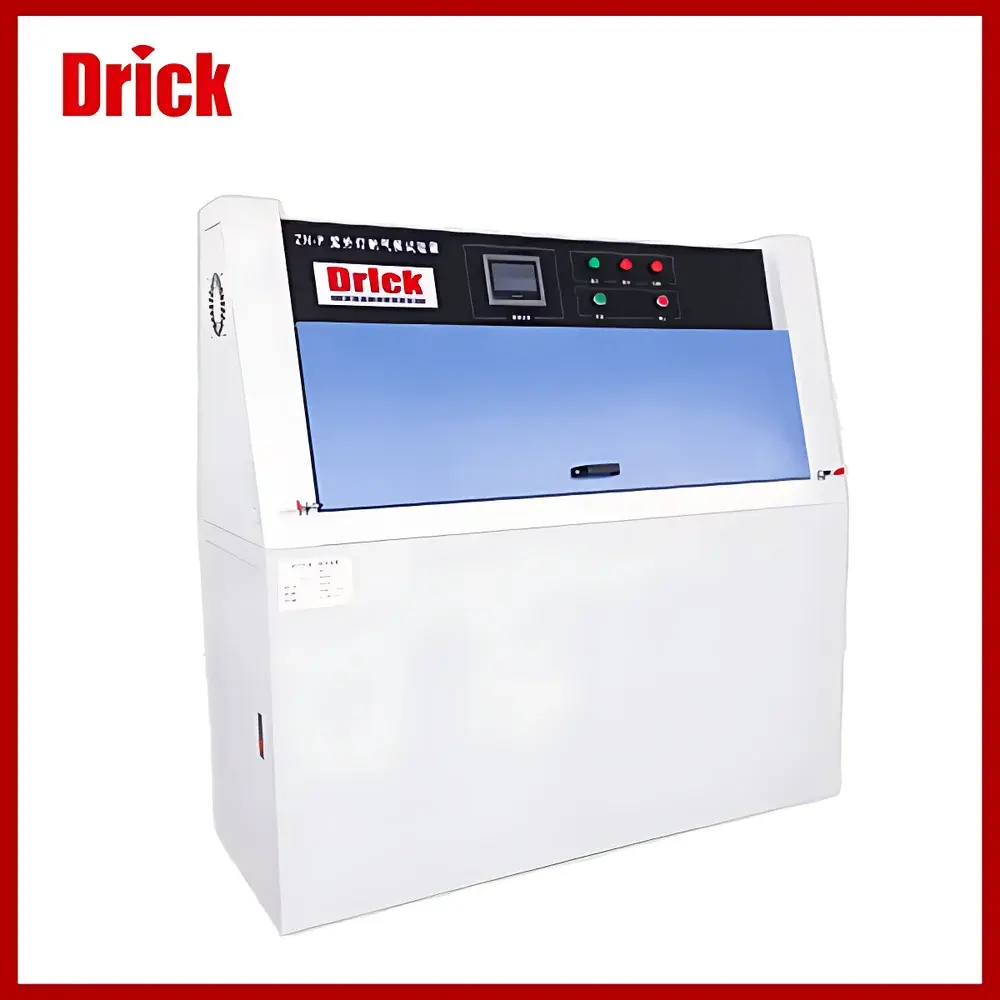
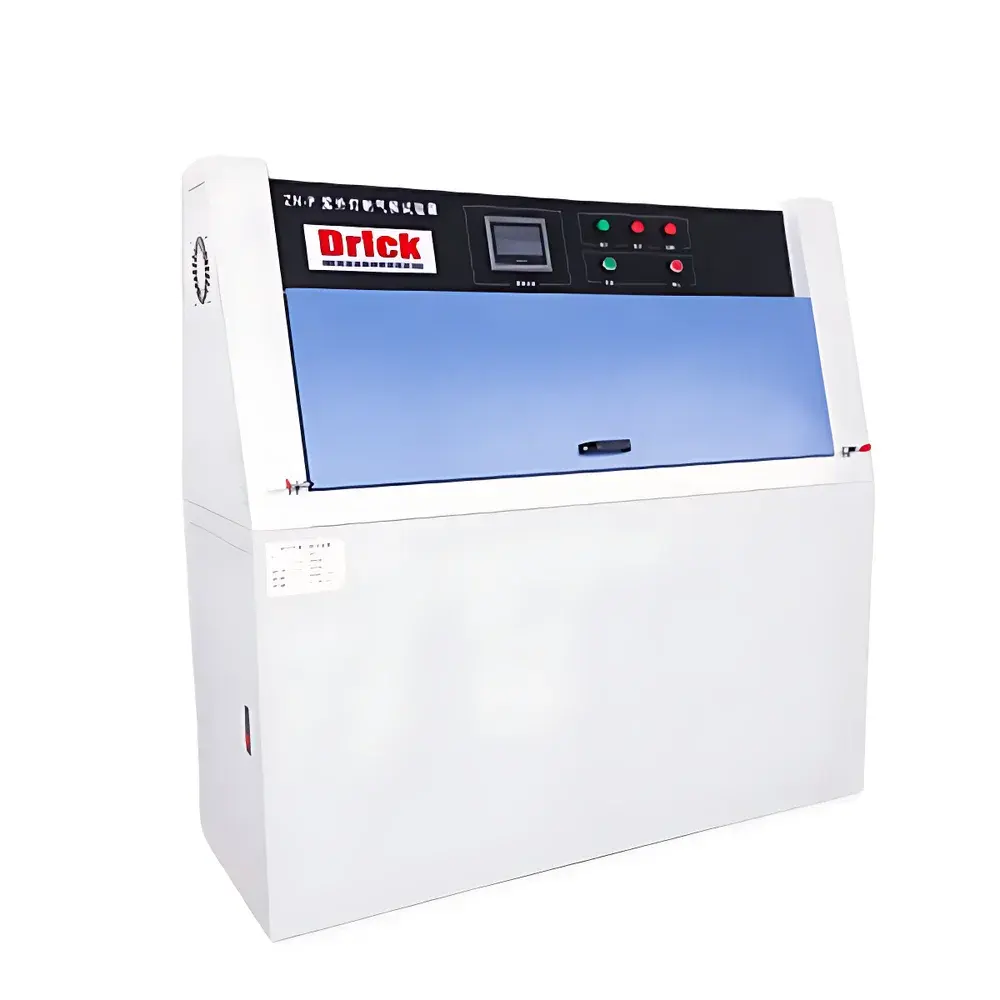
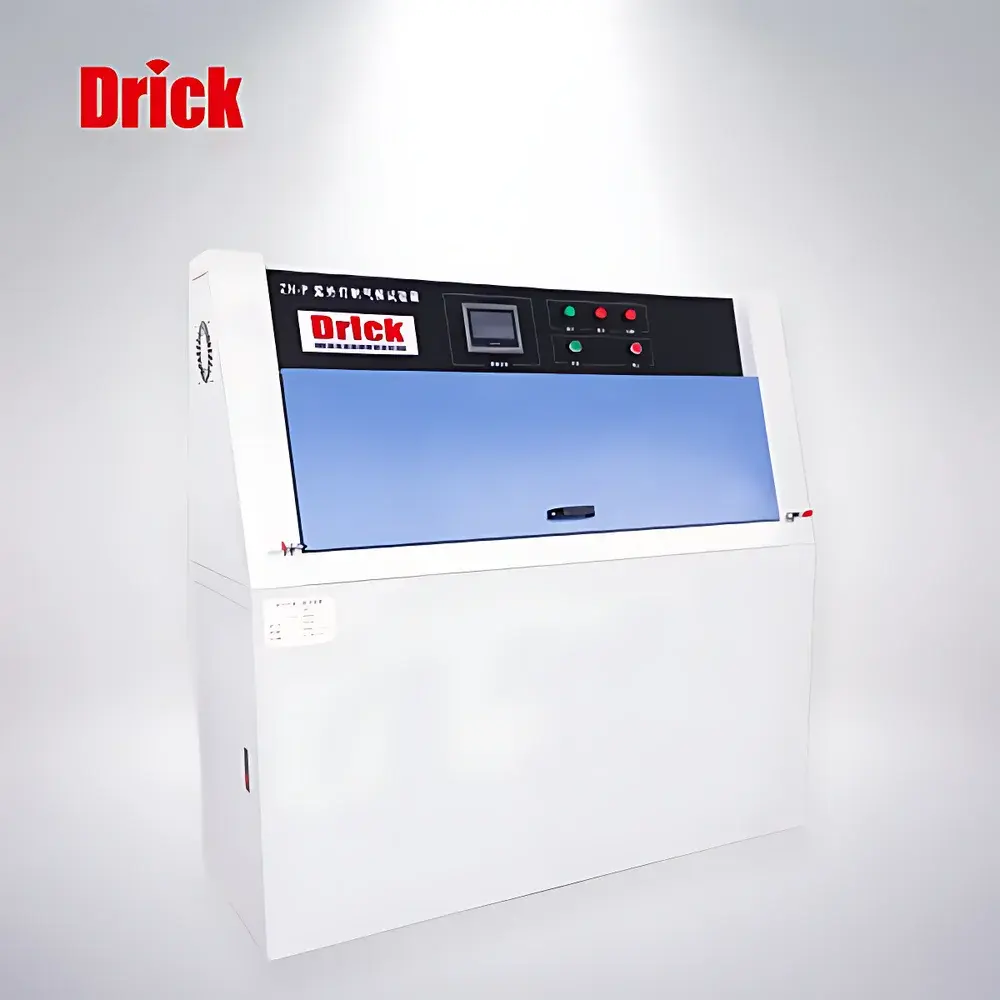
Drick ZW-P UV Aging Test Chamber
| Brand | Drick |
|---|---|
| Origin | Shandong, China |
| Manufacturer Type | Manufacturer |
| Model | ZW-P |
| Temperature Range | RT+10°C to 70°C |
| Temperature Uniformity | ±3°C |
| Humidity Range | ≥95% RH |
| UV Lamp Center-to-Center Spacing | 70 mm |
| Specimen-to-Lamp Distance | 50 ± 2 mm |
| UV Source | UV-A (GE, USA) — alternative sources available upon customization |
| UV Wavelength Range | 300–400 nm |
| Rated Power | 2.5 kW |
| Standard Specimen Size | 75 × 150 mm |
Overview
The Drick ZW-P UV Aging Test Chamber is an engineered environmental test system designed to simulate accelerated ultraviolet radiation exposure under controlled thermal and humid conditions. It operates on the principle of UV photodegradation—exposing materials to calibrated UV-A spectral irradiance (300–400 nm), replicating long-term solar weathering effects in a condensed timeframe. Unlike broad-spectrum xenon arc or carbon arc testers, the ZW-P employs GE-sourced UV-A fluorescent lamps, delivering stable, repeatable irradiance profiles ideal for comparative durability assessment of polymers, coatings, elastomers, textiles, and automotive exterior components. Its chamber architecture supports simultaneous UV irradiation and condensation cycles—mimicking diurnal dew formation—to evaluate synergistic degradation mechanisms such as photo-oxidation, hydrolysis, and surface chalking. The unit is intended for use in R&D laboratories, quality control departments, and third-party testing facilities conducting standardized aging protocols aligned with ASTM G154, ISO 4892-3, and GB/T 14522.
Key Features
- UV-A-specific lamp array (GE, USA) with narrow-band spectral output centered at 340 nm, ensuring compliance with critical UV exposure standards.
- Precisely regulated temperature control from ambient +10°C to 70°C, maintained via PID-controlled heating elements and forced-air circulation for uniform thermal distribution (±3°C tolerance across working volume).
- High-humidity condensation cycle capability (≥95% RH) generated by controlled water reservoir heating—enabling realistic moisture-induced stress during dark phases.
- Optimized optical geometry: 70 mm lamp center-to-center spacing and fixed 50 ± 2 mm specimen-to-lamp distance ensure consistent irradiance intensity and minimize edge-effect variability.
- Robust stainless-steel interior chamber with UV-resistant insulation and quartz-glass viewing window for real-time sample observation without interrupting test conditions.
- Integrated safety interlocks including overtemperature cutoff, UV lamp current monitoring, and door-open irradiation shutoff to meet IEC 61000-4 electromagnetic compatibility and functional safety requirements.
Sample Compatibility & Compliance
The ZW-P accommodates standard flat specimens measuring 75 × 150 mm, mounted on adjustable aluminum racks that allow vertical orientation and multi-layer stacking without shadowing. Non-standard geometries—including molded parts, fabric swatches, and coated metal panels—can be evaluated using custom fixture kits (available on request). All operational parameters are traceable to NIST-traceable calibration references. The chamber’s design supports full auditability for GLP and ISO/IEC 17025-accredited laboratories, with documentation packages including factory calibration certificates, lamp spectral output reports, and temperature/humidity validation data. While not inherently FDA 21 CFR Part 11-compliant, its analog control interface may be integrated into validated LIMS environments via optional RS-485 or Modbus TCP gateways.
Software & Data Management
The ZW-P utilizes a microprocessor-based digital controller with dual-line LCD display, supporting up to 99 programmable test cycles comprising UV exposure, condensation, and dark periods. Time-stamped run logs—including setpoints, actual chamber temperature/humidity, and cumulative UV exposure duration—are stored internally for up to 30 days and exportable via USB interface. Optional PC software (Drick TestLog Pro v3.2) enables remote monitoring, real-time graphing of environmental parameters, deviation alerts, and automated report generation in PDF/CSV formats compliant with internal QA documentation workflows. All data files include embedded metadata (operator ID, test ID, instrument serial number) to support 21 CFR Part 11-aligned electronic record integrity when deployed with external user authentication servers.
Applications
- Evaluation of UV resistance in automotive clearcoats, plastic grilles, and interior trim per SAE J2020 and ISO 11341.
- Accelerated weathering validation of architectural coatings and roofing membranes against ASTM D4587.
- Stability screening of textile dyes and synthetic fibers under cyclic UV/moisture stress (ISO 105-B02).
- Pre-release qualification of polymer packaging materials used in pharmaceutical and consumer goods applications.
- Comparative lifetime modeling of elastomeric seals and gaskets exposed to outdoor service conditions.
- Supporting root-cause analysis of field failures linked to photochemical degradation pathways.
FAQ
What UV spectrum does the ZW-P replicate, and why is UV-A selected?
The ZW-P uses GE UV-A fluorescent lamps emitting predominantly between 300–400 nm, with peak intensity near 340 nm. This range corresponds to the most photochemically active portion of terrestrial sunlight reaching Earth’s surface and is specified in ASTM G154 and ISO 4892-3 for non-filtered UV exposure testing.
Can the chamber perform combined UV + humidity cycling?
Yes—the ZW-P executes fully programmable sequences integrating UV irradiation, condensation (via heated water reservoir), and dark periods, enabling simulation of day/night environmental transitions.
Is lamp calibration required, and how often?
UV irradiance should be verified quarterly using a NIST-traceable UV-A radiometer; lamp replacement is recommended after 1600–2000 hours of operation or when spectral output deviates beyond ±10% of initial calibration.
Does the ZW-P meet international regulatory standards for test reporting?
While the base unit complies with mechanical and electrical safety standards (IEC 61000, GB 4793.1), formal accreditation for test reporting requires laboratory-level validation per ISO/IEC 17025—including chamber mapping, lamp spectral verification, and uncertainty budgeting.
Are custom specimen holders or larger chamber variants available?
Yes—Drick offers OEM engineering services for modified rack configurations, extended depth chambers, and UV-B or UV-C lamp options (subject to safety certification and application review).



