
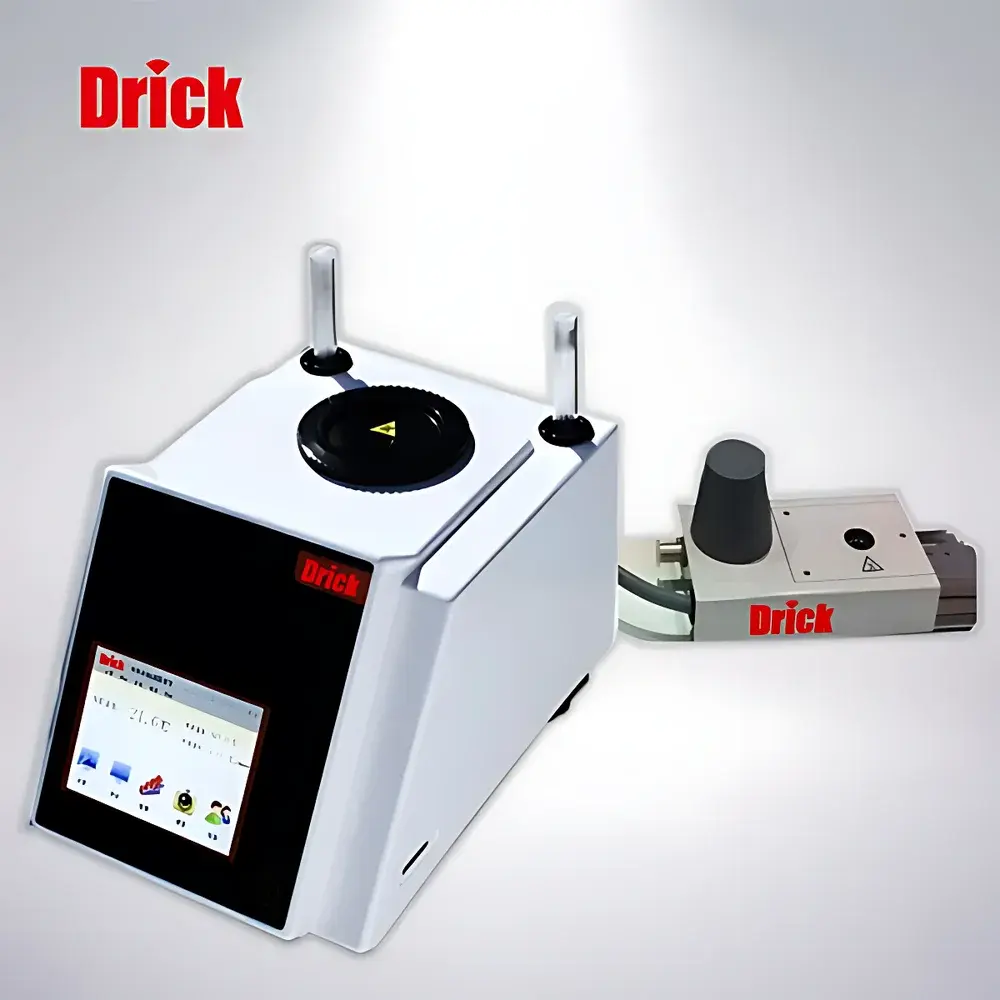
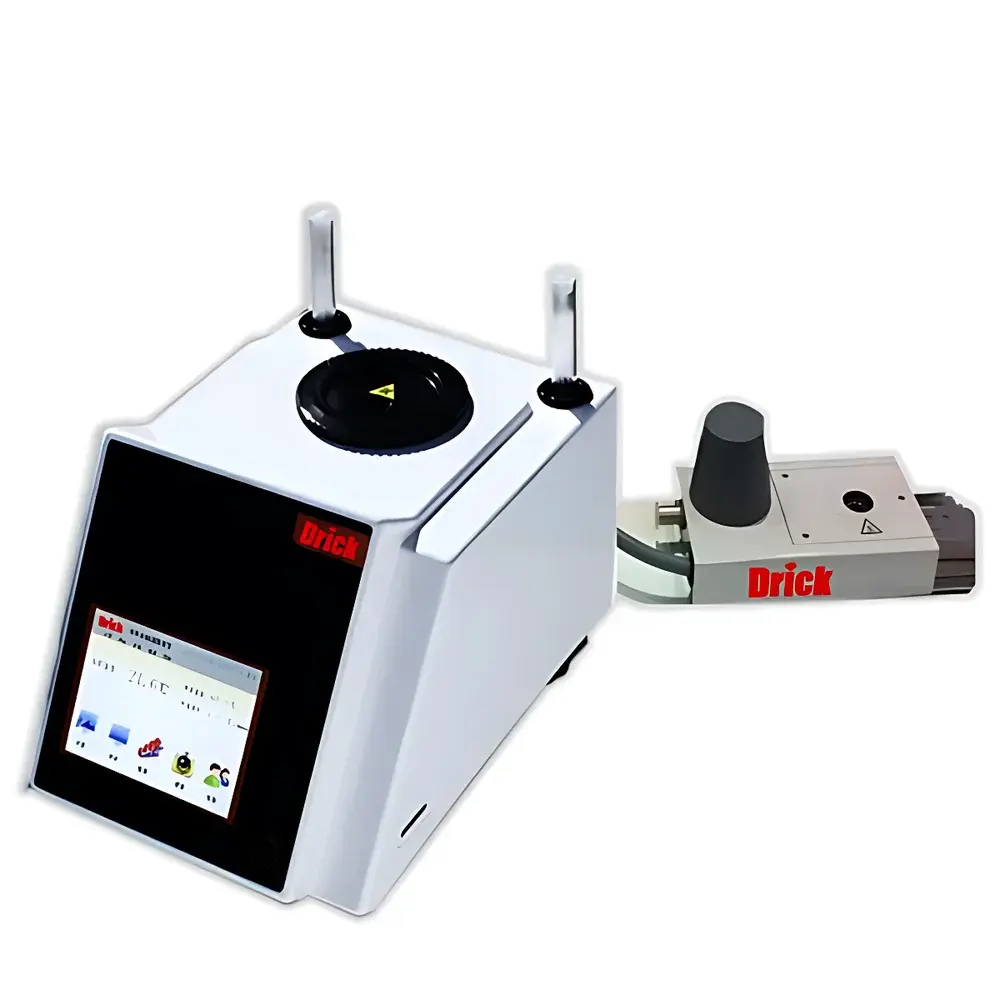
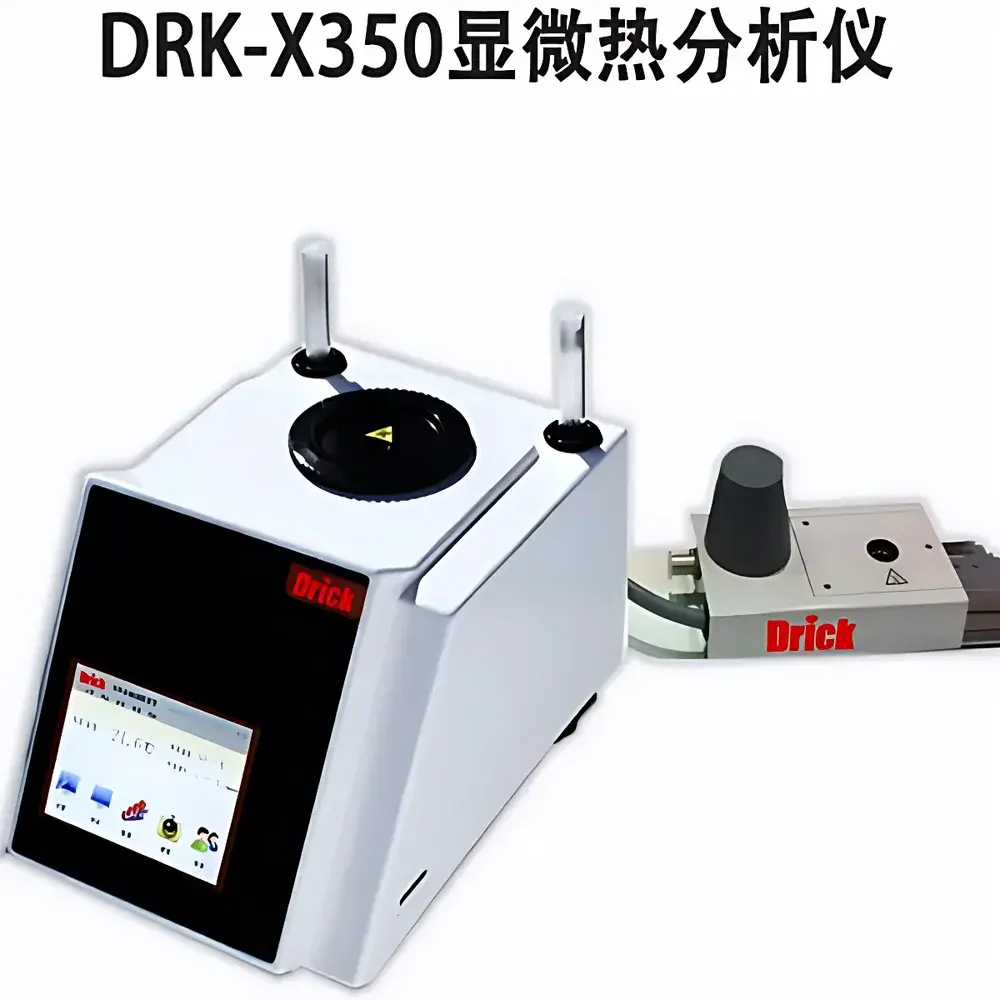
Drick DRK-X350 Digital Eyepiece Equipped Hot Stage Microscope for Melting Point Analysis
| Brand | Drick |
|---|---|
| Origin | Shandong, China |
| Manufacturer Type | Direct Manufacturer |
| Country of Origin | China |
| Model | DRK-X350 |
| Temperature Range | Ambient to 400 °C |
| Heating Rate | 0.1–20 °C/min |
| Temperature Resolution | 0.1 °C |
Overview
The Drick DRK-X350 is a precision-engineered hot stage microscope system designed for real-time visual thermal analysis of solid-phase transitions, particularly melting point determination. It integrates a thermostatically controlled heating stage with high-resolution optical observation via a calibrated digital eyepiece, enabling simultaneous temperature monitoring and morphological assessment of sample behavior under controlled thermal ramping. The instrument operates on the principle of direct microscopic observation of phase change events—such as crystal collapse, sintering onset, polymorphic transition, or eutectic melting—within a precisely regulated thermal environment. Unlike conventional capillary-based melting point apparatuses, the DRK-X350 supports bulk and thin-film samples, allowing qualitative and semi-quantitative interpretation of thermal events in context with structural evolution. Its architecture complies with foundational requirements for thermal characterization in R&D and QC laboratories where visual confirmation of transition temperatures is critical for material specification, batch release, or regulatory documentation.
Key Features
- Thermostatic hot stage with programmable linear heating profiles (0.1–20 °C/min), supporting both ramp-and-hold and continuous scanning modes.
- Digital eyepiece camera (resolution: 1920×1080, USB 2.0 interface) with real-time video capture, frame-by-frame image export, and on-screen temperature overlay.
- High-stability platinum resistance thermometer (PT100) embedded in the stage surface, delivering 0.1 °C temperature resolution and traceable calibration per ISO/IEC 17025 guidelines.
- Optically optimized glass stage window compatible with standard upright microscopes (objective working distance ≥10 mm); accommodates standard glass slides, metallurgical mounts, and polymer films.
- Robust aluminum alloy housing with active air cooling and thermal shielding to minimize ambient drift and ensure thermal uniformity across the observation zone (±0.5 °C over 10 mm diameter).
- Compliant with IEC 61000-6-3 (EMC) and IEC 61010-1 (safety) standards for laboratory electrical equipment.
Sample Compatibility & Compliance
The DRK-X350 accepts a broad range of solid-state samples including crystalline pharmaceuticals, polymer pellets, waxes, organic salts, metal alloys (in thin-section form), and composite laminates. Sample preparation requires no derivatization or encapsulation—direct placement on pre-cleaned glass or quartz substrates is sufficient. The system supports ASTM E324 (Standard Test Methods for Melting Point of Organic Solids), USP <741> (Melting Points and Temperatures of Solidification), and ISO 11357-3 (Plastics — Differential Scanning Calorimetry — Part 3: Determination of Melting Temperature). While not a quantitative DSC replacement, its visual output provides orthogonal verification essential for method validation, outlier investigation, and failure analysis in GLP- and GMP-aligned environments.
Software & Data Management
The bundled Windows-based acquisition software enables synchronized logging of temperature, time, and image metadata (EXIF-compliant timestamps, stage position, heating rate). All captured videos and still frames are stored in lossless AVI or TIFF format with embedded calibration tags. Audit trail functionality records user login, parameter changes, and session start/end times—meeting baseline requirements for FDA 21 CFR Part 11 compliance when deployed with institutional electronic signature protocols. Export options include CSV (temperature/time), PDF reports with annotated images, and batch-processing macros for multi-sample comparative analysis.
Applications
- Pharmaceutical solid-state characterization: polymorph identification, hydrate/dehydrate transitions, and excipient compatibility screening.
- Polymer processing optimization: melt flow onset, crystallinity assessment, and thermal degradation onset detection.
- Materials science research: eutectic composition mapping, liquid crystal phase identification, and solder alloy reflow profiling.
- Quality control in packaging and printing: thermal stability evaluation of ink binders, laminating adhesives, and barrier coatings.
- Food science: fat bloom analysis in chocolate, starch gelatinization tracking, and melting behavior of dairy-based emulsions.
- Academic teaching labs: hands-on demonstration of thermodynamic phase diagrams and kinetic-controlled solid-state transformations.
FAQ
Is the DRK-X350 compatible with third-party microscopes?
Yes—it is designed as a universal hot stage module for standard upright microscopes with mechanical stage adapters and ≥10 mm objective working distance.
Does the system support sub-ambient temperature measurement?
No—the DRK-X350 operates from ambient temperature up to 400 °C; cryogenic capability is not included.
Can temperature calibration be performed in-house?
Yes—calibration verification using NIST-traceable reference materials (e.g., indium, tin, zinc) is supported via the software’s calibration mode.
What file formats are generated during data acquisition?
Video: AVI (uncompressed or MJPEG); Images: TIFF or PNG; Logs: CSV and XML metadata containers.
Is remote operation or network integration possible?
Local USB 2.0 connection only; Ethernet or Wi-Fi interfaces are not provided in the base configuration.



