
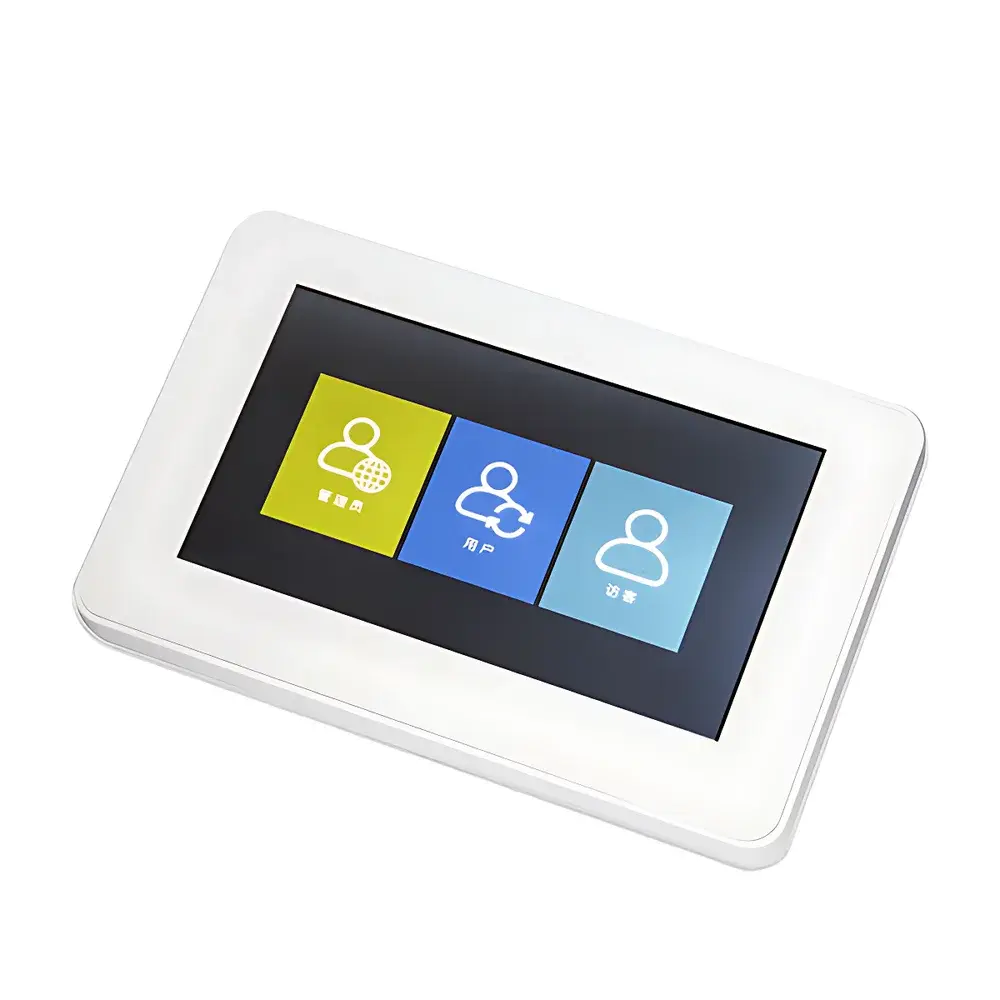
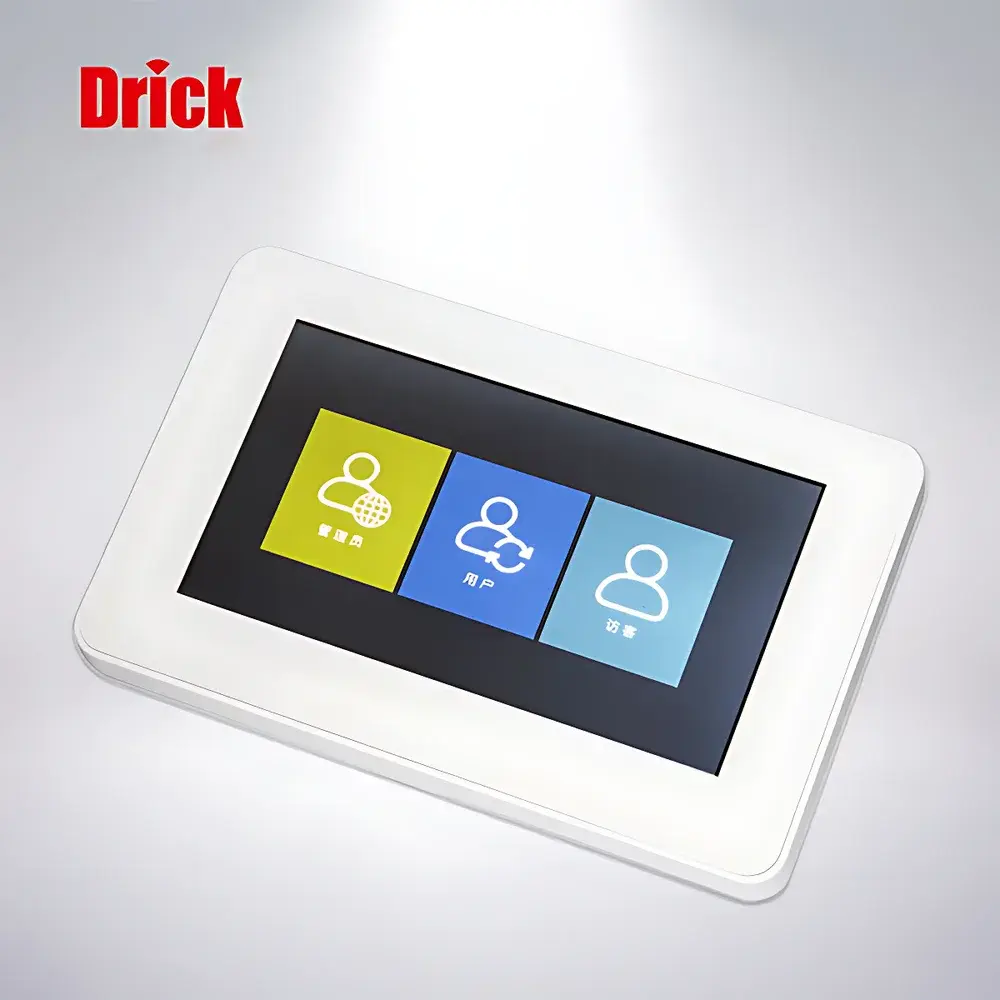
Drick DRK-pHS-5 Series Benchtop pH Meter
| Brand | Drick |
|---|---|
| Origin | Shandong, China |
| Manufacturer Type | Direct Manufacturer |
| Regional Classification | Domestic (China) |
| Model | DRK-pHS-5 Series |
| Instrument Type | Benchtop |
| Parameter Types | Multi-parameter (pH, mV, Temperature) |
| Display | 7-inch TFT Color Touchscreen |
| Measurement Range | pH –2.000 to 20.000 |
| Resolution | 0.001 pH / 0.01 mV / 0.1 °C |
| Accuracy | ±0.002 pH / ±0.02 %FS mV / ±0.2 °C |
| Stability | (±0.002 pH ±1 digit)/3 h |
| Calibration | Auto 1–5-point with JJG 119 buffer recognition and custom buffer support |
| Temperature Compensation | Automatic or manual (–5.0 to 110.0 °C) |
| Electrode Interface | BNC + RCA + Terminal Block |
| Data Storage | 500 entries (user-isolated) |
| Connectivity | USB + RS232 |
| Compliance | GLP-compliant reporting with audit-ready print logs |
| Power | DC 12 V, 10 W |
| Dimensions | 210 × 210 × 100 mm |
| Weight | 2 kg |
Overview
The Drick DRK-pHS-5 Series Benchtop pH Meter is a high-precision electrochemical measurement system engineered for rigorous laboratory and quality control environments where trace-level pH accuracy, long-term stability, and regulatory traceability are essential. It operates on the potentiometric principle: measuring the potential difference between a glass pH-sensitive electrode and a stable reference electrode immersed in an aqueous sample, then converting that voltage into a pH value using the Nernst equation (–59.16 mV/pH unit at 25 °C). Designed specifically for applications demanding multi-parameter capability—including pH, redox potential (mV), and temperature—the DRK-pHS-5 integrates advanced analog-to-digital conversion (24-bit ADC) and a 32-bit ARM microcontroller architecture to minimize noise, maximize signal fidelity, and ensure reproducible results across repeated measurements. Its extended pH range (–2.000 to 20.000) supports non-aqueous, highly alkaline, or strongly acidic samples common in paper chemistry, coating formulation, and packaging material leachate analysis—critical for ISO 186, TAPPI T414, and ASTM D6866-compliant testing workflows.
Key Features
- 7-inch full-color TFT touchscreen with Metro-style UI: Intuitive icon-driven navigation, bilingual (English/Chinese) interface, and context-sensitive help—enabling rapid operation without documentation dependency.
- Real-time electrode health monitoring: Visual signal-strength indicators dynamically reflect electrode impedance and asymmetry potential, alerting users to aging or fouling before calibration drift compromises data integrity.
- Intelligent calibration management: Supports auto-recognition of standard buffers per JJG 119 (e.g., pH 4.01, 6.86, 9.18), plus user-defined buffer entry with adjustable temperature coefficients—ensuring metrological rigor during multi-point validation.
- Dual temperature compensation: Accepts integrated Pt1000 or thermistor probes for automatic temperature detection, or permits manual input via virtual keypad—critical for compensating thermal effects on electrode slope and liquid junction potential.
- GLP-compliant data handling: All measurements include timestamp, operator ID, electrode serial number, calibration history, and environmental conditions; printed reports feature automatic digital signature fields and comply with FDA 21 CFR Part 11 audit-trail requirements when paired with validated software.
- Modular electrode connectivity: Triple-interface design (BNC, RCA, screw-terminal) accommodates combination electrodes, separate indicator/reference configurations, and specialized sensors (e.g., low-ionic-strength or high-temperature probes).
- Secure multi-user access: Three-tier permission structure (Administrator, Standard User, Guest) enforces role-based control over calibration, data export, instrument configuration, and user profile management—supporting ISO/IEC 17025 internal audit protocols.
Sample Compatibility & Compliance
The DRK-pHS-5 is optimized for routine and method-specific pH testing of aqueous extracts from packaging substrates—including paperboard, corrugated fiberboard, food-contact coatings, and migration test solutions per EU Regulation 10/2011 and FDA 21 CFR §176.170. Its wide dynamic range and low-drift electronics enable reliable measurement of aggressive media such as sodium hydroxide washes (pH >14), citric acid extracts (pH <2), and buffered enzyme solutions used in biodegradability assessments. The instrument conforms to IEC 61000-4 electromagnetic compatibility standards and meets the electrical safety requirements of GB/T 29238–2012 (Chinese national standard equivalent to IEC 61010-1). All calibration and measurement records adhere to Good Laboratory Practice (GLP) principles, including mandatory metadata capture, electronic signature capability, and immutable storage architecture.
Software & Data Management
Data generated by the DRK-pHS-5 is stored locally in non-volatile memory (500 entries, segregated by user account) and exportable via USB mass-storage mode or RS232 serial protocol to LIMS or Excel-compatible formats (.csv). Built-in print functions support direct output to ESC/POS-compatible thermal printers or legacy dot-matrix devices, generating GLP-compliant hardcopy reports containing calibration verification summaries, raw mV readings, temperature-corrected pH values, and operator authentication stamps. Firmware updates are performed via USB drive with checksum validation to prevent unauthorized modification. Optional PC software (sold separately) provides trend analysis, statistical process control (SPC) charting, and automated report generation aligned with ISO 9001 documentation requirements.
Applications
- Quality assurance of paper and board manufacturing: Monitoring pulp slurry pH, sizing agent formulations, and surface treatment baths to maintain consistent formation and strength properties.
- Migration testing laboratories: Verifying pH stability of food simulant solutions (e.g., 3% acetic acid, 10% ethanol) prior to and after contact with packaging materials per EN 13130.
- R&D for sustainable packaging: Characterizing pH-dependent hydrolysis rates of cellulose nanocrystals, PLA laminates, and starch-based barrier coatings.
- Environmental compliance testing: Measuring leachate pH from landfill liner composites and recycled fiber composites under TCLP or SPLP protocols.
- Educational and accreditation labs: Supporting student training in electrochemical fundamentals and serving as a reference instrument for CNAS-accredited testing facilities requiring traceable calibration chains.
FAQ
Does the DRK-pHS-5 support automatic buffer recognition per international standards?
Yes—it auto-identifies certified buffer solutions conforming to JJG 119 (China), DIN 19266 (Germany), and NIST SRM equivalents via built-in conductivity and temperature signatures.
Can calibration data be exported for external audit review?
Yes—calibration logs, including date/time, buffer IDs, slope/mV offset, and operator credentials, are exportable in timestamped .csv format with optional digital signature embedding.
Is the instrument suitable for measuring pH in low-conductivity samples like deionized water?
It is recommended to use a dedicated low-conductivity pH electrode (e.g., double-junction Ag/AgCl with KCl gel electrolyte) and enable the instrument’s high-impedance input mode to mitigate junction potential errors.
What is the maximum allowable ambient humidity for continuous operation?
The device is rated for continuous use at ≤80% relative humidity (non-condensing) within 5–40 °C ambient temperature, per GB/T 29238–2012 environmental classification.
How does the user management system enforce data integrity in shared lab environments?
Each user account maintains isolated data partitions; only Administrators can modify calibration parameters or delete historical records—ensuring separation of duties and preventing unauthorized result manipulation.




