
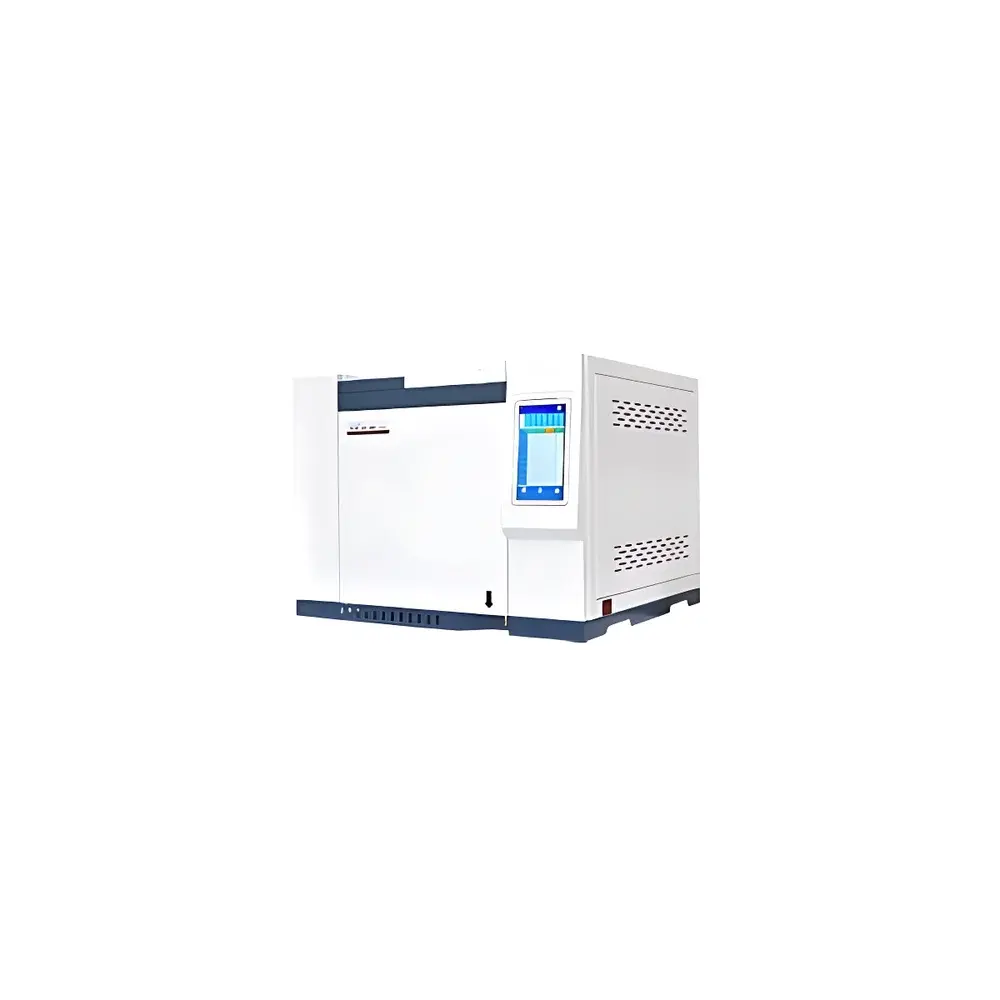
Zhongkehuifen ZKH-FPD Micro-Sulfur Analyzer
| Brand | Zhongkehuifen (ZKH) |
|---|---|
| Origin | Beijing, China |
| Model | ZKH-FPD Micro-Sulfur Analyzer |
| Instrument Type | Laboratory Gas Chromatograph with Flame Photometric Detection (FPD) |
| Temperature Control Range | Ambient + 3°C to 450°C |
| Oven Ramp Rate | 0.1–40°C/min |
| Cool-down Time | ~8 min (450°C → 50°C) |
| Carrier Gas Flow Range | 0–1200 mL/min |
| Carrier Gas Pressure Range | 0–970 kPa |
| Injector Max Temp | 450°C |
| Injector Pressure Setting Range | 0–970 kPa |
| Injector Total Flow Setting Range | 0–1200 mL/min |
| FPD S-Mode LOD | 5 pg S/s (as ethanethiol) |
| FPD P-Mode LOD | 0.11 pg P/s (as tributyl phosphate) |
| FPD Dynamic Range (S) | 10³ |
| Column Oven Dimensions | 260 × 270 × 230 mm |
| Temperature Setting Resolution | 0.01°C |
| Max Programmed Steps | 20 |
| Detector Temp Range | Up to 350°C |
| Display | 7-inch resistive touchscreen LCD |
| Communication | 10/100M adaptive Ethernet, embedded TCP/IP stack, Modbus/TCP server |
| EPC Capability | Optional electronic pressure control with auto-ignition, flame monitoring, and fault recovery |
Overview
The Zhongkehuifen ZKH-FPD Micro-Sulfur Analyzer is a dedicated laboratory gas chromatograph engineered for ultra-trace sulfur speciation analysis in gaseous and liquid hydrocarbon matrices. It employs high-resolution capillary or packed column separation coupled with selective flame photometric detection (FPD) operating at the characteristic 394 nm emission wavelength of excited sulfur species. This configuration enables quantitative determination of volatile and semi-volatile sulfur compounds—including H2S, COS, CS2, SO2, mercaptans (e.g., CH3SH, C2H5SH), sulfides (e.g., CH3SCH3, C2H5SC2H5), disulfides (e.g., CH3SSCH3), and thiophenes—across concentration ranges from sub-ppb to percent levels. The system’s design prioritizes sulfur retention integrity through full-PEEK fluidic pathways, inertized valve surfaces, and thermally stable, sulfur-selective columns—minimizing adsorption, catalytic decomposition, and memory effects common in conventional GC systems.
Key Features
- Full-PEEK gas path architecture with chemically passivated switching valves to suppress sulfur compound adsorption and enhance method reproducibility.
- Dual-column configuration capability (e.g., sulfur-specific column I + II) enabling simultaneous resolution of inorganic and organic sulfur species in a single injection.
- FPD detector with localized cooling technology allowing stable operation up to 350°C; internal flow paths fully deactivated to prevent analyte loss.
- Modular inlet options: configurable split/splitless, packed column, or liquid injection ports—each rated to 450°C with independent pressure and flow control.
- Optional Electronic Pressure Control (EPC) module providing closed-loop regulation of carrier, makeup, and hydrogen/air gases—supporting automatic ignition, flame-out recovery, and diagnostic self-checks.
- Integrated 7-inch resistive touchscreen interface with bilingual (English/Chinese) OS, real-time chromatogram display, and local method management.
- Embedded Modbus/TCP server for seamless integration into plant-wide DCS or SCADA environments—enabling remote instrument control and result forwarding without third-party middleware.
Sample Compatibility & Compliance
The ZKH-FPD analyzer accommodates gaseous samples (natural gas, coke oven gas, syngas, LPG) and liquid matrices (benzene, toluene, methanol feedstock) following standardized sample introduction protocols—including gas-tight syringe injection, pressurized loop injection via fluoropolymer-coated multi-position valves, or headspace analysis. Sample conditioning may involve cryo-focusing, sulfur scavenger bypass, or online oxidation for total sulfur conversion where required. The system supports compliance with ASTM D5504 (trace sulfur in gaseous fuels), ISO 8573-6 (compressed air purity classes), and GB/T 11060.4 (natural gas sulfur analysis). Its audit-ready data handling—via timestamped acquisition logs, user-access-controlled method files, and electronic signature support—aligns with GLP and GMP documentation expectations for QC/QA laboratories in petrochemical, coal chemical, and ammonia synthesis facilities.
Software & Data Management
The proprietary ZKH-Sulfur Workstation is a Windows-based application supporting up to 253 concurrent GC channels. It provides full instrument control (oven, inlets, detector, valves), real-time spectral visualization, peak integration with customizable baseline algorithms, and calibration curve generation using internal standard or external standard methods. All raw data (.raw), processed results (.csv/.pdf), and method parameters are stored in a relational database with immutable audit trails—meeting FDA 21 CFR Part 11 requirements when deployed with role-based access control and electronic signatures. The workstation includes built-in report templates compliant with ISO/IEC 17025 reporting clauses and exports structured data via OPC UA or RESTful API for LIMS integration.
Applications
- Monitoring sulfur breakthrough in amine scrubbers, zinc oxide beds, and activated carbon guard beds during syngas purification.
- Quantifying residual thiophenic compounds in refined benzene streams to ensure catalyst protection in alkylation units.
- Verifying sulfur removal efficiency in PSA tail gas treatment loops and Claus unit feed streams.
- Trace sulfur screening in hydrogen used for hydrotreating and hydrocracking—critical for preventing noble metal catalyst deactivation.
- Quality assurance testing of fuel-grade LPG and pipeline natural gas against regional specifications (e.g., ≤4 ppmv total sulfur).
FAQ
What sulfur compounds can be quantified with this system?
H2S, COS, CS2, SO2, methanethiol, ethanethiol, dimethyl sulfide, diethyl sulfide, methyl ethyl sulfide, tetrahydrothiophene, thiophene, benzothiophene, and dibenzothiophene—subject to column selection and method optimization.
Is the FPD detector capable of simultaneous phosphorus detection?
Yes—the ZKH-FPD operates in dual-channel mode (S and P) with independent photomultiplier gain and optical filtering; however, sulfur analysis requires dedicated alignment and calibration for optimal selectivity.
Can the system be integrated into an existing DCS environment?
Yes—via native Modbus/TCP protocol implementation; no gateway hardware is required. Register mapping and polling intervals are configurable within the workstation.
What is the typical maintenance interval for the FPD jet and photomultiplier tube?
Under normal operation with clean gas supplies, the FPD jet requires cleaning every 3–6 months; PMT lifetime exceeds 20,000 hours with stable high-voltage supply and thermal management.
Does the analyzer support unattended overnight operation?
Yes—programmable sequence control, automatic shutdown after final run, and email/SNMP alerts for abnormal conditions (e.g., flame-out, pressure deviation, temperature drift) are enabled by default.
Related Products






