
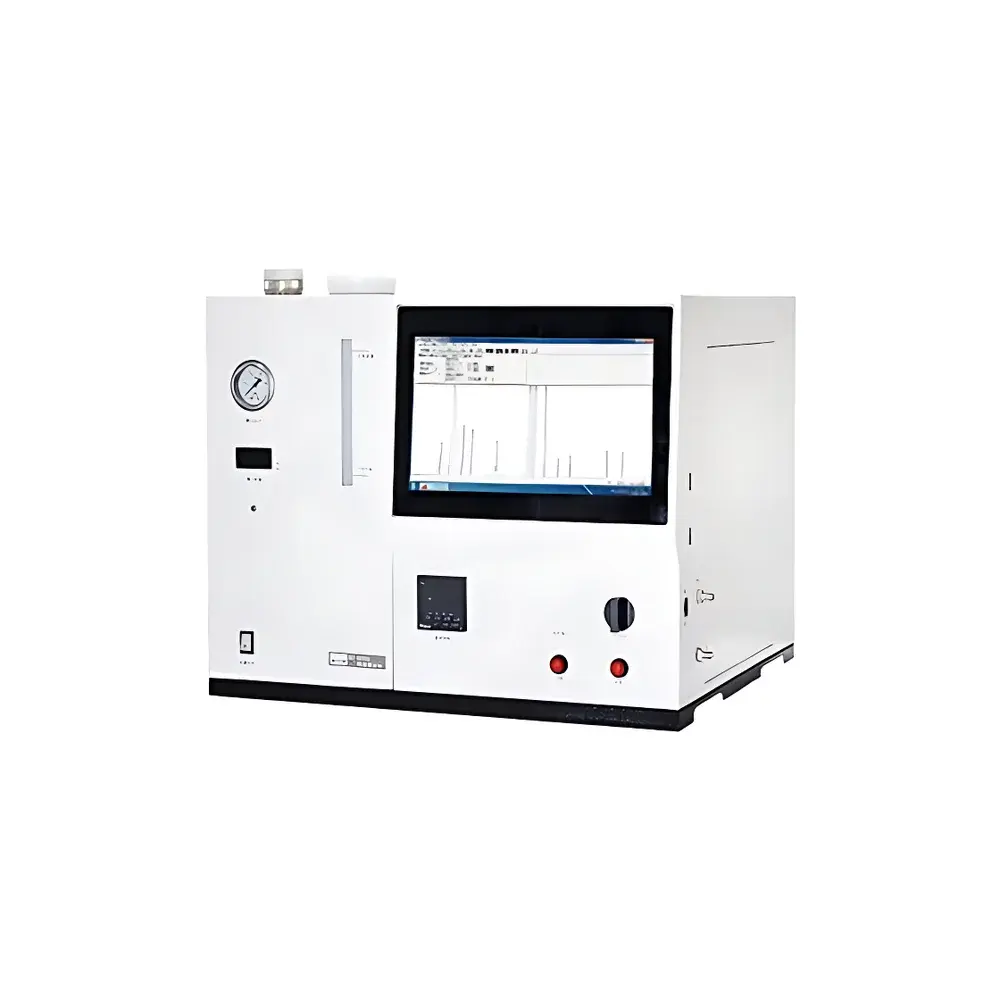
Zhongkehuifen GC-2080 Gas Chromatograph for Fuel Gas Analysis
| Brand | Zhongkehuifen |
|---|---|
| Origin | Beijing, China |
| Model | GC-2080 Gas Chromatograph |
| Instrument Type | Laboratory Gas Chromatograph |
| Application Scope | General-purpose fuel gas analysis |
| Column Oven Temperature Range | Ambient + 3°C to 450°C |
| Temperature Ramp Rate | 0.1–40°C/min |
| Cooling Rate | 450°C to 50°C in ~8 min |
| Carrier Gas Flow Range & Control | 0–1200 mL/min |
| Carrier Gas Pressure Range & Control | 0–970 kPa |
| Injector Maximum Operating Temperature | 450°C |
| Injector Pressure Setting Range | 0–970 kPa |
| Injector Total Flow Setting Range | 0–1200 mL/min |
| Oven Dimensions | 260 × 230 × 270 mm (W × D × H) |
| Weight | ~50 kg |
| External Dimensions | 560 × 540 × 520 mm (W × D × H) |
Overview
The Zhongkehuifen GC-2080 Gas Chromatograph is a laboratory-grade, dual-detector-capable analytical system engineered for precise and reproducible compositional analysis of natural gas, liquefied petroleum gas (LPG), biogas, syngas, and other hydrocarbon-rich fuel streams. It operates on the fundamental principle of gas-phase separation via differential partitioning of analytes between a mobile phase (inert carrier gas) and a stationary phase (capillary or packed column), followed by selective detection using flame ionization (FID) and thermal conductivity (TCD) technologies. Designed for routine QC/QA laboratories, energy utilities, and research facilities requiring compliance with ASTM D1945, D1946, ISO 6974, and GB/T 13610 standards, the GC-2080 delivers robust performance across complex multi-component mixtures—including methane, ethane, propane, butanes, pentanes, nitrogen, carbon dioxide, hydrogen, oxygen, and trace impurities—without compromising resolution or retention time stability.
Key Features
- 7-inch high-resolution color touchscreen interface with bilingual (English/Chinese) GUI, enabling intuitive real-time monitoring of oven temperature, detector status, flow/pressure parameters, and diagnostic alerts.
- Advanced digital temperature control architecture achieving ±0.1°C stability in oven, injector, and detector zones—critical for quantitative repeatability in regulated environments.
- Dual-inlet configuration supporting simultaneous operation of packed and capillary columns; both inlets feature septum purge functionality to minimize ghost peaks and baseline artifacts.
- Large-volume column oven (260 × 230 × 270 mm) accommodating up to two 80 m capillary columns—ideal for extended analysis of C1–C6 hydrocarbons and permanent gases.
- Modular inlet design with low-dead-volume vaporization chamber; consumables (septa, liners, jets, collectors) are tool-free replaceable with single-hand operation.
- Intelligent rear-door cooling system reduces post-run equilibration time by up to 40%, improving throughput in high-sample-volume workflows.
- Integrated hardware diagnostics including power-on self-test (POST), parameter retention after power loss, and automatic screen-saver activation to extend display longevity.
Sample Compatibility & Compliance
The GC-2080 supports direct gas sampling via manual or automated valve injection (e.g., 6- or 10-port rotary valves), as well as optional interfaces for headspace analysis, thermal desorption, and methanizer-coupled CO/CO₂ quantification. Its dual-FID/TCD configuration enables simultaneous detection of both organic (ppm-level hydrocarbons) and inorganic (N₂, O₂, CO, CO₂, H₂) species in a single run. The instrument meets essential requirements for GLP-compliant laboratories: audit-trail-ready event logging, user-access-level permissions (administrator/operator), and non-editable raw data storage. While not pre-certified for FDA 21 CFR Part 11, its firmware architecture supports integration with validated LIMS and electronic lab notebook (ELN) platforms through standard Ethernet (TCP/IP) and RS-232 communication protocols.
Software & Data Management
The GC-2080 operates with vendor-supplied chromatography data system (CDS) software compatible with Windows 10/11. Key capabilities include method development wizards, peak integration with customizable baselines and retention time windows, calibration curve generation (linear, quadratic, or polynomial), and report templates aligned with ISO/IEC 17025 documentation practices. Raw data files (.cdf or .dx) are stored in open-format archives, ensuring long-term accessibility and third-party processing compatibility (e.g., with OpenChrom or Chromeleon). All method parameters, acquisition logs, and maintenance records are timestamped and linked to operator ID—facilitating traceability during internal audits or regulatory inspections.
Applications
- Quantitative analysis of natural gas composition per ISO 6974-2 (gas chromatographic determination of individual components).
- Quality control of LPG blends (propane/butane ratio, sulfur compounds, and olefin content) in accordance with ASTM D2158.
- Biogas upgrading assessment: CH₄/CO₂ ratio, H₂S, siloxanes, and halogenated hydrocarbons monitoring.
- Syngas characterization for Fischer–Tropsch feedstock evaluation (H₂/CO ratio, methane slip, and inert gas content).
- Emission testing of combustion exhaust: unburned hydrocarbons, CO, and CO₂ profiling in engine and turbine applications.
FAQ
What types of detectors are supported natively on the GC-2080?
The system ships with integrated FID and TCD detectors; both can operate concurrently with independent temperature and signal conditioning controls.
Can the GC-2080 be used for permanent gas analysis without a methanizer?
Yes—the TCD configuration allows direct detection of N₂, O₂, CO, CO₂, and CH₄; however, a methanizer is required for sub-ppm CO/CO₂ quantification when coupled with FID.
Is remote monitoring or network integration possible?
Yes—Ethernet and RS-232 ports enable remote instrument control, real-time data streaming, and integration into centralized lab networks.
What is the maximum column length supported in the oven?
The oven accommodates two capillary columns up to 80 m each, or one packed column up to 4 m, depending on internal configuration and carrier gas optimization.
Does the GC-2080 support automated calibration verification?
The CDS software includes scheduled calibration check routines; users may define reference standards, tolerance limits, and auto-flag deviations exceeding preset thresholds.






