
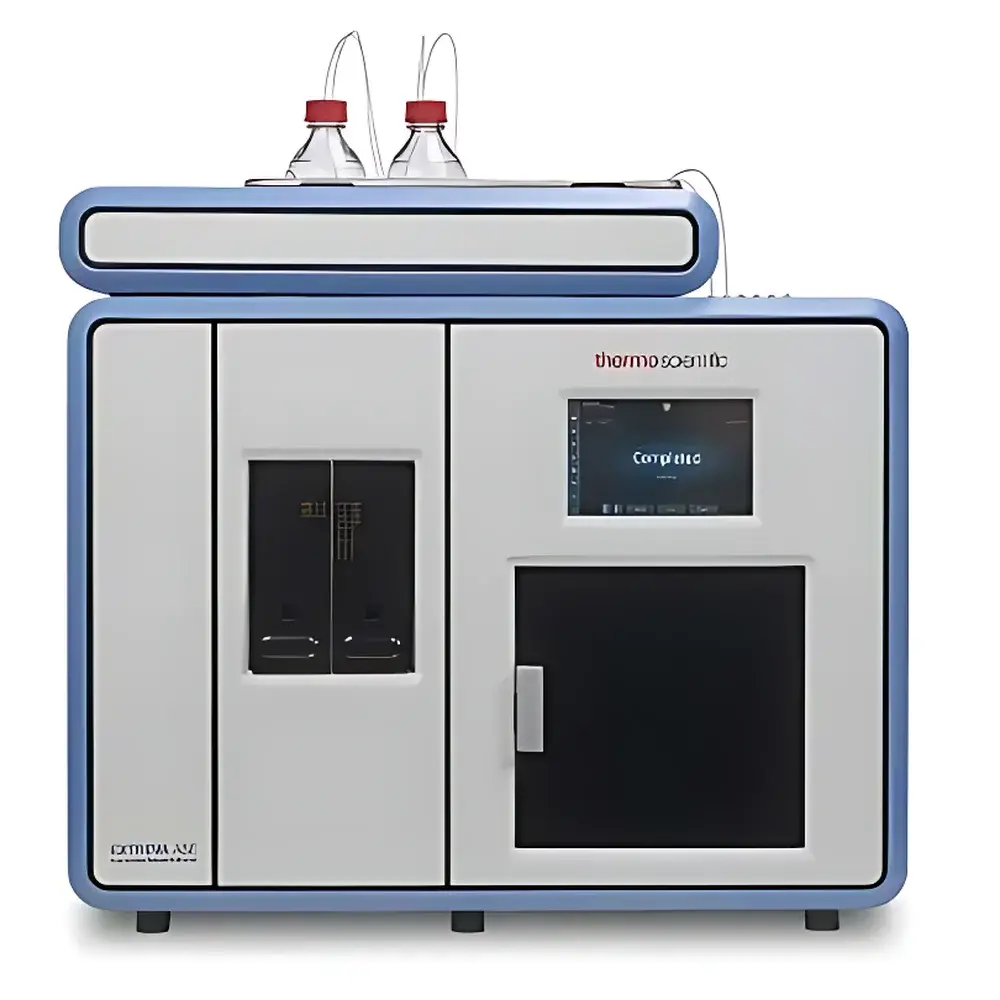
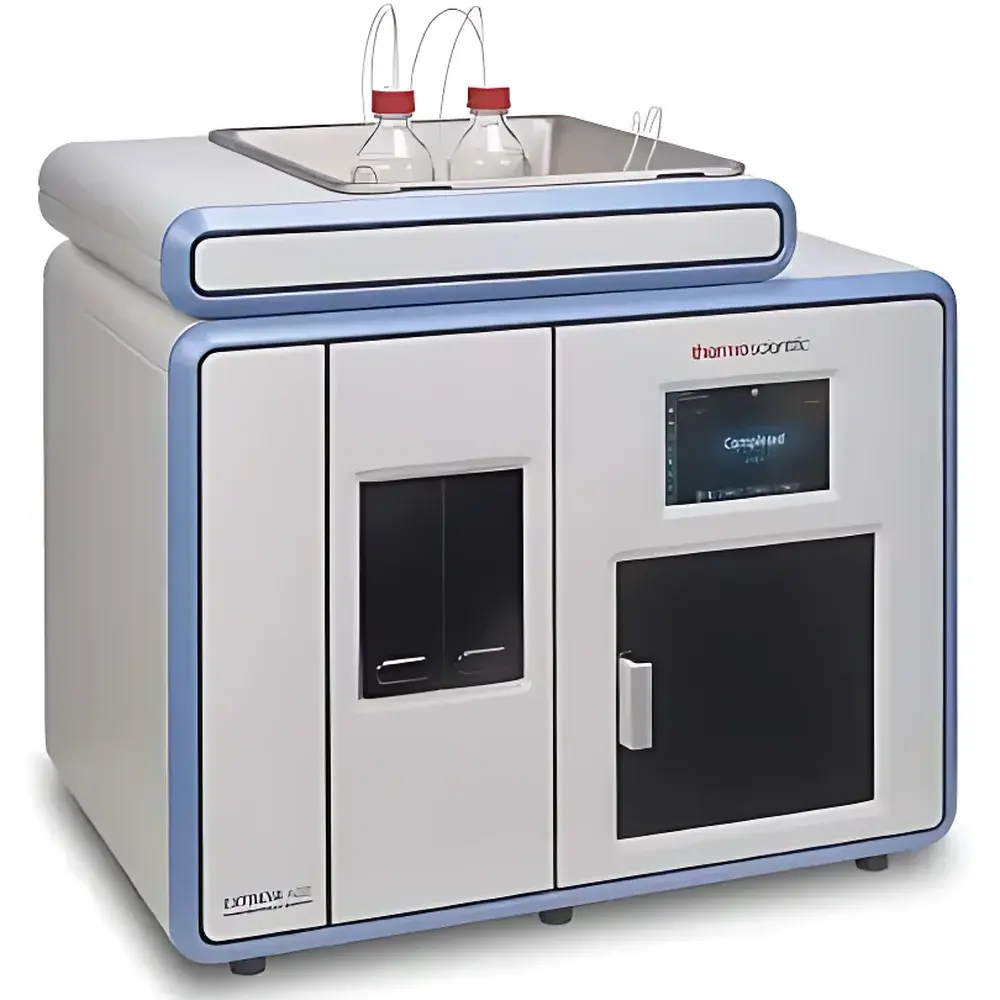
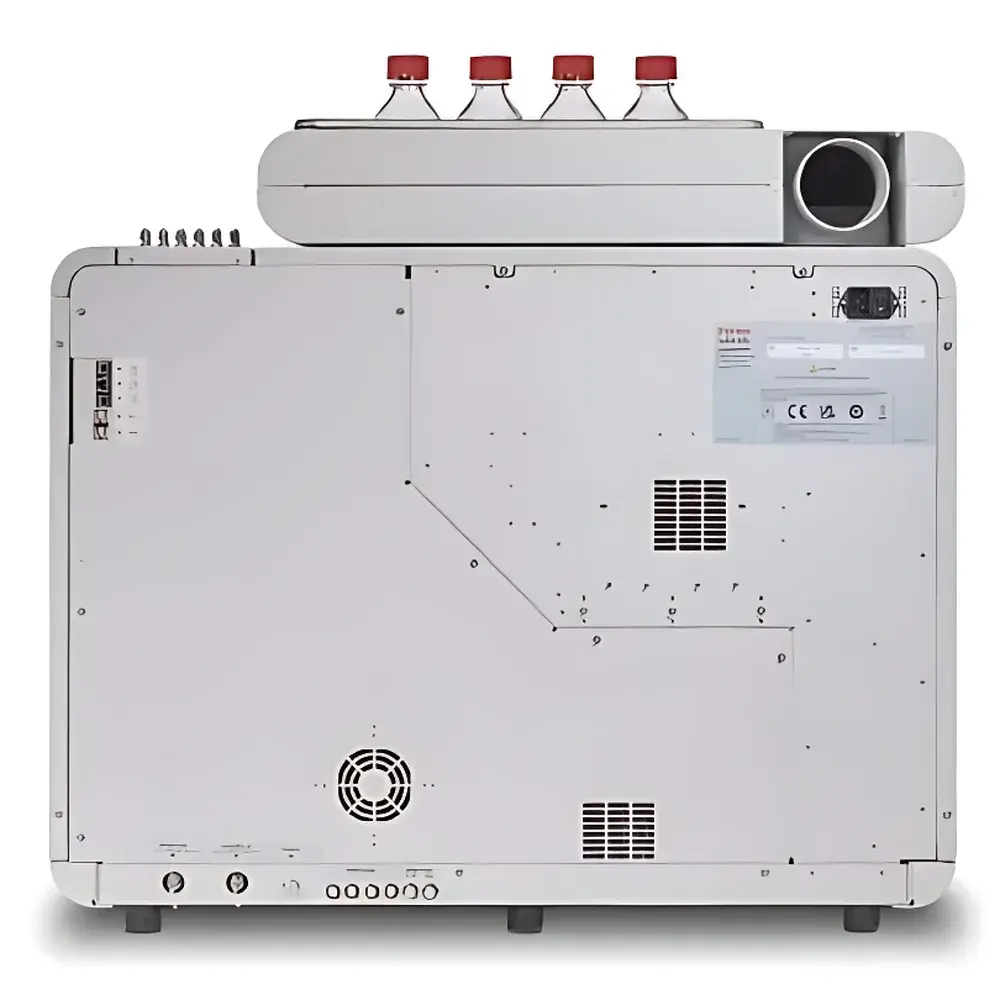
Thermo Fisher EXTREVA™ ASE™ Accelerated Solvent Extractor
| Brand | Thermo Fisher |
|---|---|
| Origin | Jiangsu, China |
| Manufacturer Type | OEM Manufacturer |
| Region of Origin | Domestic (China) |
| Model | EXTREVA™ ASE™ Accelerated Solvent Extractor |
| Instrument Type | Solid-Liquid Extraction (not Liquid-Liquid) |
| Temperature Range | 40–200 °C |
| Pressure Range | 200 bar (corrected from erroneous "200 Pa") |
| Extraction Cell Volumes | 1, 5, 10, 22, 34, 66, and 100 mL |
| Extraction Time | 2–300 min |
| Dimensions (W×D×H) | 100 × 65.2 × 86.6 cm |
| Sample Capacity | Dual trays, 16 positions total |
Overview
The Thermo Fisher EXTREVA™ ASE™ Accelerated Solvent Extractor is an engineered solid-liquid extraction platform that applies elevated temperature and pressure to enhance solute solubility and mass transfer kinetics in heterogeneous matrixes. Operating on the principle of accelerated solvent extraction (ASE®), the system delivers reproducible, high-yield recovery of analytes—including pesticides, PAHs, PCBs, pharmaceutical residues, and environmental contaminants—from solid or semi-solid samples such as soil, sediment, food, plant tissue, and polymer matrices. Unlike conventional Soxhlet or ultrasonic extraction, ASE technology achieves complete extraction in minutes rather than hours by maintaining solvent above its boiling point under controlled pressure (up to 200 bar), thereby preventing solvent degradation while preserving thermally labile compounds. The EXTREVA™ ASE™ integrates extraction and post-extraction concentration into a single automated workflow—eliminating manual transfer between instruments and reducing exposure to volatile organic solvents.
Key Features
- Integrated extraction-concentration architecture: Eliminates offline evaporation steps by coupling ASE with built-in nitrogen-assisted solvent removal directly within the collection vial.
- Parallel processing capability: Simultaneous operation of up to 16 extraction cells across two independently controlled trays (4 groups × 4 cells), enabling true batch throughput scalability.
- Gas-assisted dynamic extraction mode: Programmable nitrogen purge during elution reduces solvent consumption by 5–100 mL per run without compromising recovery—critical for cost control and waste minimization in regulated labs.
- Multi-solvent flexibility: Supports up to six distinct solvents per method sequence, including dedicated rinse solvents for cross-contamination mitigation between sample types.
- Precision fluidic control: Mass-flow-regulated solvent delivery ensures consistent flow rates and residence times, essential for method robustness and inter-laboratory comparability.
- 2D barcode traceability: Integrated scanner reads sample tube barcodes to auto-populate metadata—including lot numbers, preparation date, operator ID, and method version—ensuring ALCOA+ data integrity principles.
Sample Compatibility & Compliance
The EXTREVA™ ASE™ accommodates diverse sample matrices ranging from dry powders (e.g., powdered milk, activated carbon) to moist biological tissues (e.g., liver homogenate, leaf litter) and complex industrial materials (e.g., rubber, plastics, textiles). All cell volumes (1–100 mL) are compatible with standardized ASE-certified cellulose or stainless-steel extraction cells, supporting ASTM D7619, EPA Methods 3545A and 3546, ISO 14507, and USP <2021> for residual solvent analysis. The system’s firmware and hardware architecture comply with FDA 21 CFR Part 11 requirements when operated with Chromeleon CDS, providing electronic signatures, audit trails, and role-based access control for GLP/GMP environments.
Software & Data Management
Control and monitoring are executed via Thermo Scientific™ Chromeleon™ Chromatography Data System (CDS) v7.3 or later, offering validated method templates, real-time pressure/temperature logging, and automated report generation compliant with ISO/IEC 17025 documentation standards. Raw instrument data—including cell pressure profiles, solvent temperature ramps, and nitrogen purge cycles—are stored in vendor-neutral .cdf format. All method parameters, calibration logs, and maintenance records are time-stamped and cryptographically hashed to support regulatory inspections. Optional integration with LIMS platforms (e.g., LabWare, STARLIMS) enables end-to-end sample lifecycle tracking from receipt to final extract vial.
Applications
- Environmental testing: Extraction of organochlorine pesticides from soil cores per EPA 3545A; dioxins/furans from fly ash using toluene/hexane mixtures.
- Food safety: Multi-residue analysis of veterinary drugs in muscle tissue; mycotoxin recovery from cereals at 80 °C with acetonitrile/water (90:10).
- Pharmaceutical QC: Residual catalyst metal quantification in API intermediates using nitric acid/HF mixtures in PTFE-lined cells.
- Materials science: Leachable screening from medical device polymers per ISO 10993-12 protocols; additive migration studies in packaging films.
- Forensic toxicology: Solid-phase microextraction (SPME) fiber conditioning and analyte desorption support via programmable thermal desorption module add-on.
FAQ
What is the maximum operating pressure of the EXTREVA™ ASE™ system?
The system is rated for continuous operation up to 200 bar, with integrated pressure relief valves and redundant sensor monitoring per ASME B31.3 process piping standards.
Can the EXTREVA™ ASE™ be used for liquid samples?
No—it is designed exclusively for solid and semi-solid matrices. Liquid samples require prior adsorption onto diatomaceous earth or silica gel before loading into ASE cells.
Is method validation support available from Thermo Fisher?
Yes: Application notes, SOP templates, and ICH Q2(R2)-aligned validation packages—including specificity, linearity, accuracy, precision, and robustness assessments—are provided with instrument qualification documentation.
How does the system ensure cross-contamination prevention between runs?
Automated solvent rinsing cycles (up to three per cell), sequential cell purging with inert gas, and physical isolation of each 4-cell group minimize carryover; blank runs are automatically scheduled after high-concentration samples.
Does the EXTREVA™ ASE™ meet ISO/IEC 17025 requirements for accredited laboratories?
When deployed with Chromeleon CDS v7.3+, full compliance is achievable through configured audit trails, electronic signatures, calibration management modules, and documented IQ/OQ/PQ protocols supplied by Thermo Fisher Service Engineers.



