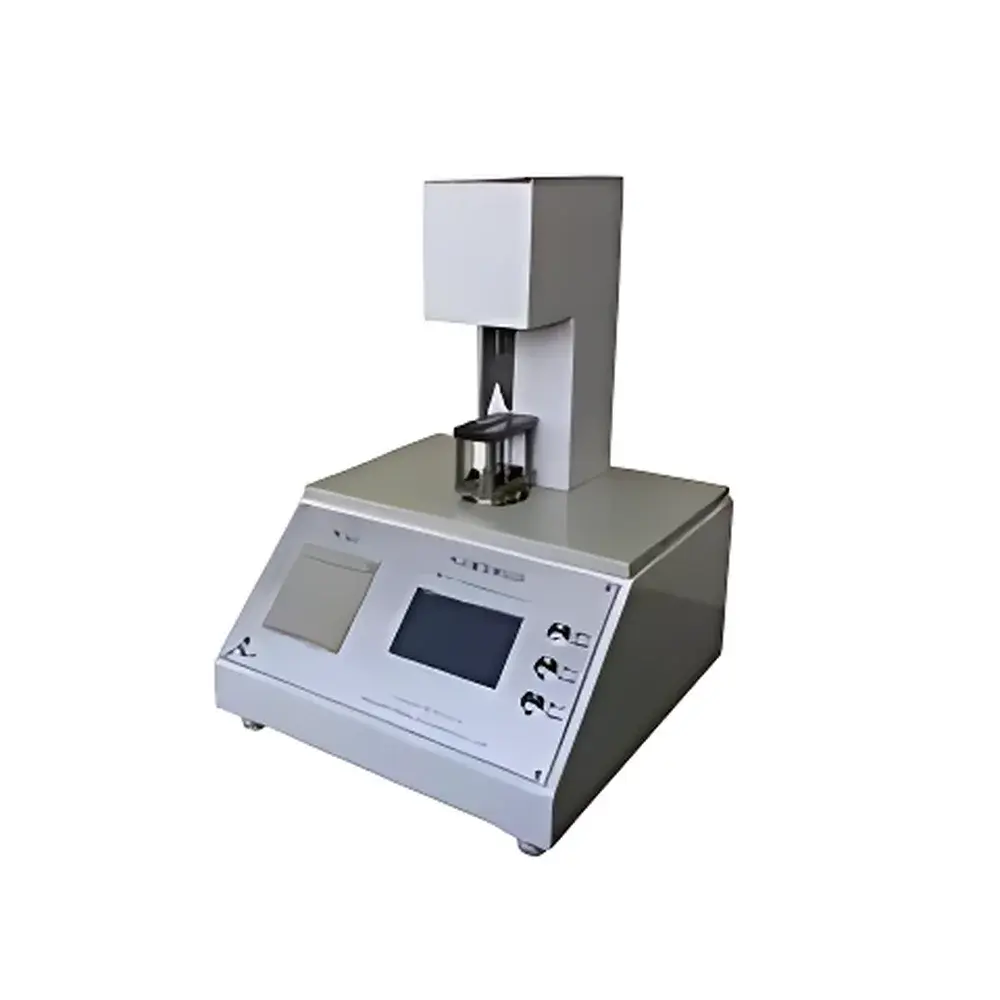
CLML3 Muscle Tenderness Analyzer for Food Quality Assessment
| Origin | Beijing, China |
|---|---|
| Manufacturer Type | Authorized Distributor |
| Origin Category | Domestic (PRC) |
| Model | CLML3 |
| Price Range | USD 1,400 – 7,000 |
| Measurement Range | 0–250 N (0–25 kgf) |
| Resolution | 0.01 N |
| Accuracy | ±1% FS |
| Shear Speed | Adjustable from 0.5 to 20 mm/s (Standard Test Speed: 1 mm/s) |
| Probe Diameter | 12.7 mm (0.5 in) |
| Blade Thickness | 3.0 ± 0.2 mm |
| Cutting Edge Included Angle | 60° |
| Triangular Notch Height | ≥35 mm |
| Anvil Slot Width | 4.0 ± 0.2 mm |
| Power Supply | 220 V AC, 50 Hz |
| Interface | RS-232 compliant |
Overview
The CLML3 Muscle Tenderness Analyzer is a precision mechanical testing instrument engineered for objective quantification of textural properties—primarily shear force—in meat and other solid food matrices. It operates on the principle of standardized single-bite shear testing, replicating the biomechanical action of human mastication via a calibrated cylindrical probe and a fixed-angle triangular blade. The device measures the peak force (in newtons or kilogram-force) required to sever a uniformly sized core sample (12.7 mm diameter, per NY/T 1180–2006) at a controlled displacement rate. This peak shear force serves as a validated proxy for sensory tenderness—a critical quality attribute directly correlated with myofibrillar protein degradation, intramuscular fat distribution, connective tissue solubility, and post-mortem aging kinetics. Designed for compliance with agricultural and food science protocols, the CLML3 delivers repeatable, operator-independent data essential for meat quality grading, breeding program evaluation, processing optimization, and regulatory documentation.
Key Features
- High-fidelity load cell with ±1% full-scale accuracy and 0.01 N resolution, calibrated traceably to national metrological standards
- Precision stepper motor drive coupled with ground-steel ball screw transmission, ensuring consistent shear speed control across the 0.5–20 mm/s range
- Integrated 7-inch capacitive touchscreen interface with real-time force–displacement curve visualization, automatic test initiation/termination, and on-device statistical summary (mean, SD, CV%)
- Rugged construction: anodized aluminum front panel, heat-treated alloy steel cutting blade (60° included angle, 3.0 ± 0.2 mm thickness), and hardened stainless steel anvil slot (4.0 ± 0.2 mm width)
- Comprehensive data output: built-in thermal micro-printer (ISO/IEC 19794-5 compliant), RS-232 serial port for bidirectional communication with LIMS or laboratory PCs, and dual-unit display (N / kgf)
- Includes certified 12.7 mm diameter coring tool (ASTM F2742–19 referenced geometry), pre-aligned to meet NY/T 1180–2006 sampling requirements
Sample Compatibility & Compliance
The CLML3 accommodates intact muscle tissue samples from beef, pork, lamb, poultry, and aquaculture species—as well as non-muscle solids including cooked cereals, baked goods, fruits, and vegetables—provided shear resistance falls within the 0–250 N operational envelope. All mechanical components conform to ISO 80000-4 (mechanics) and ISO/IEC 17025:2017 calibration traceability requirements. Test methodology aligns with NY/T 1180–2006 (“Determination of Meat Tenderness—Shear Force Method”), while hardware design supports alignment with ASTM E2163 (standard guide for sensory evaluation of meat tenderness) and ISO 11036 (sensory analysis—methodology—general guidance). Instrument validation protocols support GLP-compliant environments and FDA 21 CFR Part 11 audit trails when integrated with validated third-party data acquisition software.
Software & Data Management
The embedded firmware enables local storage of up to 500 test records with timestamp, sample ID, operator code, shear speed, and peak force metadata. Raw force–time datasets are exportable in CSV format via RS-232 to external systems running Windows-based analytical platforms (e.g., Excel, JMP, or custom Python/Pandas pipelines). Optional OEM software modules provide advanced features including automated outlier detection (Grubbs’ test), ANOVA-enabled group comparison, trend charting across batches, and PDF report generation compliant with internal QA templates. All data handling adheres to ICH E6(R3) principles for integrity and retrievability in regulated research settings.
Applications
- Quantitative assessment of post-rigor tenderness evolution during aging, marination, or enzymatic tenderization
- Objective ranking of genetic lines in livestock breeding programs targeting improved eating quality
- Validation of cooking protocols (e.g., sous-vide time/temperature matrices) against texture endpoints
- QC release testing for processed meat products (sausages, jerky, restructured steaks)
- Method development and cross-laboratory reproducibility studies under ISO 5725-2
- Teaching laboratories for food engineering, muscle biology, and sensory science curricula
FAQ
What standard does the CLML3 comply with for meat tenderness measurement?
It implements NY/T 1180–2006, the People’s Republic of China agricultural industry standard for shear force–based tenderness determination.
Can the instrument be used for non-meat food matrices?
Yes—its 0–250 N range and modular probe geometry support hardness and shear testing of fruits, cheeses, noodles, and baked goods per AOAC 985.29 and ASTM F2742–19 guidelines.
Is calibration documentation provided with the unit?
Each CLML3 ships with a factory calibration certificate referencing NIM (National Institute of Metrology, China) traceable standards, valid for 12 months under normal use conditions.
Does the system support automated data archiving in regulated environments?
When paired with validated third-party software, it supports 21 CFR Part 11–compliant electronic records, including user authentication, audit trails, and electronic signatures.
What maintenance is required to ensure long-term measurement stability?
Annual verification of load cell linearity and blade geometry (using certified gauge blocks and optical profilometry) is recommended; routine cleaning of the anvil slot and probe path prevents residue-induced hysteresis.