
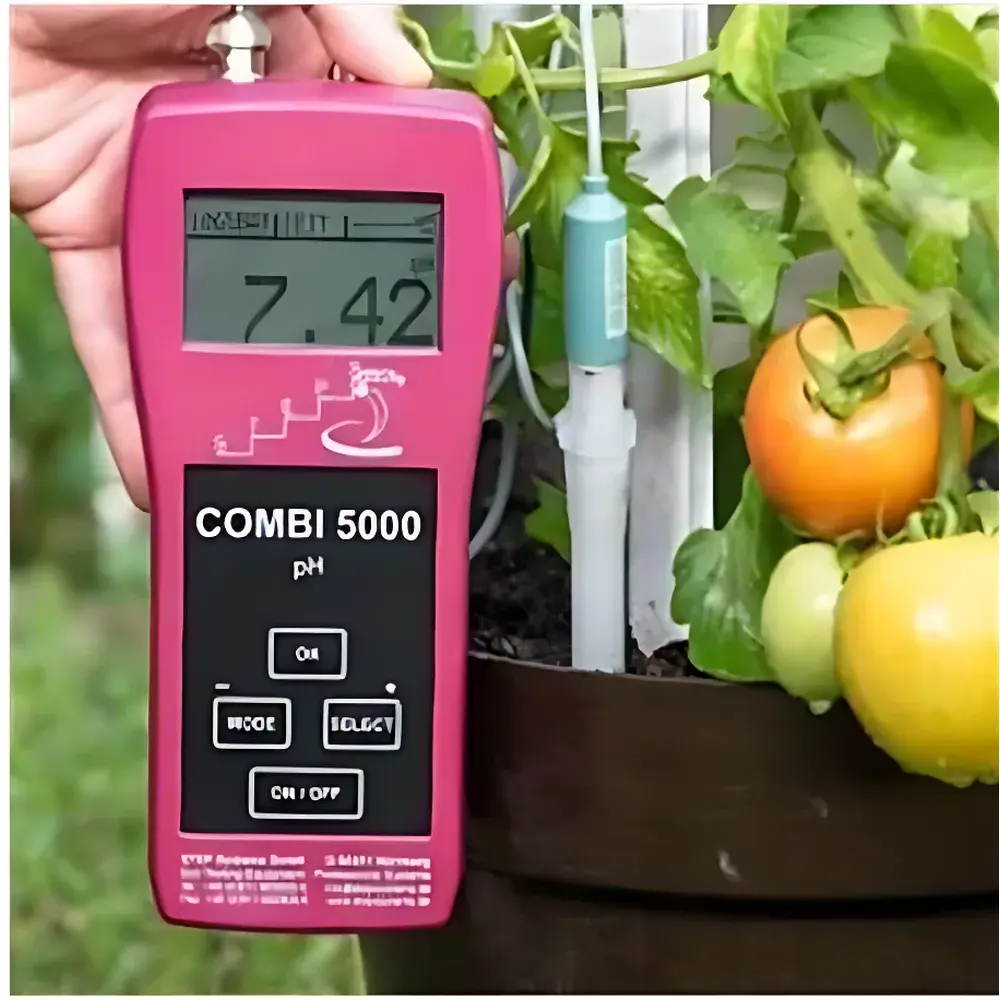
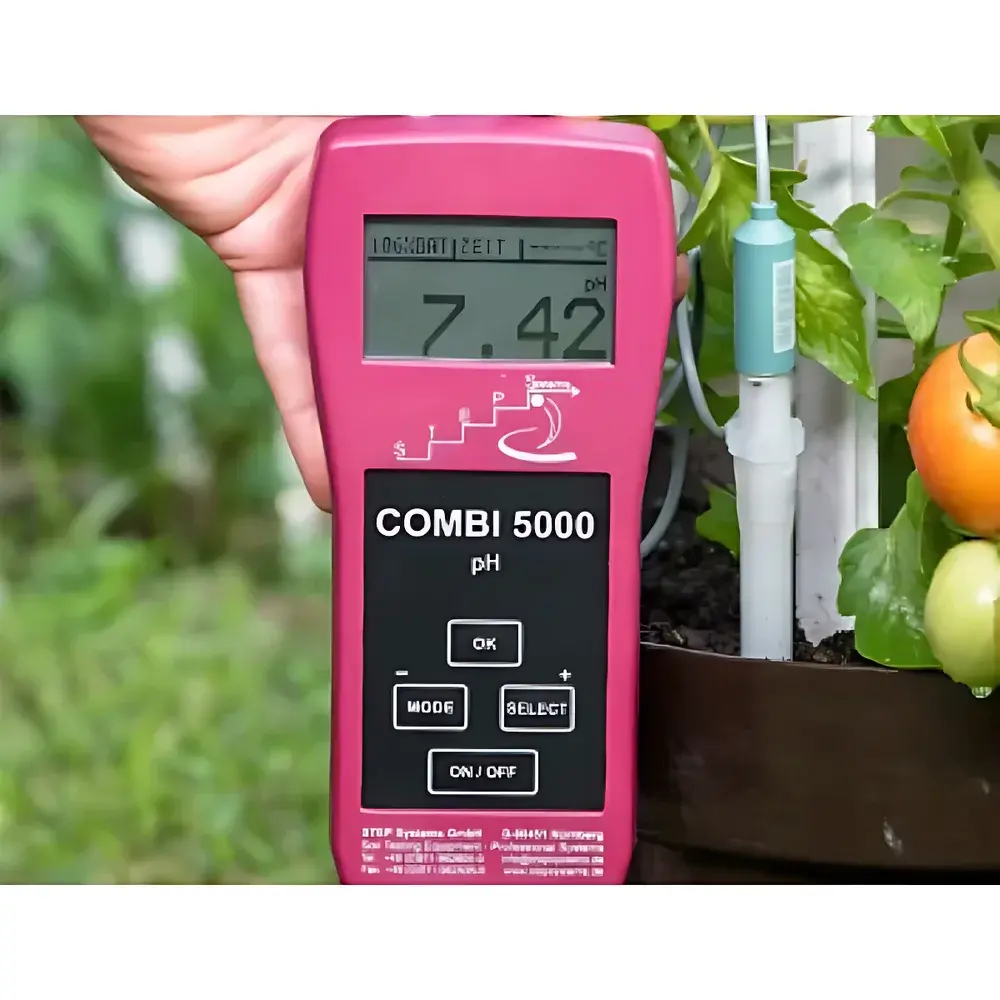
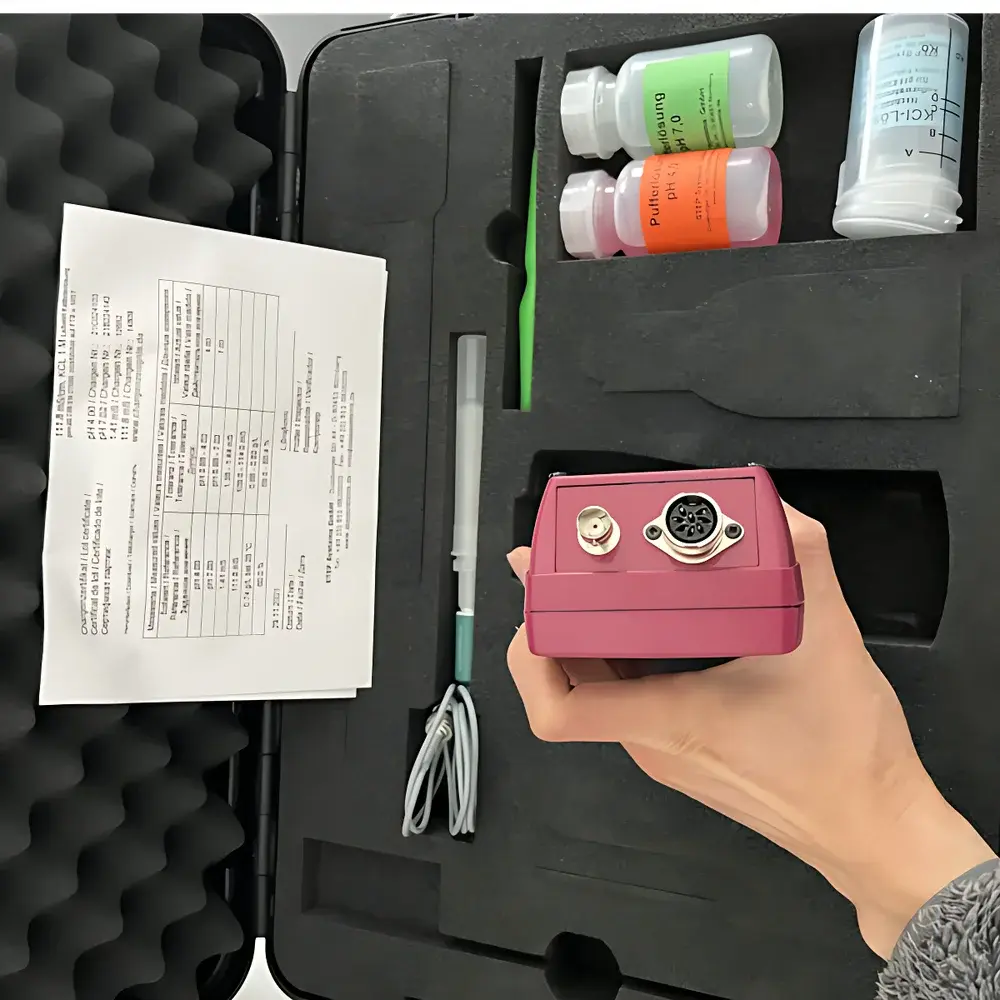
STEPS COMBI pH 5000 Portable Soil pH and Moisture Meter
| Brand | STEPS / STEP Systems GmbH |
|---|---|
| Origin | Germany |
| Model | PH5000 |
| Instrument Type | Multifunctional Soil Analyzer |
| pH Range | 0–14 |
| Resolution | 0.01 pH |
| Accuracy | ±0.02 pH |
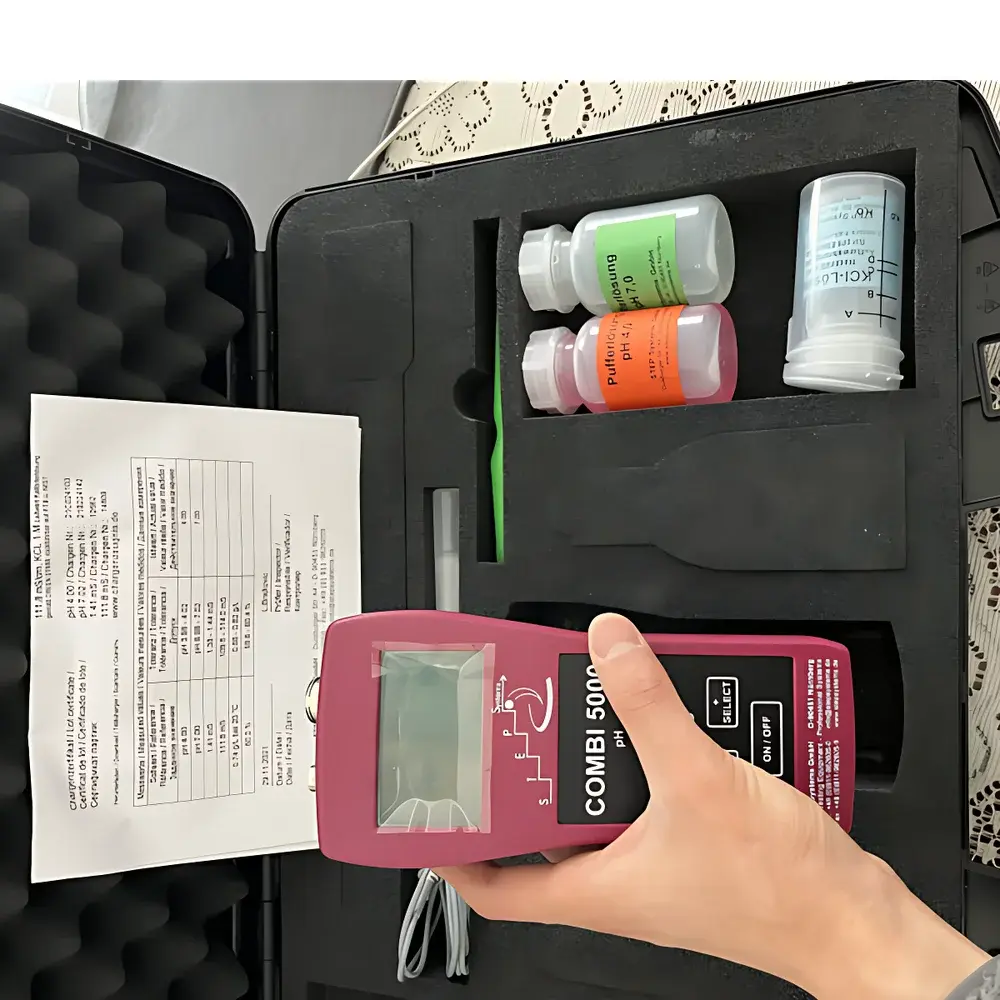
| Calibration | Automatic 2-point (pH 4.0 & 7.0) |
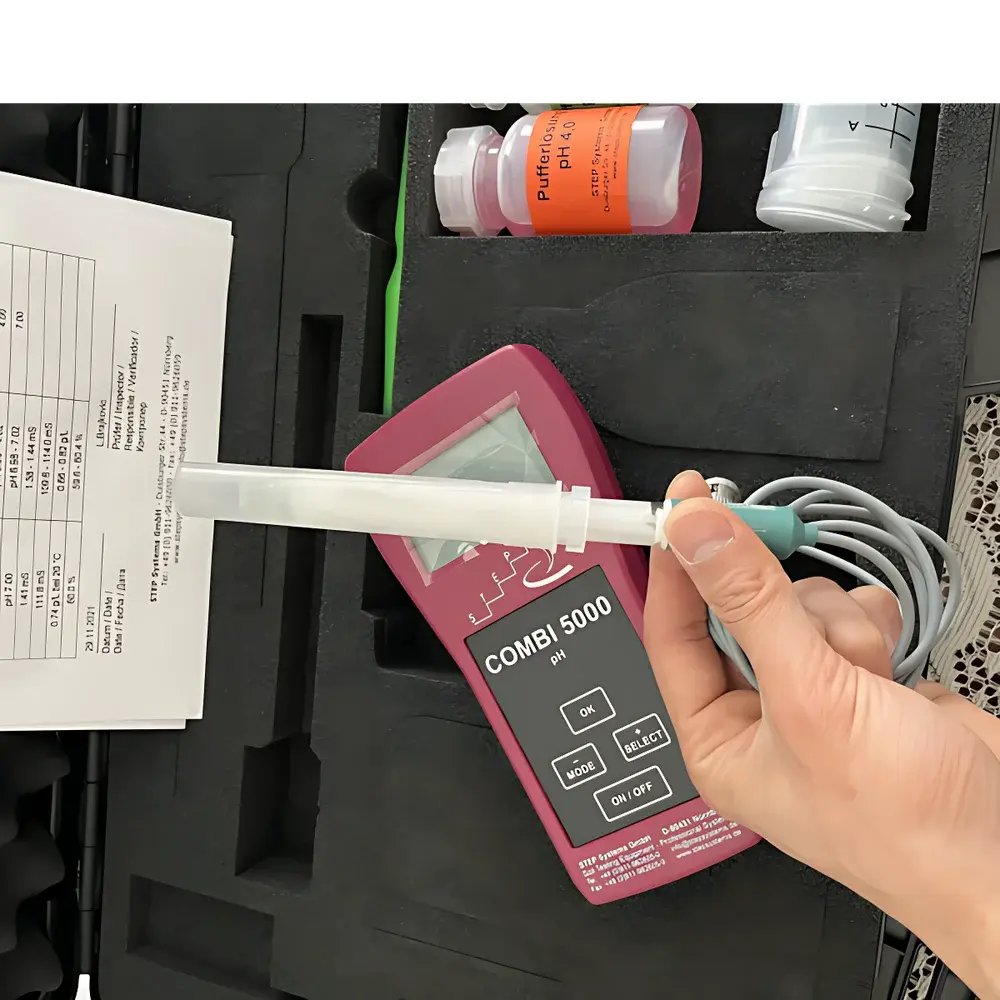
| Probe Type | Gel-filled Insertion Electrode with Triple Ceramic Junctions |
| Electrolyte Reservoir | Integrated 3 mol/L KCl Storage Chamber |
| Power Supply | 9 V battery (≥4000 measurements) |
| Housing | IP67-rated ruggedized waterproof enclosure |
| Dimensions | 180 × 85 × 50 mm |
| Weight | 280 g |
| Connector | BNC |
Overview
The STEPS COMBI pH 5000 is a field-deployable, high-precision portable meter engineered for in-situ measurement of soil pH and moisture—two critical parameters governing plant nutrient bioavailability, microbial activity, and long-term soil health. Unlike conventional benchtop pH meters requiring soil slurry preparation or extraction, the COMBI pH 5000 employs a direct-insertion glass electrode architecture optimized for heterogeneous, particulate-rich growth media. Its measurement principle follows the Nernst equation, where the potential difference between the pH-sensitive glass membrane and a stable reference system (Ag/AgCl in saturated KCl) is converted into a calibrated pH value. The triple-ceramic junction design ensures rapid ion exchange while minimizing clogging from soil colloids and organic matter—critical for reproducible readings in clay-, silt-, or organic-matter-rich substrates. The integrated KCl reservoir sustains electrolyte concentration over extended use, eliminating frequent refilling and preventing dilution-induced drift—a common failure mode in standard soil pH probes.
Key Features
- Gel-filled insertion-type pH electrode with triple ceramic junctions for enhanced durability, reduced fouling, and accelerated response time (t₉₀ < 15 s in moist loam)
- Integrated 3 mol/L KCl electrolyte storage chamber—maintains stable liquid junction potential without manual refilling for >12 months under typical field use
- Automatic 2-point calibration routine with dedicated push-button selection for pH 4.0 and pH 7.0 buffer solutions; visual stability indicator confirms endpoint convergence
- Rugged IP67-rated housing—resistant to dust ingress, rain exposure, and mechanical shock during transport and field deployment
- High-resolution display (0.01 pH) with ±0.02 pH accuracy across full 0–14 range, traceable to NIST-traceable buffer standards
- Built-in mV mode for diagnostic verification of electrode slope and asymmetry potential—enabling proactive sensor health assessment
- Low-battery indicator and energy-efficient circuitry supporting ≥4000 measurements per 9 V alkaline cell
Sample Compatibility & Compliance
The COMBI pH 5000 is validated for direct measurement in undisturbed mineral soils (sand to clay), peat-based substrates, coconut coir, perlite-vermiculite mixes, and hydroponic nutrient solutions. It complies with ISO 10390:2022 (soil quality — determination of pH) for field-use methodology equivalence when used per manufacturer protocol. While not certified for GLP or GMP environments, its calibration traceability, audit-ready calibration logs (via optional software interface), and stable electrode performance support data integrity requirements in agricultural research, greenhouse management, and environmental site assessments. The probe geometry and junction design meet ASTM D4972-21 criteria for pH measurement in coarse-textured soils.
Software & Data Management
The device operates as a standalone instrument but supports optional PC connectivity via USB-to-BNC adapter (sold separately) for raw mV and pH timestamped export. Firmware enables storage of up to 200 calibration events with date/time stamps, buffer IDs, and measured slope values—facilitating internal QA review and regulatory documentation. When integrated into larger farm management platforms (e.g., FarmLogic, Granular), exported datasets align with ISO 11783-10 (ISOBUS) metadata schemas. All calibration procedures adhere to principles outlined in USP Annex on environmental monitoring instrumentation qualification, particularly regarding frequency, documentation, and acceptance criteria.
Applications
- Real-time pH mapping of greenhouse beds and open-field plots to guide lime or sulfur amendment scheduling
- Monitoring substrate pH drift in container nurseries and vertical farms using peat or alternative growing media
- Validation of compost maturity and vermicompost buffering capacity prior to field application
- On-site assessment of acid sulfate soils in coastal reclamation projects
- Research-grade longitudinal studies of rhizosphere pH dynamics under variable irrigation or fertilizer regimes
- Extension service diagnostics for smallholder farmers addressing micronutrient deficiency symptoms (e.g., Fe chlorosis linked to pH > 7.2)
FAQ
How often should the electrode be cleaned and recalibrated in continuous field use?
Calibration is recommended before each daily measurement session; cleaning with deionized water and gentle brushing of the junction is advised after every 5–10 insertions into high-organic or high-clay soils.
Can the COMBI pH 5000 measure pH in dry or compacted soils?
Accurate measurement requires sufficient moisture (≥15% v/v) to establish ionic continuity; pre-wetting with ≤2 mL deionized water is acceptable if soil moisture falls below this threshold.
Is the triple-junction probe compatible with standard laboratory pH meters?
Yes—the BNC connector and standardized Ag/AgCl reference system ensure interoperability with any meter accepting high-impedance glass electrodes, though automatic calibration features are exclusive to the PH5000 host unit.
Does the device comply with FDA 21 CFR Part 11 for electronic records?
No—while calibration logs are stored internally, the PH5000 lacks user authentication, electronic signatures, or audit trail encryption required under Part 11; it is intended for non-GxP operational use.
What is the expected service life of the gel-filled electrode under routine agricultural use?
With proper storage in KCl solution and periodic junction cleaning, the probe maintains specification performance for ≥24 months or 500+ field insertions, per STEPS accelerated aging validation reports.







