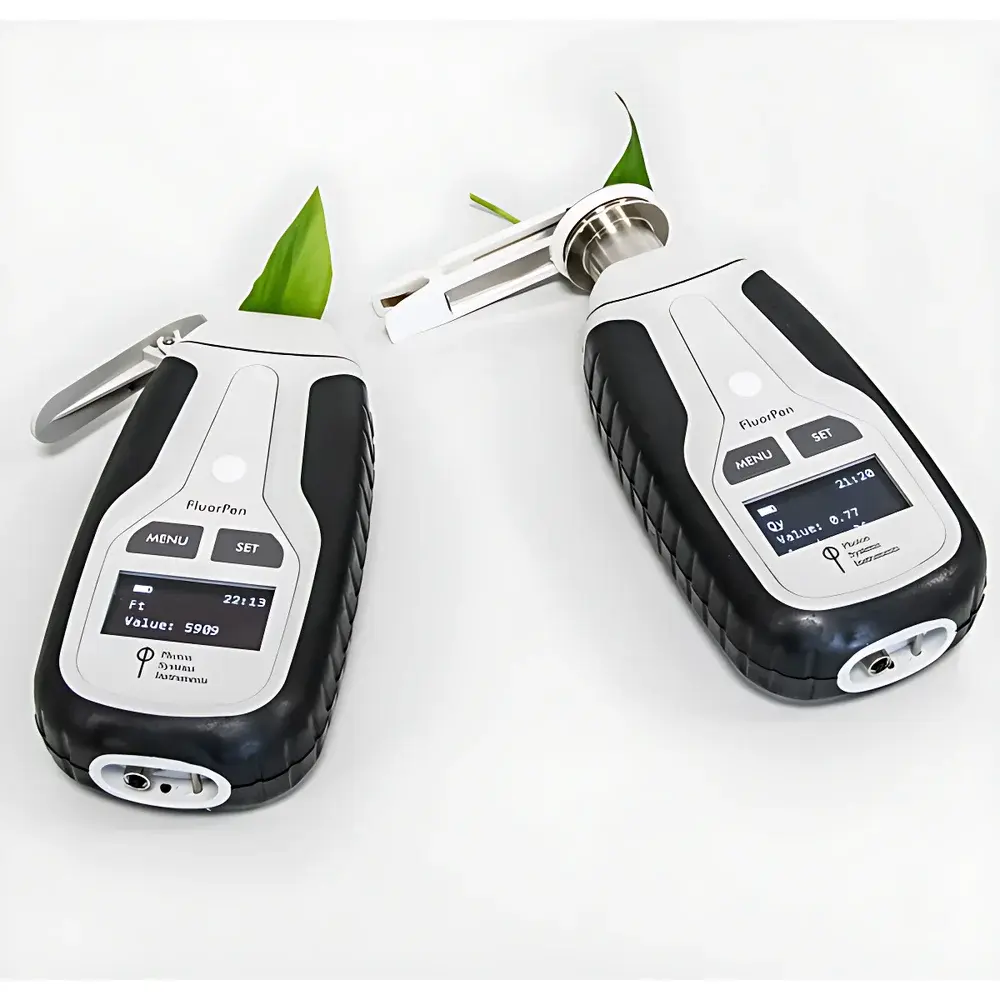
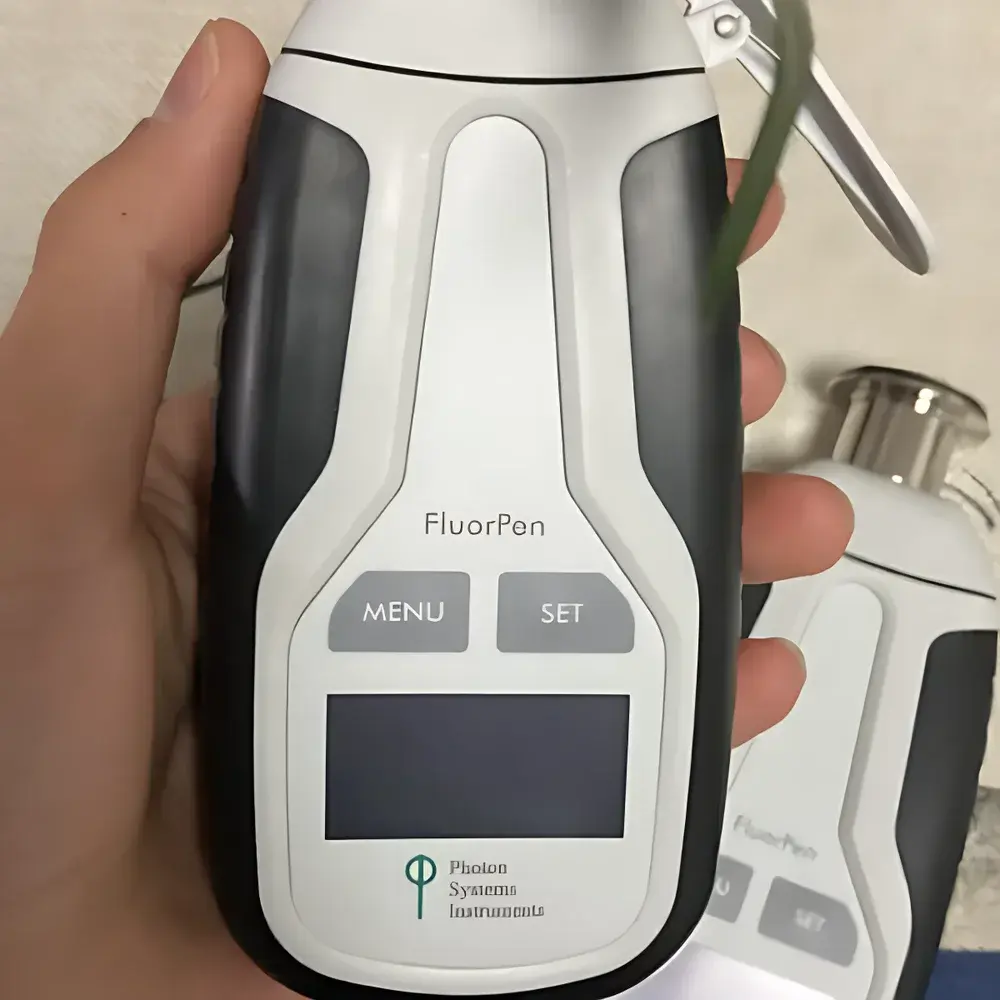
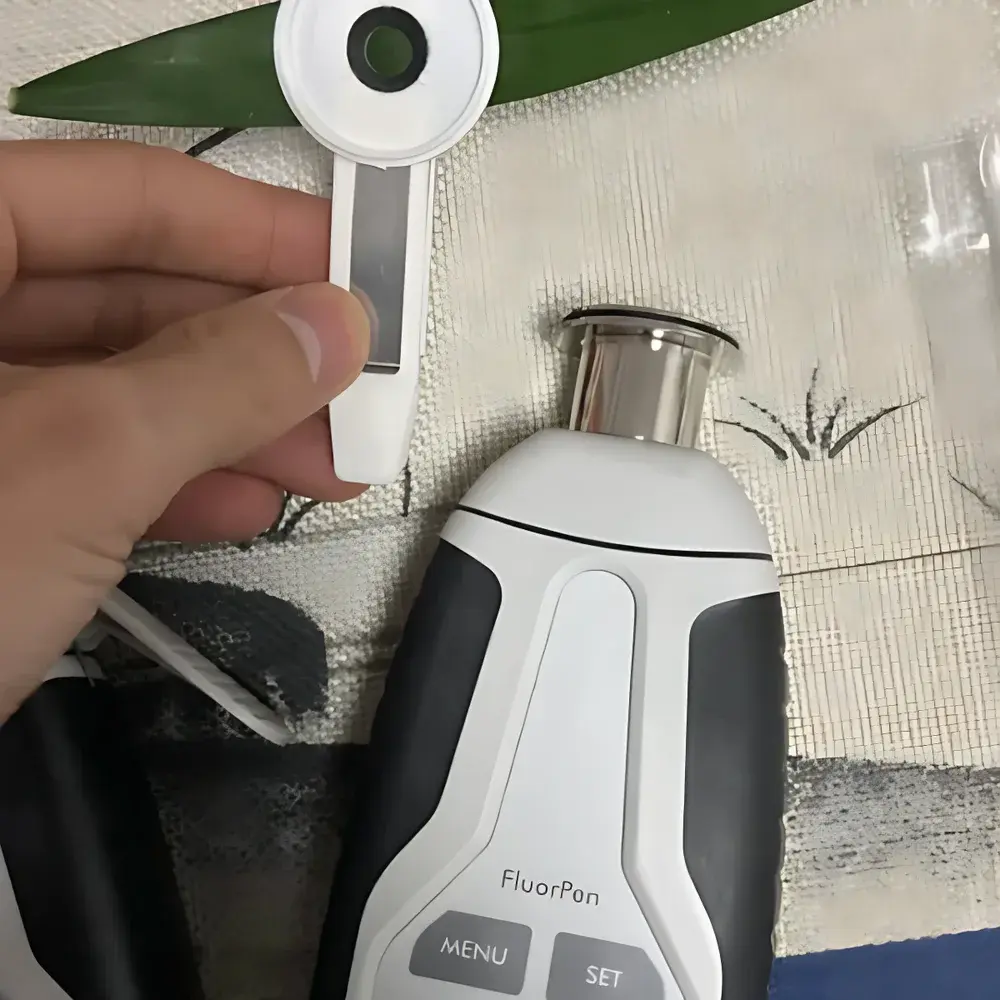
PSI FluorPen FP110 Handheld Chlorophyll Fluorometer
| Brand | PSI (Photon Systems Instruments) |
|---|---|
| Origin | Czech Republic |
| Model | FluorPen FP110 |
| Measurement Principle | Pulse-Amplitude-Modulated (PAM) Chlorophyll Fluorescence Detection |
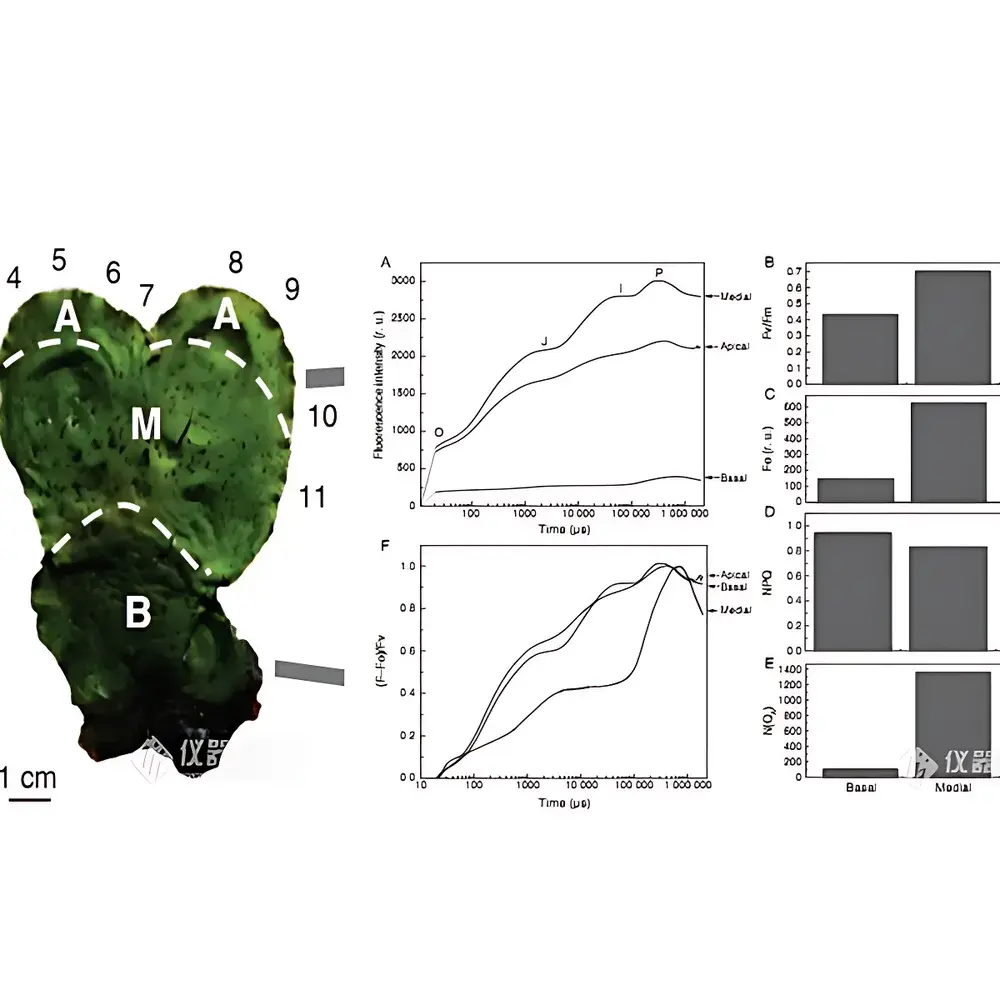
| Key Parameters | F₀, Fₘ, Fᵥ/Fₘ, ΦPSII, NPQ, QY_Ln/QY_Dn, OJIP kinetics (10 µs resolution), PAR (optional module) |
| Sample Interface | Interchangeable leaf clips (FP110/S, FP110/D, FP110/P, FP110/X) |
| Data Storage | Internal flash memory with timestamping |
| Connectivity | Bluetooth 4.2 + USB 2.0 + integrated GPS |
| Power | Rechargeable Li-ion battery (≥8 h continuous operation) |
| Weight | 188 g |
| Compliance | CE, RoHS, ISO/IEC 17025-compatible data acquisition architecture |
Overview
The PSI FluorPen FP110 Handheld Chlorophyll Fluorometer is a field-deployable, high-resolution instrument engineered for quantitative assessment of photosynthetic performance in vivo. It operates on the principle of pulse-amplitude-modulated (PAM) chlorophyll fluorescence detection, enabling non-invasive, real-time evaluation of Photosystem II (PSII) photochemical efficiency and regulatory dynamics. By applying precisely controlled saturating light pulses and measuring the resulting fluorescence induction kinetics—spanning microsecond-scale OJIP transients to minute-scale NPQ relaxation—the FP110 delivers physiologically resolved parameters critical for plant stress physiology, functional phenotyping, and ecotoxicological screening. Its compact monolithic design integrates LED excitation optics (450 nm blue), silicon photodiode detection, microcontroller-based signal processing, and embedded firmware implementing standardized fluorescence protocols per established conventions (e.g., Schreiber et al., 1995; Strasser et al., 2004). The device is calibrated traceably to NIST-traceable reference standards and supports GLP-aligned data integrity through hardware-enforced timestamping and GPS georeferencing.
Key Features
- Ultra-portable form factor (188 g) with integrated rechargeable Li-ion battery supporting ≥8 hours of continuous field operation
- 10 µs temporal resolution for OJIP transient acquisition—capturing 100,000 data points per second—with automated calculation of 26 biophysically interpretable OJIP-test parameters (e.g., Mo, Area, PIAbs, ABS/RC, ΦPo)
- Comprehensive protocol library: dual NPQ analysis routines (NPQ1/NPQ2), three programmable light-response curves (LC1–LC3), dark-adapted and light-adapted quantum yield (QYLn/QYDn), and multi-phase无人值守 monitoring sequences
- Dual-mode connectivity: Bluetooth 4.2 for real-time telemetry and remote triggering; USB 2.0 for bulk data export and firmware updates; integrated GPS module embedding spatial metadata into every fluorescence record
- Modular leaf clip system: FP110/S (fixed-clamp for high-throughput screening), FP110/D (split-clamp for strict dark adaptation), FP110/P (open-clamp for long-term chamber/greenhouse monitoring), and FP110/X (customizable interface for non-standard specimens)
- Firmware architecture compliant with ISO/IEC 17025 requirements for measurement uncertainty documentation and audit-ready data provenance
Sample Compatibility & Compliance
The FP110 accommodates intact leaves from angiosperms, gymnosperms, ferns, and bryophytes across diverse morphologies—from thin epidermal layers of Arabidopsis thaliana to thick, waxy leaves of Olea europaea. Clip interfaces ensure uniform illumination geometry and minimal pressure-induced artifacts. For regulatory applications—including OECD 201 (algal growth inhibition) and ISO 14442 (terrestrial plant toxicity testing)—the instrument satisfies data integrity prerequisites under FDA 21 CFR Part 11 when paired with PSI’s validated FluorPen Control Software v4.x, which enforces electronic signatures, audit trails, and role-based access control. All fluorescence parameters adhere to IUPAC-recommended nomenclature (Lazár, 2015) and are traceable to the JIP-test formalism for OJIP interpretation.
Software & Data Management
FluorPen Control Software (Windows/macOS) provides full instrument control, real-time visualization, and post-acquisition analysis. It supports batch processing of OJIP datasets using standardized normalization algorithms, generates publication-ready plots (Fv/Fm heatmaps, NPQ relaxation overlays, LC-derived electron transport rate [ETR] curves), and exports tabular data in CSV/Excel formats compatible with R, Python (Pandas/NumPy), and MATLAB workflows. Raw binary files (.fpd) retain full 16-bit resolution and include embedded metadata (GPS coordinates, ambient PAR, temperature, operator ID). Software validation packages—including IQ/OQ documentation, test scripts, and deviation logs—are available for GxP environments requiring documented compliance.
Applications
- Photosynthetic phenotyping in crop breeding programs: quantifying genotype-specific PSII resilience under drought, heat, or salinity stress
- Mode-of-action studies for herbicides targeting PSII (e.g., triazines, ureas) via dose–response analysis of Fv/Fm suppression
- Ecotoxicological biomonitoring: detecting sublethal phytotoxicity from heavy metals, PAHs, or pharmaceutical residues in soil/water using sensitive species (e.g., Lemna minor, Brassica rapa)
- Mutant screening pipelines: high-throughput identification of chloroplast biogenesis or repair-defective lines based on aberrant OJIP kinetics
- Forest health assessment: spatial mapping of chronic ozone or nitrogen deposition effects via transect-based Fv/Fm surveys
- Teaching laboratories: hands-on instruction in plant bioenergetics, photoinhibition mechanisms, and environmental physiology principles
FAQ
What is the minimum leaf thickness the FP110 can reliably measure?
The FP110 achieves optimal signal-to-noise ratio on leaves ≥0.1 mm thick. Thinner tissues (e.g., young Arabidopsis cotyledons) require FP110/D split-clamp configuration to prevent compression artifacts.
Does the instrument support dark adaptation timing verification?
Yes—built-in dark-adaptation timer (0–60 min adjustable) triggers automatic F₀ measurement upon completion; optional external IR sensor integration validates ambient light exclusion.
Can OJIP data be exported for third-party kinetic modeling?
Raw OJIP time-series (t, Ft) are exportable as ASCII matrices with microsecond timestamps, fully compatible with kinetic modeling tools such as KinTek Explorer or COPASI.
Is PAR measurement available on all FP110 units?
PAR sensing is an optional hardware module (FP110-PAR); standard units report relative irradiance only. Calibration certificates for PAR modules are supplied with NIST-traceable spectral responsivity data.
How is measurement reproducibility ensured across operators?
Standardized clip pressure (0.3–0.5 MPa), fixed LED–detector distance (8 mm), and auto-zeroing prior to each measurement minimize inter-user variability; intra-instrument CV for Fv/Fm is ≤1.2% (n=30, Zea mays leaf discs).