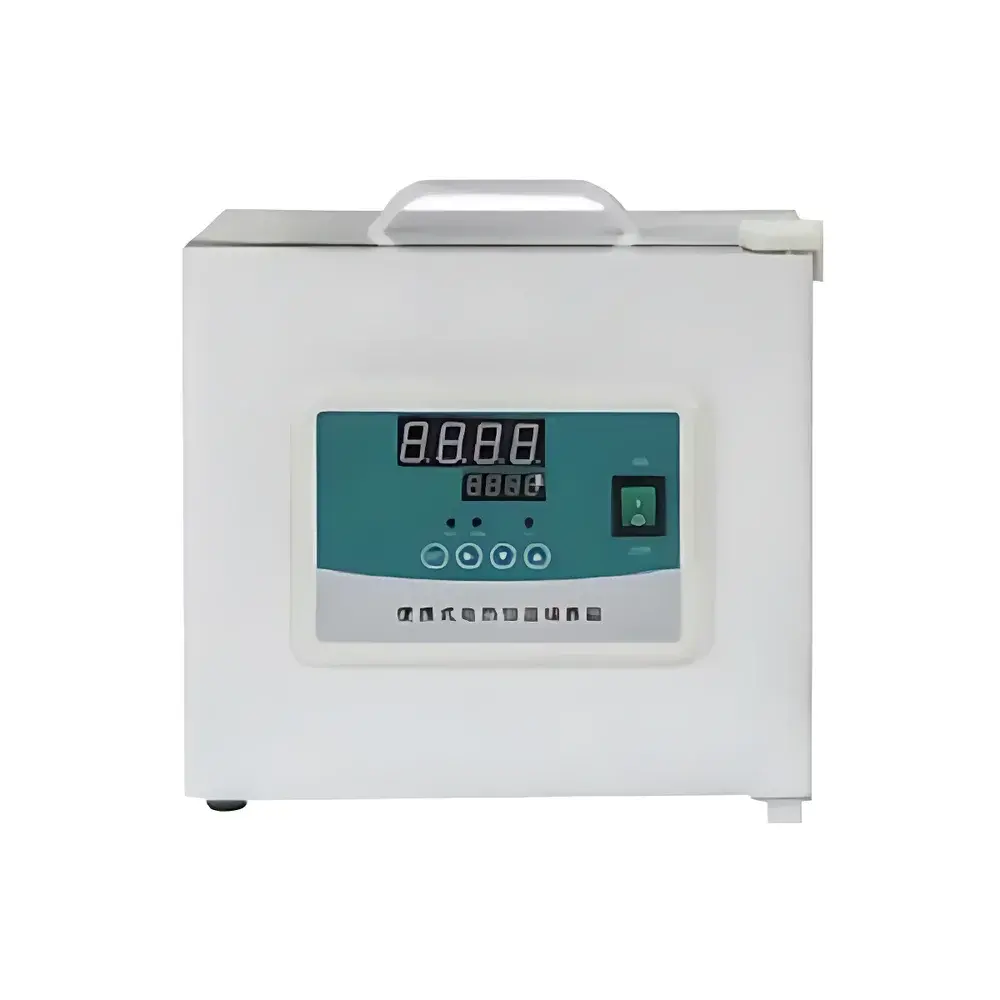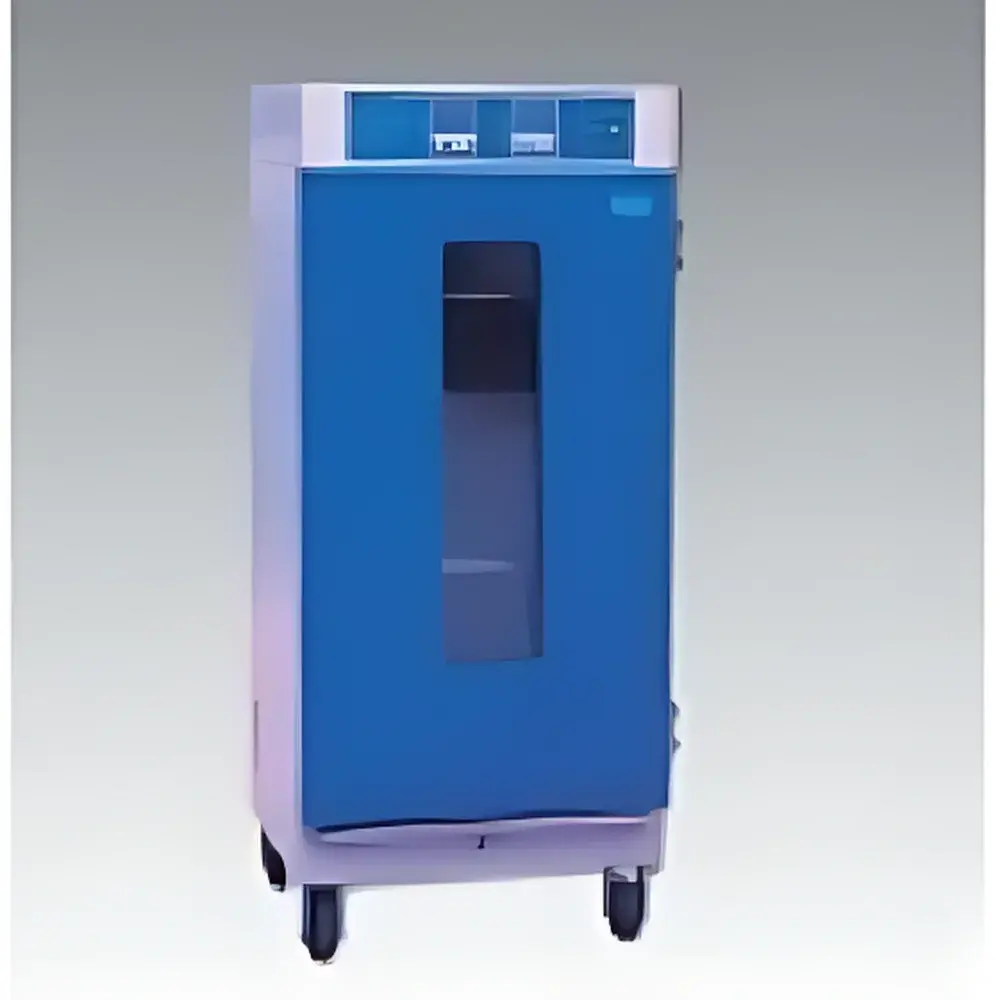
Hebei HOP MJ-150-I Mold Incubator
| Brand | Hebei HOP |
|---|---|
| Origin | Shandong, China |
| Model | MJ-150-I |
| Temperature Range | 0–60°C |
| Temperature Uniformity | ±0.5°C |
| Humidity Range | 20–50% RH |
| Capacity | 150 L |
| Temperature Resolution | 0.1°C |
| Power Supply | 220 V, 50 Hz |
| Input Power | 630 W |
| Internal Dimensions (W×D×H) | 530 × 510 × 950 mm |
| External Dimensions (W×D×H) | 620 × 770 × 1480 mm |
| Standard Shelving | 4 adjustable stainless steel shelves |
| Timer Range | 1–9999 minutes |
| Refrigerant | R134a (CFC-free) |
Overview
The Hebei HOP MJ-150-I Mold Incubator is a precision-controlled, forced-air environmental chamber engineered for reliable long-term cultivation of filamentous fungi, yeasts, and other moisture-sensitive microorganisms under defined temperature and humidity conditions. Designed in accordance with ISO 21527-1 (microbiological methods for yeasts and molds), this incubator maintains stable thermal environments critical for fungal colony development, mycotoxin production studies, pharmaceutical stability testing (ICH Q1A), and BOD₅ incubation per ASTM D5210 and EPA Method 405.1. Its microprocessor-based PID temperature control system ensures setpoint accuracy within ±0.1°C resolution and operational stability at ±0.5°C uniformity across the 150 L working volume—validated under ISO 14644-1 Class 8 cleanroom ambient conditions (20°C, 50% RH). The unit employs R134a refrigerant, compliant with Montreal Protocol Annex A, Group II requirements for ozone-depleting potential (ODP = 0) and low global warming potential (GWP = 1430).
Key Features
- Microcomputer-controlled digital temperature regulator with programmable timer (1–9999 min), enabling unattended operation for extended incubation cycles including 5-day BOD assays.
- High-gloss mirror-finish stainless steel interior (AISI 304) with seamless semi-circular corners and removable, height-adjustable shelving—facilitating ISO 13485-compliant cleaning validation and residue removal per USP <1058>.
- Double-layer tempered glass observation window with anti-fog coating, providing real-time visual monitoring without compromising thermal integrity or introducing external contamination.
- Dual-stage safety architecture: independent mechanical high-limit thermostat (adjustable up to 65°C) plus electronic over-temperature cut-off—meeting IEC 61010-1 Clause 6.4.2 for laboratory equipment protection.
- Forced-air convection system with rear-mounted fan and optimized baffle design ensures uniform airflow distribution, minimizing vertical/horizontal thermal gradients (<0.3°C deviation at 37°C).
Sample Compatibility & Compliance
The MJ-150-I accommodates standard microbiological formats including Petri dishes (90 mm and 150 mm), slant tubes, multi-well plates (up to 96-well), and Erlenmeyer flasks (≤500 mL). Its humidity control range (20–50% RH) supports growth of xerophilic molds such as Aspergillus restrictus, Wallemia sebi, and Penicillium chrysogenum without condensation-induced cross-contamination. The chamber complies with GLP documentation requirements for audit trails when equipped with optional RS485 interface and certified data logging software. All electrical components meet CE marking directives (2014/30/EU EMC, 2014/35/EU LVD), and the cabinet structure conforms to IP20 ingress protection per IEC 60529.
Software & Data Management
While the base configuration features standalone operation, optional accessories extend traceability and regulatory readiness: an RS485 serial interface enables integration with LabVantage LIMS or Thermo Fisher SampleManager via Modbus RTU protocol; certified printer output provides timestamped hard-copy records compliant with FDA 21 CFR Part 11 §11.10(a) for electronic signatures. The optional intelligent program controller supports up to 30 segmented temperature profiles—essential for simulating seasonal humidity stress in plant pathogen studies (e.g., Fusarium graminearum sporulation kinetics per EPPO PM 7/113(4)).
Applications
- Regulatory microbiological testing: mold enumeration in food (ISO 21527-2), cosmetics (ISO 18416), and pharmaceutical water systems (USP <1111>).
- Environmental monitoring: air and surface sampling analysis per ISO 14698-1, including settle plate incubation at 25°C/75% RH for viable particle assessment.
- Antifungal susceptibility testing (AFST) using CLSI M38-A3 guidelines, where precise 35°C ± 0.5°C maintenance is required for Aspergillus MIC determination.
- Biochemical oxygen demand (BOD5) incubation at 20°C ± 0.5°C for wastewater compliance (ISO 5815-1, APHA 5210B).
- Plant pathology research: spore germination assays and host–pathogen interaction studies under controlled hygrometric conditions.
FAQ
What is the maximum allowable ambient temperature for continuous operation?
The unit is rated for uninterrupted use at ambient temperatures between 5°C and 35°C, as specified in IEC 60068-2-1 and IEC 60068-2-2 test conditions.
Can the incubator maintain humidity below 20% RH?
No—the minimum factory-calibrated humidity setpoint is 20% RH, consistent with ISO 8573-1 Class 4 compressed air dew point equivalency for fungal growth inhibition studies.
Is the R134a refrigerant compatible with GMP cleanroom HVAC systems?
Yes—R134a exhibits zero ozone depletion potential and is approved for use in ISO Class 5–8 environments per EU F-Gas Regulation (EU) No 517/2014 Annex III.
Does the standard model include data logging capability?
No—data recording requires the optional RS485 interface and third-party SCADA-compatible software; internal memory is not provided in the base configuration.
Are calibration certificates available for IQ/OQ/PQ validation?
Yes—NIST-traceable temperature and humidity calibration reports (per ISO/IEC 17025) are available upon request, supporting equipment qualification under Annex 15 of the EU GMP Guidelines.
Related Products