English Product Name
| Brand | Jihepu |
|---|---|
| Origin | Shandong, China |
| Manufacturer Type | Authorized Distributor |
| Country of Origin | China |
| Model | EX21 |
| Price Range | USD 2,800–7,000 (FOB) |
| Instrument Type | Upright Biological Microscope |
| Optical Design | Infinity-Corrected Achromatic Optics |
| Eyepiece Diopter Adjustment | ±5 D |
| Interpupillary Distance Range | 47–75 mm |
| LED Illumination | 3 W, Adjustable Brightness, Color Temperature Options (Cold: 4750–5500 K |
| Warm | 2850–3250 K) |
| Condenser | N.A. 1.25 Abbe Condenser with Centering Mechanism and Modular Slot for Phase Contrast/Darkfield Accessories |
| Focus Mechanism | Coaxial Coarse/Fine Drive, 25 mm Travel, 2 µm Fine Adjustment Resolution |
| Stage | 150 × 140 mm or 150 × 162 mm Dual-Layer Mechanical Stage, 76 × 50 mm Travel Range, 0.1 mm Positioning Accuracy |
| Objective Mount | Internal-Positioning 4- or 5-Position Revolving Nosepiece |
| Camera Adapter Options | 0.35× / 0.5× / 0.65× / 1.0× C-Mount Tube with Focusing Capability |
Overview
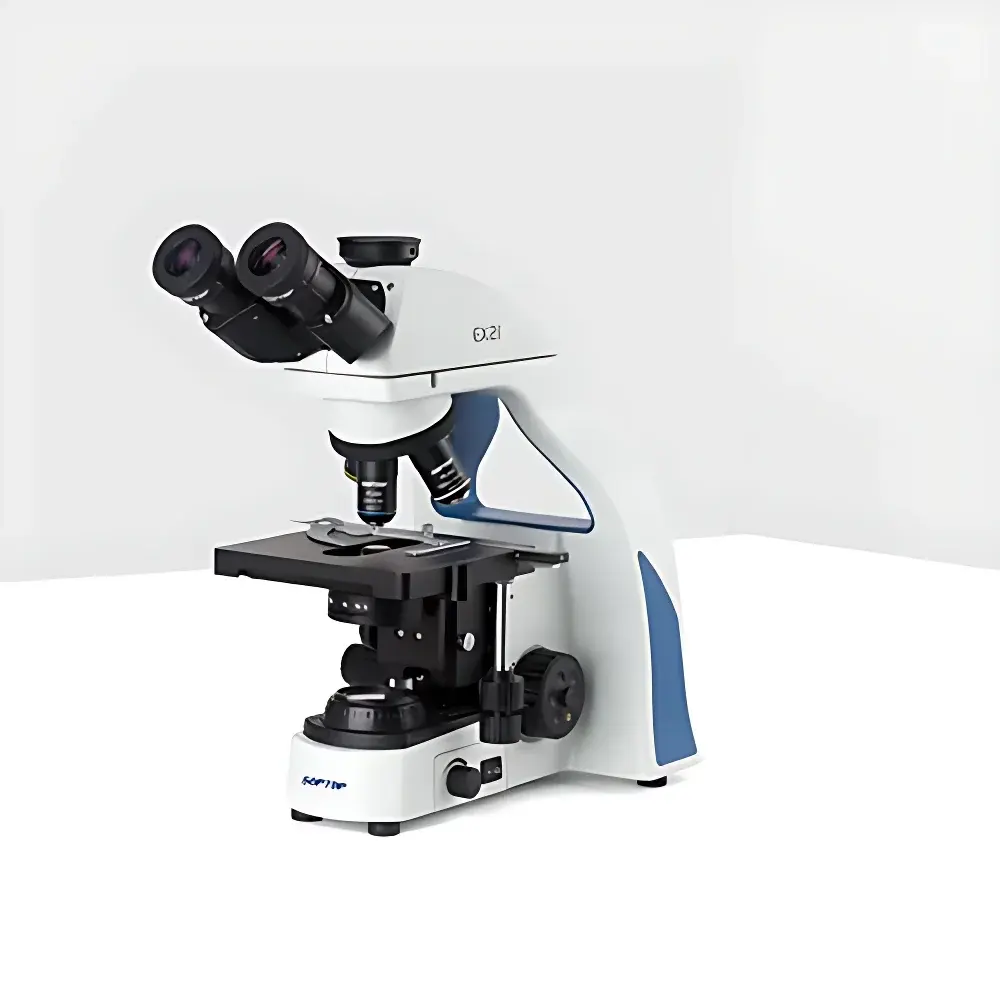
The Jihepu EX21 is an upright biological microscope engineered for routine laboratory use in academic teaching, clinical histology, and basic life science research. It employs an infinity-corrected achromatic optical system—compliant with ISO 10934-1 standards for microscope optical performance—to ensure high-fidelity image formation across the entire field of view. The instrument utilizes a fixed 30° inclined binocular or trinocular observation tube with an exceptionally wide interpupillary adjustment range (47–75 mm), accommodating users with diverse anthropometric profiles—including students, educators, and technicians wearing corrective eyewear. Its optical path supports both transmitted-light brightfield imaging and modular contrast enhancement techniques including phase contrast and darkfield, enabled by a pre-centered Abbe condenser (N.A. 1.25) featuring standardized accessory slots per DIN 58893. Designed for durability and pedagogical integrity, the EX21 integrates anti-tamper mechanical features—such as recessed eyepiece housings and non-removable lens retention—to mitigate improper handling during student instruction.
Key Features
- Ergonomic dual-port observation system: 30° inclined hinge-mounted binocular or trinocular head with continuously adjustable interpupillary distance (47–75 mm) and diopter compensation (±5 D) on both eyepieces.
- High-eye-point wide-field plan achromatic eyepieces: PL10×/18 mm and PL10×/20 mm options, each with individual focus and rubber eyecups to reduce ambient light leakage.
- Comprehensive objective suite: Six standard infinity-corrected achromatic objectives (4×, 10×, 20×, 40×, 60×, 100× oil) plus optional phase contrast objectives (10×, 20×, 40×, 100× oil), all optimized for flat-field correction and chromatic aberration control.
- Precision mechanical stage: 150 × 140 mm or 150 × 162 mm dual-layer composite platform with dual specimen clips, 76 × 50 mm travel range, and 0.1 mm vernier-scale positioning accuracy—available with either triangular rail guidance or single-axis linear rail drive.
- Stable coaxial focusing system: Low-positioned coarse/fine focus knob with 25 mm vertical travel, 2 µm fine-focus increment resolution, upper limit stop, and tension-adjustable mechanism to prevent drift during extended observation sessions.
- Adaptive LED illumination: Single 3 W high-CRI LED light source with continuous intensity control, auto-centering optics, and selectable color temperature (cold white: 4750–5500 K; warm white: 2850–3250 K), powered by universal 100–240 V AC input.
Sample Compatibility & Compliance
The EX21 accommodates standard glass microscope slides (76 × 26 mm) and coverslips (0.13–0.17 mm thickness) across all magnification ranges. Its condenser design permits rapid interchange of contrast modules—including phase contrast annuli and darkfield stops—without realignment, supporting compliance with ASTM E2016 (Standard Guide for Microscopical Examination of Biological Specimens) and ISO 8578 (Microscopes — Requirements for Light Microscopes). The mechanical stage’s corrosion-resistant surface treatment and sealed optical housing meet IP20 environmental protection requirements for typical indoor laboratory conditions. While not certified for GMP or FDA 21 CFR Part 11 environments, its stable illumination output and reproducible focus mechanics support GLP-aligned documentation workflows when paired with validated digital imaging accessories.
Software & Data Management
The EX21 is fully compatible with third-party microscopy software platforms—including ImageJ/Fiji, Olympus cellSens, and Zeiss ZEN—via standard C-mount camera adapters (0.35×, 0.5×, 0.65×, and 1.0× magnification options). All camera tubes incorporate integrated focusing mechanisms to maintain parfocality with the visual path. Optional polarizing components (linear polarizer/analyzer sets) and interference filters (e.g., 450 nm excitation, 520 nm emission) enable basic fluorescence screening when used with external LED excitation sources. Digital acquisition workflows may be audited via timestamped metadata embedding when connected to compliant USB 3.0 cameras, satisfying basic traceability requirements for educational and quality-control applications.
Applications
- Undergraduate and graduate histology laboratories: Routine staining evaluation (H&E, Masson’s trichrome, PAS), cell morphology analysis, and mitotic index quantification.
- Clinical pathology support: Preliminary tissue section review, cytology slide screening, and microbiological smear examination (Gram stain, acid-fast bacilli).
- Plant and animal physiology labs: Live-cell observation using phase contrast (e.g., unstained protozoa, epithelial monolayers), root tip meristem studies, and pollen grain morphology.
- Industrial QC settings: Inspection of biofilm formation on medical device surfaces, particulate contamination in sterile packaging, and fungal hyphae identification in pharmaceutical raw materials.
- Research preparation: Slide digitization for annotation, comparative morphometrics, and training dataset curation in AI-assisted image classification projects.
FAQ
Is the EX21 suitable for oil immersion imaging?
Yes—the 100× objective is designed for use with standard Type A immersion oil (n = 1.515) and achieves optimal resolution at N.A. 1.25 when paired with the Abbe condenser.
Can the microscope be upgraded to support fluorescence imaging?
Fluorescence capability requires external excitation sources and filter cubes; the EX21 provides mechanical and optical compatibility via its C-mount port and optional polarizer/filter holder inserts—but does not include built-in epi-illumination.
What is the warranty coverage for academic institutions?
Jihepu offers a standard 24-month limited warranty covering parts and labor for defects in materials and workmanship under normal laboratory use, extendable to 36 months with annual service contract enrollment.
Does the EX21 meet CE or UL safety certification requirements?
The unit complies with IEC 61010-1:2010 for electrical safety in laboratory equipment and carries CCC certification for the Chinese market; CE marking is available upon request for EU-bound units with accompanying Declaration of Conformity.
Are replacement objectives and eyepieces available through international distributors?
All optical components adhere to RMS (Royal Microscopical Society) thread standards (20.32 mm diameter, 0.4 mm pitch) and are available globally through authorized Jihepu distribution partners with lead times of 4–6 weeks.