
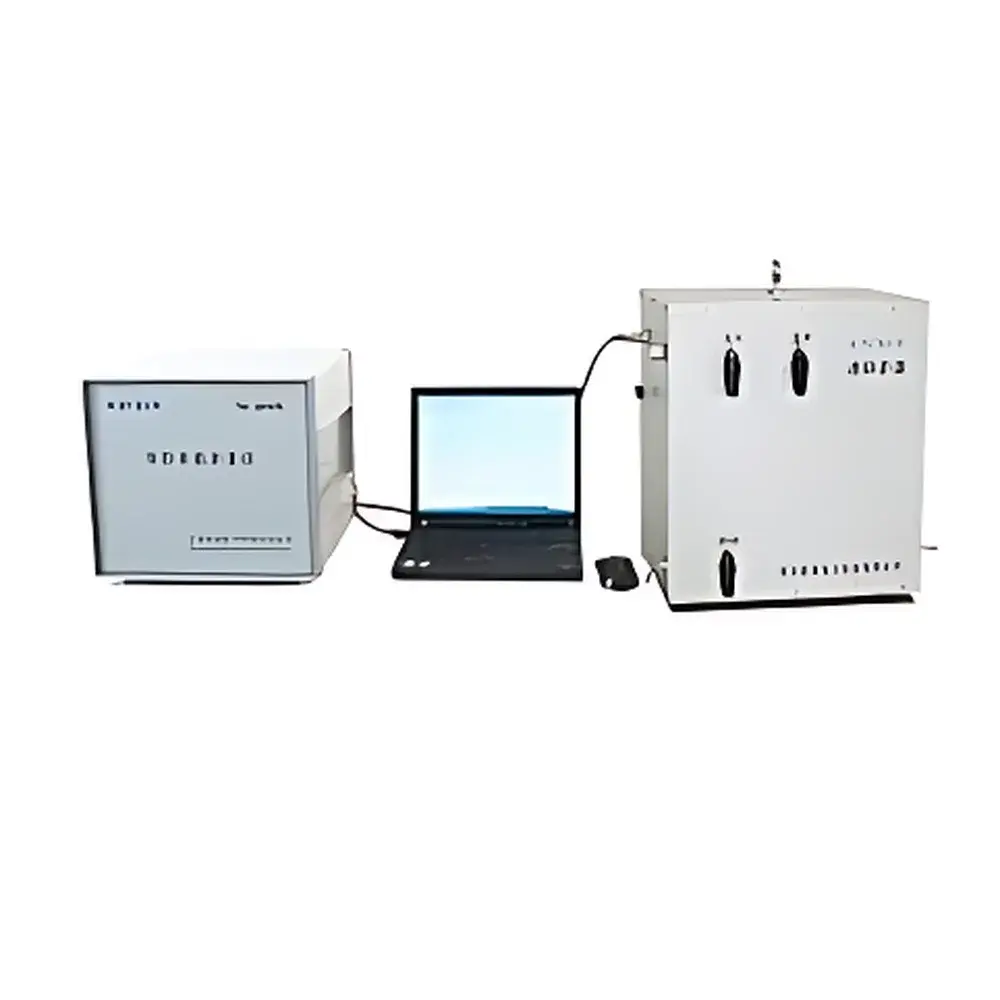
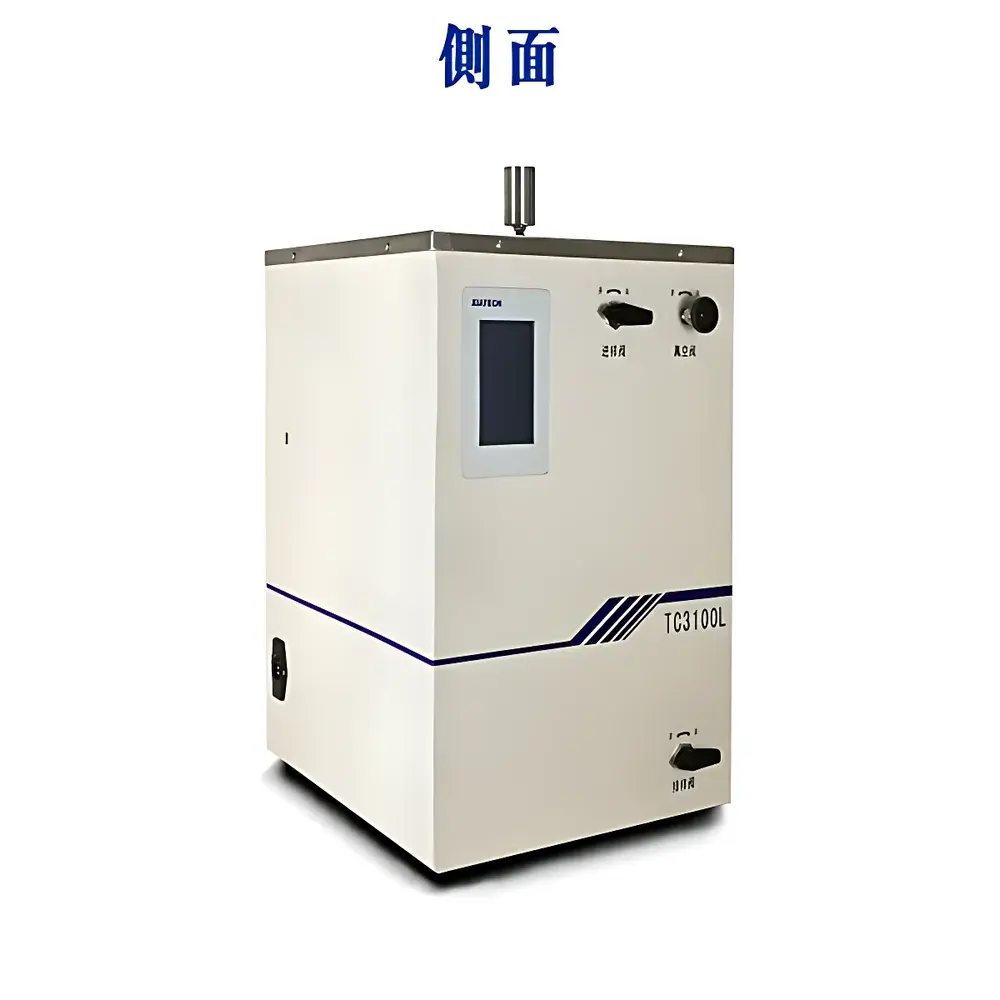
XIATECH TC3100L Low-Temperature Liquid Thermal Conductivity Analyzer
| Brand | XIATECH |
|---|---|
| Model | TC3100L |
| Measurement Principle | Transient Hot-Wire Method |
| Temperature Range | −30 to 100 °C |
| Pressure Rating | Up to 15 MPa |
| Thermal Conductivity Range | 0.0005–5 W/(m·K) |
| Accuracy | ±2% |
| Repeatability | ±2% |
| Resolution | 0.0001 W/(m·K) |
| Sample Volume | ≥40 mL |
| Measurement Time | ≤2 s |
| Test Atmosphere | Air, Vacuum, or Controlled Gas |
| Compliance | ASTM D2717, ASTM D7896 |
| Dimensions (L×W×H) | 55 cm × 50 cm × 65 cm |
Overview
The XIATECH TC3100L is a precision-engineered thermal conductivity analyzer specifically designed for the accurate and rapid characterization of liquid-phase materials under low-temperature and high-pressure conditions. It implements the transient hot-wire (THW) method—a well-established, primary-standard technique standardized in ASTM D2717 and ASTM D7896—where a thin metallic wire serves both as heater and resistance thermometer. Upon application of a constant current pulse, the wire’s temperature rise is monitored via its electrical resistance change; thermal conductivity is derived from the slope of the ln(ΔT) vs. time curve in the linear regime, independent of convection effects when measurement duration is sufficiently short (≤2 s). This physical principle ensures high intrinsic accuracy and minimal sensitivity to natural convection—critical for low-viscosity or low-density fluids at sub-ambient temperatures. The TC3100L extends THW capability into cryogenic regimes (−30 °C), with integrated pressure control up to 15 MPa, enabling thermophysical property mapping across temperature–pressure–composition parameter spaces essential for refrigerant formulation, advanced heat transfer fluid development, and process safety modeling.
Key Features
- Sub-second measurement cycle (≤2 s), effectively suppressing buoyancy-driven convection artifacts common in low-viscosity liquids at low temperatures;
- High metrological confidence: validated against certified reference materials (e.g., toluene and pure water) with typical accuracy ≤0.5% at calibration points and ≤2% across full scale;
- Robust mechanical architecture optimized for laboratory vibration environments, ensuring long-term stability without recalibration drift;
- Minimal sample consumption (≥40 mL per test), reducing cost and waste—particularly advantageous for expensive or hazardous fluids such as ionic liquids or novel refrigerant blends;
- Integrated high-pressure cell compatible with air, vacuum, or inert gas purging, supporting controlled-atmosphere testing per ISO 22007-1 and ASTM E1530 requirements;
- Full automation via Windows-based control software with real-time data acquisition, automatic baseline correction, and built-in uncertainty propagation according to GUM (Guide to the Expression of Uncertainty in Measurement).
Sample Compatibility & Compliance
The TC3100L accommodates a broad spectrum of liquid-phase samples—including polar and non-polar fluids, nanofluids (e.g., TiO₂, Al₂O₃, Fe₃O₄, ZrO₂ dispersions), hydrocarbon fuels (gasoline, diesel, kerosene), refrigerants (R134a, R12, R22, R123, DME), lubricants, heat transfer oils, cryogenic coolants, molten salts, and ionic liquids. Its stainless-steel wetted parts and chemically resistant seals ensure compatibility with aggressive media across −30 °C to 100 °C and up to 15 MPa. All measurements adhere to ASTM D2717 (Standard Test Method for Thermal Conductivity of Liquids) and ASTM D7896 (Standard Test Method for Thermal Conductivity of Refrigerants), and support GLP/GMP-compliant workflows through audit-trail-enabled software logging, electronic signatures, and data integrity features aligned with FDA 21 CFR Part 11.
Software & Data Management
The instrument is operated using XIATECH’s proprietary TCSoft v4.x platform, a Windows-native application supporting multi-language UI, customizable test protocols, and batch-mode operation. Raw resistance–time datasets are stored in HDF5 format with embedded metadata (timestamp, ambient conditions, operator ID, calibration coefficients). Post-processing includes automatic thermal diffusivity derivation, temperature/pressure compensation, and export to CSV, Excel, or MATLAB-compatible formats. Software modules support ISO/IEC 17025 traceability reporting, uncertainty budgeting per JCGM 100:2008, and direct integration with LIMS systems via OPC UA or RESTful API.
Applications
- Thermophysical property validation for next-generation refrigerants and refrigerant–oil mixtures in HVAC&R system design;
- Performance benchmarking of nanofluids in microchannel cooling and battery thermal management systems;
- Quality control of synthetic lubricants and heat transfer fluids under extreme cold-start conditions;
- Fundamental research on molecular transport phenomena in ionic liquids and deep eutectic solvents;
- Safety-critical thermal property input for process simulation tools (Aspen HYSYS, CHEMCAD) in petrochemical and cryogenic plant engineering;
- Regulatory submission support for REACH, DOE, and ASHRAE compliance documentation.
FAQ
What is the minimum sample volume required for reliable measurement?
A minimum of 40 mL is required to fully immerse the hot-wire sensor and ensure representative thermal boundary conditions.
Can the TC3100L operate under vacuum or inert gas?
Yes—the system supports configurable test atmospheres including high vacuum (<1 Pa), dry air, nitrogen, and argon, with leak-tightness verified to ISO 10648-2 Class 3.
Is calibration traceable to national standards?
All factory calibrations are performed using NIST-traceable reference liquids (toluene, water, decane) and documented per ISO/IEC 17025 requirements.
Does the instrument support automated pressure–temperature sweeps?
When equipped with the optional pressure control module (TC-PCM), the TC3100L executes programmable P–T step sequences with synchronized thermal conductivity acquisition.
How is data integrity ensured for regulated environments?
TCSoft implements role-based access control, electronic signatures, immutable audit trails, and 21 CFR Part 11–compliant electronic records generation.



