
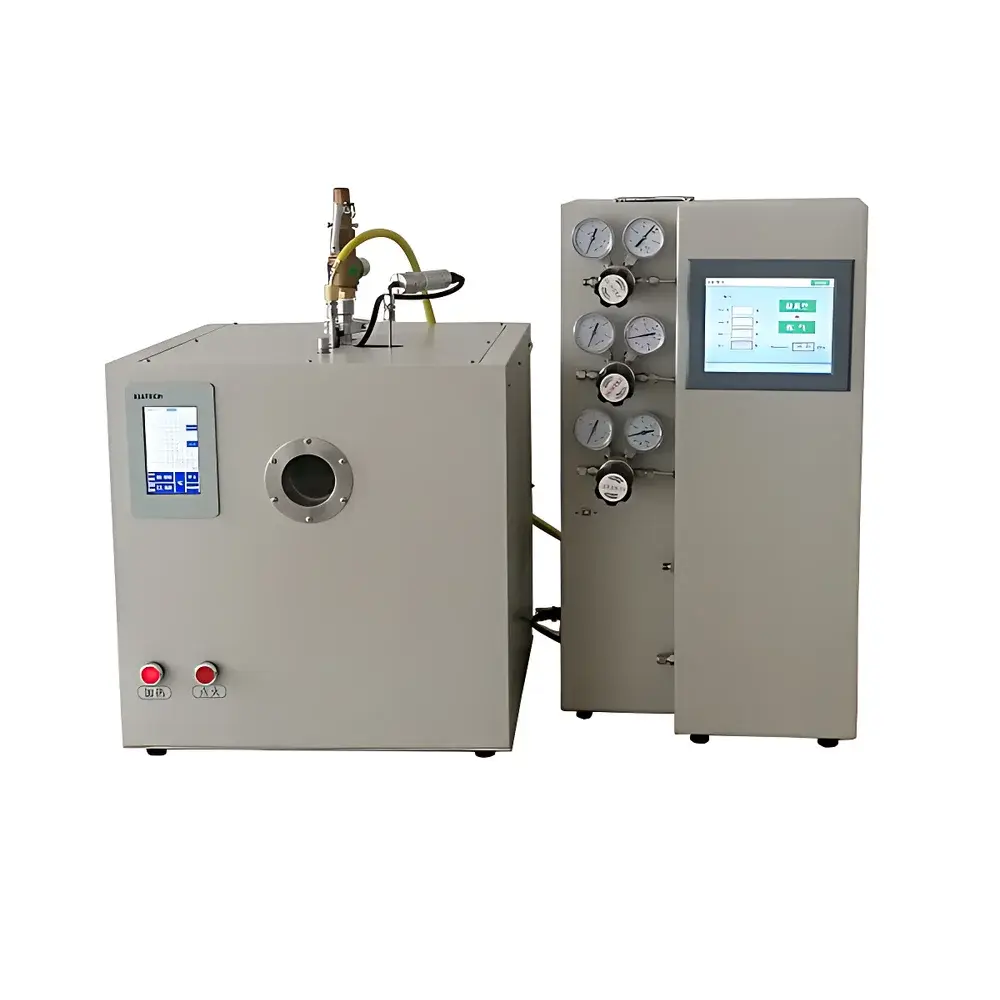
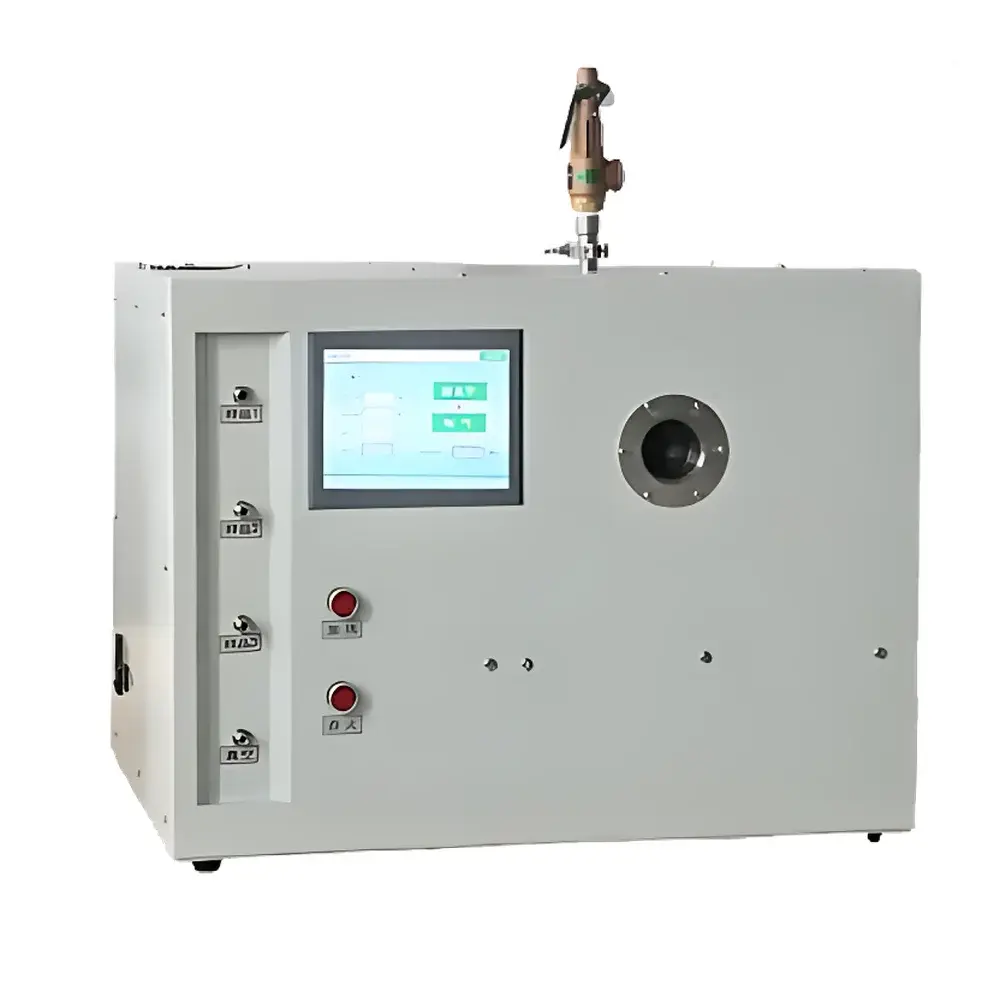
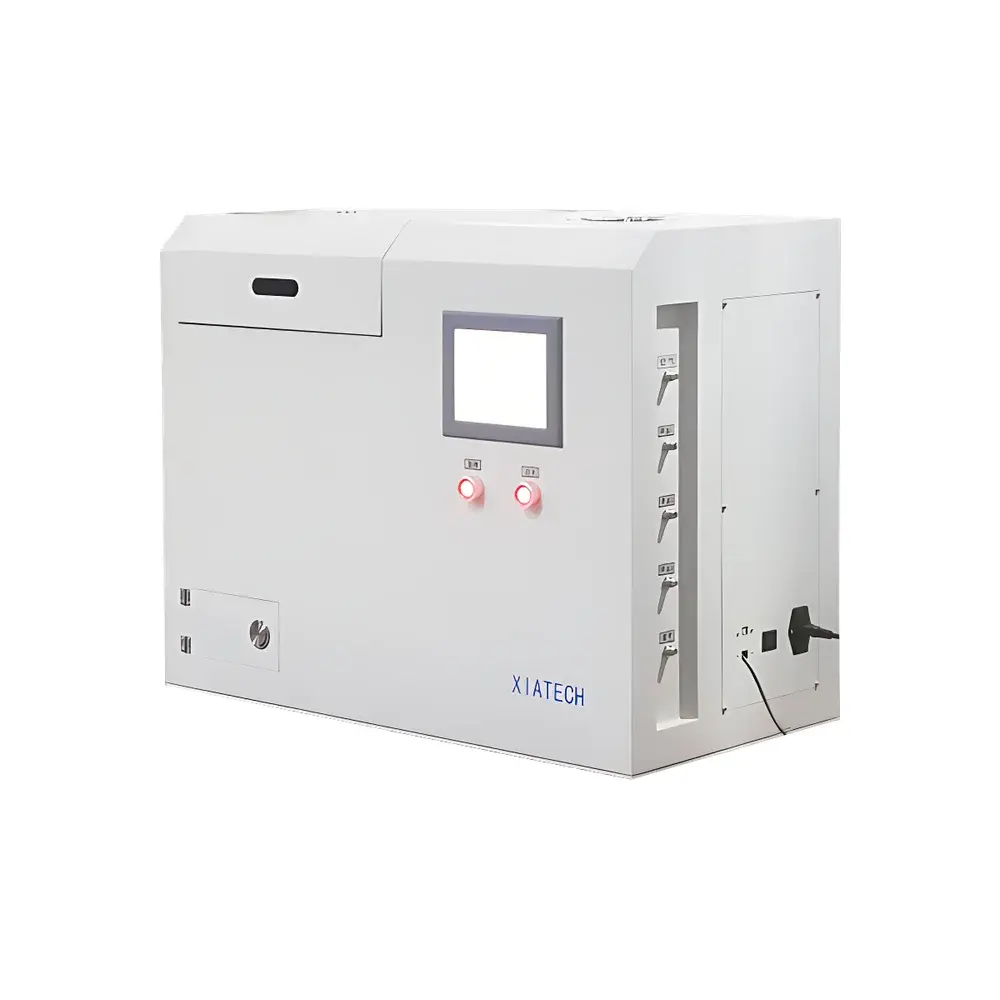
Xiatech FL1000 Combustibility Test System
| Brand | Xiatech |
|---|---|
| Model | FL1000 |
| Origin | Shaanxi, China |
| Compliance | EN 1839 Method B, ASTM E918, ASTM E2079, GB/T 38301, EN 15967 |
| Gas Mixture Accuracy | ±0.05% FS |
| Pressure Acquisition | High-frequency dynamic pressure sensor |
| Operating Modes | Auto-vacuum, temperature control, gas blending, magnetic stirring, spark ignition |
| Data Output | Real-time explosion pressure curve, stored pressure time-series, derived parameters (LEL/UEL, Pmax, (dP/dt)max, KG, LOC) |
| Safety Design | Reinforced explosion-resistant chamber with multi-layer mechanical and electronic interlocks |
| Software Platform | Windows-compatible proprietary control & analysis suite |
Overview
The Xiatech FL1000 Combustibility Test System is a precision-engineered benchtop apparatus designed for the quantitative determination of flammability and explosion characteristics of gaseous and vapor-phase combustible mixtures under controlled temperature and pressure conditions. It operates on the fundamental principle of closed-vessel explosion testing—where a stoichiometric or variable-composition fuel–oxidizer mixture is uniformly homogenized, thermally stabilized, and ignited within a calibrated, pressure-rated reaction chamber. Dynamic overpressure development during deflagration is captured in real time using a high-bandwidth piezoresistive pressure transducer (resonant frequency ≥100 kHz), enabling accurate derivation of critical safety parameters including lower and upper explosion limits (LEL/UEL), maximum explosion pressure (Pmax), maximum rate of pressure rise ((dP/dt)max), normalized KG value, and limiting oxygen concentration (LOC). The system is explicitly validated against internationally recognized standards—including EN 1839 Method B (determination of explosion limits in closed vessels), ASTM E918 (standard test method for determining limits of flammability of chemical substances), ASTM E2079 (standard test method for determining autoignition temperature of liquids), GB/T 38301–2019 (Chinese national standard for explosion limit testing of gases and vapors), and EN 15967 (explosion testing of dust–gas hybrid systems).
Key Features
- Ultra-precise gas blending: Integrated high-accuracy pressure-based mass flow control ensures composition accuracy better than ±0.05% full scale across binary and ternary mixtures (e.g., CH4/O2/N2, H2/air, solvent vapor/air).
- Real-time high-fidelity pressure acquisition: 1 MHz sampling rate with 16-bit resolution enables sub-millisecond capture of pressure transient profiles—critical for reliable (dP/dt)max calculation and flame propagation analysis.
- Thermally stable test environment: PID-controlled heating jacket maintains chamber wall temperature within ±0.5 °C over range from ambient to 200 °C, minimizing thermal gradients that affect mixture homogeneity and ignition delay.
- Robust safety architecture: Explosion-proof stainless-steel reaction vessel (rated to 200 bar burst pressure), redundant pressure relief valves, optical flame detection interlock, and hardware-enforced vacuum-before-fill sequence prevent inadvertent operation outside safe operating envelopes.
- Full process automation: Single-click execution of standardized test sequences—including evacuation to <10 Pa, temperature stabilization, precise gas dosing, magnetic stirring (≥300 rpm), timed spark ignition (±1 ms trigger accuracy), and post-test purge—minimizes operator variability and supports GLP-compliant workflow documentation.
Sample Compatibility & Compliance
The FL1000 accommodates both pure gases (e.g., hydrogen, methane, propane, ethylene) and volatile organic liquid vapors (e.g., acetone, ethanol, toluene, methyl ethyl ketone) via heated vaporization modules (up to 120 °C). Vapor generation employs gravimetric or saturation-based methods with temperature-compensated vapor pressure lookup per NIST Chemistry WebBook. All test protocols are traceable to ISO/IEC 17025 requirements for calibration of pressure, temperature, and gas composition subsystems. The system supports audit-ready electronic records compliant with FDA 21 CFR Part 11 when configured with optional digital signature and user access control modules.
Software & Data Management
Xiatech’s proprietary FL-Control Suite (v3.2+) provides intuitive graphical interface for test setup, real-time monitoring, and post-acquisition analysis. Raw pressure–time data are saved in HDF5 format with embedded metadata (operator ID, timestamp, environmental conditions, calibration certificates). Built-in algorithms automatically identify Pmax, calculate (dP/dt)max using Savitzky–Golay differentiation, and interpolate LEL/UEL boundaries via linear regression of three-point bracketing tests. Export options include CSV, PDF reports (with configurable templates aligned to ASTM or EN formatting), and direct integration with LIMS via OPC UA protocol. Audit trail logs all parameter changes, test starts/stops, and manual overrides with user attribution and UTC timestamps.
Applications
- Hazard classification of new chemical entities per GHS and CLP Regulation Annex VI.
- Process safety assessment for chemical manufacturing, pharmaceutical synthesis, and battery electrolyte handling.
- Design validation of inerting systems and explosion suppression devices.
- Research into flame inhibition mechanisms and kinetic modeling of low-temperature oxidation pathways.
- Support for ATEX/IECEx equipment certification by providing experimental boundary data for zone classification.
FAQ
What standards does the FL1000 directly support for regulatory reporting?
The system implements test procedures fully aligned with EN 1839 Method B, ASTM E918, ASTM E2079, GB/T 38301–2019, and EN 15967. Calibration and verification protocols follow ISO 17025 guidelines.
Can the FL1000 test aerosolized fuels or misted liquids?
No—the FL1000 is validated for homogeneous gaseous and saturated vapor-phase mixtures only. Liquid mists or aerosols require separate apparatus meeting ASTM E1515 or ISO/IEC 80079-20-2 requirements.
Is remote operation supported?
Yes—FL-Control Suite includes secure TCP/IP remote desktop capability with role-based access control; local network deployment is recommended for latency-sensitive pressure acquisition.
How often must the pressure sensor be recalibrated?
Annual recalibration is recommended; factory-certified recalibration services include static and dynamic (shock tube) verification per ISO 16063-21.
Does the system provide uncertainty budgets for derived parameters?
Yes—uncertainty propagation analysis (GUM-compliant) is embedded in report generation, accounting for contributions from pressure sensor drift, temperature uniformity, gas purity, and timing jitter.
Related Products



